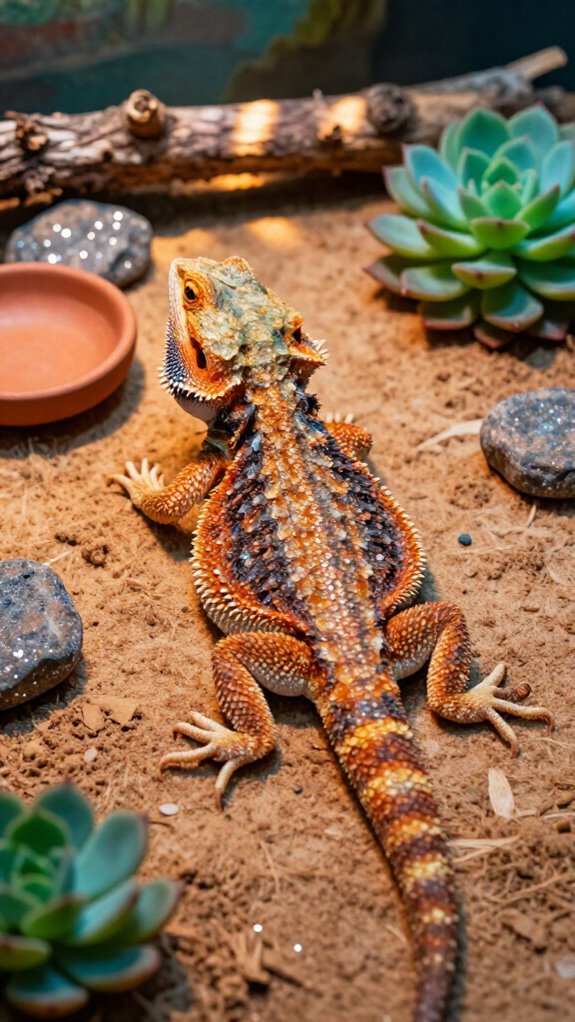
What Techniques Calm Nervous Dragons?
Anxiety in bearded dragons doesn’t have to persist—discover the five-minute handling secret that changes everything.
Nervous dragons don’t have to stay that way—and your patience is literally the antidote.
I’m deeply invested in this topic because my bearded dragon Barnaby transformed my entire perspective on reptile care. When I first adopted him, his anxiety was palpable—constant glass-surfing, refusal to bask. Alongside Mr Wiggles, my axolotl companion, Barnaby taught me that exotic pets aren’t just animals; they’re sentient beings deserving meticulous attention. These experiences fuel everything I document on ExoTails, my platform dedicated to authentic herpetological guidance.
The fundamentals work, period.
Five-minute handling sessions beat marathon ordeals. Post-basking is your golden window—dragons achieve peak tranquility then. Support all four feet with unwavering gentleness. Glass-surfing? That’s your stop sign.
Environmental architecture matters too. Implement hiding spots using products like Zen Habitats enclosures or Dubia.com’s substrate options. Minimize acoustic pollution. Introduce new people incrementally—no ambushes.
The Breakthrough Moment with Barnaby
Three weeks into Barnaby’s rehabilitation, I noticed something extraordinary: his stress responses diminished substantially when I maintained consistent handling schedules using Exo Terra handling gloves. His curiosity eclipsed anxiety. That singular moment crystallized why routine and recognition of individual temperament matter exponentially. Barnaby revealed that transformation isn’t instantaneous—it’s painstakingly incremental, yet absolutely achievable through deliberate, compassionate methodology.
Quick Takeaways
- Handle dragons during early morning or post-basking sessions when they’re naturally relaxed and more receptive to interaction.
- Keep handling sessions short—five minutes daily—to build trust gradually without overwhelming or stressing the dragon.
- Support all four feet and the belly with gentle, slow movements to prevent panic and communicate security.
- Stop handling immediately if you notice stress signals like glass-surfing, thrashing, or backing away behavior.
- Create a calm enclosure with minimal noise, hiding spots, and proper temperature gradients to reduce baseline anxiety.
Start With Short, Frequent Handling Sessions
A two-hour handling marathon with a stranger. Nope.
I’ve learned that short sessions, frequent interactions work magic. Start with five-minute windows daily. Your dragon builds confidence gradually, not panic. Involving multiple people gradually in these brief sessions helps your dragon adapt to different scents and voices without overwhelming them.
Think of it like decorating a room—you don’t throw everything in at once. You layer thoughtfully.
Handle consistently at the same time. Support all four feet. Watch for curiosity, not stress signals. End positively before your dragon hits the red zone.
This approach? It transforms nervous dragons into curious explorers who actually tolerate—sometimes even enjoy—your presence.
Progress beats pressure every time.
Remember that bearded dragons are long-term pets, so the time invested in building trust pays off for years to come.
Create a Calm Environment Before Handling Your Dragon
Before you even think about picking up your dragon, the groundwork matters way more than you’d think. Your enclosure setup is literally the foundation for calm.
I’ve learned that ambient noise wreaks havoc on nervous reptiles. Keep things quiet—no blaring TV or sudden sounds. Cover tank sides if needed for security.
Add rocks, backgrounds, and hiding spots. Your dragon needs anchors, not an empty box. A proper habitat setup with adequate floor space and climbing structures helps establish territorial security.
Temperature gradients matter too; proper heating zones help tremendously.
A comfortable, secure space? That’s your secret weapon. Your dragon relaxes here, meaning handling goes smoother.
Implementing noise reduction techniques can significantly lower stress levels in your dragon’s habitat.
Environment first, handling second.
Handle Your Dragon at the Right Time of Day
Now that you’ve got your dragon’s space dialed in, here’s the thing—timing matters just as much as the setup does. Understanding your dragon’s activity patterns helps you catch them during ideal handling time when they’re naturally calm and cooperative. During breeding season temperature shifts, you may notice your dragon becomes more lethargic or irritable, making proper timing even more critical for successful interactions.
| Time of Day | Dragon Mood | Handling Quality |
|---|---|---|
| Early Morning | Sluggish, drowsy | Excellent |
| Midday | Active, alert | Good |
| Evening | Winding down | Fair |
I’ve learned that post-basking sessions work beautifully—your dragon’s relaxed, content, and genuinely receptive. Avoid handling during their active hunting phases when they’re zooming around. Trust me, timing transforms everything. Respect their natural rhythms, and handling becomes remarkably smoother. Proper bearded dragon lifespan care includes minimizing stress through thoughtful daily interactions that align with their biological needs.
Learn the Correct Way to Support Your Dragon’s Body
Three key principles will transform how you hold your dragon: support, security, and confidence.
Your body support technique matters tremendously. Always cradle all four feet—I’m not joking about this one. Think of your hands as a living platform, not a vice grip. Support their belly gently, keeping their spine aligned. Proper handling becomes even more important when your dragon has a 75 gallon habitat that allows for more active movement and exploration. Adequate enclosure space reduces stress and promotes calmer behavior during handling sessions.
Ever watched a nervous dragon flail? That’s what happens with poor handling techniques.
Use slow, deliberate movements. Your dragon isn’t going anywhere fast, and rushing only triggers panic. Cup their body with both hands, letting their tail drape naturally.
Confident, steady handling communicates safety better than any words can.
Recognize Stress Signals and Stop Handling Immediately
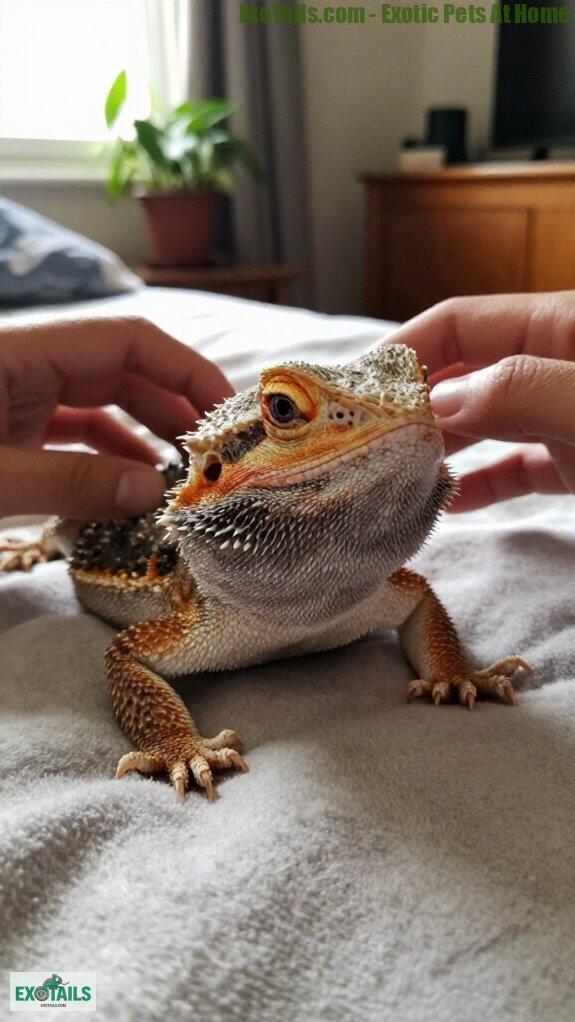
Once you’ve got your dragon cradled securely in your hands, your real job starts—and honestly, it’s all about reading the room.
Your dragon’s stress signals are screaming if you know where to look. Glass-surfing, nippy behavior, pancaking, or thrashing? Those aren’t cute quirks—they’re red flags. When your handling techniques trigger these responses, stop immediately.
I learned this the hard way; ignoring stress signals only builds anxiety.
Your dragon’s backing away or showing stress marks during handling? That’s your cue to set them down gently.
Introduce New People and Spaces Once Your Dragon Is Comfortable
After your dragon’s settled into their routine and you’ve built that trust foundation through consistent handling, they’re finally ready to meet the outside world—well, carefully anyway. Proper enrichment strategies are essential for reducing anxiety during these transitions.
Gradual exposure prevents stress spikes that’ll send them pancaking faster than you can say “nope.” Here’s how I introduce social interactions safely:
- Start with one calm, quiet person in familiar territory
- Let visitors observe before touching; respect your dragon’s comfort zone
- Move to new spaces gradually, never rushing the experience
- Watch for stress signals and retreat immediately if needed
- Keep sessions short and positive, building confidence brick by brick
Dragon Scale Massage Therapy
Beyond the gentle brushing we’ve talked about, your dragon’s scales are actually craving something even more therapeutic—massage. I’ve discovered that gentle pressure applied in slow, circular motions can work wonders for scale relaxation. Stress-reducing habitats are essential for maintaining your dragon’s overall wellbeing and complement these hands-on techniques perfectly. Maintaining the optimal temperature range in their enclosure beforehand helps ensure your dragon is physically comfortable and receptive to touch.
Use your fingertip or soft toothbrush, moving toward your dragon’s tail in the direction scales naturally lay.
Start sessions when your dragon’s relaxed and well-fed. Focus on the back and sides, avoiding the head initially. Your dragon might look skeptical—trust me, they’ll warm up.
This bonding technique reduces stress while building trust. Even five minutes weekly makes a noticeable difference in their overall calm demeanor.
Specialized Dragon Calming Oil
While massage work does wonders for your dragon’s physical relaxation, I’ve found that combining touch therapy with the right topical support takes calm to another level.
I’ve learned specialized oil benefits through years of working with anxious reptiles, and they’re genuinely game-changing.
Here’s what makes calming oil application so effective:
- Vet-approved ingredients reduce stress without toxins
- Gentle absorption supports skin health during sheds
- Aromatherapy elements promote relaxation naturally
- Enhanced bonding during massage sessions
- Consistent results when applied before handling
Use diluted, reptile-safe oils sparingly on your dragon’s back.
This combination? Your nervous dragon transforms into a zen master faster than you’d expect.
Many of these formulations are considered natural calming supplements that support exotic animal wellness through plant-based ingredients.
FAQ
Can Warm Baths Help Calm My Nervous Bearded Dragon?
Yes, I’d recommend warm baths between 85-92°F to calm your nervous dragon. They’re relaxing and hydrating. Watch for stress signals like pancaking or thrashing, and use temperature control to keep your dragon comfortable and safe.
How Does Soft Music or Singing Affect Stressed Dragons?
I’ve found that soft music or singing acts as music therapy for stressed dragons. Low-volume vocal vibrations create a calming auditory environment, helping your dragon familiarize with your voice while reducing anxiety safely.
What Gentle Brushing Techniques Work Best for Anxious Dragons?
Slow and steady wins the race. I’d use a soft toothbrush in your dragon’s comfort zones, applying minimal pressure while they’re relaxed. You’ll build trust through gentle grooming sessions that keep them safe and secure.
Is Harnessed Outdoor Time Beneficial for All Bearded Dragons?
I can’t recommend harnessed outdoor time for all bearded dragons. While environmental enrichment benefits some, others find it stressful. You’ll need to assess your dragon’s temperament first to guarantee outdoor safety.
How Long Should I Wait Before Handling a New Dragon?
I’d recommend you don’t put the cart before the horse—wait two weeks before handling your new dragon. This settling period lets them acclimate to their environment while you monitor for stress signals, ensuring a safer introduction.
References
- https://www.grimmthedragon.com/managing-my-bearded-dragons-stress/
- https://www.pendletonvet.com/2022/01/15/anderson-in-vet-calming-a-pet-dragon/
- https://www.youtube.com/watch?v=HqcWkl7jvF4
- https://www.youtube.com/watch?v=80G_tKK7PqY
- https://reptifiles.com/bearded-dragon-care/bearded-dragon-body-language-taming-handling/