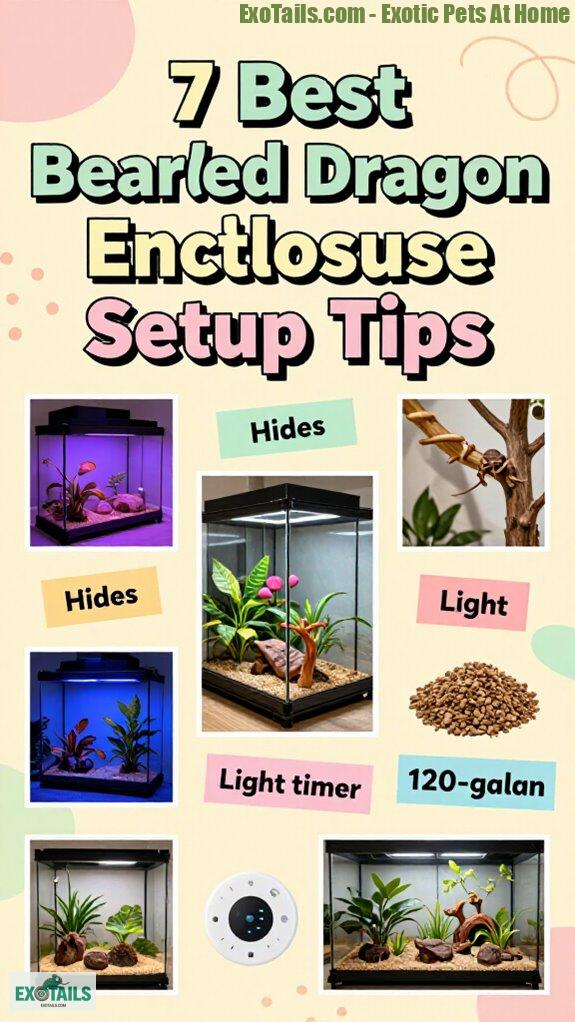
7 Best Bearded Dragon Enclosure Setup Tips
Optimizing a bearded dragon setup starts with must-know tips—discover 7 best enclosure secrets you’ll want to keep reading to uncover.
Setting Up Your Bearded Dragon Enclosure: It’s Easier Than You Think
Creating an optimal enclosure isn’t witchcraft—it’s methodology. A 75-gallon, 4x2x2 vivarium with stellar ventilation prevents mold catastrophe. UVB exposure demands 10–12 hours daily via quality bulbs from reputable brands like Zoo Med or Arcadia. Thermostat-controlled heat mats maintain precise temperatures. Substrate choices? Tile and reptile carpet reign supreme.
When Barnaby Taught Me Everything
I’m absolutely smitten with my bearded dragon Barnaby and my axolotl Mr Wiggles—they’ve become my emotional anchors. Years ago, I fumbled Barnaby’s setup spectacularly, nearly triggering metabolic bone disease. That terrifying moment catalyzed my deep dive into herpetology, ultimately birthing ExoTails, my sanctuary for exotic pet knowledge. These scaled and aquatic companions transformed my perspective entirely.
The Night I Nearly Lost Barnaby
Three years ago, I discovered Barnaby lethargic and trembling. Insufficient UVB exposure had ravaged his calcium metabolism. Frantically consulting veterinary specialists and recalibrating his enclosure with premium Reptisun 10.0 bulbs and calcium supplementation saved him. That harrowing experience crystallized my commitment to disseminating accurate husbandry protocols through ExoTails, ensuring other enthusiasts avoid similar anguish.
Quick Takeaways
- Ensure a spacious enclosure (minimum 75 gallons; 4x2x2 feet) with horizontal walking and vertical climbing space for bearded dragons.
- Use safe substrates (tile or reptile carpet) and provide enriching, appropriately spaced climbing structures and hides.
- Implement reliable heating and UVB lighting with consistent photoperiods (10–12 hours UVB daily) and proper bulb placement to avoid hotspots.
- Maintain ventilation to prevent moisture buildup, and perform daily spot cleans with weekly deep cleans for hygiene.
- Monitor calcium intake, provide a balanced diet with safe supplements, and schedule regular vet checks to support bone health.
Bearded Dragon Enclosure: Immediate Setup Essentials
So, if you’re just setting up your bearded dragon, start with the basics that actually matter: a sturdy, appropriately sized enclosure, warm and cool spots, UVB that covers every inch, and a safe, boring-proof substrate. I’m talking practical choices you can trust.
Enclosure materials matter for heat, safety, and cleaning. Ventilation importance can’t be skipped—breathe easy, avoid mold. Enrichment ideas matter for happiness, yet avoid clutter that stresses your dragon. Territorial behavior is real, so plan space accordingly. For adult dragons, a minimum 75 gallon enclosure provides the room they need to move, thermoregulate, and display natural behaviors comfortably.
Bioactive habitats sound fancy, but floor options matter—tile or scored flooring works best. Creating ideal temperature gradients across the enclosure allows your dragon to thermoregulate naturally, moving between warm and cool zones as needed for digestion and overall health. Ready to build your calm, thriving setup?
How Big Should the Tank Be? Tank Size and Layout Guidelines
A good tank size isn’t something you can fake with a fancy lid—it’s the backbone of a happy bearded dragon. I’m telling you straight: tank dimensions matter because safety follows size.
Think horizontal space for walking, plus vertical climbing for activity. Enclosure materials matter too—PVC or wood beat glass heat loss, and a snug lid prevents escapes. For owners seeking 75 gallon tanks, several excellent options exist that balance thermal efficiency with ample activity space. Proper temperature gradients within these enclosures allow your dragon to self-regulate their body heat between warm and cool zones.
Do you want sturdy heat and clean UV exposure? A 4x2x2 is solid for adults, with larger giving more enrichment room.
Can you picture a setup with branches and hides? More space reduces stress, supports growth, and invites happy, confident dragons.
Ready to design thoughtfully?
Heating, Lighting, and UVB: Non-Negotiables for Health
Heating, lighting, and UVB aren’t optional extras for a bearded dragon—they’re non-negotiables that keep them healthy, happy, and fearless at the basking spot.
I’ll guard against accidents with clear heat sources and a steady light spectrum, not guesswork. Do you check temperature measurement twice daily? You should. Selecting the right light fixtures ensures your setup delivers consistent, species-appropriate illumination.
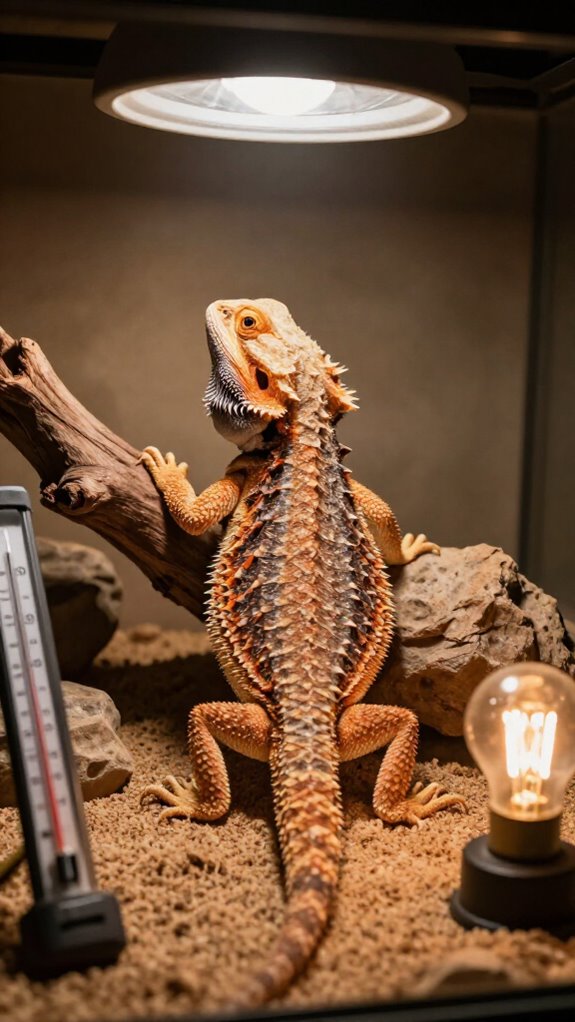
Use reliable heat mats and basking spots placed to avoid hot spots, while bulb placement minimizes burns. UVB duration matters—realistic cycles prevent eye strain and stress.
Choose lighting types that cover full enclosure, then confirm even glow everywhere. Safety first, fun second—your dragon will thank you with bold naps and bright curiosity.
Bearded dragons require 10-12 hours of UVB exposure daily to properly synthesize vitamin D3 and maintain strong bone health.
Safe Substrates and Furnishings for a Happy Dragon
We’ve got to pick the right ground for a happy dragon, and that starts with safe substrates and comfy furnishings.
I’ll keep it simple: use safe substrates, like tile or reptile carpet, and avoid loose stuff that can be swallowed. Ceramic or slate tile ranks among the most hygienic and durable options for bearded dragon enclosures, as it resists moisture buildup and supports proper nail wear.
Enrichment options matter, so add climbing structures, rocks, and hides without crowding the space.
Do you feel the need for airflow? Ventilation methods must stay clear of moisture traps.
Maintenance tips keep smells down and pets healthy.
Stress reduction comes from predictable layouts and quiet corners.
Ideal furnishings support basking, play, and rest—comfort with safety, always.
When choosing the best substrates for your specific dragon’s needs, consider factors like age, health, and activity level to ensure optimal safety and comfort.
Temperature Zoning: Day vs. Night Heating Strategies
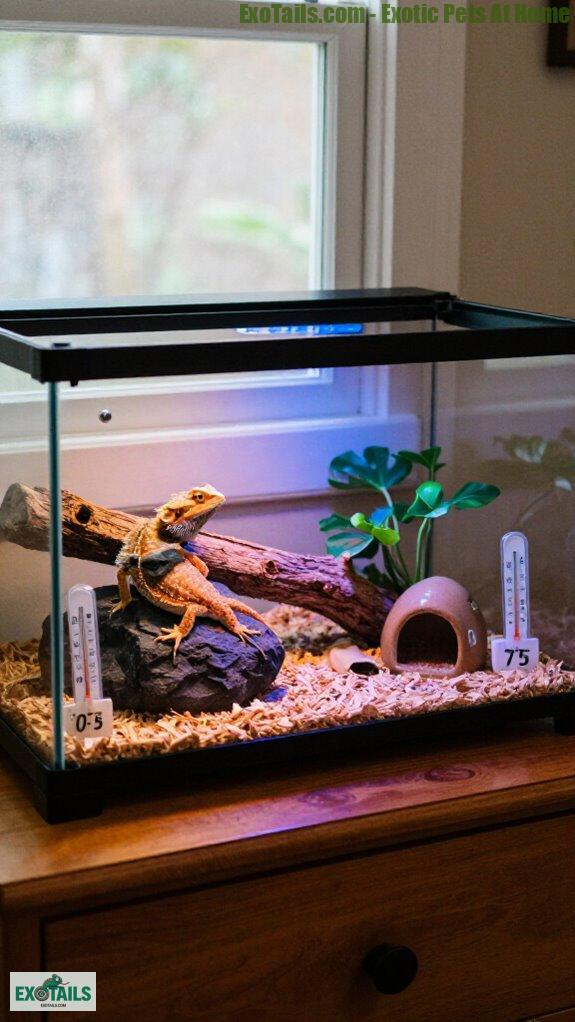
Temperature zoning isn’t just a buzzword—it’s the heartbeat of a thriving bearded dragon setup. I guide you to balance daytime heat with a safe hot zone and a cooler night; your heat gradient should soften gradually, not shock. Nighttime temperature matters, so don’t overdo winter heating or you’ll stress your dragon. Ambient temperature should feel calm, not chaotic, like a comfy cave. The basking spot temperature must reach the upper range to support proper digestion and thermoregulation. Proper habitat climate control prevents respiratory issues and promotes healthy brumation cycles. Here’s a quick table to hook you:
| Zone | Target temp | Rationale |
|---|---|---|
| Day | 95–110°F | Basking needs |
| Night | 70–80°F | Nocturnal cooling |
| Shift | 85–90°F | Safe shift |
Are you ready to fine-tune for safety and success?
Feeding Space, Water, and Hygiene Basics
- Feeding techniques matter, so set a calm, separate spot for meals and wipe spills quickly.
- Hydration options include a shallow bowl and misting—offer both to encourage drinking.
- Cleanliness standards mean daily spot-cleaning and weekly full wipes of bowls, substrates, and hides.
- Feeding zones should stay in the warm area but allow drainage and quick access for you.
Need safety? Keep hands steady, avoid overcrowding, and monitor tummy tummies after meals.
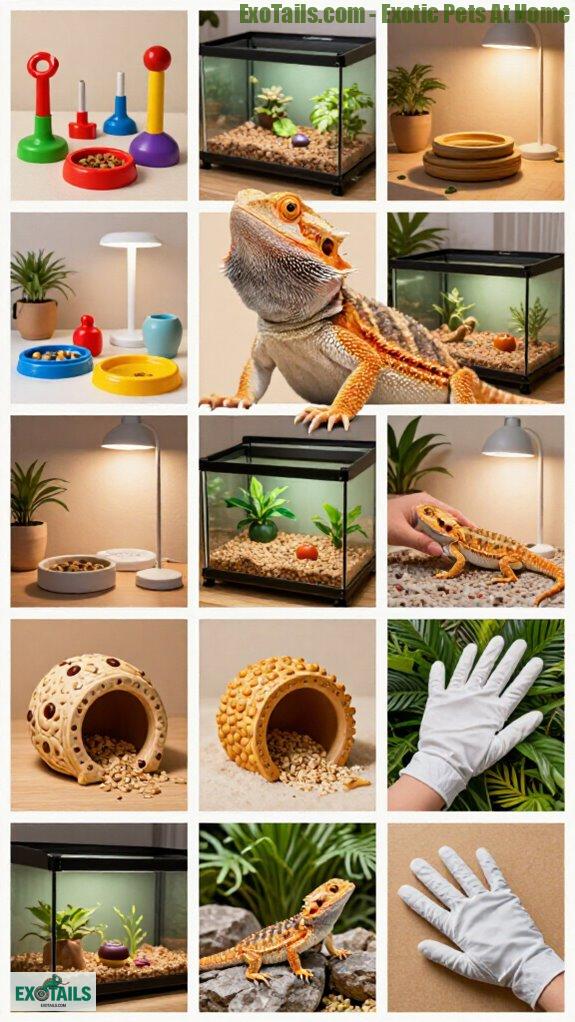
Investing in essential feeding dishes helps prevent spillage and supports proper digestion during mealtime.
Choosing dish color contrast aids your bearded dragon’s ability to locate food more easily.
Common Enclosure Problems and Quick Fixes at Home
If you’ve got a bearded dragon, you’ve probably run into a snag or two, from wobbly temps to spotty UVB coverage—and that’s totally normal. I’m here to help with calm, practical fixes you can try tonight.
Enclosure ventilation matters. Don’t ignore it—stale air boosts stress and poor temperature regulation.
Check lighting placement so heat spreads evenly, not in hot pockets. Substrate selection matters, too; go safe and simple to avoid gut issues.
Enrichment ideas keep them active, stress reduction rises, and climbing structures become safe, fun stations. If you see territorial behavior, add hides and space.
When planning long-term housing, investing in 120 gallon terrariums gives adult bearded dragons adequate room to thermoregulate and establish distinct activity zones.
Using light timers for your heat and UVB lamps ensures consistent photoperiods that support healthy circadian rhythms.
Quick fix: adjust zones, swap substrates, and clean vents. You’ve got this.
Aging Bearded Dragon Bones
1) Track calcium requirements closely, or risk shaky days.
2) Spot nutritional deficiencies early with steady appetite and movement changes.
3) Support bone health with balanced diet, bright sunlight, and safe supplements.
4) Regular vet checks keep future surprises small and manageable.
Curious how your setup could reinforce strength?
Tiny tweaks today mean confident, calm dragons tomorrow.
Quality calcium supplements designed for reptiles help prevent metabolic bone disease when used properly alongside UVB exposure.
The top calcium supplements provide essential nutrients that work with proper lighting to maintain strong skeletal structure throughout your dragon’s life.
LED UVB Bulbs for Basking
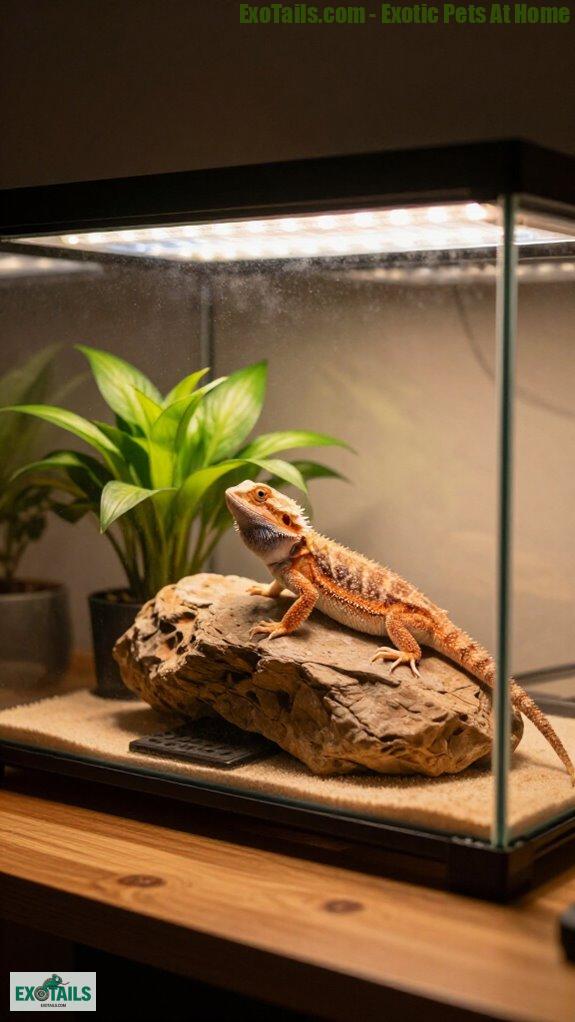
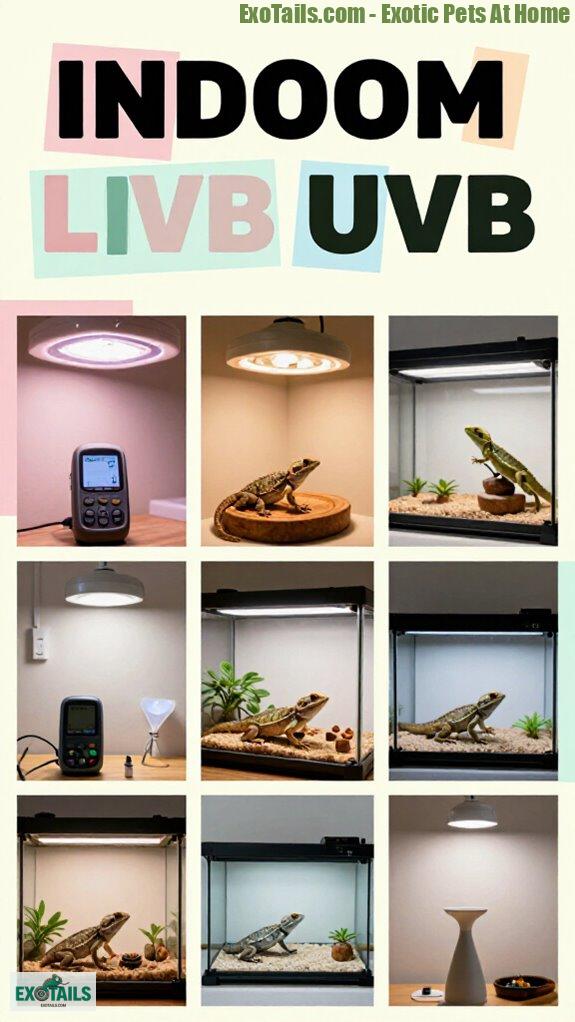
Say goodbye to boring, dim basking spots—LED UVB bulbs can light up your bearded dragon’s day with the right spectrum and intensity.
I’ll guide you on led uvb benefits, why led uvb placement matters, and choosing led uvb wattage that fits your enclosure. Selecting the right reflector hood ensures maximum UVB output reaches your dragon rather than scattering uselessly.
How long will these bulbs last? Led uvb lifespan varies, but proper mounting and cooling help.
Compare led uvb comparisons to traditional bulbs, and you’ll see real led uvb effectiveness in heat and vitamin exposure.
Safe setup questions: is there glare? Is coverage full?
I’ve learned a lot from exotic pets and home decor—let’s glow smartly.
For optimal UVB coverage across larger habitats, many keepers still prefer T5 UVB tube fixtures, which provide more consistent horizontal UVB gradients than point-source LED alternatives.
FAQ
How Often Should I Replace UVB Bulbs for Bearded Dragons?
UVB bulb lifespan matters, I replace bulbs every 6–12 months, or sooner if output wanes. I know about UVB bulb types and safety—always use a quality arc/coil-free bulb, monitor reptile eyes, and avoid underrated fixtures.
Can Bearded Dragons Cohabit Safely in Any Enclosure?
No, bearded dragons cannot safely cohabit in any enclosure. In fact, only about 1 dragon per 4x2x2 ft or larger. I prioritize cage size and temperature gradient to prevent stress and fighting.
What’s the Best Substrate for Moisture-Rich Enclosures?
The best substrate for moisture-rich enclosures is one that promotes moisture retention without mold risk; I’d choose ceramic tile over porous substrates, or a well-drained, moisture-retentive mix with careful ventilation. Moisture retention guarantees safer, happier dragons.
How to Handle Brumation and Activity Changes Seasonally?
I monitor brumation behaviors and, with safety in mind, make seasonal adjustments like dimming lighting, lowering temps gradually, and offering steady hydration; I don’t force activity, but provide safe enrichment to prevent stress during dormancy.
Do Enclosure Materials Affect Heat Retention Long-Term?
Do enclosure materials affect heat retention long-term? Yes, I’ve seen better temperature regulation with insulated walls and PVC/wood over glass; enclosure insulation matters for safety, and consistent warmth reduces stress, guarding health during brumation and seasonal changes.
References
- https://reptifiles.com/bearded-dragon-care/bearded-dragon-terrarium-size/
- https://www.zenhabitats.com/blogs/reptile-care-sheets-resources/what-size-enclosure-do-bearded-dragons-need
- https://www.youtube.com/watch?v=o6aJ-7881Dg
- https://www.chewy.com/education/reptile-and-amphibian/bearded-dragon/what-size-tank-does-a-bearded-dragon-need
- https://reptizoo.store/blogs/reptizoo-reptiles-blogs/how-to-choose-the-best-bearded-dragon-tank
- https://www.reptiles.swelluk.com/help-guides/creating-the-ideal-bearded-dragon-setup/
- https://www.petmd.com/reptile/bearded-dragon-care-sheet
- https://reptilenetworks.co.uk/2021/01/16/what-size-enclosure-for-my-bearded-dragon/