7 Best Bearded Dragon Climate Control Tips
Weather the chill with seven pro tips for bearded dragons, but what crucial detail could unlock ideal climate control you’ve been missing?
Nailing Your Bearded Dragon’s Climate: No Guesswork Required
Ever watched your scaly bestie go completely lethargic because the temps were off? That’s the wake-up call nobody needs.
I remember when Barnaby—my bearded dragon of seven years—started refusing food. Turns out, my heat gradient was a total dumpster fire. That’s when Mr Wiggles, my axolotl pal, became my unlikely accountability buddy. Their thriving tanks forced me to actually *learn* climate science instead of winging it. Now, over at ExoTails, I document every nuance so others don’t spiral like I did.
These creatures aren’t decorations—they’re living, breathing proof that we can do better.
The Night Barnaby Nearly Cost Me Everything
Midwinter, 2019. I’d been lazy with my temperature monitoring using a basic analog thermometer—rookie mistake. Barnaby’s basking spot had dipped to a catastrophic 78°F. His appetite vanished overnight. That terrifying moment taught me that precision instruments like infrared thermometers and reptile-grade heat mats (brands like Zoo Med and Arcadia genuinely matter) aren’t luxuries—they’re non-negotiable. I invested immediately in proper monitoring and never looked back.
Climate control transcends mere temperature regulation—it’s fundamental to their physiological survival.
Quick Takeaways
- Maintain a stable temperature gradient with 108–113°F for basking and 75–85°F on the cool end, measured at the dragon’s level.
- Use UVB lighting with regular bulb replacement to support calcium absorption and activity, especially in short winter days.
- Monitor humidity at 30–40% and control it via airflow, water dishes, and substrate to prevent moisture issues.
- Coordinate heat and light using overhead basking bulbs and heat mats to promote thermoregulation and UV exposure.
- Track temperatures and humidity daily with infrared thermometers and adjust quickly using dimmers and airflow tweaks.
Bearded Dragon Climate Basics: What Your Setup Needs
Bearded Dragon climate basics start with a clear plan for heat, light, and airflow, because these little lifelines keep your dragon thriving.
I’m talking about a bearded dragon habitat that supports activity, digestion, and safe basking. Essential heat should come from reliable sources, not guesswork, so you won’t surprise your reptile with cold nights. UVB bulb replacement should follow a regular schedule to ensure your dragon receives adequate ultraviolet exposure for calcium absorption and overall health.
Do you want steady daytime warmth and a cool retreat for evening burrow-downs? Set up with a warm spot, a cool side, and proper airflow to prevent mold.
Creating the optimal climate means keeping humidity levels balanced alongside temperature zones to mimic their natural Australian environment.
Ready to build confidently, with safety at the center of every choice? You’ve got this.
Set Up a Safe Temperature Gradient in the Enclosure
You’ve got the plan for heat and light, now let’s make sure the enclosure naturally guides your dragon through a safe gradient.
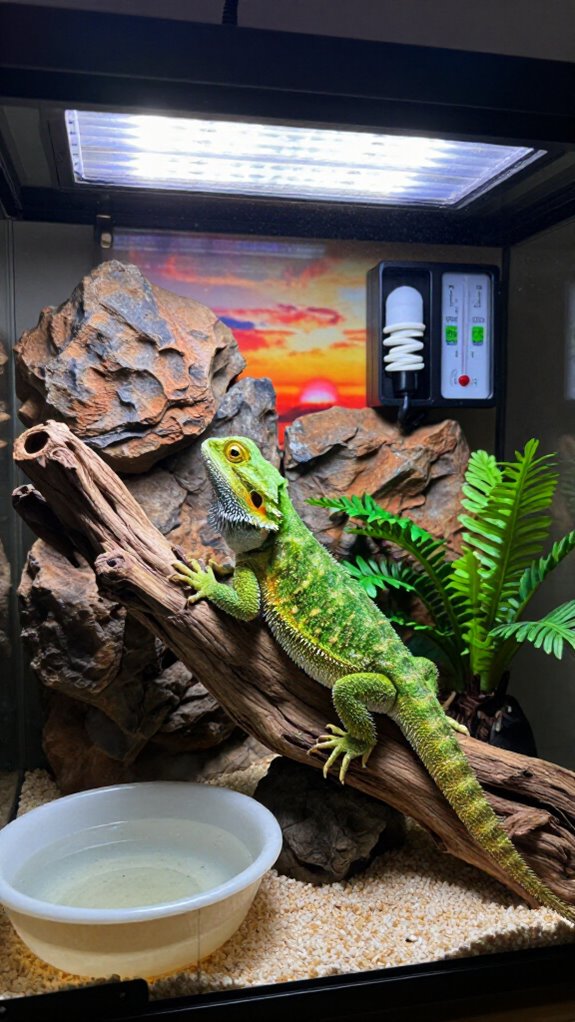
I design one side warmer for a basking spot, with heat sources delivering 108-113°F at the focal point. The cool end sits around 75-85°F, creating a clear, safe path for movement. Water quality matters just as much for reptile health as it does for fully aquatic species, ensuring proper hydration supports digestion and temperature regulation.
Use a sturdy basking branch and light-colored stone to spread warmth, not scorch skin. Monitor with digital thermometers, adjust thermostats daily, and avoid hot rocks.
Want proof? A tidy gradient reduces stress, helps digestion, and keeps your dragon thriving without drama.
Simple setup, big safety win.
According to reptile care guidelines, basking spot temperatures should always be measured at the dragon’s level where they actually absorb heat, not at the top of the enclosure.
Humidity Management Without Condensation
Nobody wants a swampy beardie bed, right? I’m here to help you manage humidity without condensation drama.
First, know your humidity sources: a water dish, misting, and airflow all play roles. Keep air moving with gentle ventilation; still air invites droplets, not charm. Proper reptile room lighting helps maintain stable temperatures that reduce humidity fluctuations.
Use a digital hygrometer to track levels on the cool end, aiming for steady 30-40% and low spikes.
Condensation prevention hinges on balancing moisture and temperature—don’t oversaturate substrates, and wipe droplets promptly.
Want a simple test? Breathe near the enclosure—if fog lingers, tweak airflow.
Safe, practical steps keep beardie happy. Much like axolotl larvae care, maintaining precise environmental conditions requires consistent monitoring and adjustment of multiple factors.
Heating and Lighting: They Work Together in Your Habitat
Heating and lighting aren’t rivals in your beardie habitat — they’re a dynamic duo that keeps your pet’s day smooth and comfy.
I’ll guide you to balance light spectrum with warm basking areas so your dragon gets steady energy and safe temps. Think: a bright daytime schedule, with a focused basking spot around 108–113°F, and cool zones nearby. The lamp placement directly affects how effectively your dragon can thermoregulate and absorb essential UVB rays. For beardies who need both heat and light in one fixture, basking combination bulbs provide an efficient solution that simplifies your setup.
Do you check temps daily? A quick read from digital thermometers helps you avoid burns or dim days.
Use a safe UVB, not just heat, and position lights to illuminate basking areas. Your setup stays vibrant, precise, and proudly pet-friendly.
Daily Climate Monitoring: How to Stay Stable
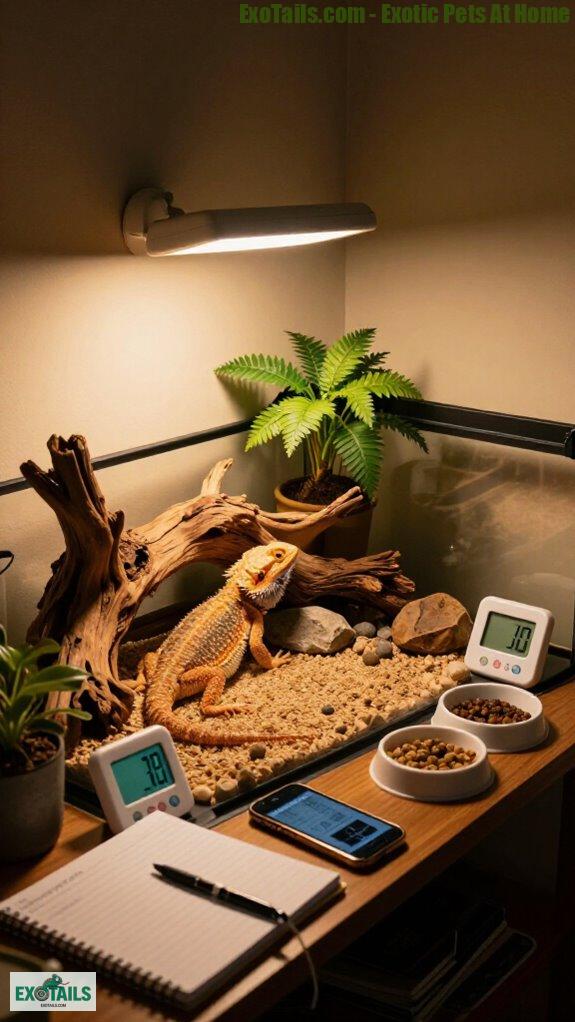
Here’s the lowdown I’m sticking to every day: I check temps in two key spots—the warm end and the cool end—using digital thermometers so I don’t guess. Creating distinct thermal zones allows your bearded dragon to properly thermoregulate by moving between areas as needed.
Daily routines keep us steady, right? I track readings and note any drift, then make small temperature adjustments to stay in the safe range.
Do you feel that reassurance when your dragon stays comfy? I sure do. With clear data, you avoid guesswork and stress.
Quick tip: log numbers in a notebook or phone note—keeps you honest. Consistency beats chaos, and a calm enclosure means fewer health scares—and yes, your exotic decor can wait for a better moment.
Just as you use proper feeding dishes to keep their meals contained and clean, maintaining stable temperatures helps reduce overall stress in their environment.
Troubleshooting Temperature and Humidity: Quick Fixes
If you spot the temps wobbling or humidity creeping up, don’t panic—we’ll tackle it fast and keep your bearded dragon comfy.
I’ve handled temperature anomalies and humidity fluctuations by quick checks, then targeted fixes. Ready for action?
- Swap in a smaller enclosure fan to boost air movement without chilling the entire tank
- Adjust basking and cool-end temps with a dimmer and a timer, not guesswork
- Run a quick misting check, then purge excess humidity with better ventilation
- Invest in a quality dimming thermostat to maintain precise thermal gradients and prevent dangerous temperature spikes
Monitoring conditions accurately requires enclosure humidity gauges placed on both sides of the habitat to track readings at the basking and cool zones.
From my days with quirky decor and exotic pets, calm planning wins every time.
Seasonal Adaptation Plans for Your Bearded Dragon Enclosure
Seasonal changes aren’t just about waking up from a long winter nap and hoping the dragon isn’t cranky; they’re about adjusting your enclosure so your bearded dragon stays happy and healthy all year long.
I’m talking seasonal adaptations that fit climate variations, not guesses. Do you want steady safety, steady temps, and fewer surprises? Start with a flexible gradient: warm side 95-100°F by day, cool side 75-85°F, adjust at night.
Use a thermostat, digital readings, and a breathable substrate. Ever notice how friendly, calm dragons make home feel safer? Seasonal tweaks keep that vibe—and your enclosure’s vibe—cozy and secure.
Proper indoor lighting setup is equally critical for seasonal transitions, as it supports their circadian rhythm and overall wellbeing throughout the year.
Investing in quality light fixtures ensures your bearded dragon receives consistent UVB and heat output during shorter winter days when natural sunlight is scarce.
Heat Mat Calibration Guide
Heat mat calibration is all about accuracy, not guesswork. I want you to feel confident that your heat mat placement keeps the basking zone safe and steady, not hot and hazy. Remember that UVB exposure requirements work alongside proper heating to keep your dragon healthy and active. While heat mats provide under-tank warmth, overhead basking bulbs remain essential for creating proper thermal gradients.
Think through each touchpoint like a tiny thermostat for your dragon’s day. Is your mat’s heat spreading evenly, or are cold spots sneaking in? Recall, heat mat efficiency comes from proper setup, not luck.
- Picture a warm, even stripe across the basking surface, no scorching peaks
- Envision gentle warmth surrounding the dragon, not a heat blob
- Visualize quick checks that stay consistent, day after day
Infrared Thermometer Picks
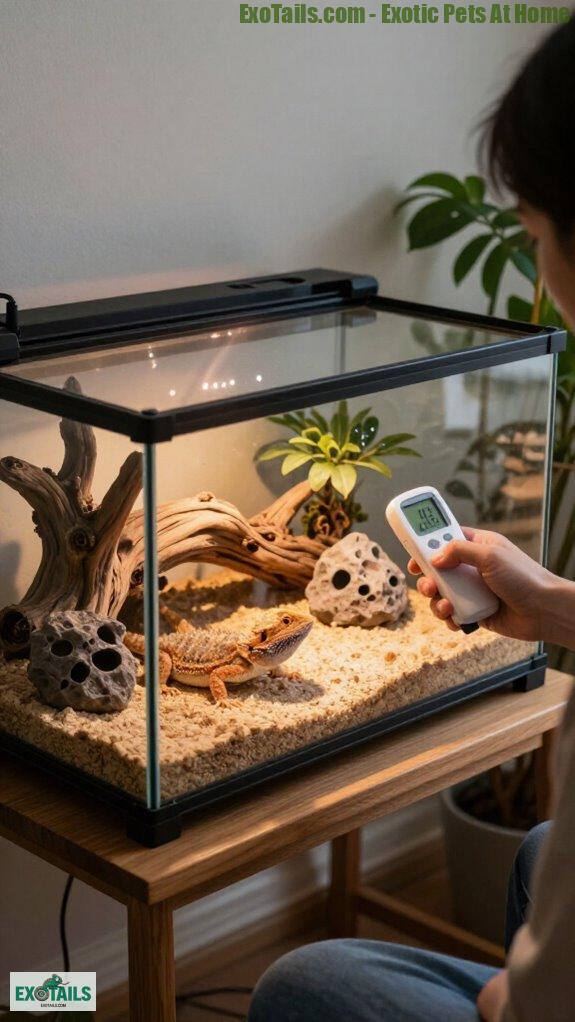
Infrared thermometers are my go-to tool when dialing in your bearded dragon’s heat map, because you get real, spot-on readings without dragging a probe across scales. Do you want fast, safe temps you can trust? I sure do. Infrared thermometer types vary, but accuracy matters most for your dragon’s comfort and health. These devices give accurate temperature readings at a glance, perfect for live-in gradients. Several digital thermometer models rank among the top choices for bearded dragon keepers seeking reliable climate control.
| Item | Benefit |
|---|---|
| Handheld IR | Quick checks |
| Pocket IR | Portable precision |
Are you ready to optimize basking zones and reduce risk with smart, simple tools?
FAQ
How Often Should I Recalibrate My Thermostat Accuracy?
I recalibrate my thermostat every month to minimize temperature fluctuations and guarantee safety. Regular thermostat maintenance helps prevent inaccuracies, and I also check readings with digital thermometers daily to protect your bearded dragon’s health and stable environment.
Can Low Humidity Cause Behavioral Changes in Bearded Dragons?
Low humidity can affect behavior: I notice reduced activity, hiding, and grumpier interactions. Low humidity effects include stress and appetite changes. I monitor signs like lethargy and unusual basking; stay safe by maintaining steady, target humidity ranges.
What Non-Thermal Factors Impact Enclosure Temperature Readings?
Ambient light and enclosure insulation impact readings by altering surface heat and heat retention; I monitor these factors to guarantee accurate temps, maintain safety, and prevent overheating or cold spots for your dragon.
Are There Signs That Airflow Is Too Strong for the Dragon?
Airflow observations matter; I watch for signs your dragon’s comfort. If the enclosure hums, fans howl, or the dragon flattens to the cool side, reduce airflow promptly to protect safety and guarantee steady basking and breathing.
Should I Use a Backup Power Source for Climate Control?
Yes, I strongly recommend a backup power source to guard against outages, preventing dangerous temperature fluctuations. I’ll explain how to set it up safely, ensuring your dragon stays within stable basking, ambient, and night temps.
References
- https://reptifiles.com/bearded-dragon-care/bearded-dragon-temperatures-uvb/
- https://reptilinks.com/blogs/news/bearded-dragon-care-guide
- https://www.youtube.com/watch?v=KNm69JutV08
- https://www.rspca.org.uk/documents/1494939/0/bearded+dragon+care+sheet+(pdf+350kb).pdf/151bb6df-1c35-a484-6de8-bffed4985abf?t=1556100899951
- https://a-z-animals.com/blog/bearded-dragon-humidity-the-ideal-range-for-your-pet/