5 Best Basking Lamp Placement Strategies
Ongoing bearded dragon care hinges on five basking lamp placement strategies—unlock them now to ensure heat, UV, and safety, but discover the full method below.
Basking Lamp Placement: The Game-Changer Your Dragon Deserves
Ever wondered why your scaly bestie seems perpetually grumpy? Spoiler alert: it’s probably their basking setup.
—
My bearded dragon Barnaby transformed from a lethargic pessimist into an absolute unit once I finally cracked the basking lamp code. Watching him bask with newfound vigor was genuinely moving. Mr Wiggles, my axolotl companion, taught me patience—something crucial when calibrating heat zones. These creatures aren’t just pets; they’re my responsibility and passion. That’s why I document everything over at ExoTails, my blog dedicated to exotic animal husbandry.
The Afternoon I Nearly Incinerated Barnaby (And What I Learned)
I positioned my first basking lamp way too close—rookie mistake of epic proportions. Barnaby’s behavior screamed distress; he avoided his favorite perch like it housed his mortal enemy. That harrowing moment crystallized everything. Now I employ a methodical approach: establish a thermal gradient spanning 105–115°F, deploy quality thermometers (Zoo Med makes stellar ones), and adjust lamp height obsessively. Dawn-to-dusk temperature cycling prevents burnout. Never wing it with your dragon’s heat source.
Quick Takeaways
- Start with a securely mounted basking lamp at a height that yields 105–115°F directly under the bulb for a warm, accessible spot.
- Position the lamp to create a clear temperature gradient: warm basking area, intermediate zone, and cool area.
- Place thermometers in the basking, middle, and cool zones to monitor and adjust wattage or distance accurately.
- Use a dimmer or adjustable fixture to fine-tune heat without overheating, and ensure safe lamp distance from substrate and decor.
- Align lamp height and exposure with daily light/heat cycles, including a dawn ramp and sunset taper for natural behavior.
Know the Basking Lamp Basics for Bearded Dragons
Sure thing—let’s plunge into the basics of basking lamp setup for bearded dragons. I’m talking lamp wattage, because the right power keeps them happy and safe.
You’ll want a dependable heat source that creates a warm spot without scorching, and that’s where basking behavior comes in. Proper temperature gradients allow reptiles to thermoregulate by moving between warmer and cooler zones. Do you see how a slightly higher wattage nudges them to bask without overdoing it? If they skitter away, the wattage is too high or too far. If they never bask, it’s too low.
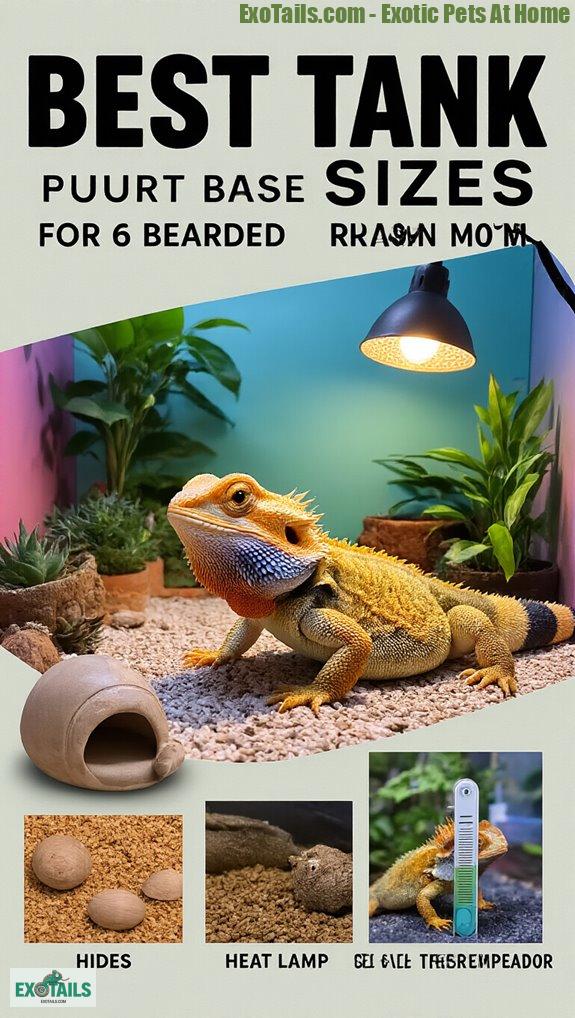
Calibration matters, and safety matters most—avoid overheating, use dimmers, and double-check distances. The right tank size helps regulate basking temperatures by allowing proper heat gradients across the enclosure. Ready to optimize?
Set a Safe, Even Heat Gradient in the Enclosure
We’ve got to spread that heat out so your dragon doesn’t burn or shiver in place. I’m here to help you build a safe heat gradient with clear temperature zones that your pet can read like a map. Selecting from the top recommended heat lamp fixtures helps prevent uneven heating that could stress your reptile or create safety hazards.
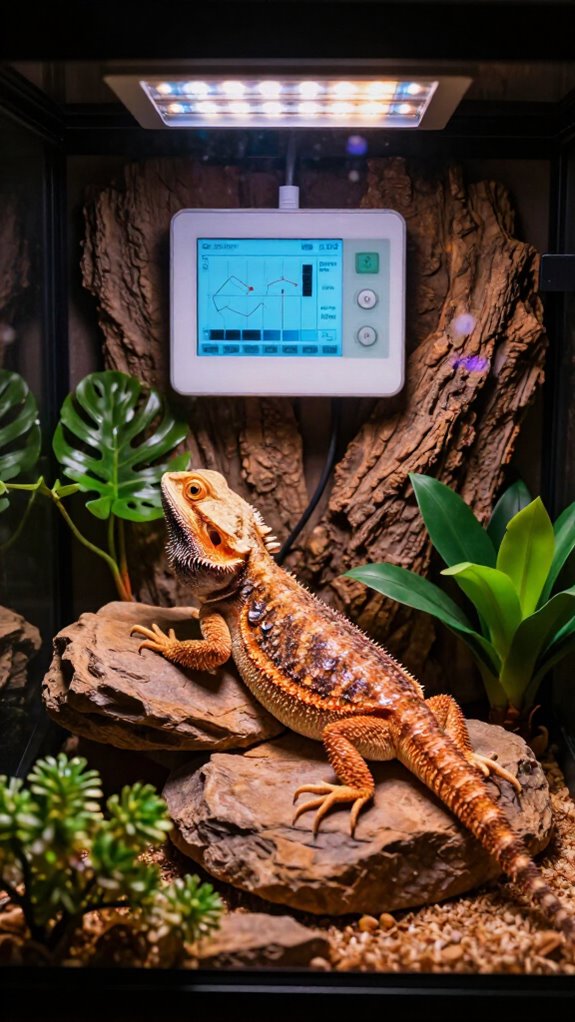
A proper gradient means a warm basking spot, a gentle middle, and a cool edge for cooling down. Use a thermometer in each zone and adjust wattage until the basking area sits at 105-115°F while cool zones stay 70-85°F. Choosing the right heat lamp fixture ensures consistent temperature distribution and reduces the risk of dangerous hot spots.
Isn’t it comforting to know you control the space—no drama, just steady comfort and safer days?
Find the Right Lamp Height and Distance for Basking
Finding the right lamp height and distance for basking isn’t guesswork—it’s a quick setup you can dial in with a thermometer and a few practical tweaks.
I’ll guide you with safety first: start with lamp height that yields 105-115°F on the basking spot, then measure distance to fine-tune. The optimal temperature range creates the foundation for your bearded dragon’s metabolic health and overall wellbeing.
Use distance measurement to keep UVB and heat balanced, avoiding hot spots. If temp climbs too high, back the lamp away or lower wattage. If too cool, nudge it closer or increase output.
Ever notice how a tidy setup eases daily care? Your enclosure becomes calmer, safer, and easier to enjoy.
Proper habitat climate control prevents respiratory infections and supports healthy digestion for your bearded dragon.
Ready to measure confidently? Let’s go.
Plan Daily Light, Heat, and UV Cycles
Setting up a steady daily routine for light, heat, and UV is easier than you might think—let’s map it out so your reptile stays warm, safe, and chipper. Proper lamp distance prevents burns while ensuring effective basking temperatures.
Daily plan helps with heat cycle and light schedule. Want consistent basking hours? I do. Start with a dawn ramp: gentle heat, bright light, UV over basking area.
Midday peak, then a sunset taper to night. Check temps, adjust wattage, and log outcomes. Do you keep a simple chart? It keeps nerves calm and pets happier.
Keep in mind to vary scenes slowly, like shifting mood lighting in a cozy room.
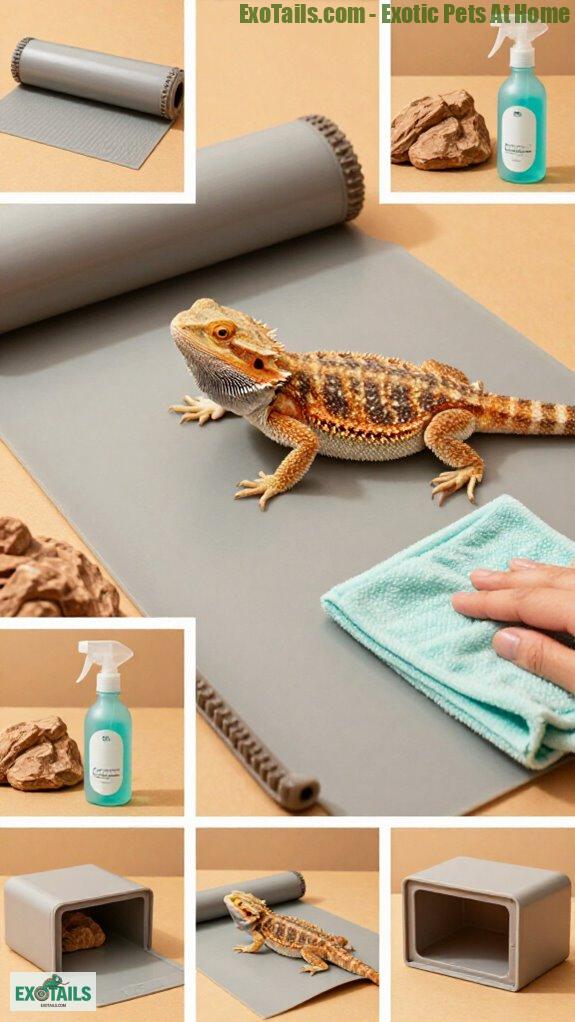
Just as reptile carpet substrates provide stable ground conditions for bearded dragons, consistent lighting routines create reliable environmental foundations.
| Idea | Benefit |
|---|---|
| Dawn ramp | Gentle wake |
| Midday peak | Consistent warmth |
| Sunset taper | Nightly calm |
Troubleshoot Basking Problems and Adjustments
Troubleshooting basking problems is all about reading the signs and making small, smart tweaks. I look at bulb wattage first, because a tiny change can wake up sleepy basking behavior. Selecting from the top basking bulbs ensures you have reliable heat output for proper thermoregulation.
If your reptile rarely basks, I’d nudge wattage up a notch or adjust distance, not blast brightness. If it overdoes it, dial back and monitor. Safety stays top of mind—burns aren’t funny.
Do you notice shading or spotty UV exposure? Fix with placement tweaks, not panic.
The basking spot temperature must reach 95-110°F for proper digestion and energy regulation.
Keep notes: temp targets and basking behavior shifts. Quick checks, calm hands, steady progress—your setup becomes friendlier, smarter, and more reliable.
Infrared Heat Map For每尽?
Infrared heat maps aren’t some sci-fi gadget; they’re practical tools that help you see warmth where your reptile actually spends time.
I’m here to walk you through how infrared advantages translate to safer setups, not guesswork. Do you want a true read on basking spots or just vibes from a glow?
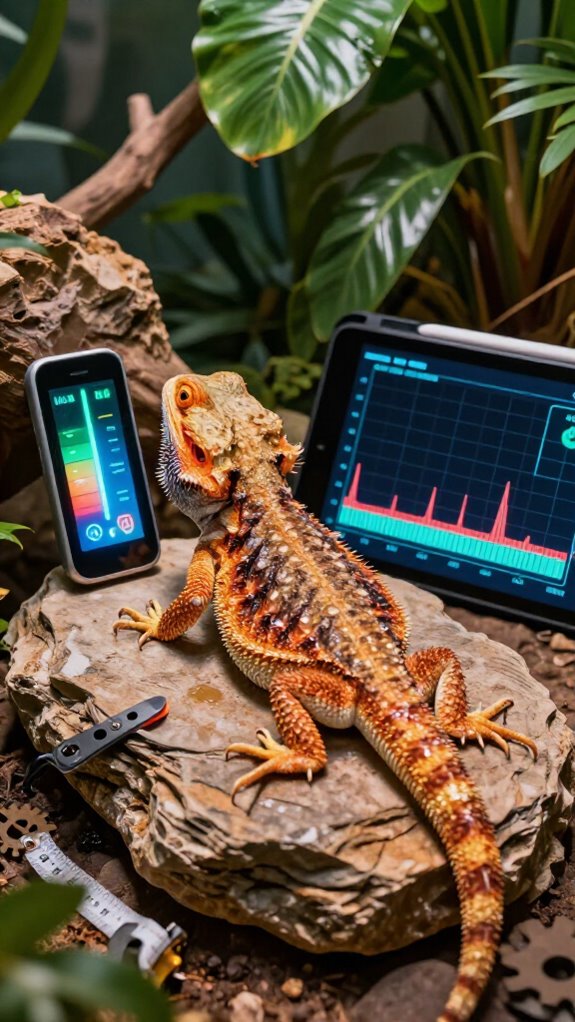
Mapping techniques show hot zones, cold pockets, and shade gaps, letting you adjust lamps without guesswork. It’s like night vision for comfort.
Curious how close to the UVB is best? Use maps to fine-tune distances, test temps, and verify consistent heat. Bearded dragons rely on adequate UVB exposure to metabolize calcium and maintain healthy bone development, making precise lamp positioning critical for their wellbeing.
Your enclosure, calmer reptile, happier decor vibe.
Proper climate control techniques ensure your habitat maintains stable thermal gradients essential for exotic pet health.
Heat Lamp Placement Picks
Let’s start with a practical mindset: your heat lamp should be king of the basking throne, not a shy understudy.
I tell readers: pick lamp type selection wisely, then fine-tune with bulb wattage adjustment to hit 105-115°F on the basking spot.
Too cool? move closer or raise wattage.
Too hot? dim or back away.
This isn’t guessing—measure carefully and stay safe.
How do I decide? I map enclosure height, then pick a 100W PAR38 as a reliable baseline.
Ready to glow confidently? Your setup deserves wit, care, and calm—not chaos.
Ever wonder how your snake decor would approve of this efficient plan?
UVB lighting requirements work hand-in-hand with heat placement to create a complete thermal gradient that supports your bearded dragon’s health.
For optimal results, always start with essential basking bulbs designed specifically for bearded dragons to ensure proper heat output and longevity.
FAQ
How Often Should I Replace the UVB Bulb?
I replace the UVB bulb every 6–12 months, depending on usage and brightness, because UVB bulb lifespan declines with time. I choose UVB bulb types rated for reptiles and monitor output to stay safe and effective.
Can Multiple Lamps Cause Conflicting Temperature Zones?
Yes. Multiple lamps can create conflicting temperature zones and rugged gradients; I’ve seen 4–6°F swings. The basking zone should have a stable gradient, so monitor temps closely, avoid hot spots, and aim consistent temperature gradients for safety.
Does Humidity Affect Basking Lamp Effectiveness?
Yes, humidity can influence basking intensity by affecting surface evaporation and heat transfer, so I monitor ambient temperature and adjust spacing; keep humidity steady, guarantee proper ventilation, and avoid overheating while maintaining safe basking conditions.
Is a Dimmer Switch Safe for Reptile Lamps?
Yes, a dimmer switch can be safe if you choose dimmers compatible with reptile bulbs and follow dimming guidelines. I prioritize dimmer switch safety and guarantee reptile bulb compatibility before any adjustment.
Can LED Daylight Lamps Meet “Full-Spectrum” Requirements?
Yes—I’ll reveal it now: LED daylight lamps can meet full-spectrum requirements, but watch for color temperature and UV output. If unsure, choose LED lamp types with documented full spectrum benefits and verify safety ratings and compatibility.
References
- https://www.zenhabitats.com/blogs/reptile-care-sheets-resources/bearded-dragon-complete-lighting-and-heating-guide
- https://www.youtube.com/watch?v=ttmhdEtj0Sk
- https://www.youtube.com/watch?v=4BIS4QhZptg
- https://reptifiles.com/bearded-dragon-care/bearded-dragon-temperatures-uvb/
- https://www.youtube.com/watch?v=XEzEUHQ2WUY