
7 Ways to Socialize Your Dragon With Multiple People
Learn the 7 secrets to transforming your dragon into a social butterfly—but wait until you discover the one technique that changes everything.
Socialization That Actually Sticks
Ever wonder why some dragons are total social butterflies while others turn into hermits? The secret isn’t wizardry—it’s strategic early exposure.
My bearded dragon Barnaby transformed my entire perspective on reptile companionship. When I first acquired him at 7 weeks, I was petrified of botching his socialization. Paired with my axolotl Mr Wiggles, they became my unlikely duo of inspiration. Documenting their journey on ExoTails revealed something profound: these creatures genuinely thrive with intentional human connection. That realization became my mission.
When Barnaby Met My Best Friend
Last spring, I introduced my best friend to Barnaby using the two-hand scoop technique with my Zen Habitats enclosure setup. She was trembling—not from fear, but anticipation. Watching Barnaby remain completely unfazed while perched on her palm, casually accepting hand-fed crickets from Fluker’s, sparked an epiphany. She wept. That moment encapsulated why proper socialization matters profoundly.
Start early. Initiate handling sessions at 6–8 weeks using gentle, abbreviated interactions. Hand-feed premium feeder insects to reinforce tranquility. Introduce singular handlers methodically before tactile engagement. Employ the two-hand scoop methodology—essential for safety and confidence. Monitor physiological stress indicators meticulously. Expand social networks incrementally across multiple weeks. Employ reputable training harnesses like Zoo Med for outdoor excursions.
Quick Takeaways
- Introduce one new handler at a time during regular bonding sessions with the primary handler present for reassurance.
- Have new handlers observe calm interactions before attempting gentle handling to allow the dragon to acclimate gradually.
- Use consistent two-hand scoop techniques across all handlers to build confidence and maintain the dragon’s comfort level.
- Start with short outdoor sessions using harnesses or bonding pouches to expose dragons to new people safely.
- Monitor stress signals like beard flaring and hissing; pause socialization when discomfort appears to respect individual temperament.
Begin Handling Your Bearded Dragon at 6–8 Weeks Old
they’re basically tiny dinosaurs with zero chill, which means timing your first handling sessions matters way more than you’d think. Caring for baby bearded dragons requires patience and consistency from the very beginning.
Starting early handling at six to eight weeks old sets your dragon up for success. At this dragon age, they’re curious but manageable—think of it like decorating a room; you’re establishing the vibe from day one. Brief ten-to-fifteen minute sessions work best initially. Using gentle handling techniques helps prevent stress and builds trust during these critical early weeks.
Support their entire body, keep them close, and move slowly. Want a socialized dragon later? Early handling creates that foundation. You’re literally building their comfort with humans now.
Build Trust Using Gentle Touch and Consistent Rewards
Now that you’ve got your tiny dinosaur comfortable with your presence, it’s time to level up your bonding game by turning those handling sessions into trust-building masterclasses.
Gentle touch paired with consistent rewards creates positive reinforcement that your dragon genuinely craves. I’ve discovered that soft strokes during calm moments, followed immediately by favorite treats, work wonders. Your dragon learns: “Humans equal good things happen.”
Keep these trust-building strategies front and center:
- Hand-feed insects with tweezers to create positive associations
- Stroke gently during brief 10-15 minute sessions
- Reward calm behavior with preferred foods immediately
- Maintain predictable routines daily
This approach transforms handling from stressful to enjoyable, building genuine confidence between you and your scaly friend.
Introduce One New Handler at a Time to Minimize Stress
Your dragon’s been crushing it with you—those trust-building sessions are paying off big time.
Now comes the fun part: expanding their social circle.
Here’s the thing about new handler introduction: you’ll want to introduce fresh faces one at a time, not all at once like some chaotic house party.
Why? Because stress reduction techniques matter.
Multiple people simultaneously? That’s overwhelming territory.
Start by having your new handler sit quietly nearby during your normal bonding time.
Let them observe your routine.
Then, they can attempt gentle handling while you’re present—your calm energy reassures your dragon that this person’s trustworthy, not some unpredictable threat.
Drawing from enrichment ideas used with exotic pets, remember that gradual environmental changes help your dragon feel secure in new social situations.
Master the Two-Hand Scoop Before Adding More Handlers
Before you hand off your bearded dragon to the next person in the rotation, there’s one essential skill that’ll make everyone’s life easier: mastering the two-hand scoop.
Here’s why this matters:
- Hand position keeps your dragon secure and prevents accidental drops.
- Body support distributes weight evenly, reducing stress on fragile spines.
- Consistent technique builds dragon confidence across all handlers.
- Proper grip prevents escape attempts and defensive behaviors.
Think of it like carrying precious cargo—which you absolutely are.
Just as you track UVB bulb replacement to maintain your dragon’s health, tracking each handler’s practice sessions ensures everyone maintains the same careful approach.
Position one hand under the chest, the other supporting the tail. This balanced approach? It’s your golden ticket to smooth handler exchanges and one genuinely chill dragon.
Reward Calm Behavior With Preferred Insects and Praise
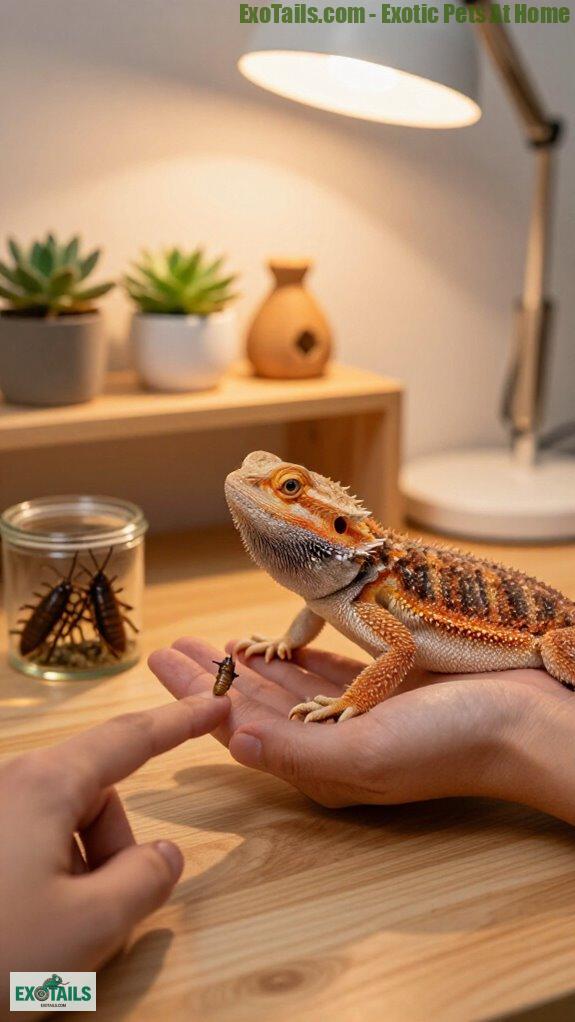
Once your bearded dragon masters the art of staying calm during handling, here’s the fun part—rewarding that stellar behavior.
Your reward strategies should focus on their absolute favorite insects: hornworms, dubia roaches, or crickets. Hand-deliver these treats during calm moments to create powerful behavior reinforcement. Proper feeder insect keepers ensure these nutritious rewards stay healthy and active for your dragon’s training sessions.
Why settle for mediocre motivation when your dragon craves their preferred protein?
Pair those delicious insects with genuine praise—talk to them enthusiastically, use a happy tone. This combination creates an irresistible association: calm handling equals tasty rewards plus human affection.
Consistency matters tremendously here. Repeat this pattern regularly, and watch your dragon transform into a socialization superstar who actually enjoys multiple handlers.
Gradually Expand to Multiple Handlers Over Several Weeks
Multiple handlers aren’t just nice to have—they’re basically the secret sauce to raising a well-rounded, confident bearded dragon.
I’ve learned that introducing new people requires patience and strategy. Bearded dragons live 10-15 years, making long-term socialization planning essential. Creating a proper starter setup from the beginning lays the foundation for successful socialization experiences. Start with your initial handler introduction in calm environments where your dragon feels secure. Use gradual exposure techniques by having new handlers observe first, then interact briefly using hand-feeding sessions.
Here’s your game plan:
- Have each new person spend quiet time near the enclosure before handling
- Limit first interactions to 5-10 minutes maximum
- Use the same gentle handling techniques consistently across all handlers
- Schedule introductions weekly, never rushing the process
Your dragon’ll thank you with relaxed vibes.
Recognize Stress Signals and Pause Socialization When Needed
As you’re building your dragon’s social circle, you’ll want to stay sharp about what their body’s actually telling you—because here’s the thing: stress signals are your dragon’s way of hitting the brakes, and ignoring them is like trying to force a shy friend into a crowded party.
Watch for beard flaring, hissing, or aggressive posturing. These discomfort signs mean pause socialization immediately. I’ve learned handler awareness prevents unnecessary anxiety that derails progress.
Create a calm environment where gradual exposure happens naturally. Notice arm waving? That’s acceptance. Body language never lies—respect it.
Safe interactions build trust; forcing connections destroys it. Your dragon’s comfort matters most.
# Dragon Species Temperament Variations
While bearded dragons are generally the poster child for chill reptile vibes, here’s the plot twist: not all dragons come off the assembly line with identical personalities.
I’ve learned that species temperament varies more than you’d expect, and understanding your dragon’s handling preferences makes all the difference in successful socialization.
Some dragons? Total lap buddies. Others? They’d rather contemplate life from their favorite basking spot, thank you very much.
- Individual dragons show distinct personality ranges
- Handling preferences differ between individuals
- Age affects socialization receptiveness
- Genetics influence natural temperament
Respecting these differences keeps everyone safe and happy.
Understanding bearded dragon lifespan helps set realistic expectations for building long-term bonds with your individual dragon.
Dragon Socialization Training Harness
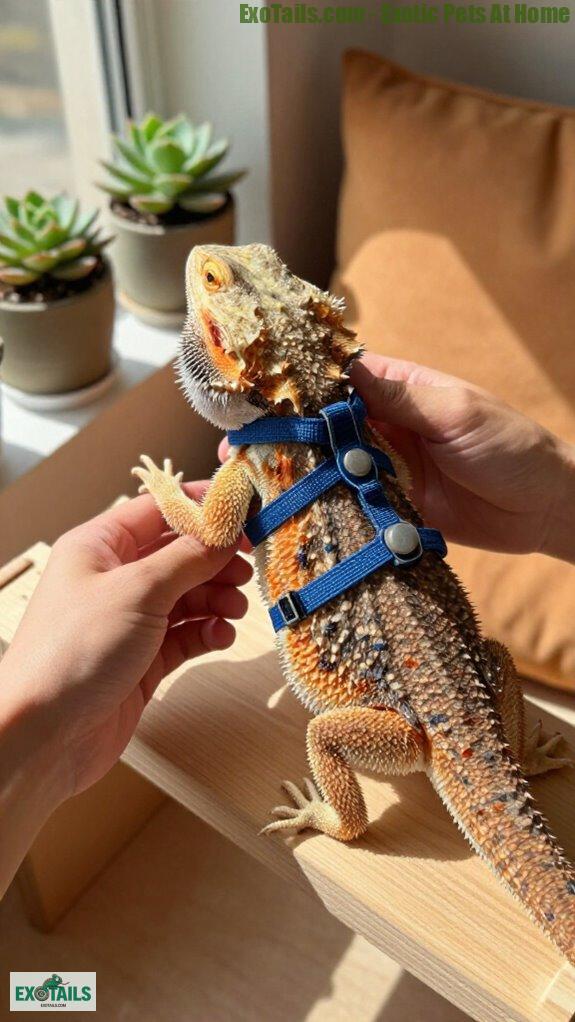
Once your bearded dragon‘s settled in and you’ve built some solid trust through hand-feeding and gentle handling, you might wonder: is there a way to take outdoor adventures without risking an escape artist moment?
Training harnesses offer exactly that—freedom with security. I’ve found dragon harnessing techniques work best when you introduce the harness gradually during calm moments, letting your dragon explore it before wearing it. Bonding pouches also serve as excellent tools for acclimating nervous dragons to new experiences before attempting harness training.
Start with short outdoor sessions in secure spaces. These socialization environment adjustments expand their world safely, preventing the dreaded “my reptile vanished into the neighbor’s bushes” scenario while strengthening your bond through shared exploration.
When planning longer outings, consider using bearded dragon bonding pouches to keep your dragon secure and comfortable while exposing them to new people and environments.
FAQ
Can Multiple Bearded Dragons Live Together, or Must They Always Be Housed Separately?
You must house bearded dragons separately. They’re solitary creatures that won’t bond with each other. Cohabitation challenges include serious territorial behavior, fighting, and stress-related health issues that threaten your dragons’ safety and wellbeing.
How Long Should I Wait Before Introducing My New Dragon to Multiple People?
You’ll want to wait two weeks before starting socialization timing with multiple people. Once your dragon’s settled, I’d recommend gradual introductions—have each person rest their hand in the enclosure first so your dragon can approach safely.
What Does Arm Waving Mean, and How Should I Respond to It?
Arm waving’s a white flag your dragon’s raising—it signals submission and acceptance. I’ll reciprocate the gesture to build your dragon’s confidence. These appropriate responses strengthen your bond safely during handling sessions.
Is Mouth Gaping a Sign of Aggression or Something Else Entirely?
Mouth gaping isn’t aggression—it’s your dragon’s body language for thermoregulation. I’d encourage you to recognize this social cue so you won’t misinterpret your pet’s needs or stress unnecessarily during interactions.
How Can I Tell if My Dragon Is Showing Affection Versus Merely Tolerating Handling?
You’ll notice affection when your dragon shows calm body language cues during handling and willingly sits on your lap. Arm waving and relaxed posture signal genuine affection signs, while beard flaring indicates you should back off for safety.
References
- https://www.youtube.com/watch?v=DxUSq1TRPvs
- https://www.youtube.com/watch?v=58SMGDv61hk
- https://petwave.com.au/blogs/our-blog-2/handling-and-bonding-with-your-bearded-dragon-building-trust-and-strengthening-your-connection
- https://www.beardeddragonforum.com/threads/introduction-questions-on-socialization.21925/
- https://reptifiles.com/bearded-dragon-care/bearded-dragon-body-language-taming-handling/
- https://dragonsdiet.com/blogs/dragon-care/how-to-bond-with-your-bearded-dragon-and-how-to-know-if-they-like-you