Complete Juvenile Dragon Feeding Schedule Guide
Neglect calcium supplementation and watch your juvenile dragon’s health crumble—discover the feeding schedule that transforms struggling dragons into thriving pets.
Nourishing Your Scaly Companion: The Feeding Blueprint That Actually Works
Ever watched your bearded dragon refuse food and felt that gut-punch of worry? That’s when you realize feeding isn’t just about tossing crickets in a enclosure—it’s about engineering thriving reptiles from the ground up.
—
My journey with Barnaby transformed everything. When I first acquired this little guy, he was lethargic, refusing insects, his scales looking utterly lackluster. Simultaneously, Mr Wiggles (my axolotl) thrived under meticulous feeding protocols. That disparity haunted me. I obsessively documented what worked, what catastrophically failed, and eventually launched ExoTails to share these hard-won insights. These creatures aren’t just pets—they’re my accountability partners, my teachers.
The Day Barnaby’s Appetite Roared Back
Three weeks into implementing calcium supplementation via ReptiCalcium and establishing morning feeding windows post-basking, Barnaby’s transformation was visceral. His droppings became firm artillery rounds instead of mushy disappointments. His musculature visibly densified. But what absolutely shattered me emotionally? Watching him sprint toward his feeding dish with genuine *enthusiasm*. That moment crystallized why this meticulous protocol matters profoundly.
Here’s what actually moves the needle:
Juvenile bearded dragons demand insects 1-2 times daily initially, gradually transitioning toward vegetation-dominant diets by 12-18 months. Non-negotiable: daily calcium dusting (Repashy SuperVitamin A Plus works phenomenally). Offer appropriately-sized prey—nothing exceeding the space between their eyes. Time feedings immediately post-lights-on when their metabolic engines fire up.
Skip this foundation? Everything collapses catastrophically.
Quick Takeaways
- Hatchlings require bug-heavy diets shifting to vegetable-dominant by 12-18 months with monthly adjustments.
- Offer insects for maximum 15 minutes daily in the morning, 1-2 hours after lights on.
- Provide greens available throughout the day for natural grazing alongside scheduled protein sessions.
- Apply calcium dust daily to insects and salads right before feeding for maximum absorption.
- Monitor firm, regular droppings and muscular body shape to confirm proper nutrition and health.
Feeding Frequency by Age: From Hatchling to Adolescent
Three critical things happen during your juvenile bearded dragon’s first 18 months: they’re growing like they’ve got a personal trainer, their dietary needs are shifting dramatically, and honestly, their appetite can be absolutely wild.
Here’s what I’ve learned: hatchling needs differ hugely from adolescent diet requirements.
At 4-6 months, your dragon’s basically a protein-obsessed machine, demolishing insects daily. Even at this young age, you can start introducing small pieces of nutrient-rich vegetables to help them develop healthy eating habits early.
But by 12-18 months? They’re flipping the script entirely.
You’ll gradually shift from bug-heavy meals toward veggie dominance.
I’m talking monthly adjustments—reducing insects while increasing greens.
Why? Their metabolism changes. Their growth slows.
Smart feeding now prevents serious health issues later.
Regardless of age, you’ll need to provide essential supplements to support proper bone development and prevent metabolic bone disease.
Daily Diet for Juvenile Bearded Dragons
Now that you’ve got the feeding frequency down and understand how your dragon’s metabolism is shifting, let’s talk about what actually goes in the bowl each day.
Your juvenile needs a strategic mix that keeps them thriving:
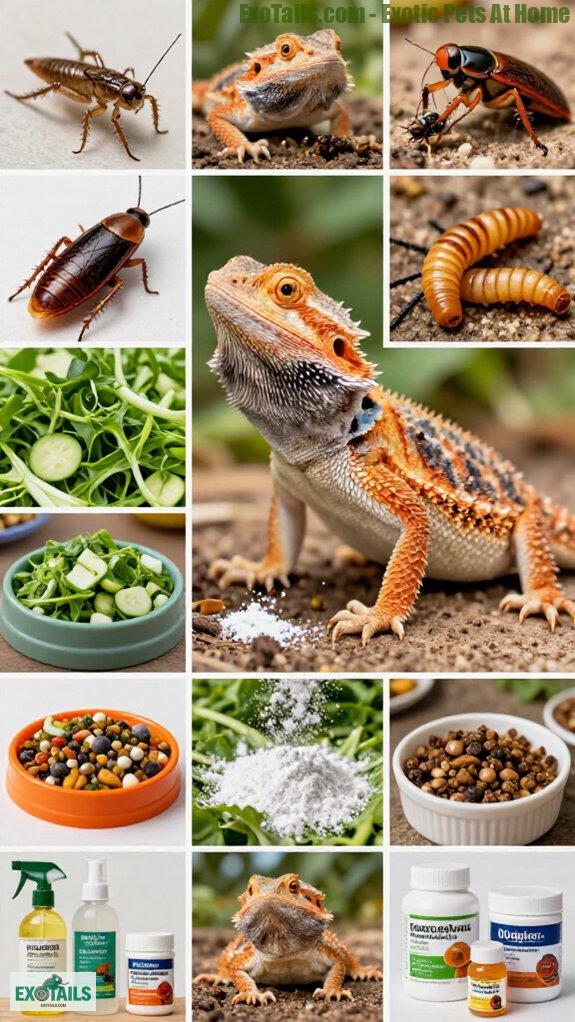
- Protein variety prevents boredom – rotate crickets, roaches, and superworms for complete nutrition
- Greens grow increasingly important – gradually shift toward that veggie-heavy adult diet
- Insect selection matters greatly – only offer prey smaller than the space between their eyes
- Calcium dusting is non-negotiable – skip this and you’re risking serious health issues
The key is choosing high-quality calcium powders specifically formulated for reptile absorption rather than human supplements.
Think of dietary variety as nutritional insurance.
I’ve learned from years with exotic pets that mixing things up keeps dragons engaged and healthy.
Offer insects in the morning, leave greens available all day in a shallow dish near their basking spot.
Simple, effective, safe.
Proper daylight lamp exposure ensures your dragon can actually metabolize that calcium you’re dusting, making UVB lighting just as critical as the food itself.
Portion Sizes and Meal Prep Basics
Getting the portion sizes right is where many dragon keepers stumble, yet it’s honestly simpler than you’d think.
I keep insects no bigger than the space between your dragon’s eyes—seriously, that’s your golden rule for safety. Proper insect keeper selection also helps ensure your feeders stay healthy and nutritious before mealtimes.
For meal prep, I chop veggies head-sized or smaller, then arrange them in shallow dishes near the basking spot.
Offer all insects your juvenile can eat in fifteen minutes daily. Think of it like meal prepping for yourself: organize greens in advance, gut-load your bugs beforehand, and you’re golden.
This approach prevents choking, impaction, and the dreaded uneaten-food cleanup nightmare.
When determining feeding frequency, remember that juveniles need more protein and meals per day than adults to support their rapid growth.
Build Your Juvenile Bearded Dragon Feeding Schedule
Once you’ve got your portion sizes dialed in, here’s where the magic happens—building an actual schedule you’ll stick with.
I’ve learned that consistency transforms feeding into second nature. Here’s my feeding strategy that creates nutritional balance:
- Morning protein sessions (1-2 hours after lights on) keep your dragon fueled for basking and growth
- Greens available all day until lights out guarantees natural grazing habits
- Weekly supplement routine prevents nutritional gaps that sneak up on you
- End-of-day cleanup removes temptation for late-night snacking
Rotate in top veggie options to ensure your juvenile gets diverse nutrients beyond the staple greens. Establishing a reliable feeder insect keeper system ensures your live food stays healthy and nutritious until mealtime.
Want to know the secret? Pick times you’ll actually retain. I schedule feedings with my morning coffee and evening wind-down.
Your dragon thrives when you’re consistent, not perfect.
Recognizing Healthy Eating Patterns
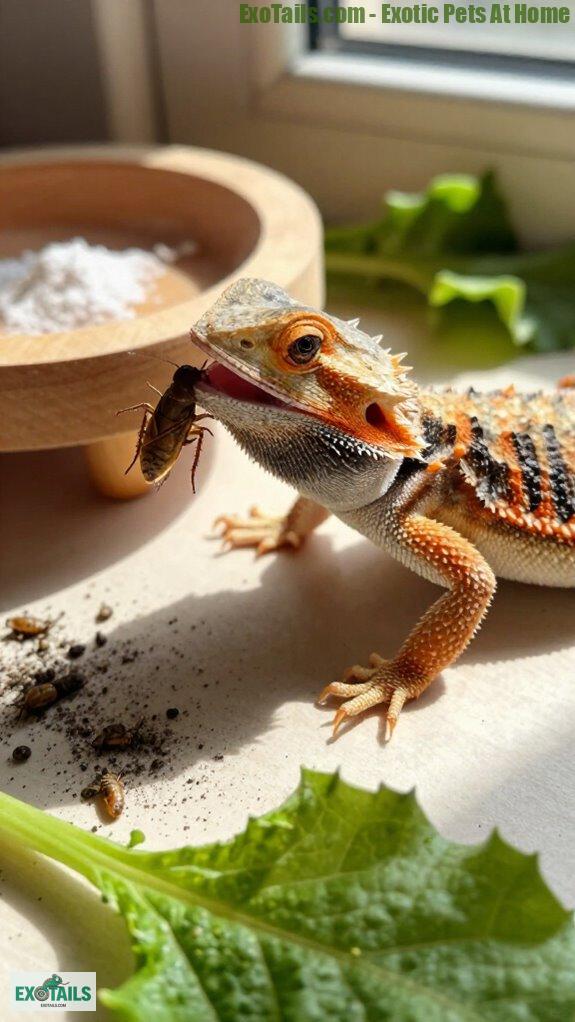
Your juvenile bearded dragon’s eating habits tell you everything about whether you’re nailing this whole feeding thing or accidentally creating a picky eater with digestive issues. I’ve learned that healthy weight and diet diversity are your best indicators of success. Investing in quality feeding kits can help ensure your dragon receives proper nutrition from the start. The best bearded dragon feeding kits include properly sized food dishes, calcium supplements, and gut-loading supplies that support optimal nutrition throughout their growth stages.
| Sign | Healthy | Concerning |
|---|---|---|
| Appetite | Eats insects enthusiastically | Refuses food repeatedly |
| Droppings | Firm, regular | Runny or absent |
| Body | Muscular, filled out | Skinny or bloated |
| Activity | Alert, active | Lethargic, hiding |
| Veggies | Eats variety daily | Ignores greens completely |
When your dragon devours those crickets with gusto and actually munches greens without protest, you’re winning. That’s your green light.
Feeding Mistakes That Stunt Growth
Even though you’re doing everything right with the feeding schedule, there’s a sneaky list of mistakes that’ll tank your juvenile dragon’s growth faster than you’d think—and most keepers don’t realize they’re making them until their dragon’s looking more like a lizard stick than a healthy reptile.
- Feeding boring insect variety – Crickets only? Your dragon’s missing vital nutrients that roaches and phoenix worms provide.
- Skipping greens preparation – Oversized, unwashed veggies sit ignored while your dragon stays malnourished.
- Dusting inconsistently – Calcium supplements matter; skipping them causes metabolic bone disease.
- Overfeeding superworms – Fat content stunts development permanently.
Without proper multivitamin supplementation, even a varied diet may leave your juvenile dragon deficient in essential nutrients like vitamin D3 and calcium.
Your juvenile deserves better. A well-fed juvenile dragon given optimal care can live up to 10-15 years, making every feeding decision during these formative months critical to their long-term health.
# Calcium Supplementation for Growing Dragons
Of all the feeding mistakes that stunt growth, inconsistent calcium dusting might be the sneakiest culprit—and here’s why it matters so much.
Your juvenile dragon’s bones are basically under construction, which means calcium sources aren’t optional—they’re essential infrastructure.
I’ve watched dragons develop skeletal issues simply because owners forgot dusting days.
Here’s the deal: dust all insects and salads daily with phosphorous-free calcium containing D3.
Supplementation timing matters too—apply it right before feeding, ensuring your dragon gets maximum absorption.
Think of calcium as your dragon’s skeletal insurance policy.
Skip it, and you’re inviting serious problems down the road.
Consistency wins every single time.
Choosing from the top calcium supplements available ensures your growing dragon receives properly formulated nutrition for optimal bone development.
Vitamin D3 Powder Brands
Three things separate a thriving juvenile dragon from one stuck in growth limbo: calcium consistency, the right D3 formula, and honestly, picking a brand that won’t break the bank or gather dust on your shelf.
I’ve learned that D3 powder brands vary wildly in quality and price. You’ll find ReptiCal, Zoo Med, and Herptivite leading the pack—each offering phosphorous-free formulas designed for growing dragons.
Here’s what matters in your brand comparison:
- Phosphorous-free guarantee protects your dragon’s calcium absorption
- Trusted reptile brands backed by herpetologists
- Affordable pricing you can sustain weekly
- Shelf-stable formulas that stay potent longer
Choose wisely.
FAQ
How Do I Prevent Live Insects From Escaping During Feeding Sessions?
I feed live insects in a separate bin—think of it like a contained arena. This insect containment strategy keeps escapees from your enclosure. I’ve found this feeding strategy prevents stress and maintains safety for your dragon.
What’s the Best Way to Gut-Load Prey Before Feeding to Juveniles?
I’ll gut-load your prey by feeding insects nutritious foods like leafy greens, carrots, and commercial gut-load products 24-48 hours before offering them. I’ll also guarantee proper insect hydration using water crystals or fresh vegetables to maximize prey nutrition for your juvenile.
Can I Use Tap Water or Should I Use Filtered Water Daily?
I’d recommend filtered water to avoid chlorine effects on your juvenile dragon’s hydration and pH balance. While tap water won’t harm them occasionally, consistent filtration guarantees ideal water quality for their health and development.
How Do I Know if My Juvenile Is Eating the Right Amount?
I’d monitor your juvenile’s body condition and feeding frequency to guarantee you’re offering the right portion size. They’ll eat all insects in 15 minutes daily, plus greens matching three times that volume. Your dragon’s appearance signals adequate nutrition.
What Should I Do if My Juvenile Refuses Vegetables for Several Days?
If your juvenile refuses vegetables for several days, I’d introduce vegetable alternatives like different greens or softer options. Gradually encourage eating by mixing preferred insects with chopped veggies to build acceptance safely.
References
- https://dragonsdiet.com/blogs/dragon-care/how-often-do-bearded-dragons-eat-feeding-chart-by-age
- https://carolinadesignerdragons.com/information/dragon-feeding/
- https://www.dachiubeardeddragons.com/baby-bearded-dragon-care-sheet/
- https://www.beardeddragonforum.com/threads/juvenile-live-feed-guidance.26732/
- https://docs.google.com/document/d/1l8YdSA-mEe_3GYKBVJ_ADQKXNsTzMLYw45HdQyxd3C0/edit?tab=t.0
- https://reptifiles.com/bearded-dragon-care/bearded-dragon-food/