7 Best Temperature Tips for Breeding Bearded Dragons
Discover essential temperature strategies for breeding bearded dragons—perfect temps, drops, and monitoring tips that could make all the difference.
Breeding Bearded Dragons: Temperature Mastery Unlocked
Ever feel that gut-wrenching anxiety when your scaly bestie’s thermostat reads wrong? Yeah, I’ve been there.
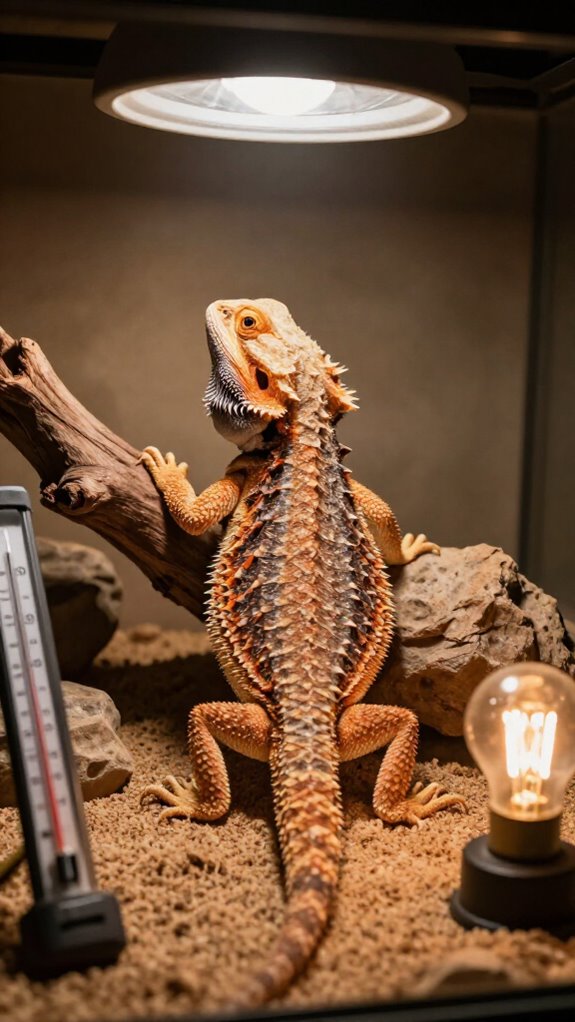
Breeding bearded dragons demands obsessive temperature precision. Core temps should hover near 36.3°C, with basking zones hitting 40–42°C for 10–12 hours. Never exceed 50°C—seriously, this isn’t negotiable. Daily monitoring with reliable digital thermometers (forget analog; they’re deceiving you) keeps everything dialed in.
Trigger breeding by dropping daytime temps 5–8°C for 8–10 weeks. Nocturnal environments need 18–22°C vibes. Nest substrates flourish at 27–29°C with ambient air around 24–26°C. Incubators set to 82–84°F are industry gold. Brands like Inkbird controllers eliminate guesswork.
Humidity checks twice daily prevent catastrophic outcomes. Draft detection matters—spot-check relentlessly.
When Barnaby Taught Me Everything About Temperature Obsession
My bearded dragon Barnaby nearly didn’t make it through breeding season because I trusted a faulty thermostat. That moment—seeing him lethargic under his basking lamp—crystallized my commitment to precision. Mr Wiggles, my axolotl, thrives in my ExoTails ecosystem because I learned that lesson. Temperature consistency isn’t pet-parent mythology; it’s existential. These creatures depend on our meticulous care, transforming us from casual owners into devoted stewards.
Quick Takeaways
- Maintain adult core temperatures near 36.3°C with basking zones at 40–42°C and avoid exceeding 50°C.
- Provide a clear thermal gradient by heating roughly one-third of the enclosure for effective temperature regulation.
- Simulate seasonal cooling by lowering daytime temps 5–8°C for 8–10 weeks to trigger mating behavior.
- Keep nesting substrate at 27–29°C and ambient nest area around 24–26°C for even egg development.
- Use calibrated thermometers/hygrometers near eggs and log conditions twice daily to prevent clutch loss.
Prepare Adults : Target Body & Basking Temps (Exact Numbers)
Ready to dial in the exact temps for breeding adults?
I set clear temperature goals, because safety matters, right? Aim for a core body temp near 36.3°C, with basking zones at 40–42°C on the surface, never over 50°C to avoid burns. A well-designed temperature gradient allows reptiles to regulate their body temperature naturally throughout the day.
Position the heat over about one-third of the enclosure, so dragons can choose warmth or coolness, and record temps daily — thermostats lie. Maintaining proper thermal gradients is essential for creating a habitat climate that supports healthy breeding behavior and overall wellbeing.
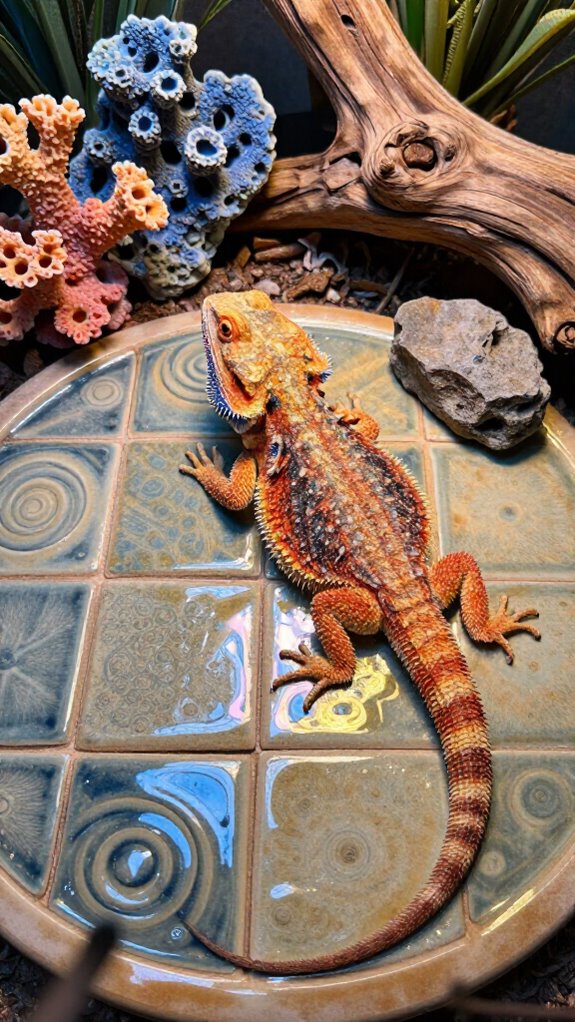
Want an example? I’ve used light-colored stone to hold heat nicely, and my living room plants didn’t mind the décor clash.
Curious how small changes improve fertility and reduce stress? Try these precise targets.
Use Seasonal Temp Shifts in Captivity to Trigger Breeding
If you want your bearded dragons to think it’s time to mate, mimic the seasons in their tank, because a clear shift in temperature and daylight is the clearest signal they understand — and yes, they’re less subtle than your houseplants.
I gently lower daytime temps and shorten light to simulate cooler months, then raise both over weeks, creating clear seasonal changes that act as strong temperature triggers.
Want specifics? Drop day air by 5–8°C for 8–10 weeks, nights cooler but safe, then restore basking and daylight gradually. The basking spot should reach optimal temperatures when ramping back up to signal the start of the active breeding season.
Maintaining proper humidity levels alongside these temperature shifts helps ensure your breeding pair remains healthy throughout the brumation and breeding cycle.
It’s like coaxing a reluctant date—respectful, slow, and reliably effective.
Set Pairing Basking and Night Temps : Timing & Duration
I’ll start by setting clear temps for pairing, because timing is everything when you want two dragons to actually notice each other instead of just avoiding eye contact like awkward houseguests.
I set pairing temperature daytime at 40–42°C, with basking duration 10–12 hours, so they’re active and honest about intentions. Nights drop to 18–22°C, safely above risky lows. Want examples? Here’s a simple chart to guide you.
| Time | Temp (°C) | Notes |
|---|---|---|
| Day | 40–42 | Basking duration 10–12 h |
| Evening | 28–30 | Wind-down, social cues |
| Night | 18–22 | Rest, safe brumation prep |
Set Nesting‑Site Temps for Laying: Substrate and Ambient Ranges
When a female’s ready to dig, I make the nesting site warm but not oven-hot, because you want eggs to develop evenly without turning the clutch into a science experiment gone wrong.
I set nesting substrate to about 27–29°C, moist but not soggy, so eggs won’t desiccate or rot. Ambient conditions around the nest should sit near 24–26°C, steady, with minimal drafts.
I check temps daily with a probe thermometer, because trust is good, logs are better. Want safe results? Offer a sheltered box, firm depth for digging, and supervise quietly—think helpful interior designer, not stage manager. For quick spot checks of surface temperatures, I also use one of the essential temperature guns recommended for bearded dragon care.
To maintain these precise temperatures consistently, I rely on dimming thermostats which gradually adjust heat output rather than cycling on and off, preventing dangerous temperature spikes that could harm developing eggs.
Control Incubator Temps (Bearded Dragon): Sex Ratios & Hatch Rates
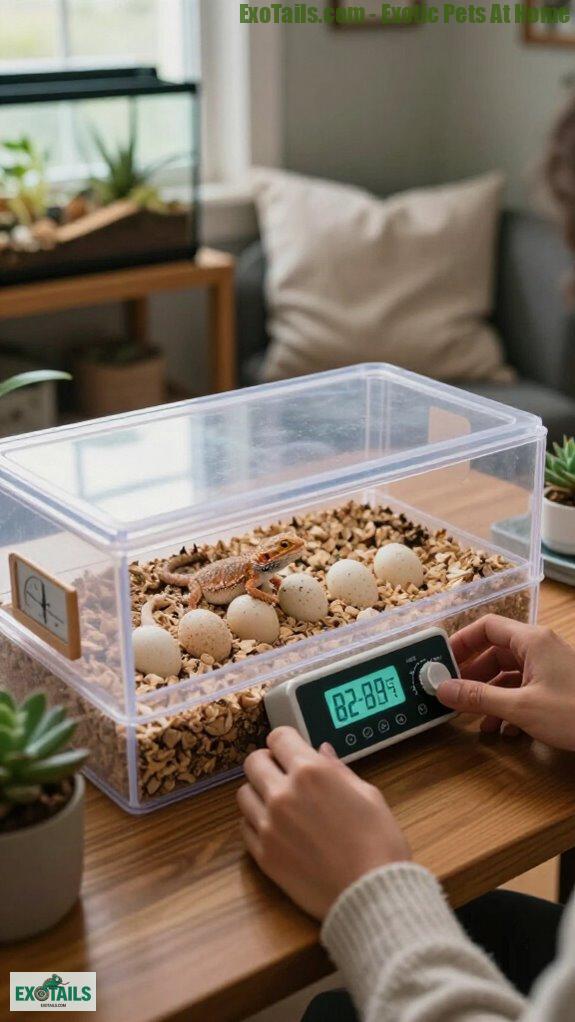
You’ve got the nest temps dialed in, so let’s talk about the next big knob to turn: the incubator — because that box of warm mystery pretty much writes the hatchery’s handbook.
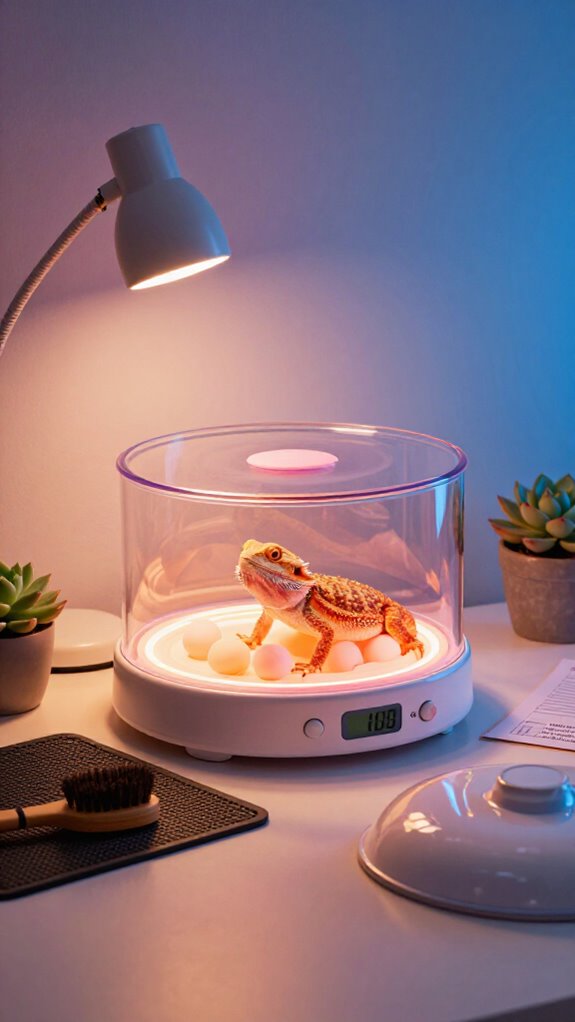
I set incubator temperature to about 82–84°F, which gives reliable hatch rates, and yes, shifts sex determination odds, so you’re not wholly hostage to reptile roulette.
Want more males? Slightly warmer; more females, a touch cooler. I’ve learned this with exotic pets and odd lamp choices that oddly matched my living room mood.
Use a reliable thermostat and check temps daily, safely, to protect eggs and your peace of mind.
Quality incubation equipment ensures stable thermal conditions critical for embryo development and predictable outcomes.
Choosing from the top incubators for bearded dragons can make temperature control far easier and more consistent than struggling with improvised setups.
Monitor Humidity and Temps to Protect Clutches
Curious how a few degrees and a whisper of moisture can make or break a clutch?
I watch eggs like tiny treasures, and I tell you, humidity control and temperature monitoring are nonnegotiable. Do you want mold, collapse, or healthy hatchlings? Check digital probes, log temps twice daily, and keep incubator humidity steady, around the recommended substrate dampness. In addition to incubation management, breeders should carefully plan UVB spectrum range to match the needs of different reptile species from the moment they hatch.
I’ve balanced enclosures for dragons and a finicky fern, so yes, I get both science and style.
- Use a calibrated thermometer and hygrometer, placed near eggs.
- Maintain steady incubator temps, avoid sudden swings.
- Mist sparingly, seal boxes to trap moisture.
Once hatchlings emerge, they’ll need proper UVB lighting to support bone development and prevent metabolic bone disease, just as critical as the incubation environment you so carefully controlled.
Spot‑Check and Troubleshoot Temperature‑Related Breeding Issues
I’ve learned the hard way that a few degrees can make the difference between a thriving clutch and a sad science experiment, so let’s go straight to spot-checking and troubleshooting temps before things get dramatic. Investing in quality measurement tools from trusted top digital thermometers can prevent many of these headaches before they start.
Check thermometers in three spots, daily, and log readings, yes, like a boring scientist. If you see temperature fluctuations larger than 3°C, hunt for drafts, faulty bulbs, or loose thermostats.
Notice odd breeding behaviors, like refusal to bask? That’s a red flag.
Swap bulbs, reposition heat over a third of the tank, and use a ceramic heater at night if needed.
For the most reliable readings during breeding season, I always rely on digital thermometers for bearded dragons to ensure my spot-checks are accurate.
Want help diagnosing a specific reading?
Seasonal Photoperiod Adjustments
When daylight shortens in nature, I nudge my dragons’ lighting schedule down too, because their hormones actually track day length and not my calendar—wouldn’t that make my life easier if people did the same?
I reduce photoperiod gradually, over 2–3 weeks, mimicking seasonal cues so hormones adjust safely, not suddenly. It supports brumation readiness and photoperiod benefits like improved fertility, while keeping temps steady. Selecting the right UVB bulb type is essential for maintaining proper ultraviolet exposure during these seasonal transitions.
Shift lights by 30–60 minutes weekly, monitor behavior.
Keep basking temps stable, don’t confuse them with sudden drops.
Record changes daily, and watch for stress signs.
Need reassurance? I’ve done this while rearranging my living room terrarium, no drama.
Remember that UVB intensity requirements remain critical throughout these adjustments, as proper ultraviolet light exposure sustains bone health and metabolic function regardless of seasonal schedule changes.
Best Products to Use
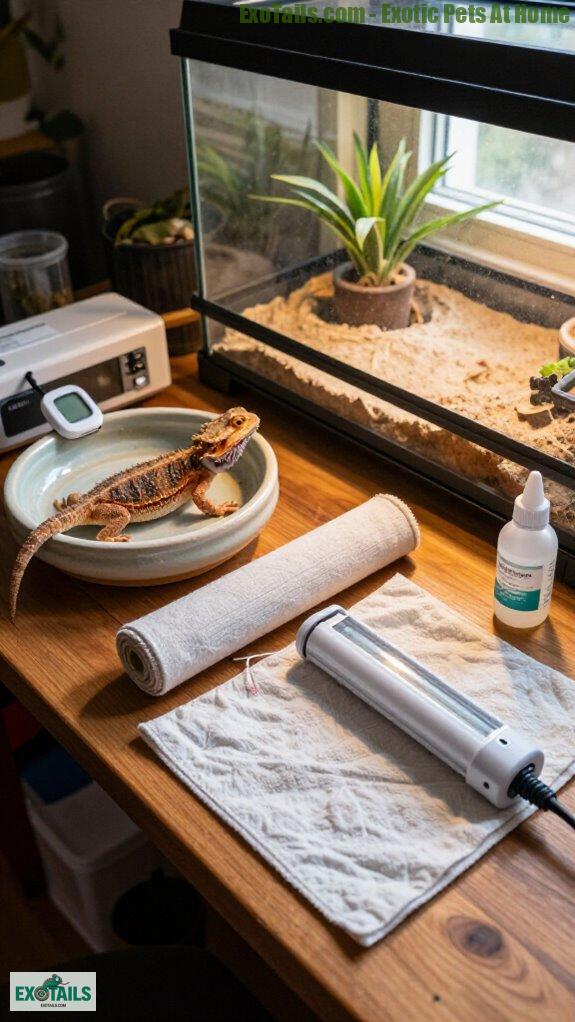
Bearded dragons thrive in controlled environments where stable temperatures directly impact breeding success. I use ceramic heaters for chilly nights, and a dimming thermostat to prevent spikes. Want humidity control during incubation? Get a sealed incubator with Hatchrite substrate. I’ve balanced vents in a wooden vivarium for steady temps and yes, my living room decor survived. For optimal daytime basking, I recommend halogen flood bulbs as a primary heat source in your enclosure setup.
FAQ
How Do I Safely Brumate Multiple Dragons Together?
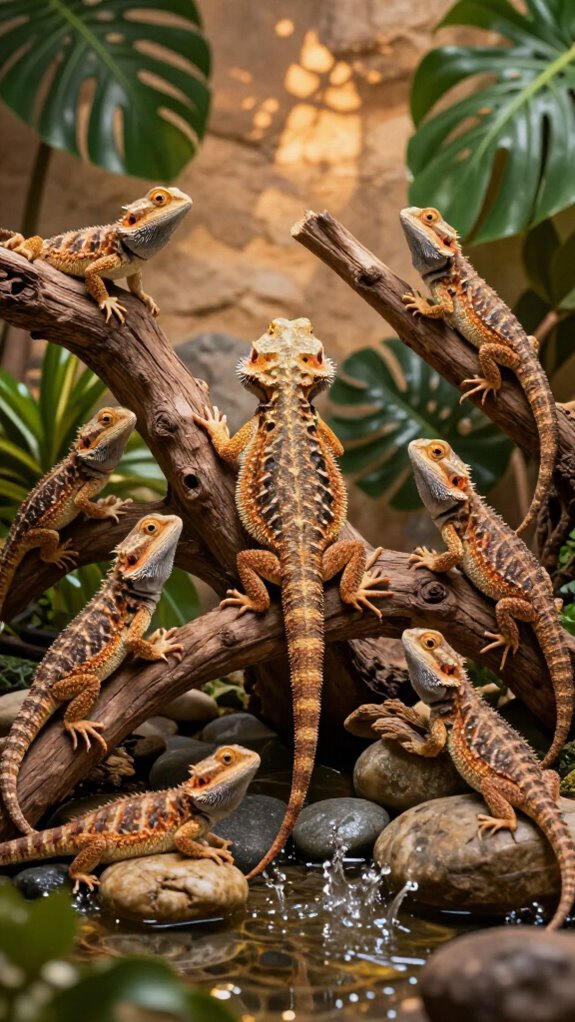
I’d separate dragons by size, monitor group dynamics closely, and create a consistent brumation environment with individual hides, stable cooler temperatures, daily checks, and quarantine sick animals—keeping records so everyone stays safe and stress-free.
Can Suboptimal Temps Cause Long‑Term Fertility Issues?
Yes — I’ve seen suboptimal temperature ranges harm fertility long-term; inconsistent temps can disrupt hormones, sperm quality, egg viability, and incubation effects, so I recommend strict monitoring, proper gradients, and controlled brumation to protect reproductive health.
How to Acclimate Newly Purchased Dragons Before Breeding?
I acclimate new dragons slowly: quarantine seven to thirty days, use gradual temperature and photoperiod shifts, provide environmental enrichment, monitor weight and behavior, handle minimally, and only pair for breeding once stress signs disappear and health checks clear.
Do UVB Intensity Changes Affect Breeding Success?
Yes — I believe UVB exposure can influence breeding cycles and fertility; I’ll guarantee consistent, appropriate UVB levels and gradual changes to avoid stress, keeping intensity stable to protect health and maximize safe breeding outcomes.
When Should I Separate Males After Aggressive Mating?
Separate males immediately after aggressive mating if aggression signs appear—biting, tail whipping, prolonged chasing. I monitor mating behavior closely, intervene quickly for safety, and isolate the male until both dragons calm and injuries are assessed.
References
- https://reptifiles.com/bearded-dragon-care/bearded-dragon-temperatures-uvb/
- https://www.reptilecentre.com/pages/info-bearded-dragon-care-sheet
- http://www.kingsnake.com/gladescs/bearded/
- https://www.rspca.org.uk/documents/1494939/0/bearded+dragon+care+sheet+(pdf+350kb).pdf/151bb6df-1c35-a484-6de8-bffed4985abf?t=1556100899951
- https://www.reptiles.swelluk.com/help-guides/a-complete-guide-to-bearded-dragon-temperature-and-heating/