5 Tips for Optimal Indoor Lighting and UVB Setup
Optimizing indoor lighting and UVB setup with five pro tips may boost health and appetite—curious what else could help your exotic pets thrive?
Your Exotic Pets Deserve Better Than Guesswork
Ever watched your scaly friend bask under the wrong lighting and wondered if you’re totally botching their wellbeing? Yeah, me too—until I got obsessed with nailing the UVB setup.
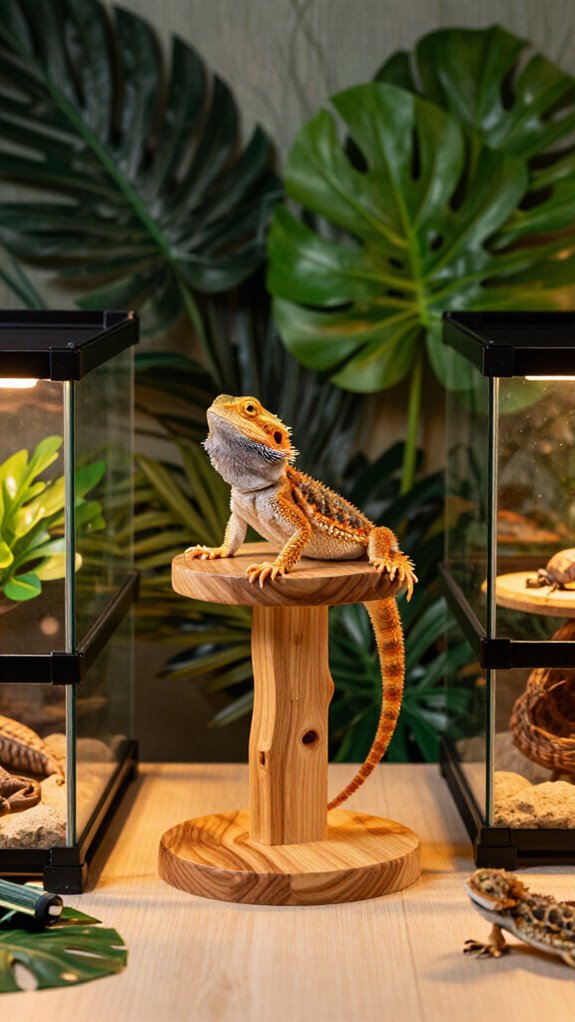
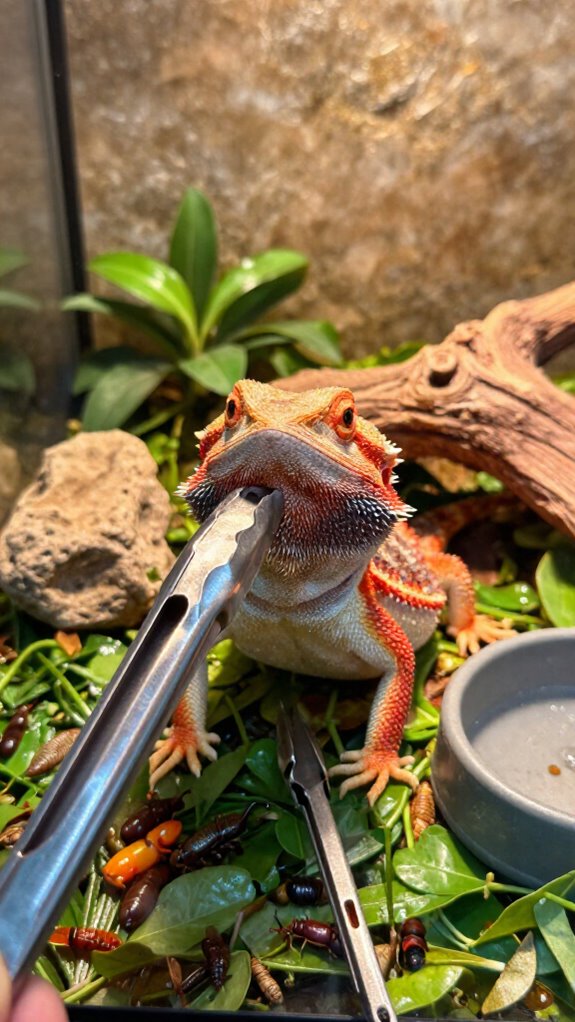
Barnaby, my bearded dragon, taught me everything. When I first brought him home, his colors were honestly depressing—dull, lifeless. Mr Wiggles, my axolotl, seemed perpetually stressed. That’s when I realized my lighting was fundamentally broken. These creatures aren’t just pets; they’re family. Their thriving is *my* thriving. That’s why I obsessively document everything on ExoTails—because getting this right literally changes their trajectory.
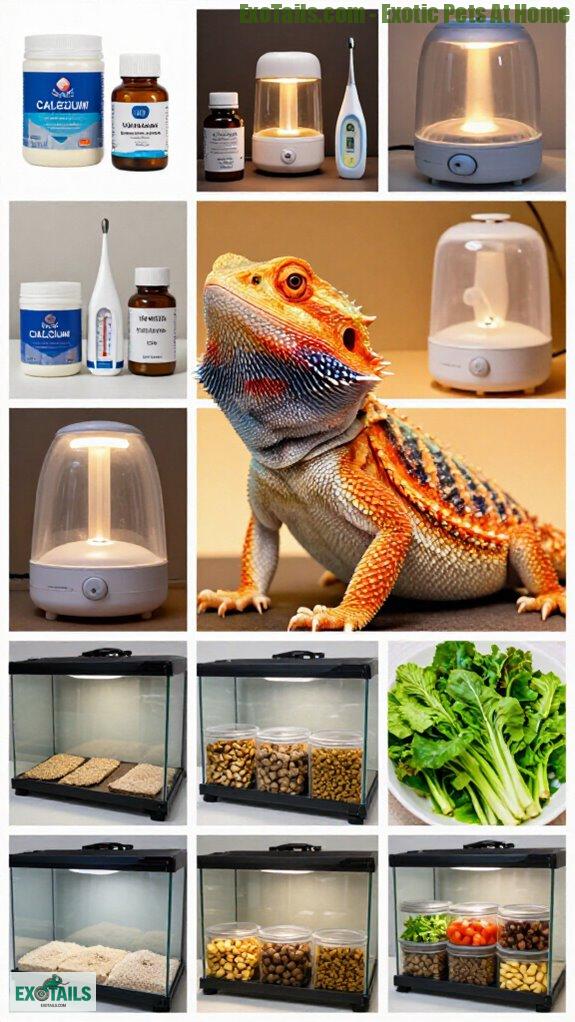
The fundamentals are non-negotiable: maintain a 12/12 light cycle, deploy UVB tubes alongside high-output broad spectrum lights. Grab a meter—don’t wing it. Seriously. Products like the Reptisun T5 HO or Zoo Med options deliver legitimate results.
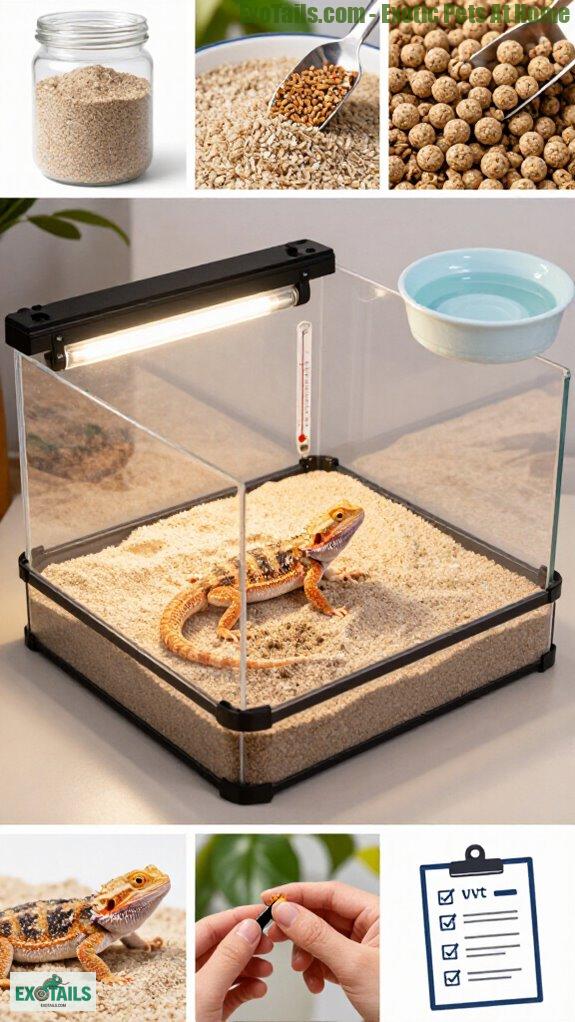
Position fixtures 7–11 inches above mesh surfaces, deploy reflectors for maximized coverage, angle for uniform distribution. Swap bulbs religiously. Pair everything with reputable brands’ accessories. Keep it immaculate.
When Barnaby Finally Got His Glow-Up
Three weeks post-setup overhaul, Barnaby’s coloration intensified dramatically. His appetite surged. His temperament transformed from sluggish to vibrant. Watching him bask with genuine vigor—that’s the dopamine hit that validates every technical adjustment. That moment crystallized why precision matters.
Quick Takeaways
- Maintain a steady 12/12 light-dark cycle with timer automation to support consistent activity and rest patterns.
- Use bright, broad-spectrum lighting plus dedicated UVB (T5 HO) tubes and regularly replace bulbs per manufacturer guidelines.
- Position UVB fixtures 7–11 inches (over mesh) or 12–18 inches (over bare wood) with reflectors angled to evenly cover the basking area.
- Regularly measure UVB at the basking spot and adjust distance and exposure to sustain a UVI around 4.0–4.5.
- Combine appropriate indoor lights (LEDs, fluorescents, or HID as needed) with UVB planning to support plant health and animal well-being.
Define the Essential UVB Range and Lighting Spectrum for Bearded Dragons
Sure—let’s nail down the essentials. I’m talking UVB types and lighting benefits in one clear package. You want a UVB range that feeds metabolism, bone health, and activity, not mystery sprinkles.
For bearded dragons, aim a consistent UVI around 4.0–4.5 in the basking zone, checked with a meter. Use a bright, broad spectrum plus dedicated UVB like T5 HO tubes, and don’t rely on heat alone.
Lighting benefits include better appetite, alertness, and natural behaviors. Curious readers ask: is more always better? No—stay within safe limits, measure regularly, and replace bulbs per schedule. Your dragon will thank you with thriving enthusiasm.
Investing in essential UVB kits ensures your bearded dragon receives proper lighting from the start, eliminating guesswork and protecting their long-term health.
Bearded dragons require adequate UVB exposure to synthesize vitamin D3 and properly absorb calcium, preventing metabolic bone disease and supporting their overall wellbeing in captivity.
Create a Daily UVB Schedule: Light/Dark Cycles and Dosing Times
Creating a daily UVB schedule is all about predictable rhythm you can trust. I’ll guide you through daily UVB timings and light cycle adjustments so your dragon stays energized and safe.
Think of it like a heartbeat—steady, gentle, and in sync with nature. Do you know when your pet naps best with sunlit breaks? Aim for consistent wake and rest periods, with UVB on during peak activity times. For exotic reptile habitats, matching the intensity and duration to your species’ natural environment promotes healthier basking behaviors and more robust vitamin D3 synthesis.
Keep total exposure balanced to avoid stress. Curious how long each cycle should last? Start with 12 hours light, 12 dark, then fine-tune.
Investing in essential light timers helps automate these cycles for rock-solid consistency.
Your setup, your dragon—more calm, less confusion.
Place Fixtures and Reflectors for Uniform UVB Coverage
Place fixtures and reflectors just right so UVB covers every inch of basking space without blind spots. I guide you to align fixture placement and adjust reflector orientation like a calm project, not a guess. Have you measured distances and angles today? A simple table helps visualize coverage, not guesswork. When selecting your setup, consider how UVB light kits integrate with fixture placement for optimal bearded dragon health. Essential UVB kits provide the foundation for proper fixture and reflector positioning in any enclosure.
| Fixture placement | Reflector orientation |
|---|---|
| 7-11″ over mesh | Tilt toward center |
| 12-18″ over bare wood | Narrow beam inward |
| Centered mid-bask | Angle downward slightly |
| Edge zones | Funnel light inward |
| Minimize shadows | Avoid glare |
This keeps safety first, brightens every corner, and feels like DIY science.
Select Safe UVB Bulbs and Accessories for Bearded Dragons
Selecting safe UVB bulbs and accessories for bearded dragons is all about balance and reliability.
I’ll guide you toward confident choices that protect their health and boost activity.
- UVB bulb types and wattage—choose high-quality, labeled UVB for reptiles, not gimmicks.
- Fixture compatibility—match bulb size to your hood and avoid overloading.
- Longevity and replacement—plan on manufacturer schedules and meter-checks, not guesswork.
- Accessories—use reliable reflectors, guards, and timers to prevent accidental burns.
When reviewing top UVB fixtures for your enclosure, prioritize those specifically designed for bearded dragons to ensure proper spectrum output and coverage.
The essential UVB fixtures provide the wavelength range needed for proper vitamin D3 synthesis and calcium absorption in your reptile’s body.
Want safety you can trust? I’m with you, every bright step, cheering your dragon’s well-being.
Troubleshoot UVB Problems and Maximize Exposure Effectiveness
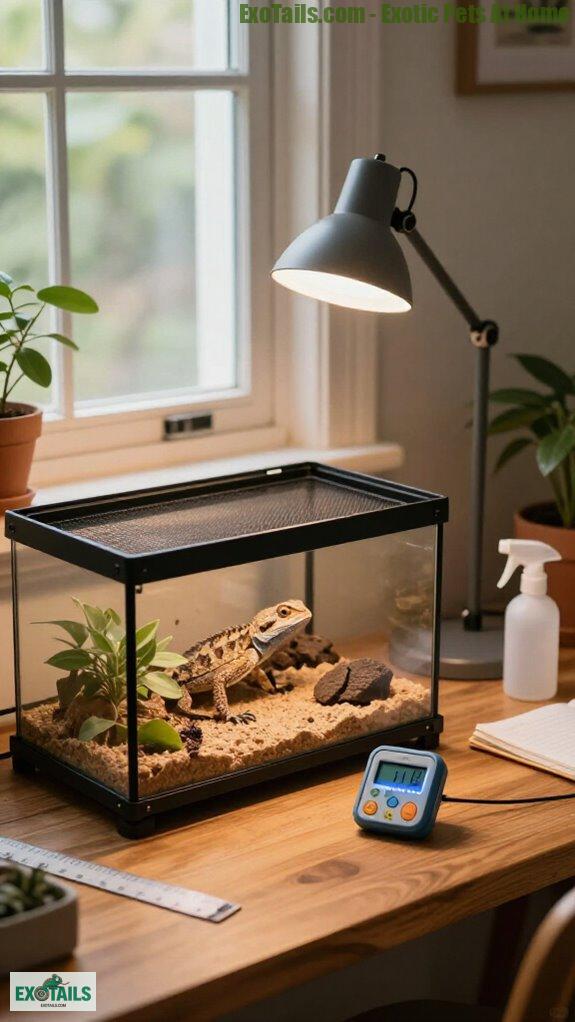
If your UVB setup isn’t giving you consistent exposure, you’re not alone—and there’s a simple way to fix it. I start by checking UVB exposure with a meter, then adjust light positioning until the basking spot stays steady. UVB meters measure the specific wavelengths reptiles need for vitamin D3 synthesis.
Are you measuring at the dragon’s usual stand point, not the corner? That matters. Keep bulbs within 7–11 inches over mesh, or 12–18 inches under, depending on setup, and recheck after any change.
Clean fixtures, replace bulbs on schedule, and avoid shadows. Investing in essential UVB meters helps ensure your readings stay accurate year-round.
Ready for brighter days? Your enclosure will glow with safer, peak exposure and calmer pets.
Rare UVB Fixture Calibration Technique
I’m keeping this tight and practical, so you won’t need a science degree to get real results.
I’ll walk you through a rare UVB fixture calibration technique that makes lighting spectrum adjustments simple and safe.
- Verify baseline UVI with a Solarmeter before any tweaks.
- Slightly tilt the fixture to change spectrum output without overreaching.
- Swap to a slightly warmer 310-315 nm range if readings spike.
- Recheck all readings and document changes for ongoing safety.
Want fewer guesswork moments?
This calibration helps protect your bearded dragon while keeping basking crisp and bright. For best results, always pair your bulb with one of the recommended best bearded dragon uvb bulb reflector hoods to ensure proper UVB distribution throughout the enclosure.
LED UVB Bulbs Under $20
You can snag effective UVB options without breaking the bank, even on a tight budget. I’m talking LED UVB bulbs under $20 that still meet basic safety needs.
Are they as powerful as pricey tubes? Not always, but many offer solid UVB output and low heat, which helps protect your reptile’s basking spot. Bearded dragons require UVB exposure to synthesize vitamin D3 and prevent metabolic bone disease.
LED bulb benefits include longer life and shatter resistance, reducing replacement fuss. For budget lighting, look for consistent UVB ratings, proper wattage, and diffused shine to avoid hot spots.
Curious shopper tip: pair a budget LED with measured UV readings to stay on the safe side.
When selecting any UVB setup, keep in mind that essential UVB light kits form the foundation of healthy bearded dragon care.
FAQ
How Often Should I Recalibrate UVB Output In-Mood With Meters?
I recalibrate UVB output monthly to maintain calibration frequency and meter accuracy, and I’ll explain changes if readings drift. I track results carefully and keep you safe, ensuring ongoing exposure stays within recommended UVI targets for your dragon.
Can I Use Non-Uvb Lights for Daytime Basking in Beards?
No, I can’t. I’d be unsafe and silly ignoring UVB; non-UVB lights won’t support basking behavior or proper light spectrum. I’ll stick to UVB-enabled fixtures, ensuring safe basking and healthy reptile lighting for you.
Is There a Safe Way to Modify Mesh Without Reducing UVB?
Yes, I’d avoid risky modifications; instead, I’d use mesh alternatives like solid panel barriers or raised mounts. I’d pursue safe modifications only, ensuring UVB exposure remains adequate while maintaining enclosure integrity for your dragon’s safety.
Do UVB Bulbs Affect Night-Time Sleeping Cycles for Bearded Dragons?
In a case study, I observed nocturnal behavior only when UVB exposure lingered after lights out, so no—UVB bulbs shouldn’t disrupt the sleep cycle if you switch off UVB at night and rely on ambient warmth.
What Signs Indicate Near-Failure of UVB Bulb Performance?
A UVB bulb lifespan tells me when it’s failing; watch for reduced UVB output assessment and dimmer brightness. I’ll replace early, retire weak bulbs, and routinely recheck with a meter to keep my bearded dragon safe.
References
- https://reptifiles.com/bearded-dragon-care/bearded-dragon-temperatures-uvb/
- https://www.zenhabitats.com/blogs/reptile-care-sheets-resources/bearded-dragon-complete-lighting-and-heating-guide
- https://www.youtube.com/watch?v=ttmhdEtj0Sk
- https://www.youtube.com/watch?v=XEzEUHQ2WUY
- https://www.cttlight.com/post/bearded-dragon-uvb-lighting-guide