Female Dragon Egg Laying: Complete Home Care Guide
Caring for your gravid bearded dragon? Discover safe lay box setup, stress-free handling, and recovery tips to ensure healthy eggs and a happy mom.
Female Dragon Egg Laying: Complete Home Care Guide
Your bearded dragon’s gravidity phase isn’t just biology—it’s a pivotal moment demanding meticulous environmental calibration and unwavering commitment.
I’ve navigated this labyrinth with Barnaby, my bearded dragon companion of six years, and Mr Wiggles, my axolotl confidant. Their wellbeing crystallized my passion for exotic husbandry, spurring me to launch ExoTails—my repository for evidence-based reptile care protocols. These creatures transformed how I perceive responsibility and stewardship.
When Barnaby Taught Me Everything About Gravidity
Last spring, Barnaby exhibited telltale indicators: distended abdomen, compulsive substrate excavation, behavioral restlessness. I deployed a premium lay box (ReptiBreeze substrate compound works phenomenally) and maintained 75-80°F ambient temps with humidity hovering 60-70%. The egg deposition succeeded flawlessly—eighteen viable ova. That moment crystallized how meticulous environmental orchestration directly correlates with reproductive outcomes.
The Core Protocol: What Actually Matters
Observe for hyperphagia cessation and frantic digging behaviors—these signal imminent oviposition. Furnish a substrate nest (minimum six inches depth) utilizing coconut husk or ReptiChip bedding. Minimize handling ruthlessly; her temperament deteriorates exponentially with disturbance.
Maintain steady thermogradients and hygrometric stability. Consider incubation via Inkbird or Herpstat technology, or leave eggs within-tank under controlled conditions.
Recovery requires calcium supplementation and nutritional rehabilitation post-lay.
Quick Takeaways
- Provide a secure, private lay box with six inches of damp EcoEarth-sand substrate for comfortable digging and turning.
- Reduce handling, offer gentle hydration, and monitor breathing and packing behavior during active egg laying.
- Maintain steady ambient warmth and UVB, avoiding hot spots while keeping nesting area slightly warmer than rest of enclosure.
- After laying, offer hydrated greens, calcium-rich feeders, daily weights, and soft palpation to monitor recovery.
- Prepare quality incubator, hygrometers, and nesting tools to collect, store, and incubate eggs safely if needed.
Prepare Your Bearded Dragon and Nest Box Before Laying
Before she even thinks about laying, get your act together and set up a proper nest box—because trust me, an angry, pregnant dragon doesn’t care if your living room matches your chic, minimalist decor (I’ve learned that the hard way with a cactus and a startled iguana).
I prep a sturdy lay box with six inches of dampened egg substrate, like EcoEarth mixed with play sand, to keep moisture steady, and I add gentle heat and UVB. A laying bin should be large enough for her to fully turn around and dig comfortably.
Want safety? Check compactness, prevent collapse, and provide privacy.
Stay nearby, but let her do her job—unless your cactus objects again.
Breeding season is easier when you invest in quality nesting boxes designed specifically for reptile reproduction.
Recognize Nesting Behavior and Signs She’ll Lay Soon
When your girl starts acting like she’s auditioning for a construction crew, pay attention—those early nesting behaviors tell you she’s getting ready to lay. Proper bearded dragon breeding requires understanding these critical pre-laying signals to ensure successful egg development.
You’ll notice frantic pacing, lots of digging behavior, and an engorged belly with bumps, classic nesting behavior and clear laying signs. She may eat less and get grumpier, so ask yourself: is she digging a lay box or redecorating?
I’ve seen this with other exotics, and it’s oddly like home decor chaos.
Offer a secure lay box, monitor her closely, and keep handling minimal, for her safety and your peace of mind. Maintaining a calm acoustic environment during this vulnerable period can help reduce stress that might otherwise disrupt the process.
Care During Egg Laying: Temperature, Hydration, Handling
While she’s digging like she’s starting a minimalist landscaping project, I stay vigilant about three things: temperature, hydration, and handling, because small changes can stress her or doom a clutch.
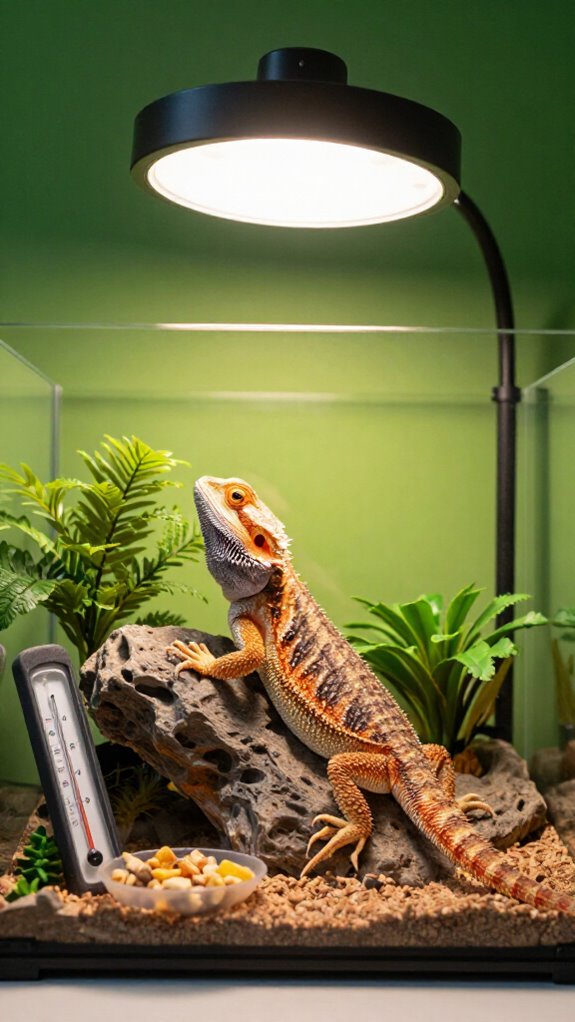
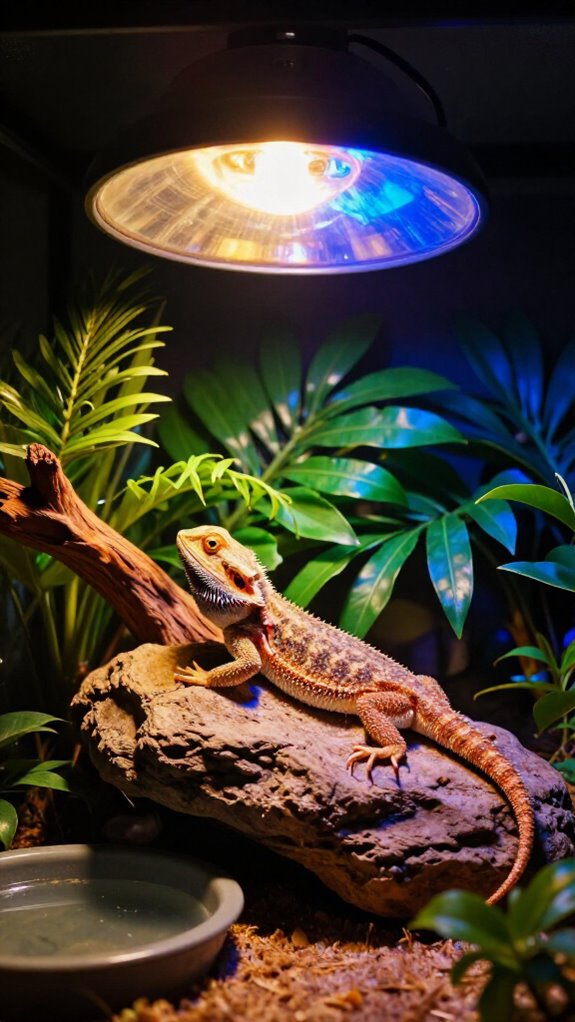
- I monitor temperature regulation closely, keeping tank temps steady, using a reliable thermometer, and avoiding hot spots that could cook eggs. A stable thermal environment requires an adequate enclosure size to prevent dangerous heat concentrations in smaller spaces.
- I use gentle hydration techniques, offering moist hides, shallow water dishes, and misting, without forcing fluids.
- I limit handling, only brief checks, because stress prolongs laying.
- I watch breathing and packing behavior, ready to act if she seems distressed—yes, even my throw-pillows–meets–bearded–dragon aesthetic learned me patience.
- Unlike breeding season temperature requirements, egg-laying females need consistent ambient warmth rather than the seasonal cooling that triggers reproductive cycling.
Decide and Act: Incubate Eggs at Home or Leave in the Tank
You’ve kept an eye on her temps, hydration, and stress like a pro, and now you’ve hit the fork in the road: do you remove the clutch and incubate at home, or leave the eggs in the tank and let nature run its course?
I’ll weigh safety first: moving eggs to a controlled incubator gives steady humidity and temps, which boosts hatch rates, but needs proper incubation methods and careful egg storage, no sudden jostles.
Want less fuss? Leave them, but monitor closely, and be ready to intervene if conditions swing.
I’ve done both—think practical, not dramatic, and you’ll be fine.
Bearded Dragon Recovery After Laying: Food, Checks, Prevention
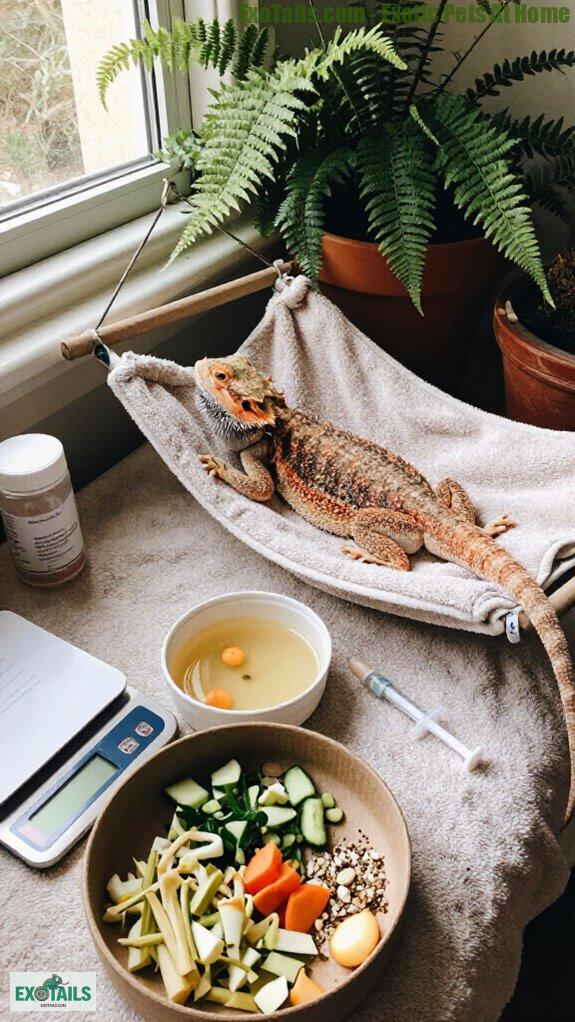
Because she’s just been through a marathon of digging and egg-packing, I always check a laying female like I’m checking on a long-haul traveler—slow, gentle, and with snacks ready.
I watch for behavioral changes, ask myself, is she lethargic or just sassy? I offer hydrated veggies and calcium-rich feeders for post laying nutrition, small and frequent.
- Soft hydration: dilute fruit puree, syringe if needed.
- Calcium check: dust insects, monitor posture.
- Wound and weight checks: gentle palpation, scale daily.
- Vet backup: fever, refusal, or odd discharge.
Yes, my fern-filled living room doubles as reptile rehab.
I also rotate in essential calcium supplements to prevent depletion from the demanding reproductive cycle.
During this recovery period, maintaining optimal vitamin supplementation helps support her immune system and overall healing after the strenuous egg-laying process.
Giant Forest Dragon Nesting Rituals
If a Giant Forest Dragon is ready to nest, I notice it immediately—she pads around the enclosure like a tiny bulldozer, trampling plants and rearranging decor until she finds the perfect spot, and yes, she’s far savvier at interior design than my fern collection.
I watch her ritual: frantic digging, careful testing of substrate, circling and pawing until the hole feels right.
I offer a secure lay box, damp substrate, and quiet time, because stress harms eggs.
Want specifics? Six inches of damp sand works well, check temperature and privacy, and resist interfering unless she’s distressed.
Trust her instincts—mostly.
Best Products to Use
Now that we’ve got her nesting ritual sorted and a comfy lay box in place, let’s look at the actual gear you’ll want on hand.
- High-quality damp play sand or EcoEarth, as nesting materials, sterile, easy to pack, safe for her digging habits.
- Reliable incubator with thermostat, temp sensors, and clear egg monitoring ports, so you can watch without fuss.
- Moisture-proof hygrometer and small spray bottle, for precise humidity control near 75%, which eggs need.
- Soft nesting scoops, gloves, and a low-watt heat mat, gentle tools that reduce stress during checks.
Want peace of mind? I’ve used these in my own eclectic terrarium setups, trust me.
When selecting your equipment, invest in one of the top-rated incubators designed specifically for reptile eggs to ensure optimal hatch rates. Proper incubation temperature is critical for determining the sex of the hatchlings and overall egg viability.
FAQ
Can a Female Lay Eggs Without Ever Being With a Male and Later Produce Fertile Clutches?
Yes — I know parthenogenesis feasibility is real: a female can lay unfertilized eggs without a male, and later produce fertile clutches only if she mates afterward; don’t trust egg fertilization myths, handle eggs cautiously.
How Can I Tell if a Buried Egg Is Viable Without Risking Damage?
I can assess egg viability using non invasive methods: gently candling with a dim flashlight to look for veins and embryo movement, monitoring weight and humidity, and observing surface texture—avoiding digging to prevent stress or damage.
Is It Safe to Candle Bearded Dragon Eggs to Check Development?
Yes—I wouldn’t recommend routine candling; about 40–90 days is typical incubation. Using careful candling techniques can reveal embryo development, but I’ll only candle briefly, gently, and rarely to avoid stressing or overheating eggs.
Should I Separate Hatchlings From the Mother Immediately After Hatching?
No—I don’t separate hatchlings immediately; I monitor hatchling bonding and maternal instincts for a short period, ensuring safety, then remove babies to individual secure enclosures once they’re active and mom shows no aggression or neglect.
Can Constant Handling During Laying Cause Long-Term Stress or Reproductive Issues?
Yes — I think constant handling during laying increases stress factors and can harm reproductive health; I recommend minimal disturbance, gentle monitoring, and providing a quiet, secure lay box so she can dig and deposit eggs without added pressure.