What Is the Ideal Temperature Gradient for Exotic Pets?
What is the perfect temperature gradient for exotic pets? Discover the essential setup that keeps your scaly friends happy and thriving!
The ideal temperature gradient for exotic pets is essential for their comfort and well-being. Most reptiles need a warm basking spot of about 80-90°F, along with cooler areas around 75°F. This combo keeps them happy and prevents crankiness. Trust me, I’ve learned the hard way that one heating source just won’t cut it. By providing a thoughtful temperature gradient, you’re paving the way for a super cozy habitat! Let’s explore how to nail this setup together!
Quick Takeaways
- Create well-defined warm and cool areas in the habitat to cater to various species’ needs for thermoregulation.
- Ensure leopard geckos have a temperature range of 80-90°F while ball pythons require 75-80°F for optimal comfort.
- Use reliable thermometers to consistently monitor and maintain temperature gradients for your exotic pets.
- Incorporate varied heating sources like heat mats and lamps to provide consistent warmth across the habitat.
- Regularly check and calibrate thermometers to prevent distress caused by unnoticed temperature fluctuations.
Understanding Temperature Gradients in Reptile Habitats
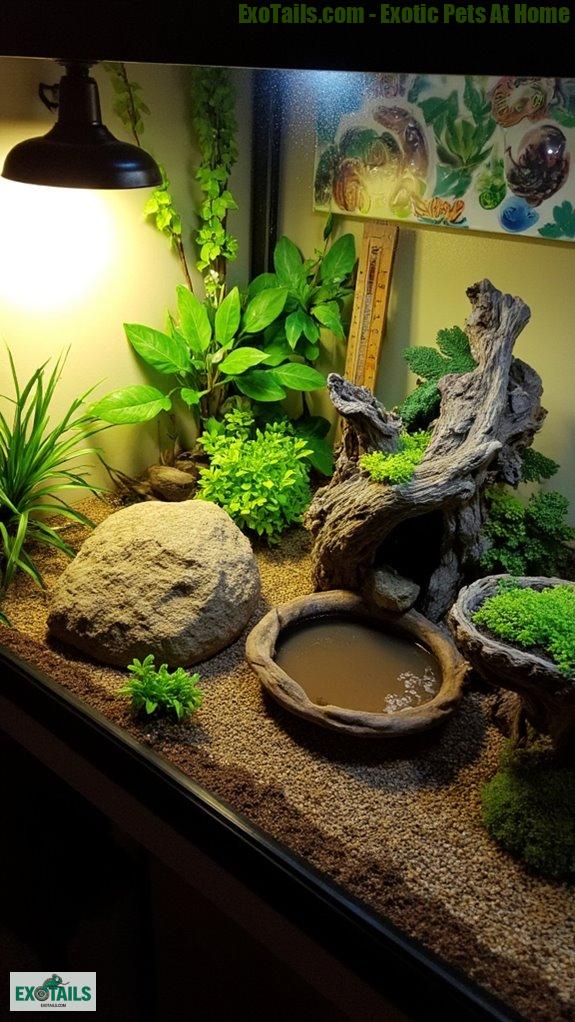
When it comes to creating the perfect habitat for your scaly companions, understanding temperature gradients is essential. You can’t just toss a lizard into a cold box and hope for the best. You need proper temperature zones to mimic their natural environment. In my habitat design dreams (yes, I’ve spent way too many hours on this), I always consider how significant it’s for them to have warm spots and cooler areas. A well-planned gradient not only keeps them comfy, but it also promotes their health. For instance, creating temperature zones that reflect their native habitats is crucial for their overall well-being. After all, a happy reptile makes for a happy owner, right?
The Role of Basking and Cooler Areas

Basking and cooler areas are like the peanut butter and jelly of a reptile habitat—they just work better together! Creating a balanced space lets your pets bask as they please, while also retreating to cooler zones when they need to chill. Isn’t it amazing how a little variety makes a big difference?
| Feature | Description |
|---|---|
| Basking Preferences | Warm areas for sunbathing |
| Cooling Zones | Cooler spots for relief |
With my experience in exotic pets and home decor, I can assure you that understanding these zones will elevate your pet’s habitat dramatically!
Ideal Temperature Ranges for Popular Exotic Pets

Finding the right temperature for your exotic pets can feel like searching for a needle in a haystack, but I promise it’s worth it!
Each species has its own temperature preferences, from the warm-hearted leopard gecko thriving between 80-90°F to the cool, calm ball python comfortable around 75-80°F.
Knowing these species variations guarantees your pet feels right at home.
Too cold, and you’re in for a cranky critter; too hot, and they might just plot their escape!
At ExoTails, I’ve learned that creating the perfect habitat combines decor and comfort, painting a happy picture for both pets and owners alike! Additionally, providing a proper heating source is essential to mimic natural desert environments for optimal pet health.
Monitoring and Maintaining Temperature Gradients

Maintaining the perfect temperature gradient in your exotic pet’s habitat can seem like an endless juggling act, but it doesn’t have to be a circus performance!
With temperature monitoring tools and a bit of diligence, you can easily master this art.
Here are some tips to help you maintain a balanced environment:
- Invest in a reliable thermometer for consistent readings
- Make habitat adjustments slowly, to avoid stressing your pets
- Use heat mats or lamps for precise heating
- Regularly check temperature fluctuations to guarantee stability
Creating a comfortable habitat is essential because noise reduction techniques can help minimize stress for your pets.
With my experience in exotic pets and home decor, I know a little control can go a long way in creating a cozy space!
Seasonal Adjustments for Temperature Control
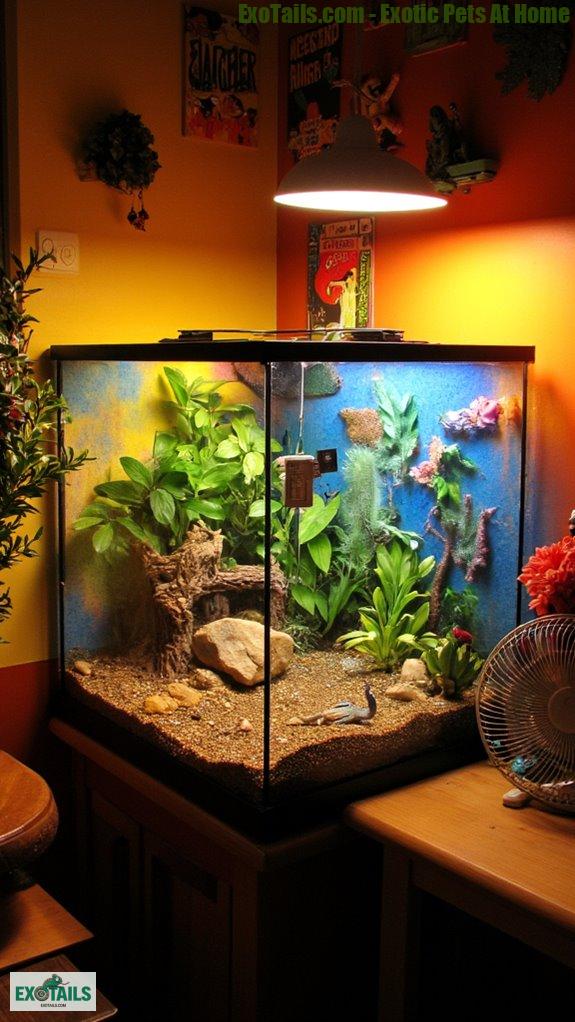
As the seasons change, your exotic pet’s climate needs shift too, making it essential to adapt quickly.
Have you thought about the seasonal adaptations necessary for your critters? In winter, I tweak the heating to keep things cozy, while in summer, I focus on cooling.
It’s all about climate considerations—those changes can affect your pet’s overall health.
I recall when I first decorated my home and my gecko felt too chilled.
Trust me, managing these little details means happier pets.
With the right adjustments, you gain the perfect environment, and your exotic buddy will thank you for it!
Common Mistakes in Temperature Management

While it’s easy to overlook, some common mistakes in temperature management can really throw off your exotic pet’s happiness and health.
Overlooking temperature management can seriously affect your exotic pet’s well-being and happiness.
Trust me, I’ve learned the hard way!
Here are things to avoid:
- Ignoring temperature fluctuations; they can stress your pets out.
- Over-relying on just one type of heating element; variety is key!
- Forgetting to regularly check and calibrate thermometers; they can lie!
- Not providing a temperature gradient; your pet needs options.
Get control of your habitat!
When I designed ExoTails, I made sure to focus on these aspects so you can create the ideal environment effortlessly.
Multi-Level Habitat Design

When you think about your exotic pet’s happiness, how often do you envision a multi-level habitat?
Creating habitat elevation can transform your pet’s world, adding excitement and enrichment. Think about how climbing can keep them fit and engaged.
Plus, with different levels, you can strategically place heat sources to optimize heat retention, ensuring your pet stays cozy where they prefer.
I’ve designed many habitats, blending my love for exotic pets with home decor principles. It’s all about balance—style and function.
Questions and Answers
How Do Temperature Gradients Affect Exotic Pet Behavior?
Envision a sunbather seeking ideal warmth; temperature preferences shape creatures’ behaviors. By observing my exotic pets under various conditions, I realize their actions reveal their comfort levels, guiding me toward optimal care and control in their environment.
Can Temperature Gradients Help With Breeding Exotic Pets?
I’ve found that controlling temperature gradients is essential for breeding success in exotic pets. By providing ideal temperature control, I can create conditions that encourage healthy mating behaviors and improve the chances of viable offspring.
What Are the Signs of Improper Temperature Gradients?
I’ve noticed improper temperature gradients can lead to stress and health issues for my pets. Signs include lethargy, abnormal behavior, and poor appetite, highlighting the importance of understanding each species’ temperature regulation and habitat requirements.
Are There Species That Thrive Without Temperature Gradients?
I’ve found that most species aren’t happy without temperature gradients. Their temperature sensitivity often dictates behavior and health. Yet, some adaptable types manage well in stable environments, but I wouldn’t risk it for my pets.
How Do Temperature Gradients Influence Escaped Exotic Pets?
Ah, the thrill of escapology! When exotic pets escape, their survival strategies hinge on temperature gradients. Without them, it’s like throwing a fur coat into a sauna. Control your pets’ environment, or chaos reigns!