What’s the Best Way to Track Dragon Weight?
How often should you weigh your bearded dragon to catch health problems before they become serious?
Ever noticed your scaly bestie looking a tad lankier than usual? That’s your gut telling you something’s off.
—
I’m obsessed with my bearded dragon Barnaby and my axolotl Mr Wiggles—they’ve taught me everything about reptile wellness. Over five years of caring for these creatures, I’ve documented their journeys on my blog ExoTails. Watching Barnaby thrive after nearly losing him to malnutrition? That’s what ignited my passion for tracking reptile vitals meticulously.
—
The Monday Morning That Changed Everything
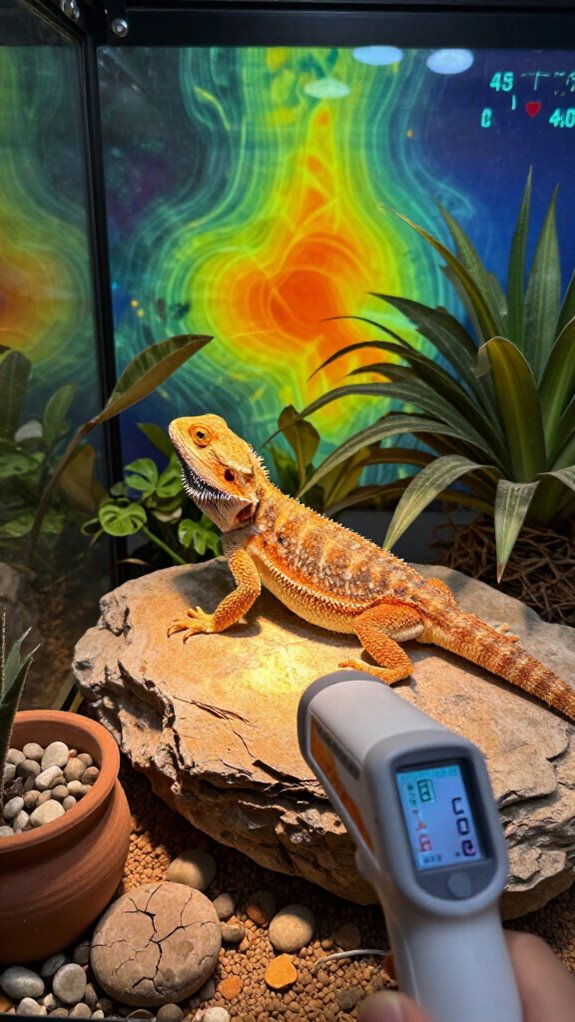
Last spring, I noticed Barnaby’s weight plummeting 12% in two weeks. My heart absolutely sank. Armed with my Reptisun scale—a game-changer with its precision tare function—I caught what would’ve spiraled into something catastrophic. Temperature fluctuations were sabotaging his metabolism. This near-miss galvanized my commitment to weekly weigh-ins using a Dubia roach holder for his comfort.
—
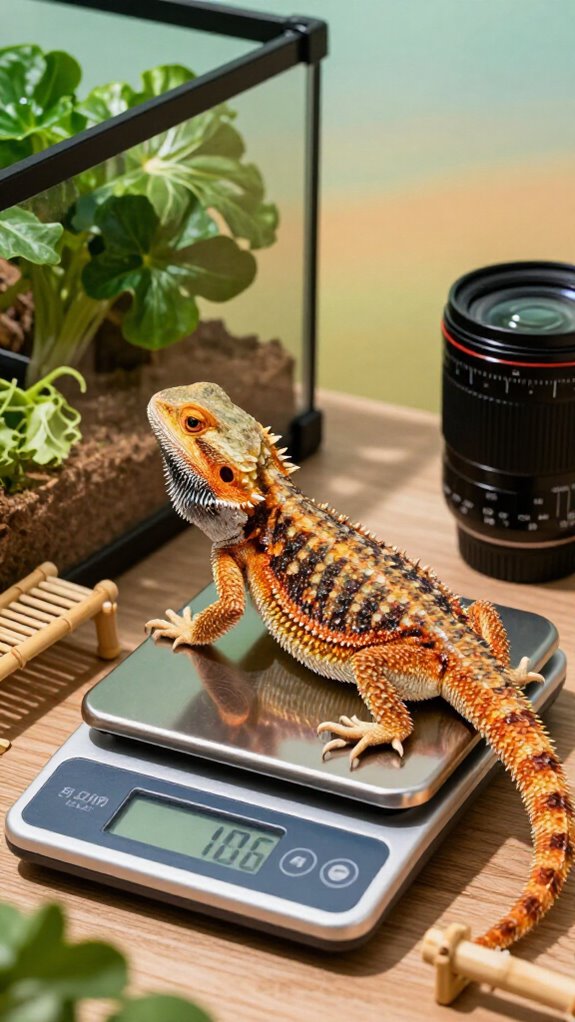
Deploy a digital scale equipped with tare capabilities—non-negotiable. Weigh weekly, same day. Hatchlings: 4-6g. Adults: 400-550g+. Any 10% deviation? Investigate immediately. Compare against age benchmarks obsessively.
Record everything. Appetite shifts, environmental tweaks, everything matters.
Your vigilance prevents tragedy. Trust the data.
Quick Takeaways
- Use a digital gram scale with tare function and plastic holder for accurate, consistent weight measurements of your dragon.
- Establish a weekly weighing routine on the same day to track growth patterns and detect health issues early.
- Compare measurements against age-based benchmarks: hatchlings weigh 4-6g, adults 400-550g+, and document findings in a health journal.
- Monitor for weight loss exceeding 10%, rapid gains, or fluctuations; consult a veterinarian if issues persist despite diet adjustments.
- Track weight alongside temperature readings and appetite changes, as temperature regulation directly impacts feeding behavior and overall health.
Choose a Scale for Accurate Dragon Weight Tracking
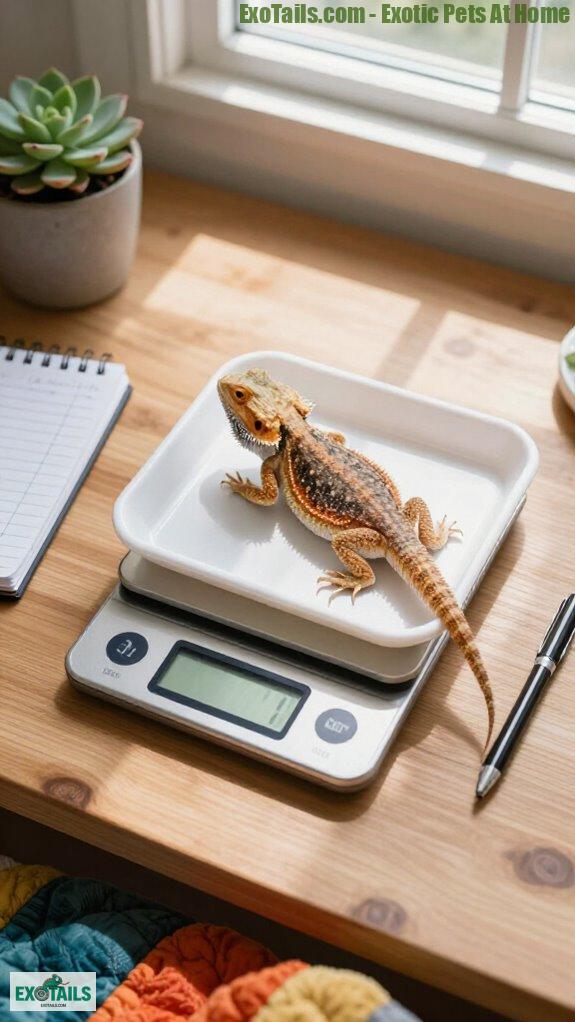
If you’ve ever tried weighing a squirmy bearded dragon on a kitchen scale meant for measuring flour, you’ll quickly discover why precision matters.
I recommend investing in a digital gram scale with a tare function—it’s genuinely a game-changer. This scale type zeroes out your holder’s weight automatically, giving you accurate readings every single time. Digital gram scales designed specifically for reptiles provide the precision needed for proper health monitoring.
I’ve learned that basic kitchen scales simply don’t cut it for reliable weight accuracy. For consistently reliable measurements, you’ll want to choose from the Top Digital Scales for Your Bearded Dragon to ensure proper accuracy.
Grab a plastic holder or tray to support your dragon comfortably. Your reptile deserves proper support without tail-touching shenanigans.
Trust me, those few dollars spent on quality equipment beats guessing games entirely.
Establish a Weekly Weighing Routine
Once you’ve got your digital gram scale and holder ready to go, the real magic happens when you actually use them—consistently, every single week.
Here’s the thing: weighing frequency matters tremendously for catching health issues early. I’ve learned this the hard way with my collection of scaled friends over the years. Many experienced keepers reference bearded dragon care books to establish proper monitoring protocols from the start. Essential reads provide detailed guidance on interpreting weight fluctuations that could signal underlying problems.
Pick the same day weekly—say, Monday mornings—and stick to it. This consistency gives you reliable data. Use proper weighing techniques every time: zero your scale, support your dragon fully, and record that number immediately.
Weekly tracking reveals patterns you’d totally miss otherwise.
Track Growth Rate, Body Condition, and Appetite
Your growth rate tells you if your scaled buddy’s on track for their age. I compare my bearded dragon’s weekly measurements against growth benchmarks—hatchlings at 4-6g, juveniles hitting 20-400g, adults stabilizing around 400-550g+. Keeping a detailed health journal helps identify patterns and catch potential issues early. Reviewing essential health journals for bearded dragons can provide additional guidance on what metrics matter most for long-term wellness tracking.
| Age Group | Weight Range | Length | What to Expect |
|---|---|---|---|
| Hatchlings | 4-6g | 3 inches | Rapid growth begins |
| Babies | 4-20g | 3-9 inches | Weekly gains visible |
| Juveniles | 20-400g | 8-24 inches | Growth plateaus gradually |
| Adults | 400-550g+ | 16-24 inches | Maintenance weight |
Appetite tracking matters too—decreased eating signals stress, illness, or brumation. I’ve noticed my dragon’s appetite dips during temperature changes, affecting growth. Consistent weight plus healthy eating? That’s your green light.
Recognize Weight Patterns That Signal a Vet Visit
Tracking weight trends reveals what consistent monitoring can’t always show you at first glance—the subtle red flags that mean your scaled buddy needs professional help.
I’ve learned that weight loss exceeding 10% signals trouble, while rapid weight gain can indicate overfeeding or illness. Your dragon’s normal range keeps them thriving, so deviations warrant attention.
Notice weight fluctuations during brumation? Expected. But consistent drops? That’s your vet-visit cue.
Health indicators like appetite changes paired with unusual weight patterns scream “professional help needed.”
I’ve found that tracking weekly prevents surprises, catching problems early when treatment’s easiest and most effective.
Adjust Diet Based on Weight Trends
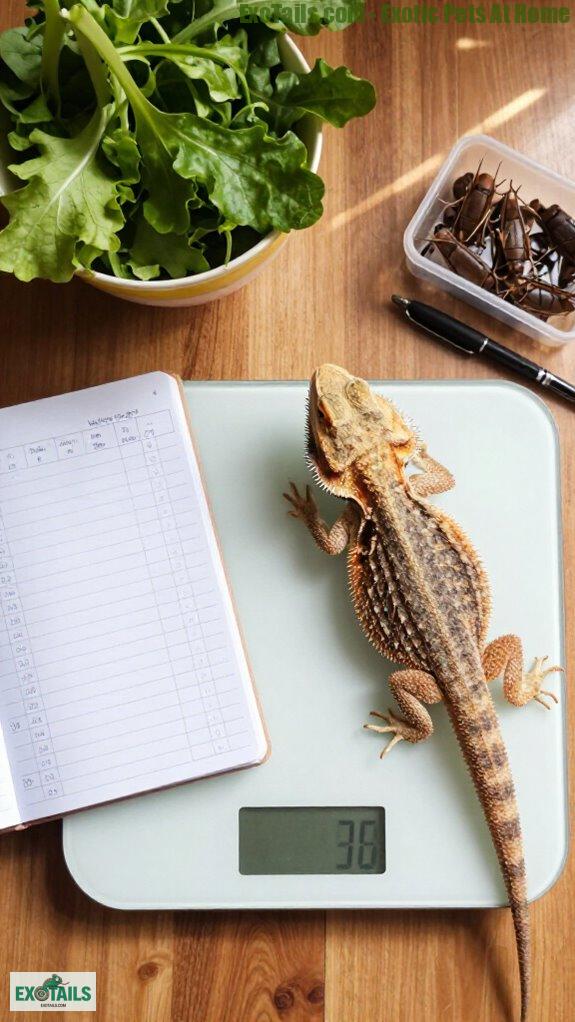
When your weekly weigh-ins show a dragon that’s consistently climbing or dropping on the scale, it’s time to rethink what’s going into their bowl—because diet adjustments are how you’ll keep those numbers in the sweet spot.
Is your bearded dragon gaining too fast? Scale back insects and boost dietary fiber through leafy greens like collard greens, mustard greens, and squash, which rank among the top vegetables for your bearded dragon’s diet.
Gaining too slowly? Increase protein sources like crickets and dubia roaches.
I’ve learned that juveniles need more insects than adults; it’s not rocket science, just smart feeding. Track what you’re offering alongside those weight logs.
Your dragon’s growth chart tells the story—listen to it.
Feeding frequency also matters, as younger dragons need meals more often than mature ones to support healthy weight development.
When Dietary Changes Aren’t Enough: Contact Your Vet
Sometimes diet tweaks alone won’t budge that scale, and I’ve been there—adjusting crickets and greens week after week, only to watch my bearded dragon plateau or keep dropping weight despite my best efforts.
That’s when veterinary consultations become your secret weapon.
I’ve learned the hard way that persistent weight issues signal something deeper: metabolic problems, parasites, or illness hiding beneath those scales.
Your vet checks what you can’t see.
Don’t skip this step—dietary adjustments work great for healthy dragons, but struggling reptiles need professional diagnosis.
After all, what good’s a perfectly decorated terrarium if your dragon’s health spirals?
Specialized Reptile Body Condition Scoring
Beyond the numbers on your scale lies an essential skill that separates casual dragon keepers from truly invested ones: body condition scoring. I’ve learned that weight assessment alone doesn’t tell the whole story—your dragon’s appearance matters equally. Multiple handling sessions with different people help you observe your dragon’s body condition from various angles, as familiar dragons show their true physical state more readily when comfortable.
Here’s what I evaluate:
- Rib visibility—subtle definition shows healthy dragons, not protruding bones
- Tail thickness—fat storage indicates proper nutrition and reserves
- Spine prominence—gentle bumps are normal; sharp ridges signal concern
When I combine regular weighing with visual body scoring, I catch problems early. Think of it as reading between the lines of those scale numbers. Your dragon’s physique reveals what raw data can’t. Regular monitoring also helps you spot early signs of scale rot prevention, which can affect body condition before weight changes become apparent.
Digital Reptile Scales
Three features make a digital reptile scale worth its weight in gold: accuracy, ease of use, and the tare function that’ll save you from math headaches every single time you weigh your dragon.
I’ve learned that investing in a quality gram scale transforms your monitoring routine. The accurate tare function lets you zero out your holder’s weight instantly, giving you precise readings without calculator frustration. Digital scale features matter tremendously when tracking growth patterns weekly. Just as you would invest in digital thermometer precision for your bearded dragon’s enclosure, prioritizing accuracy in your scale ensures reliable health monitoring. When selecting monitoring equipment, remember that top digital thermometers serve equally critical roles in your dragon’s health tracking system, as temperature regulation directly impacts appetite and weight management cycles that your scale will measure.
| Feature | Benefit | Why It Matters |
|---|---|---|
| Gram Precision | Detects tiny changes | Catches health issues early |
| Tare Button | Eliminates holder weight | Stress-free accurate readings |
| Large Display | Easy number visibility | Quick, safe weight checks |
| Portable Design | Weighs anywhere safely | Convenient home monitoring |
FAQ
How Do I Subtract Holder Weight From Total Scale Reading for Accurate Dragon Weight?
I’ll reveal the vital step you’re missing: zero your scale with the empty holder first. This holder calibration automatically subtracts its weight, eliminating fluctuation errors and giving you your dragon’s true weight instantly.
What Colored Pens Should I Use to Organize Different Types of Weight Log Entries?
I recommend you use color coding with different pen types: red for feeding records, blue for weight entries, and green for health notes. This system helps you quickly spot patterns and safely monitor your dragon’s growth trajectory.
How Often Should I Weigh My Dragon During Brumation or Hibernation Periods?
I’d weigh your dragon weekly during brumation to track brumation weight fluctuations and monitor dragon health. This schedule helps you catch dangerous weight loss early, ensuring you’ll spot problems before they become serious.
Can I Use a Kitchen Scale Instead of a Digital Gram Scale for Weighing?
I wouldn’t recommend using a kitchen scale for your dragon. Kitchen scale accuracy isn’t reliable enough for monitoring small weight changes. You’ll get better results with a digital gram scale comparison—it’ll give you the precision you need to catch health issues early.
What’s the Ideal Room Temperature When Weighing My Bearded Dragon for Consistent Results?
I’ll stabilize your dragon’s weight like anchoring a ship—maintain 75-85°F room temperature. This ideal heating range guarantees weight stability during measurements, preventing temperature fluctuations that skew results and compromise your safety monitoring protocol.