Best Ways to Prevent and Treat Scale Rot
Overlooking scale rot in bearded dragons leads to devastating consequences—but these proven prevention methods work.
Scale rot isn’t just a minor inconvenience—it’s a silent saboteur that decimates reptile health when you’re not vigilant. Let me illuminate why this condition demands your immediate attention.
I learned this the hard way with Barnaby, my beloved bearded dragon. Watching him battle scale rot was heartbreaking. That’s precisely why I obsessively document prevention strategies on ExoTails—my passion project dedicated to exotic pet wellness.
My axolotl companion, Mr Wiggles, taught me that moisture management transcends species boundaries. These creatures aren’t just pets; they’re family.
When Barnaby’s Scales Started Betraying Him
I noticed Barnaby’s underbelly developing that telltale discoloration during routine handling. My stomach sank. I’d maintained pristine conditions—or so I thought. The humidity was creeping toward 45%, my substrate choice proved suboptimal, and my laziness with spot-cleaning compounded everything. That moment crystallized my mission to help others avoid this nightmare.
Prevention obliterates complications. Maintain humidity between 30-40% with paper towel substrates. Implement daily spot-cleaning protocols using F10SC antiseptic—it’s non-negotiable.
Your basking apparatus should reach 100-110°F, facilitating natural desiccation. Incorporate calcium-rich supplementation strategically.
Early detection? You’re golden. Late-stage intervention demands veterinary expertise immediately. Don’t procrastinate—this condition escalates catastrophically.
Quick Takeaways
- Maintain humidity levels at 30-40% and use paper towels or reptile carpet to prevent moisture buildup and bacterial growth.
- Establish a temperature gradient with a 100-110°F basking spot and 75-85°F cool side for natural drying and health.
- Perform daily spot-cleaning and weekly deep-cleaning with antiseptic products like F10SC or Chlorhexidine to prevent infection.
- Consult a reptile veterinarian immediately if scale rot symptoms appear to minimize complications and ensure proper treatment.
- Monitor scales daily post-treatment and maintain pristine enclosure conditions with calcium-dusted insects for optimal recovery and prevention.
Recognize the Early Signs of Scale Rot in Your Bearded Dragon
Because scale rot progresses quickly—and can turn from manageable to serious in just weeks—catching it early is genuinely your superpower as a bearded dragon owner.
Watch for early symptoms like brownish scale discoloration on your dragon’s belly (where they spend most time scooting).
Flaky skin? That’s your red flag.
Notice raised or pitted scales, especially near the legs and tail?
Don’t ignore lethargy or appetite loss either. These behavioral shifts suggest something’s brewing underneath.
I’ve learned from my exotic pet experience that belly scales tell the real story—they’re basically your dragon’s health report card.
Set Up the Right Tank Environment
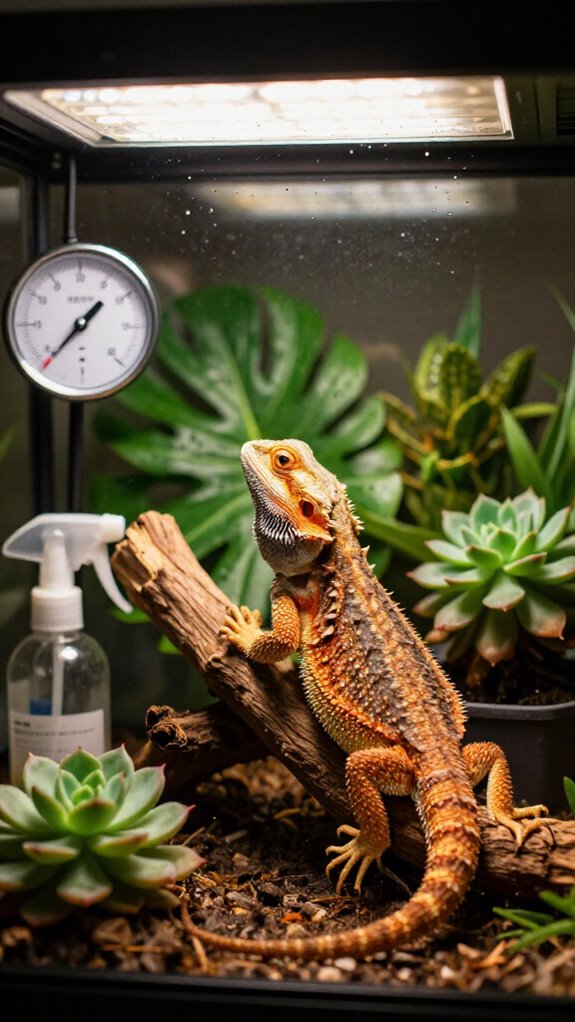
Your bearded dragon’s tank is basically their entire world—so here’s the truth: you can’t prevent scale rot if your setup’s working against you. I’ve learned this the hard way with exotic pets: environment matters more than you’d think. A proper environment directly supports your bearded dragon’s lifespan by reducing stress and disease risk. Using appropriate substrates creates the foundation for healthy skin and prevents conditions that trap harmful bacteria against your pet’s scales.
| Factor | Your Goal | Why It Matters |
|---|---|---|
| Humidity | 30-40% | Prevents moisture buildup |
| Substrate | Paper towels or reptile carpet | Minimizes belly irritation |
| Tank Insulation | Proper ventilation | Stops damp pockets |
Your substrate selection determines everything. Paper towels beat sand or loose bedding because they’re dry, replaceable, and won’t trap moisture against your dragon’s belly. Combine that with smart tank insulation—ensuring air flows freely without creating humid corners—and you’ve eliminated scale rot’s favorite breeding ground.
Temperature gradient matters too: basking spot 100-110°F, cool side 75-85°F. This encourages natural drying.
Create a Cleaning Schedule That Sticks
Without a solid cleaning routine, even the perfect tank setup becomes a petri dish—and I’ve watched scale rot thrive in enclosures that looked clean on the surface but harbored bacteria in the corners.
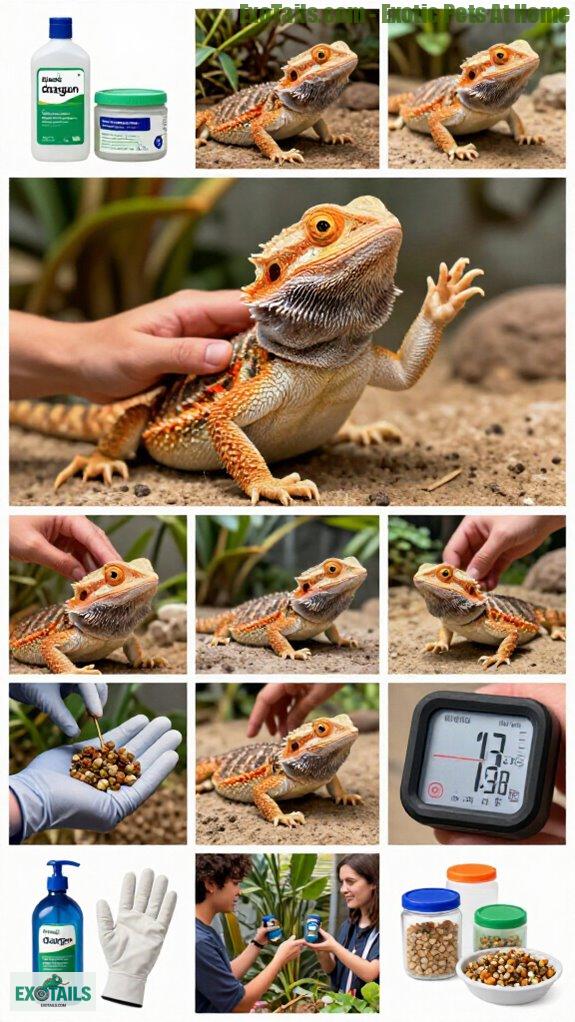
I’m serious about cleaning frequency: spot-clean daily (remove waste, uneaten food, shed skin), and deep-clean weekly with effective products like F10SC or Chlorhexidine. For bearded dragon owners specifically, choosing the top antiseptic cleaners can make a significant difference in preventing bacterial infections. Products with proven efficacy against common reptile pathogens, such as veterinary-grade F10SC, should be staples in your cleaning arsenal.
Why wait? Bacteria love festering in forgotten corners. I’ve learned that consistency beats intensity—daily habits prevent disasters better than frantic weekend overhauls.
Your reptile’s belly will thank you for staying diligent.
Know When to Call Your Vet
When should you actually pick up the phone and call your vet—is it those brownish scales you spotted yesterday, or should you wait and see if they clear up on their own?
Don’t wait. Symptom recognition is your superpower here. Any discoloration, flaky patches, blisters, or raised scales demand immediate attention.
I’ve learned the hard way that scale rot spreads fast—what looks minor today becomes catastrophic tomorrow.
Your vet will examine your reptile, culture any infections, and recommend treatment options tailored to your pet’s specific situation.
Early intervention means weeks of recovery, not months of complications. Trust your gut and call today.
Investing in UVB light kits from the start provides the foundation for long-term health and disease prevention. Proper UVB lighting helps maintain a healthy immune system that can fight off infections before they develop into scale rot.
Keep Your Dragon Healthy After Treatment
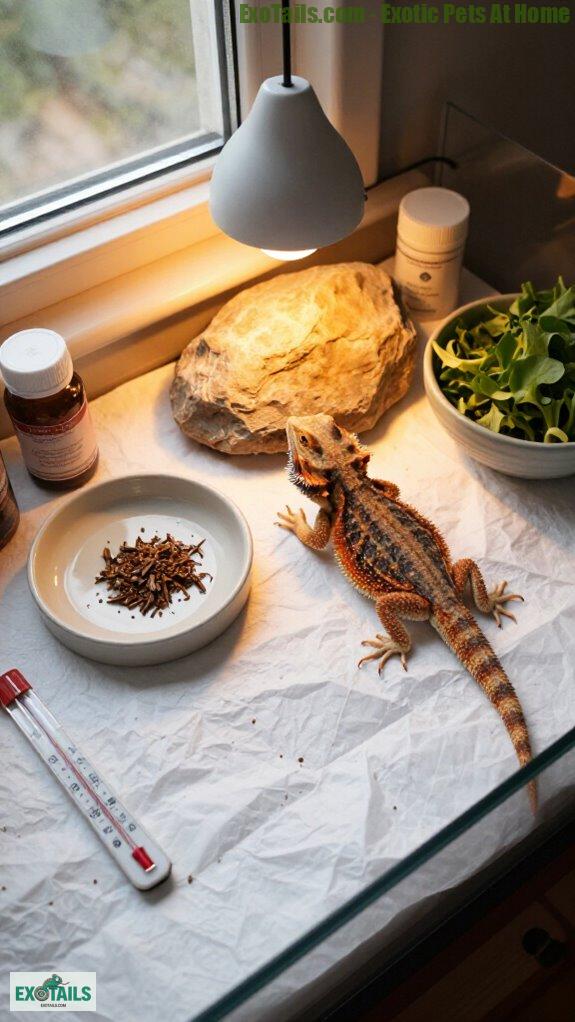
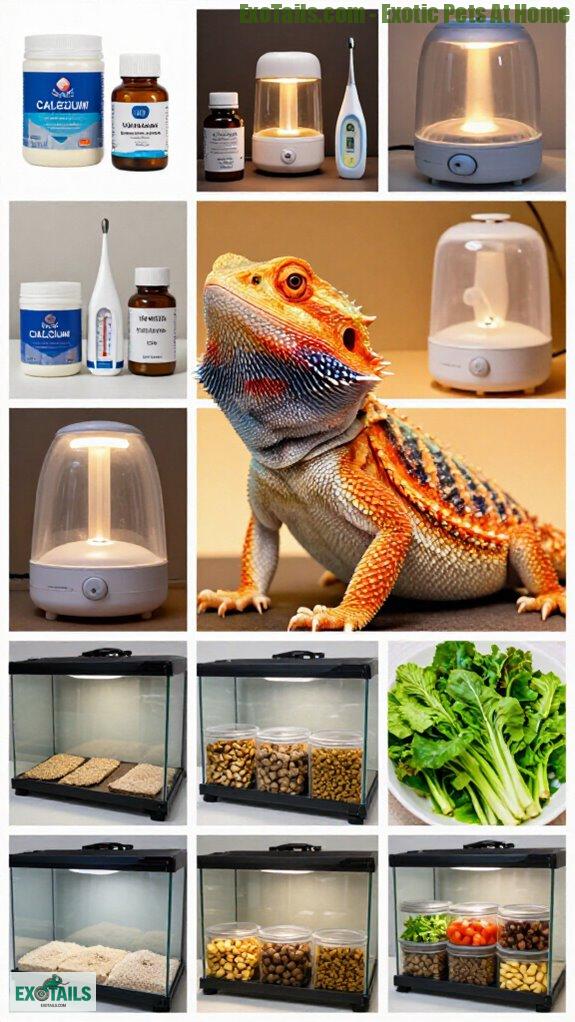
After your bearded dragon gets the all-clear from your vet, the real work begins—because recovery doesn’t end when treatment stops. You’ll need to maintain those pristine conditions that helped them heal, implementing dietary adjustments with calcium and vitamin supplements, and focusing on stress management by keeping handling minimal. Essential Calcium Supplements help support bone health and prevent secondary nutritional deficiencies during this critical healing period. Proper nutrition supplements ensure your dragon receives complete dietary support during recovery, covering any gaps that stress and healing may create.
| Recovery Phase | Your Action |
|---|---|
| Week 1-2 | Monitor scales daily |
| Week 3-4 | Gradually increase activity |
| Ongoing | Maintain hospital-clean enclosure |
| Diet | Calcium dusted insects |
| Environment | Stable temps, low humidity |
Think of it as their comeback tour. Stay vigilant.
Humidity Monitoring Systems
Since humidity’s basically the villain in your bearded dragon’s scale rot story, you’ll want to know exactly what’s happening inside that enclosure at all times—and honestly, guessing just doesn’t cut it.
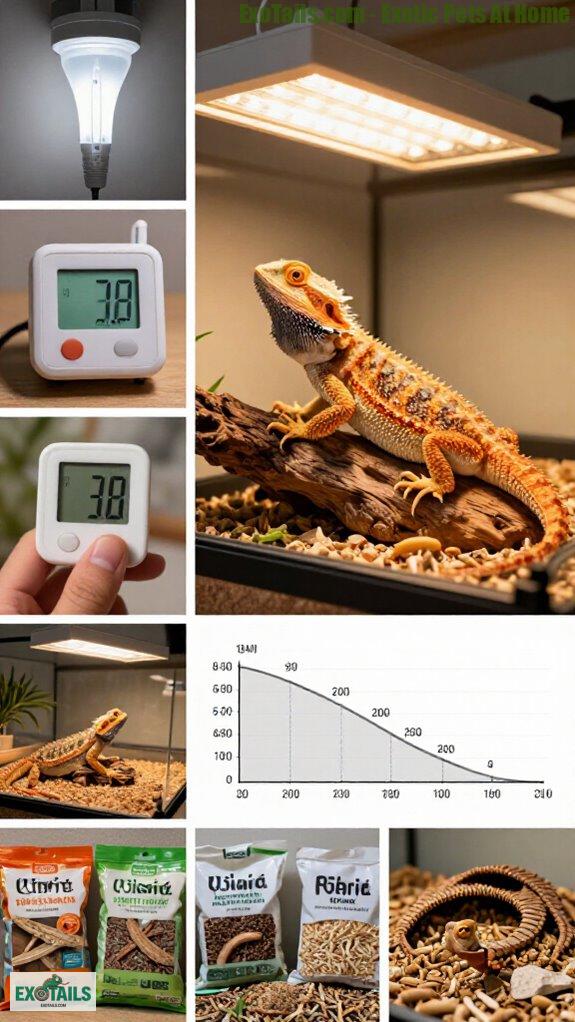
I recommend digital hygrometers (they’re cheap!) placed on both the hot and cool sides. Your target? 30-40% humidity.
Why? Higher levels trap moisture, preventing proper scale hydration and creating the perfect bacterial playground.
Check readings daily. When I switched to monitoring systems in my collection, I caught humidity creep before it caused problems.
Prevention beats treatment every single time.
When selecting from the available monitor types, look for models with remote probes that can measure both temperature and humidity, giving you complete environmental data without disturbing your dragon.
For the most reliable results, invest in essential humidity gauges designed specifically for reptile enclosures rather than generic household models.
Hygrometer for Accurate Readings
Precision monitoring isn’t just a nice-to-have—it’s your scale rot prevention superpower, and I can’t stress this enough.
I’ve learned the hard way that guessing your enclosure’s humidity is basically playing Russian roulette with your dragon’s belly.
A quality hygrometer installation gives you real data, not wishful thinking.
Want accurate readings? Place it mid-enclosure, away from heat sources. Digital hygrometers beat analog ones—trust me on this.
Check for humidity fluctuations daily. Humidity spiking to 60%? That’s your cue to increase airflow immediately.
Staying vigilant with precise numbers prevents nasty surprises and keeps your scaly friend thriving.
Among the top digital hygrometers for bearded dragon care, investing in a reliable model ensures your readings remain trustworthy long-term.
When selecting monitoring equipment, prioritize essential humidity gauges designed specifically for reptile environments to ensure accuracy and durability in your dragon’s habitat.
FAQ
Can Scale Rot Be Contagious to Other Reptiles in My Collection?
Scale rot isn’t directly contagious, but I’d quarantine affected reptiles immediately. The bacteria and fungi causing it can spread through shared enclosures, contaminated equipment, and poor hygiene—critical for reptile health and effective scale rot management.
What Vitamin a and C Deficiencies Specifically Contribute to Scale Rot Development?
Vitamin A deficiencies weaken your reptile’s immune system and skin barrier, while vitamin C deficiencies impair wound healing. Both compromise scale health, making infection from bacterial and fungal growth more likely. I’d recommend varied vitamin sources through proper supplementation.
How Do Mites Cause Raised Scales and Increase Scale Rot Risk?
Ever wondered why your reptile’s scales suddenly look bumpy? Mites burrow beneath scales, triggering inflammation and raising them. I’d recommend quarantining immediately—this mites behavior compromises scale health, creating entry points for infections that rapidly worsen.
Which Disinfectants Are Most Effective: F10SC, Rescue, or Chlorhexidine?
I’d recommend F10SC for its superior disinfectant effectiveness against bacteria and fungi. For surface application, it’s veterinarian-approved and safe around reptiles when diluted properly. Chlorhexidine works well too, though Rescue ranks third in potency.
How Quickly Can Untreated Scale Rot Progress to Septicemia or Mouth Rot?
I’m telling you, untreated scale rot’s a ticking time bomb—it can spiral into septicemia or mouth rot within days to weeks. This scale rot progression demands immediate veterinary care; untreated infections become life-threatening emergencies fast.
References
- https://www.wildlifedemonstrations.com/post/scale-rot-how-to-identify-and-treat
- https://reptifiles.com/blue-tongue-skink-care/blue-tongue-skink-illnesses/scale-rot/
- https://vetmedx.co.za/identifying-and-treating-scale-rot/
- https://lbah.com/reptile/snake-skin-conditions/
- https://reptifiles.com/boa-constrictor-care/sick-boa/scale-rot/
- https://creative.science/education/yikes-is-this-scale-rot-on-my-pet-python-how-do-i-treat-ball-python-scale-rot
- https://www.exoticvets.co.za/types-of-common-illnesses-treated/scale-shell-rot-in-reptiles