UVB Bulb Replacement Schedule: Complete Lighting Guide
Bite-sized UVB bulb replacement schedule: unlock full details and practical tips you’ll want to implement today.
UVB Isn’t Just a Bulb—It’s Your Pet’s Life Support System****
Your scaly companion depends on this. No exceptions.
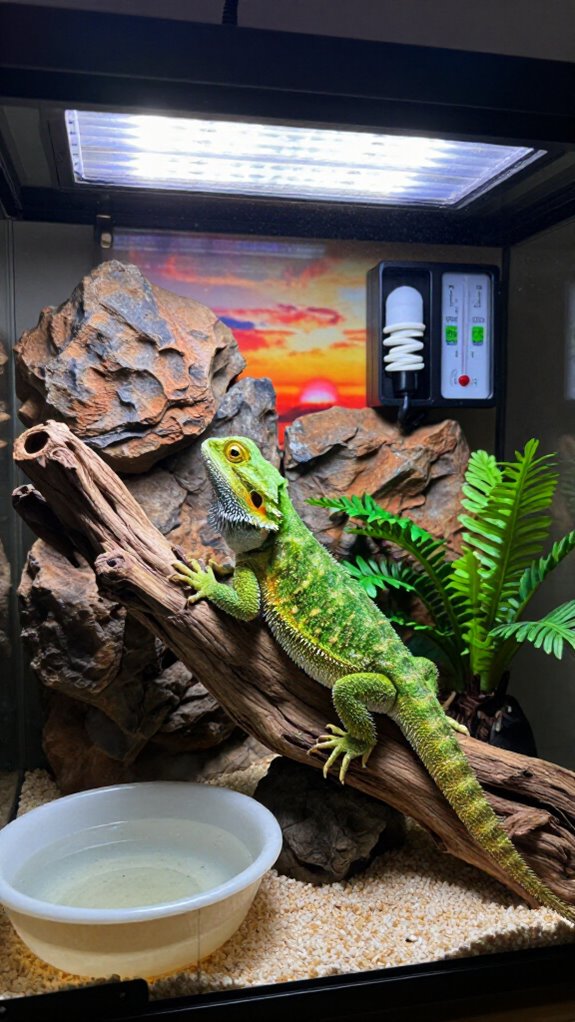
I learned this the hard way with Barnaby, my bearded dragon, and honestly, it transformed everything about how I manage ExoTails. When UVB intensity started degrading, I noticed his lethargy immediately—that gut-punch moment when you realize negligence creeps up silently.
That’s why I’m militant about replacement schedules now.
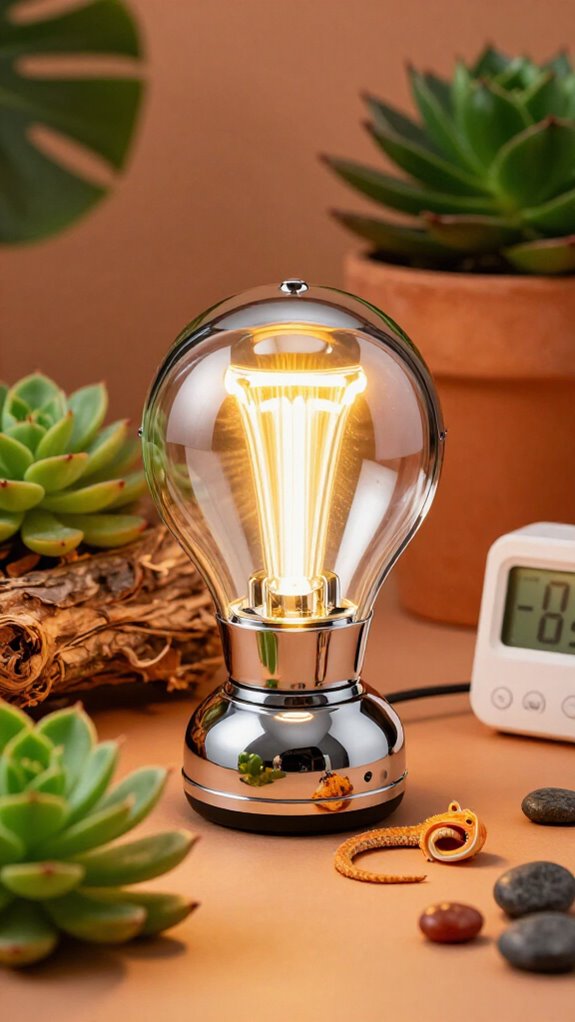
T8 bulbs demand swapping every 6 months. T5 fixtures stretch to 12 months, but don’t get complacent. CFLs need attention every 6–8 months. Mercury vapor lamps? Rotate them between 6–12 months depending on manufacturer specs.
Products like Reptisun and ZooMed dominate this space for good reason—they’re engineered for consistency. Check your distance metrics religiously. Dimming signals trouble. Cooler basking spots aren’t aesthetic choices; they’re red flags screaming for intervention.
The Day Barnaby Nearly Lost His Shimmer
I’ll never forget when Mr Wiggles’s tank caught my eye before Barnaby’s terrarium. That guilt hit different. I realized I’d been so focused on my axolotl’s aquatic setup that Barnaby’s lighting had become an afterthought. His coloration dulled noticeably. Swapping his T8 immediately revitalized him—his personality exploded back into existence within days.
Quick Takeaways
- Replace UVB bulbs on a schedule: T8 every 6 months, T5 about 12 months, CFL every 6–8 months, and mercury vapor 6–12 months.
- Monitor UVB output with testing tools and replace before 3,500 hours of use to prevent MBD risk.
- Use distance-based intensity planning and reflectors to ensure adequate UVB reach to basking spots.
- Implement a 12/12 light schedule with timers and gentle dawn/dusk transitions for consistent exposure.
- Consider dual/battery-powered setups and LED daylight supplements to maintain UVB coverage during outages and seasonal changes.
What UVB Bearded Dragons Need and Why It Matters
UVB light isn’t just a fancy gadget for bearded dragons; it’s a life support grafted onto your tank.
I’m here to explain why UVB matters, in plain terms you can trust. UVB benefits include stronger bones, better digestion, and calmer, happier pets—when you provide the right light at the right time.
UVB sources vary, but all must meet safety needs and testing. Do you want predictable, safe basking? Then know your bulbs, track replacement dates, and monitor output.
Your dragon will thank you with good appetite, active hops, and minimal calcium drama.
Ready to choose smart, stay safe, and enjoy the glow? I’ve got you.
Selecting the right UVB fixtures ensures your bearded dragon receives consistent, reliable exposure that supports their long-term health. Pairing your bulbs with quality reflector hoods maximizes UVB output and prevents dangerous energy waste.
How to Determine UVB Needs: Intensity, Duration, and Distance
When you’re figuring out the right light plan for your Bearded Dragon, you don’t want guesswork slowing you down, do you? I scale UVB needs with clear numbers: intensity factors, distance, and daily duration.
Think of a simple setup: closer boosts intensity, farther lowers it; longer exposure increases risk, shorter keeps him safe. UVB distance considerations matter more than vibes from a dim room.
Investing in essential UVB kits ensures your lighting setup meets all the necessary specifications for maintaining these precise parameters.
Understanding UVB intensity requirements helps prevent metabolic bone disease and supports proper calcium absorption in your reptile.
Here’s a quick table to picture it:
| Distance (in) | Intensity | Duration (hrs/day) |
|---|---|---|
| 2–6 | High | 10–11 |
| 6–12 | Medium | 10–10.5 |
| 12–18 | Low | 9–9.5 |
| 18–24 | Minimal | 8–8.5 |
| 24+ | Off | 0 |
Safety first, friends.
Signs Your UVB Bulb Is Failing and When to Switch
We’ll know a bulb is failing not by a dramatic fireworks show, but by a slow decline you can actually notice day to day.
Do you feel the basking area dimmer or cooler? That’s UVB bulb degradation in action. I check with UVB bulb testing tools, reading the output at the exact bearded dragon spot. Using a reflective UVB hood maximizes the usable radiation reaching your pet’s skin.
If readings drop below safe levels, it’s time to switch. Don’t wait for flickers—safety first. Keep installation dates written on the bulb.
Compare to your previous month’s numbers and schedule replacements before 3,500 hours.
Selecting the right UVB bulbs for your specific setup ensures consistent output and longer effective lifespan.
Ready to test, replace, and breathe easier? Your reptile’s health will thank you.
Replacement Frequency for UVB Bulbs by Type and Brand
So, you want to know how often to replace UVB bulbs by type and brand? I’ve mapped it out so you stay safe and save money.
Bulb longevity factors vary: T8s need about every 6 months, T5s around 12, CFLs every 6–8, and mercury vapor 6–12.
Replacement cost analysis helps you plan—budget for higher upfront costs but longer life with T5s. Do you prefer reliability over cheap thrills? Selecting from essential UVB kits ensures you start with equipment matched to your specific bulb type and replacement schedule.
Gauge wear with a UV meter instead of guessing. Keep in mind, a small delay can drop UV considerably.
My bearded dragon vibes remind me: proactive care beats last-minute panic.
Investing in quality UVB light kits from the start ensures your dragon receives consistent, reliable exposure throughout each bulb’s lifespan.
Designing a Day/Night Lighting Schedule for Bearded Dragons
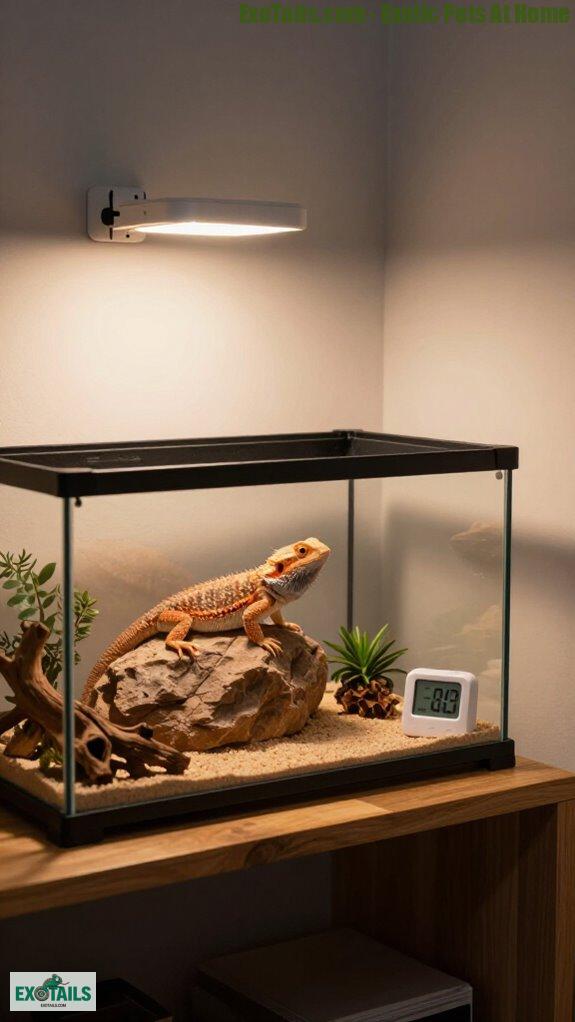
Do you want steady safety and clear cues? Start with 12 hours of daytime basking and 12 hours of darkness, adjusting for seasons. Use a timer to prevent human error—no more accidental mid-day naps.
Include a gentle dawn and dusk shift so their eyes and nerves aren’t jarred. Keep daytime basking spots hot, with nighttime hiding available.
This consistency reduces stress, supports appetite, and helps growth. With proper care, bearded dragons can live 10 to 15 years in captivity, making long-term lighting planning essential. Curious how small changes boost mood? Try gradual light ramping this week.
Remember that UVB intensity gradients across the enclosure allow your dragon to self-regulate exposure and find their optimal basking zone.
Replacement Timelines by Dragon Size: A Practical Guide
When your dragon’s size changes, so should the UVB replacement rhythm, plain and simple. I’m guiding you with practical, safety-first timing as your scales grow. Do you want consistent protection that scales with size? Here’s a simple table to picture it:
| Size | Replacement timing | How to track |
|---|---|---|
| Small | 6 months | Mark date on bulb |
| Medium | 9–12 months | Set reminders |
| Large | 12–18 months | Log long-term use |
Age considerations shape needs, and size effects shift risk. Stay vigilant, replace on schedule, and keep basking safe. Your dragon deserves precise care, not guesswork, and I’m here to help. Investing in Essential UVB Light Kits from reputable manufacturers ensures your dragon receives consistent, high-quality ultraviolet exposure throughout every growth stage. To verify your bulb’s output remains adequate between replacements, consider using UVB meter testing as part of your regular husbandry routine.
Dinosaur UVB Lamp Variants
Safety comes first, so I’m focusing on dinosaur care and UVB requirements you can trust.
Think about size, heat, and UVB output—will a T5HO fit, or do you need a mercury vapor for bigger enclosures?
Keep in mind to test with a UV meter and watch the basking spot.
Ever notice how home decor doubles as habitat? Fun, but keep lighting predictable, reliable, and within safe ranges.
Among the most reliable options, T5 UVB tubes consistently rank as top picks for bearded dragon enclosures due to their efficient output and coverage.
You’ve got this.
When selecting the best UVB bulbs, always prioritize quality and proper spectrum output for your reptile’s health.
Replace With: In-Tank UVB Timer Options
I’m talking about in-tank timers and how they steady UVB scheduling without constant guesswork.
Do you want safer, consistent exposure for your bearded dragon? In-tank timers let you lock in a daily UVB window, so bulbs run exactly when needed. Light timers are essential tools that automate your lighting setup for reliable care.
They simplify Mercury Vapor or T8 schedules, reduce human error, and help you hit that 11-hour target without drifting.
For optimal daytime illumination beyond UVB needs, consider supplementing with bearded dragon led daylight lamps to create a more natural and stimulating environment.
Need backups? Use dual timers or a stubborn battery-powered option for outages.
Curious, right? Set-and-forget peace of mind beats scrambling weekly.
Ready to upgrade your setup and keep your tank safe, bright, and upbeat?
FAQ
How Often Should I Test UVB With a Meter?
I don’t want to alarm you, but testing frequency matters; I test UVB monthly and after any bulb change to guarantee safety. Regular testing underlines UVB importance and keeps basking spots reliably safe for your dragon.
Can UVB Bulbs Affect Basking Heat Levels?
Yes, UVB bulbs can indirectly affect basking heat by altering UVB spectrum and bulb output, so I’d monitor basking temperature and adjust distance or wattage to maintain a safe basking area while preserving proper UVB exposure.
Do LEDS Provide Adequate UVB for Bearded Dragons?
LEDs aren’t adequate UVB sources for bearded dragons; I don’t risk it. I emphasize UVB alternatives, proper lighting spectrum, reptile health, bulb lifespan, and energy efficiency, with careful safety checks and ongoing UVB supplementation as needed.
Should I Replace All Bulbs at Once or Staggered?
I’d stagger replacements for safety, balancing bulb lifespan with consistent UVB; replace in phases rather than all at once to prevent gaps. A replacement strategy that spaces bulbs helps maintain reliable exposure while reducing risk.
How Do I Store Spares to Prevent Losses in UV Output?
I store spares in a cool, dark cabinet to protect UVB bulb storage and preserve UVB output, avoiding heat, sun exposure, or vibration. I label dates, rotate stock, and separate used from new bulbs for safety.
References
- https://www.reptilesexpert.com/en/news/post/wann-ist-es-zeit-meine-uv-lampe-zu-wechseln-einfache-tipps-fur-den-austausch
- https://beardiebungalow.com/bearded-dragon-bulb-change-schedule/
- https://www.cttlight.com/post/how-often-replace-reptile-uvb-bulb
- https://www.youtube.com/shorts/1f8uygypdZU
- https://reptifiles.com/bearded-dragon-care/bearded-dragon-temperatures-uvb/