Respiratory Infection Signs in Pet Dragons
Noisy breathing, nasal discharge, and lethargy in bearded dragons signal respiratory infections—but one overlooked symptom could mean the difference between recovery and crisis.
Respiratory Infection Signs in Pet Dragons
Ever heard your scaly companion sound like a broken harmonica? That’s your red flag.
I’ve been knee-deep in reptile husbandry for years through my blog ExoTails, where I document the triumphs and tribulations of exotic pet ownership. Barnaby, my bearded dragon, taught me everything about vigilance—he’s my feathered (well, scaled) mentor. My axolotl Mr Wiggles completes our little ecosystem, reminding me daily why experience matters in this space.
The Barnaby Wake-Up Call: When I Almost Missed the Signs
Three years ago, Barnaby exhibited subtle behavioral shifts—less basking enthusiasm, increased hiding. I’d noticed pale gums during feeding time but dismissed it as stress. Within 48 hours, open-mouth gaping and labored breathing escalated into genuine panic. That terrifying moment at the vet’s office crystallized my commitment to early detection protocols.
Watch for these telltale symptoms ruthlessly: rapid breathing, nasal discharge, and that disconcerting gaping behavior signal immediate intervention territory.
Lethargy, trembling, or pallid mucous membranes? Don’t procrastinate—veterinary consultation isn’t optional.
Implement environmental optimization using quality UVB bulbs (Reptisun 10.0) and maintain precise humidity levels via monitoring systems. Reduce stressors aggressively.
Early action? That’s the difference between recovery and catastrophe.
Quick Takeaways
- Rapid, open-mouthed breathing and nasal discharge are early warning signs requiring immediate veterinary attention.
- Continuous open-mouth breathing at rest, gasping sounds, and mucus bubbles indicate emergency respiratory distress.
- Unusual lethargy, reduced basking interest, and increased hiding behavior suggest respiratory infection stress.
- Pale gum discoloration, elevated heart rate, and visible weakness signal oxygen deprivation issues.
- Maintain basking temperatures at 105-110°F, remove water bowls, and complete prescribed antibiotics for recovery.
First Signs to Watch For: Breathing Changes and Nasal Discharge
Notice your bearded dragon breathing like it just sprinted across the terrarium?
That’s your first red flag. Healthy dragons breathe quietly and steadily, so rapid or open-mouthed breathing patterns definitely warrant attention.
You might also spot nasal symptoms like discharge around the nostrils or excess mucus around the mouth—basically, anything that looks abnormal.
These breathing changes often appear before other symptoms, making them your early warning system.
Watch for wheezing, coughing, or that weird gaping thing they do for no reason. If you’re seeing these nasal symptoms combined with unusual breathing patterns, don’t wait—contact your vet promptly.
Early intervention makes all the difference in recovery.
When to Call Your Vet: Emergency Red Flags
While catching those early breathing changes puts you ahead of the game, some symptoms demand immediate action—I’m talking drop-everything-and-call-your-vet situations.
Here’s your emergency checklist:
- Open-mouth breathing that won’t stop, even during rest
- Gasping sounds like your dragon’s lungs are staging a protest
- Mucus bubbles streaming from nose or mouth continuously
- Complete appetite loss paired with severe lethargy
Don’t wait. These red flags mean your dragon needs veterinary resources NOW.
Respiratory infections escalate fast in reptiles—what seems manageable today becomes critical tomorrow. Your vet has diagnostic tools and antibiotics ready.
Having contact info handy beforehand? Smart move.
Behavioral Changes: Lethargy, Anxiety, and Posture Shifts
Beyond the obvious breathing troubles, your bearded dragon’s behavior tells you something’s seriously off—and honestly, it’s one of the most telling signs I’ve noticed over years of watching reptiles.
When your dragon suddenly becomes a couch potato, that’s your first red flag. Using behavioral observation techniques, watch for unusual lethargy, reduced basking interest, and anxious posturing.
Is your normally active friend hiding constantly? That’s stress signaling respiratory distress.
Stress management strategies matter here: maintain stable temperatures, minimize handling, and create calm environments.
Notice posture shifts—puffing up, gaping, or drooping body positions indicate serious discomfort. These behavioral changes often precede obvious breathing problems, making them invaluable early warning signs worth addressing immediately.
Systemic Symptoms of Respiratory Distress: Gum Color, Heart Rate, and Weakness
Three critical indicators—gum color, heart rate, and overall weakness—reveal what’s happening inside your bearded dragon’s body when respiratory trouble strikes.
When infection takes hold, you’ll notice troubling changes:
- Pale or grayish gum discoloration signals oxygen struggles—your dragon’s tissues aren’t getting enough air.
- Elevated heart rate means their cardiovascular system’s working overtime, compensating for respiratory strain.
- Visible weakness and lethargy show their energy’s depleted fighting infection.
- Trembling or unstable movement indicates systemic stress affecting muscles.
These aren’t minor quirks; they’re your dragon’s distress signals.
Heart anomalies accompanying respiratory issues demand immediate veterinary attention.
Catching these symptoms early literally saves lives—I’ve learned this firsthand managing exotic pets’ health crises.
Recovering From Respiratory Distress: Home Care Essentials
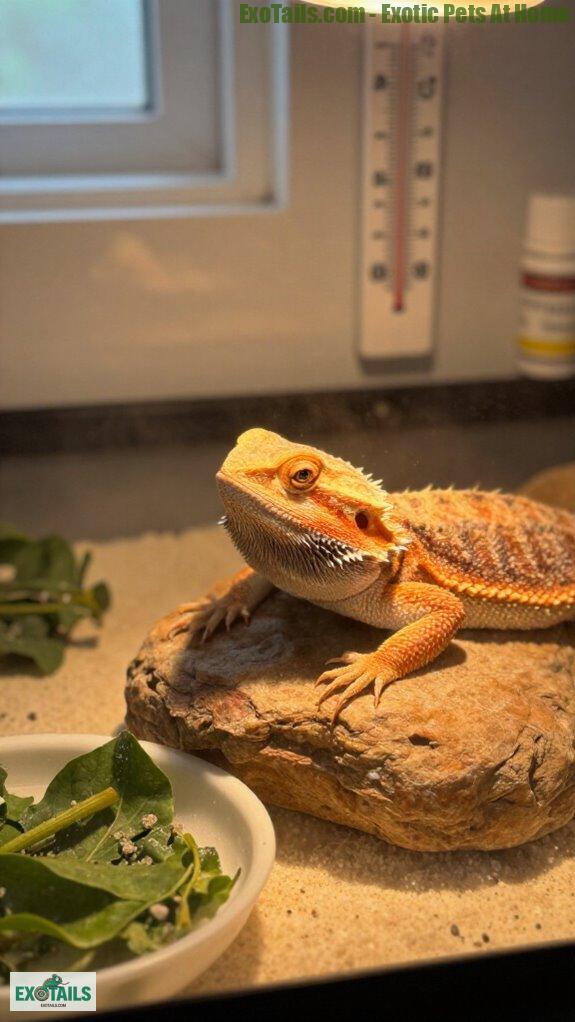
Supporting your bearded dragon’s recovery from respiratory distress doesn’t require you to become a veterinary technician—it does, however, demand consistent attention to the fundamentals that got them sick in the first place.
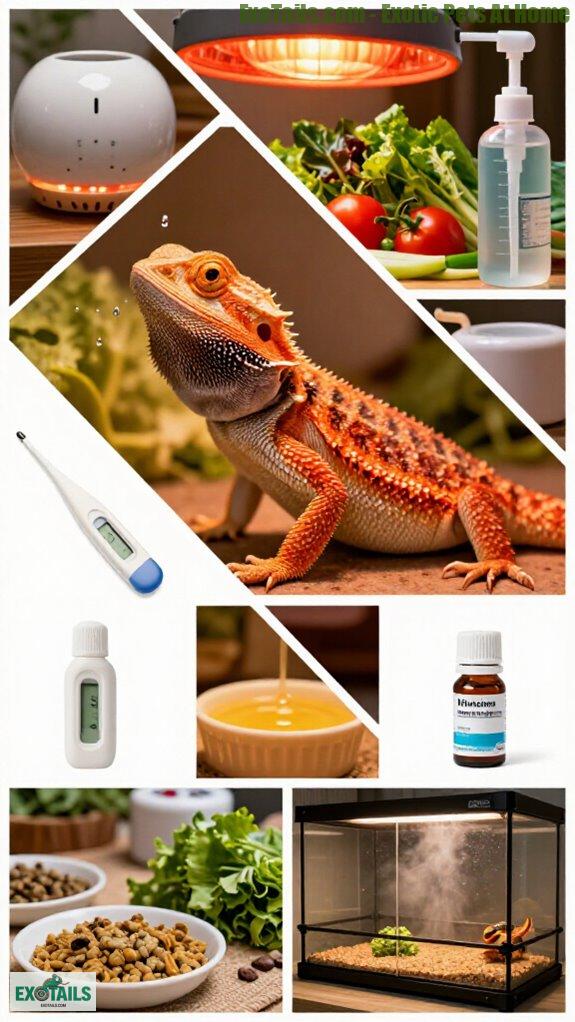
First, nail those environmental factors: maintain basking temps between 105-110°F and daytime temps above 80°F. Remove that water bowl immediately—seriously, humidity is your enemy right now.
Next, hydration techniques matter tremendously. Offer water through misting vegetables or droplets on their snout since they’re often too weak to drink normally.
Monitor appetite closely, provide soft foods, and keep stress minimal. Your vet-prescribed antibiotics? Take them seriously for the full two weeks.
Bearded Dragon Pneumonia Complications
When your bearded dragon’s respiratory infection progresses into pneumonia, you’re looking at a whole different ballgame—and honestly, it’s the complication you really want to avoid.
Pneumonia causes serious lung inflammation that can turn life-threatening fast.
Here’s what keeps me up at night:
- Fluid accumulation in lungs making breathing nearly impossible
- Organ failure from prolonged oxygen deprivation
- Sepsis spreading infection throughout their tiny body
- Permanent lung scarring even after treatment
Diagnosis methods include X-rays revealing fluid patterns and bloodwork showing infection severity.
Early vet intervention isn’t optional—it’s your safety net.
Without aggressive antibiotics and habitat optimization, you’re watching their health spiral downward rapidly.
Reptile Heating Lamp Upgrades
your heating lamp types and infrared bulbs make all the difference. I’ve seen dragons thrive under proper heat, and honestly, it’s the easiest fix you’ll make. Investing in quality heat lamp fixtures specifically designed for bearded dragons ensures consistent temperature regulation that cheaper alternatives simply cannot match. Selecting the right fixture mounting prevents dangerous heat spikes and ensures your dragon’s safety.
| Lamp Type | Best For |
|---|---|
| Ceramic Heat Emitters | Nighttime warmth |
| Infrared Bulbs | Basking spots |
| UVB Fluorescent | Vitamin D3 |
| Halogen Spotlights | Natural basking |
| Mercury Vapor | All-in-one option |
Quality heating eliminates stress and strengthens immunity. Don’t gamble with cheap bulbs—your dragon deserves better.
FAQ
What Specific Bacterial or Viral Pathogens Most Commonly Cause Respiratory Infections in Bearded Dragons?
I’ve identified that Mycoplasma species and Chlamydia pneumoniae are the primary bacterial pathogens you’ll encounter, while adenovirus and nidovirus represent the most common viral pathogens affecting your bearded dragon’s respiratory health.
How Can I Distinguish Between Normal Bearding Behavior and Respiratory Distress Puffing in My Dragon?
I’d love to tell you they’re identical—they’re not. Normal bearding behavior occurs when your dragon’s calm; respiratory distress puffing accompanies breathing difficulties, wheezing, or discharge. Watch for circumstances: threat displays versus genuine respiratory struggle.
Are Respiratory Infections in Bearded Dragons Contagious to Other Reptiles or Pets in My Home?
Yes, I’d recommend isolating your infected dragon from other reptiles immediately. Different species can contract various pathogens through contagious behaviors and shared environments. Strict infection prevention—separate feeding areas, hygiene protocols, quarantine—protects your other pets.
What Diagnostic Tests Will My Vet Perform to Identify the Cause of My Dragon’s Infection?
Your vet’ll perform diagnostic imaging like X-rays to check your dragon’s lungs, collect respiratory cultures to identify bacteria or viruses, run bloodwork for infection severity, and possibly use advanced sequencing tests.
How Long Does Antibiotic Treatment Typically Take, and What Are Success Rates for Recovery?
I’ll tell you antibiotic treatment typically lasts two weeks, though your vet may adjust based on severity. Recovery rates improve greatly with early intervention and proper habitat optimization—I’d prioritize both for your dragon’s safety.
References
- https://reptifiles.com/bearded-dragon-care/bearded-dragon-illnesses-health/respiratory-infection/
- https://www.petmd.com/reptile/conditions/respiratory/respiratory-infections-reptiles
- http://www.midogtest.com/blog/bearded-dragons-pneumonia/
- https://www.youtube.com/watch?v=AngcdMuqBZA
- https://wpvet.com/reptile-rounds/respiratory-infections/