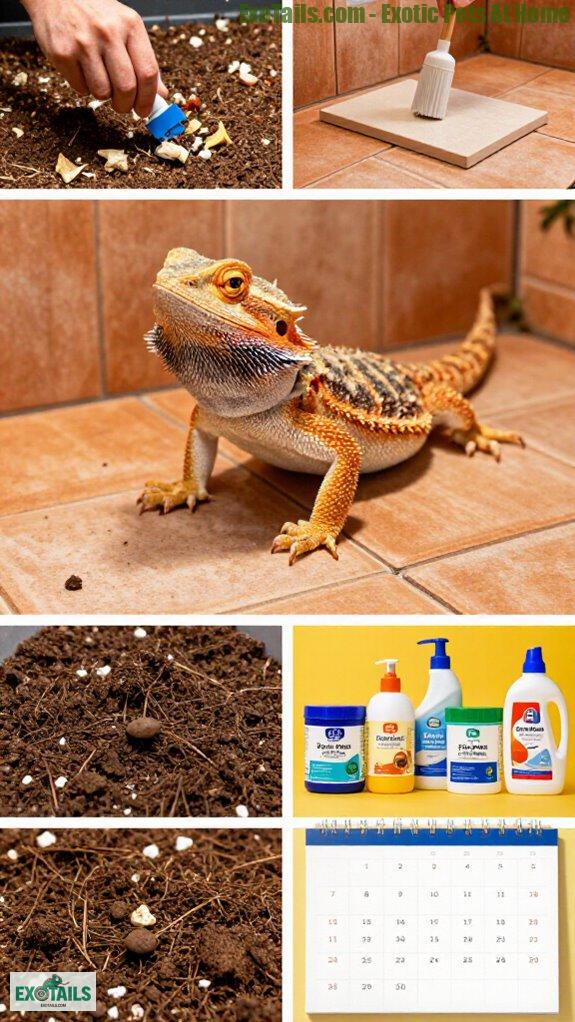
Safe Substrate Choices for Your Dragon
Uncover which substrate keeps your dragon healthy and why sand might be your biggest mistake.
Your dragon’s substrate isn’t just window dressing—it’s literally keeping your scaled buddy alive.
I’m obsessed with getting this right. My bearded dragon Barnaby transformed when I ditched sand for ceramic tile, and my axolotl Mr Wiggles? He’s thriving in his meticulously curated setup. These creatures aren’t pets to me—they’re family. That’s why I built ExoTails, my blog dedicated to exotic animal welfare.
Skip sand and gravel (impaction nightmares, honestly).
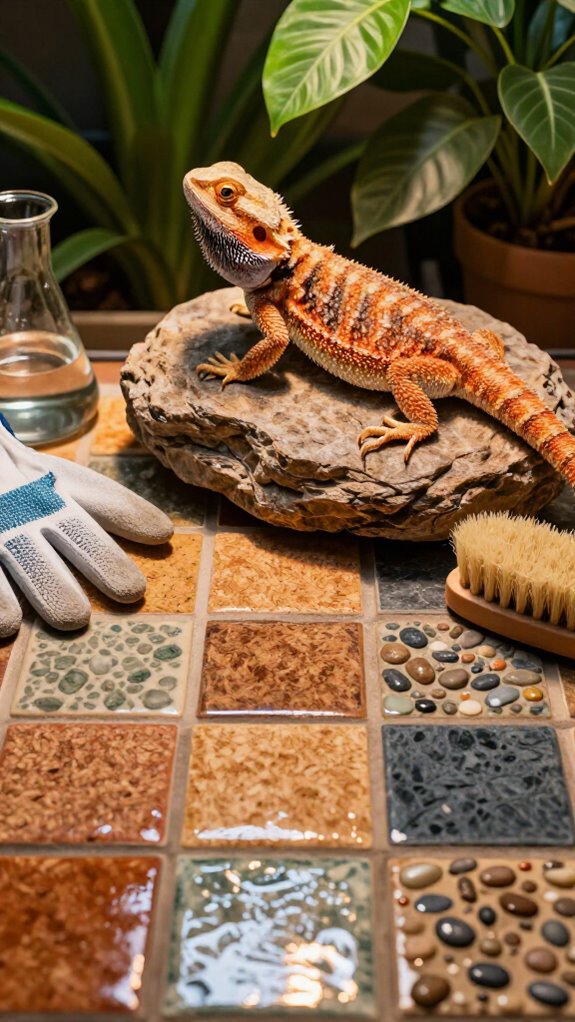
Ceramic tile from brands like Zoo Med delivers durability and that naturalistic aesthetic. Slate tile? Heat retention powerhouse. Or grab zen mats for hassle-free maintenance.
The 4–6 inch layering technique using fine sand, topsoil, and excavator clay? Revolutionary. It obliterates vet bills, facilitates burrowing instincts, and keeps your scaly companion absolutely thriving.
The Day Barnaby’s Health Clicked Into Place
I’ll never forget finding Barnaby sluggish and distressed. His previous sand substrate was slowly suffocating him internally. Swapping to premium ceramic tile from Zen Habitats was genuinely transformative—within weeks, his vitality returned explosively. Watching him burrow safely, basking confidently, crystallized why substrate selection matters profoundly. It wasn’t just husbandry protocol; it was genuine love expressed through environmental design.
Quick Takeaways
- Solid substrates like ceramic tile and slate eliminate impaction risks while supporting your dragon’s natural behaviors.
- Zen mats provide excellent grip and cleaning ease, making them ideal for maintaining a hygienic habitat.
- Avoid sand and gravel entirely due to high impaction and digestive blockage risks in bearded dragons.
- Maintain substrate depth of 4–6 inches to accommodate natural burrowing and create a comfortable environment.
- Layer substrates with fine sand, topsoil, and excavator clay to mimic natural conditions and support health.
Why Substrate Affects Your Dragon’s Health
Because your bearded dragon spends most of their time in direct contact with their substrate—climbing it, digging through it, and yes, accidentally ingesting it—the material you choose literally becomes part of their daily health equation.
The substrate composition directly affects whether your dragon thrives or struggles. Wrong choices? You’re risking impaction, respiratory issues, even toe deformities. I’ve watched dragons suffer needlessly from poor substrate picks. Selecting top-rated substrates recommended by experienced keepers can make the difference between a healthy dragon and a vet emergency.
Health implications span everything from digestion to behavior. The right substrate supports natural digging instincts, maintains proper humidity, and prevents parasites from thriving.
Think of it as your dragon’s foundation—literally.
Selecting appropriate substrate materials helps create a habitat that mimics their natural arid environment and encourages species-typical behaviors.
Safe Substrate Options: Carpet, Tile, and Clay
When you’re standing in the reptile aisle staring at substrate options, wondering which one won’t turn your dragon into a medical emergency, solid substrates become your best friend.
I’ve learned that solid options offer zero impaction risk—a game-changer for peace of mind. Slate tile provides belly warmth dragons crave, though it’s slippery solo. Zen mats stay easy-clean. Newspaper works temporarily. Unlike humid habitat substrates, these solid choices eliminate moisture-related health concerns entirely. Ceramic tile remains the most popular choice among experienced keepers due to its durability and natural appearance. Here’s what matters:
| Substrate | Heat Retention | Cleaning Ease | Grip Quality |
|---|---|---|---|
| Slate Tile | Excellent | Good | Poor |
| Zen Mat | Moderate | Excellent | Good |
| Newspaper | None | Perfect | Okay |
Pair options strategically for comfort factors that keep your dragon thriving safely.
Why Sand and Gravel Are Dangerous
You see those bags of colorful sand and gravel at the pet store, think “looks natural, mimics the desert, perfect!”—and suddenly you’re playing substrate roulette with your dragon’s digestive system.
Sand impaction risks are real when you’re using calcium-based or powdery varieties. Your dragon eats a mouthful while hunting, and boom—digestive blockage. Dust-free bedding options eliminate the respiratory irritation that often accompanies loose substrates.
Gravel ingestion dangers multiply because those pebbles don’t break down. I’ve learned that plain sandbox sand or decorative gravel cause serious problems fast.
Stick with super-fine quartz sand instead, and always pair it with proper hydration and temperatures to keep digestion moving smoothly.
Ceramic tile and non-slip slate are among the safest tile substrates for eliminating impaction risks entirely.
Setting Up Your Substrate the Right Way
Once you’ve chosen the right substrate, the setup itself makes all the difference—and I’m not just talking about dumping a bag of sand into the enclosure and calling it a day.
I’ve learned that substrate layering techniques and ideal substrate depth are your dragon’s best friends. Pack 4–6 inches deep so your scaly buddy can burrow naturally without compacting the material dangerously.
Here’s what I recommend:
- Layer fine sand at the base, then topsoil, then excavator clay for stability
- Guarantee even distribution across the entire enclosure floor
- Maintain consistent depth to prevent erosion and settling
For bearded dragons specifically, bioactive soil substrates provide superior enrichment by supporting beneficial microorganisms that help break down waste naturally. This setup prevents impaction while delivering enrichment your dragon will actually enjoy. Just as tank size requirements directly impact your dragon’s overall wellbeing, proper substrate installation ensures they can exhibit natural behaviors safely.
Cleaning and Replacing Your Substrate: A Maintenance Schedule
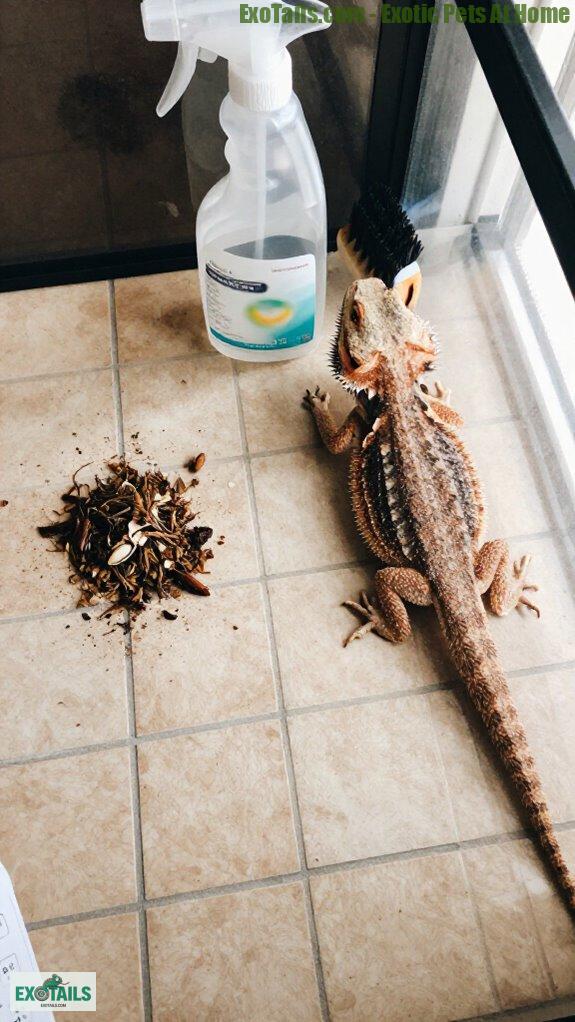
Because your dragon’s bathroom habits don’t follow a convenient schedule, neither should your substrate maintenance—and honestly, a clean enclosure is the difference between a thriving reptile and a stressed one dealing with preventable health issues.
Spot-clean daily by removing visible waste and uneaten food. For solid substrates like tile or Zen Mat, I’ve found this takes mere minutes.
Loose substrates need weekly spot-cleaning too, though bioactive mixes extend cleaning frequency considerably—sometimes monthly for established systems.
Complete substrate replacement? Swap solid substrates every two weeks for ideal hygiene.
Loose naturalistic substrates last 4-6 weeks when bioactive, maximizing substrate longevity while maintaining your dragon’s health and your sanity.
Bioactive Substrate Ecosystems
While solid substrates keep things simple and loose sand offers natural enrichment, bioactive substrate ecosystems do something pretty extraordinary—they actually *work for you*.
Picture this: beneficial microbes breaking down waste, live plants thriving, and cleanup crews handling the dirty work. Bioactive benefits include reduced maintenance and a genuinely living environment that mirrors nature’s efficiency.
I’ve designed enclosures with substrate layers—sand base, organic topsoil middle, leaf litter top—and honestly? Watching the ecosystem self-regulate is mesmerizing.
- Live isopods and millipedes processing waste naturally
- Plants improving air quality and humidity
- Reduced enclosure cleaning frequency dramatically
Your dragon gets enrichment while you catch a break. That’s the bioactive advantage. This naturalistic bioactive setup creates a self-sustaining habitat that replicates the complex relationships found in wild reptile environments.
Substrate Heating Mats and Thermostats
If you’ve ever touched a cold tile substrate and wondered whether your dragon’s belly was getting the warmth it desperately needs, you’ve hit on something essential—substrate heating isn’t optional, it’s fundamental. I’ve learned that proper substrate temperature regulation makes all the difference in digestion and overall health. Beyond just belly heat, understanding the optimal temperature ranges for your dragon’s entire habitat ensures you’re creating a truly thriving environment. Maintaining proper humidity levels alongside temperature control prevents respiratory issues and supports healthy shedding.
| Heating Mat Type | Best For | Heating Mat Efficiency |
|---|---|---|
| Under-tank heater | Loose substrates | 70-80% |
| Ceramic heat emitter | Solid surfaces | 85-90% |
| Radiant heat panel | Large enclosures | 90%+ |
| Thermostat-controlled | All setups | Ideal |
| Backup heating | Emergency situations | Variable |
Pair your mat with a thermostat—trust me, preventing burns and hot spots isn’t negotiable.
FAQ
Can I Transition My Adult Dragon From Solid Substrate to Loose Substrate Safely?
Yes, you can safely shift your adult dragon to loose substrate. I’d introduce it gradually over 2-3 weeks, monitor hydration and temperatures closely, and make certain you’re using fine quartz sand mixes. These substrate safety shift tips minimize impaction risks.
What Substrate Works Best for My Juvenile Bearded Dragon’s Specific Life Stage?
Your juvenile needs solid substrate—think of it as a safe playpen where curiosity doesn’t cause harm. Paper towels or tile let you monitor feeding habits, regulate temperature precisely, and prevent accidental ingestion during this critical stage.
How Do I Create a DIY Naturalistic Substrate Mix at Home Affordably?
I’ll mix 50% fine sand, 30% organic topsoil, and 20% Zoo Med Excavator Clay for your DIY substrate layering. You’ll create natural materials that mimic Australia’s environment affordably while ensuring your dragon’s safety without impaction risks.
Will Loose Substrate Cause Toe Deformities or Other Long-Term Health Problems?
A 2017 study tracked 529 bearded dragons and found impaction wasn’t caused by loose substrate alone. I’d tell you that proper hydration, temps, and nutrition protect your dragon’s toe health and substrate safety far more than the bedding type itself.
When Should I Switch My Hatchling From Paper Towels to Bioactive Substrate?
I’d recommend switching your hatchling from paper towels to bioactive substrate around three months old. This hatchling care timing balances substrate selection safety—they’ll be past the taste-everything phase while gaining enrichment benefits.
References
- https://reptifiles.com/bearded-dragon-care/bearded-dragon-substrate-housing/
- https://www.zenhabitats.com/blogs/reptile-care-sheets-resources/bearded-dragon-complete-substrate-guide
- https://www.youtube.com/watch?v=fT4Li1r2P4s
- https://atomiclizardranch.net/substrate-or-flooring-for-bearded-dragon-terrariums/
- https://www.youtube.com/watch?v=qjZq3sHWVL0
- https://www.zenhabitats.com/blogs/reptile-care-sheets-resources/bearded-dragon-solid-substrate-guide
- https://www.chewy.com/education/reptile-and-amphibian/general/best-substrate-for-bearded-dragons