10 Steps to Breeding Bearded Dragons at Home
Uncover ten essential, vet‑safe steps for breeding bearded dragons at home—starting with pairing and setup—so you can confidently start the process.
Breeding Bearded Dragons: Your Complete Home Guide
Ready to navigate the intricate world of reptile reproduction? Breeding bearded dragons demands precision, dedication, and serious preparation—but the payoff? Absolutely transcendent.
My journey with Barnaby, my charismatic bearded dragon, fundamentally shifted my perspective on exotic pet husbandry. When I acquired him five years ago, I was green. Mr Wiggles, my axolotl companion, taught me patience through observation. Together, these amphibians and reptiles became my catalyst for launching ExoTails—a digital sanctuary documenting everything I’ve learned about specialized care protocols.
Barnaby’s vivacity inspired my breeding endeavors. These creatures aren’t just pets; they’re living legacies demanding our earnest stewardship.
The Day Barnaby Chose His Mate
Witnessing Barnaby’s behavioral transformation during breeding season hit differently. His head-bobbing intensified, his coloration deepened—suddenly, this docile creature became a purposeful biological entity. That pivotal moment cemented my commitment to responsible breeding practices using quality enclosures like those from Zen Habitats, premium UVB fixtures from Arcadia, and meticulously calibrated incubators. The experience reminded me that reproduction isn’t casual—it’s sacred responsibility.
Essential prerequisites: Secure 120-gallon privacy enclosures, implement UVB lighting, maintain 95–105°F basking zones, manipulate photoperiods strategically, and utilize Dubia roach colonies for calcium-rich nutrition.
Quick Takeaways
- Prepare a large, secure breeding enclosure (≥120 gallons, 48″x24″x24″) with hide, digging area, UVB, and proper temperatures.
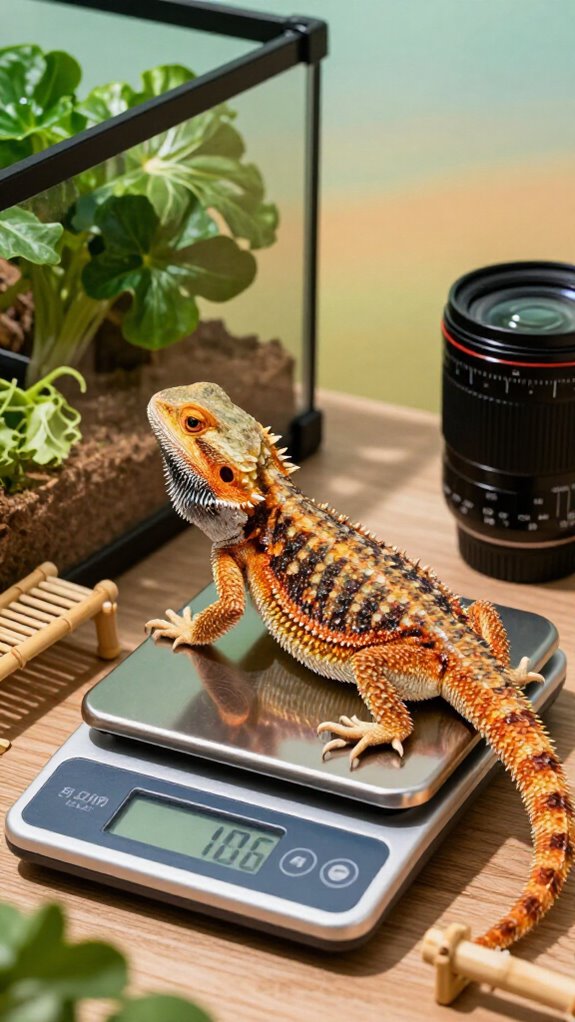
- Verify pair readiness: male ≥350g/18 months, female ≥400g/24 months, healthy exams, negative adenovirus tests.
- Mimic seasonality: reduce photoperiod and lower nighttime temps to 65–70°F for 4–6 weeks to induce reproductive cycles.
- Provide enhanced nutrition and calcium supplementation, monitor weight, and ensure female hydration before mating and egg-laying.
- Collect eggs without rotating, incubate in damp vermiculite at ~84°F (80–88°F), 70–90% humidity, and monitor daily.
Quick Starter Checklist for Breeding Bearded Dragons
Checklist time. I’ll keep this short, safe, and practical.
First, review basic breeding techniques: housing, health checks, and incubation plans, don’t skip adenovirus testing. Selecting the right breeding enclosure ensures your female has adequate privacy and space to reduce stress during the laying process.
Ask yourself, ready for daily monitoring and dedicated space? Pack a lay box, clean incubator, thermostat, and vermiculite, and label everything.
Avoid common mistakes, like poor substrate or rushing mating, or leaving adults together year-round — trust me, my exotic pets taught me that the couch and vivarium don’t mix.
Plan feed boosts, egg handling rules, and a 50–100 day hatch window.
Safety first, questions welcomed, we’ll tweak this checklist together.
Ensure you select one of the recommended best bearded dragon breeding boxes to provide proper egg-laying conditions for your female.
Choose Healthy Breeding Pairs: Sex, Age, Size, Temperament
When you’re picking a breeding pair, think like a picky landlord who only wants reliable tenants — because you’re about to house a tiny, demanding real estate project for months.
I check sex, age, size, and calmness, because safety matters. Health indicators like clear eyes, steady weight, and negative adenovirus tests are non-negotiable. Temperament traits matter too; do they mellow or scream when handled? Want data? Males ≥350g, 18 months; females ≥400g, 24 months, ~18″ long. I’ve kept exotic pets and tasteful terrariums, so I know comfort counts. Bearded dragon lifespan varies significantly based on genetics and care quality, making proper breeding selection crucial for long-term health outcomes. Selecting dragons with excellent genetics improves the odds of producing offspring that reach their full potential longevity.
| Calm | Healthy | Mature |
|---|---|---|
| Yes | Yes | Yes |
Confirm Reproductive Readiness and Ideal Timing
Before you flip on the mood lighting and call it romance, let’s make certain both dragons are truly ready to breed, because nothing kills enthusiasm faster than a failed clutch or a sickly hatchling.
I check reproductive readiness by weight, age, and clear health tests, because safety comes first. Is your male 18+ months and 350g, your female 24+ months and 400g?
Have you repeated adenovirus tests and confirmed separate housing outside season? Ideal timing is usually March, when hormones peak and behavior shows receptivity, but don’t rush it—too early or undersized females risk egg binding.
Gravid females especially need essential calcium supplements to support proper egg development and prevent metabolic bone complications.
Proper nutrition supplementation throughout the breeding process ensures both parents maintain optimal health for successful reproduction.
Trust data, not hope.
Set Up a Breeding Habitat : Enclosure, Lighting, Temperature
Because a proper breeding habitat can make or break your season, I set up the enclosure so both dragons have what they need, nothing fancy beyond function, and nothing neglected like my old ficus that mysteriously died when I brought home a blue-tongue skink. When selecting a 120 gallon terrarium, prioritize sturdy construction and front-opening doors for easy access during breeding activities.
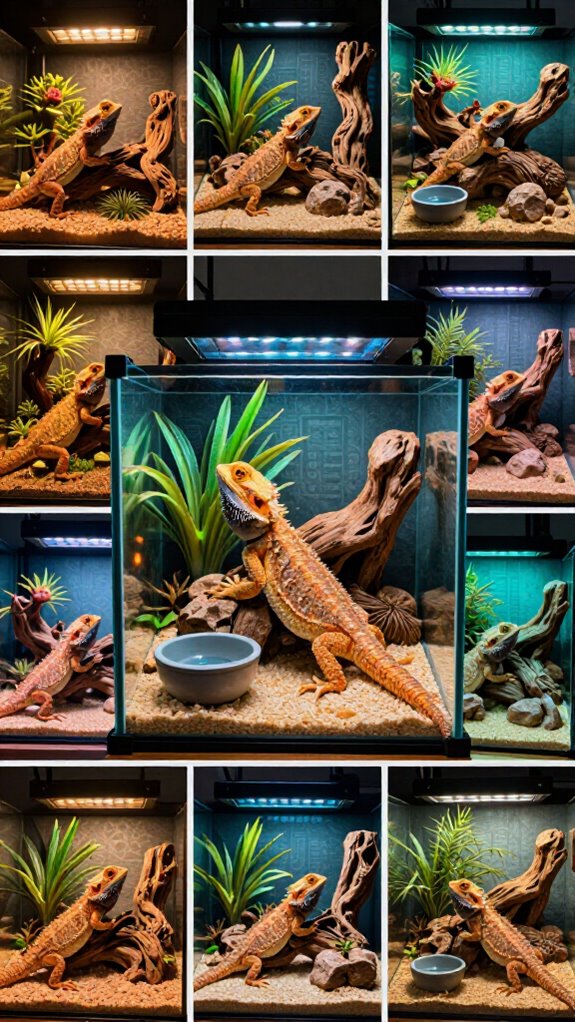
Pick enclosure dimensions at least 48″x24″x24″, more for comfort, safe and secure. Choose lighting types: full-spectrum UVB plus basking bulbs, on timers.
Maintain temperature ranges: basking 95–105°F, cool side 75–85°F. Add habitat decor for hiding and digging, guarantee ventilation needs are met, and use humidity control where required.
Sound, safe, and practical—what could go wrong?
A well-designed bearded dragon enclosure provides the essential foundation for successful breeding by replicating their natural arid environment.
Mimic Seasons Safely (Photoperiod & Brumation)
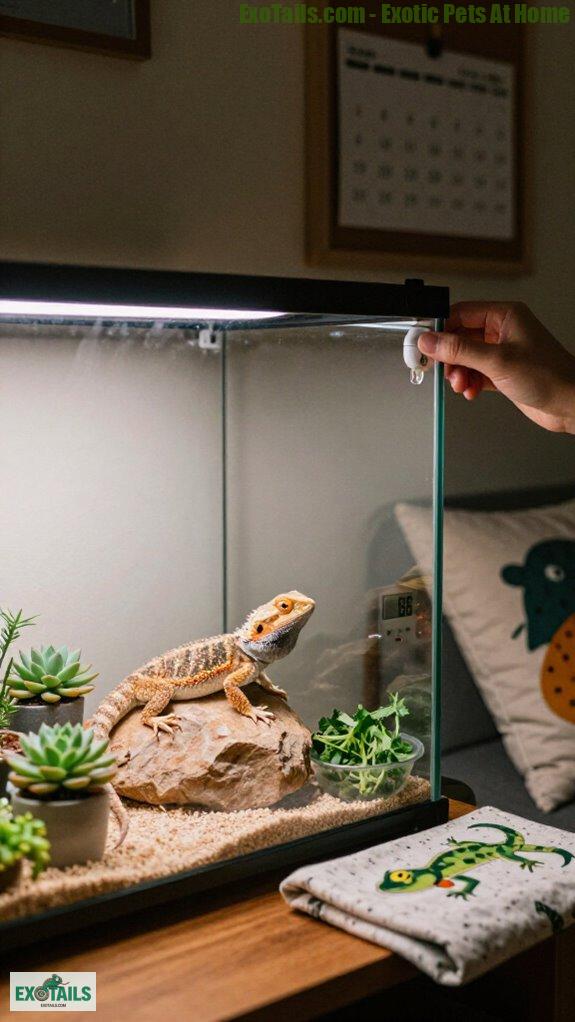
If I want my beardies to breed well, I mimic the seasons at home so their bodies get the same cues they’d get in the wild, and that means dialing in both light and cool-downs with care. Even outside breeding cycles, UVB exposure requirements remain critical for long-term health and proper calcium metabolism.
I slowly shorten daylight, using photoperiod manipulation to match winter, dropping to about 8–10 hours light over 4–6 weeks. Then, I cool the enclosure slightly. That starts safe brumation cycles, but I monitor weight, appetite, and behavior daily.
Ever worry? I do too, even with my odd mix of succulents and gecko-themed throw pillows. Stop if health dips, and consult a vet promptly.
During this cooling phase, I ensure nighttime temperatures drop to around 65–70°F to replicate natural winter conditions that trigger hormonal changes for breeding.
Prepare the Female: Diet, Calcium, Hydration Before Mating
After mimicking seasonal cues and watching your bearded dragon navigate its cool-down, it’s time to get the female’s body ready for mating, and that starts with dialing in her diet, calcium, and hydration so she can actually survive egg production without dramatic drama.
I focus on pre mating nutrition — more protein-rich feeders, dark leafy greens, and occasional fruit treats, all portioned to avoid obesity.
I monitor calcium levels with daily dusting and a reptile-safe supplement, and offer a shallow water dish plus regular misting for hydration. Selecting from the top calcium supplements ensures your female receives optimal mineral support during this demanding reproductive phase.
Want specifics? Aim for consistent calcium dosing, clear records, and a vet if anything looks off.
Understanding how often bearded dragons eat helps you schedule the increased protein intake without overfeeding during this critical preparation phase.
Introduce Male and Female Safely : Monitor Aggression and Injury
When I bring a male and female together, I watch like a hawk and keep a leash on excitement—literally and figuratively—because introductions can go from romantic to rowdy fast, and I don’t want anyone losing a tail over it.
I introduce pairs slowly, in neutral space, with escape routes, plenty of hide spots, and my hands ready.
Aggression monitoring is constant: biting, frantic chasing, or flattened postures mean immediate separation.
How long do I watch? At least an hour, then repeat short visits over days.
I once used a decorative plant as a divider—works and keeps my living room stylish, surprisingly.
Prepare a Nesting Box: Substrate, Depth, and Placement
You’ve watched them circle, kept an eye on the mood swings, and nudged them apart before it got dramatic—now it’s time to give your gravid female a proper place to lay, and I can’t stress how much a good nesting box changes the game.
I use a large plastic tray with safe nesting box materials: damp sand mixed with soil, clumpable to at least 8 inches deep, so she can tunnel without hitting plastic.
Place it in a quiet corner of the vivarium, near warm areas but away from traffic. Want peace of mind? Check stability and dryness daily—no surprises.
Collect and Incubate Bearded Dragon Eggs : Temps, Humidity, Turning
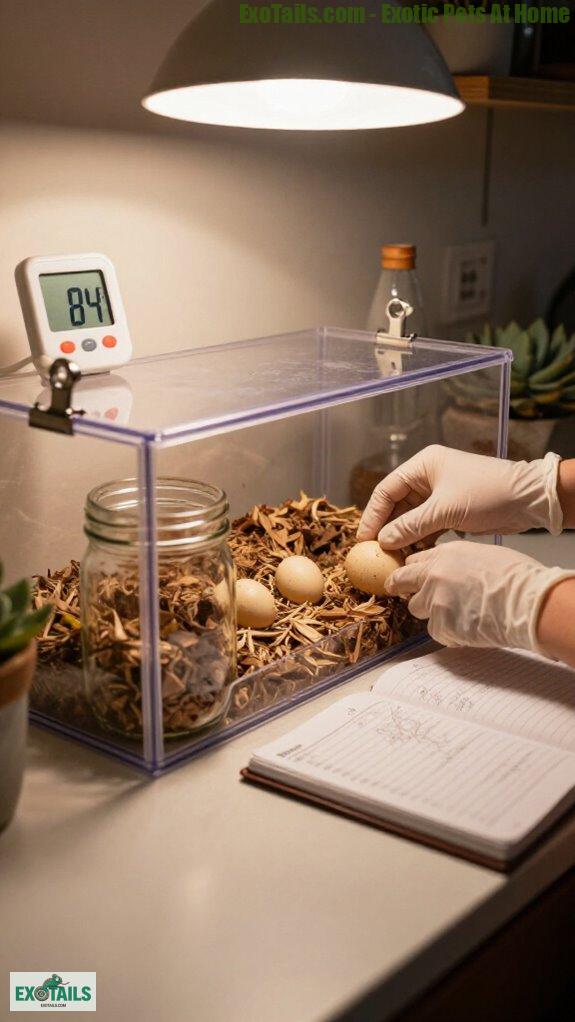
If you want healthy hatchlings, you’ve got to treat egg collection and incubation like a science project that also doubles as a spa day for reptile embryos — and yes, I’ve accidentally arranged an incubation setup that matched my living room’s mid-century vibe once, so I get the urge to make things pretty.
I collect eggs carefully, keeping their original orientation, half-burying in damp vermiculite. Set temps around 84°F, range 80–88°F, avoid >90°F. Maintain humidity levels 70–90%, check daily. Don’t turn eggs. Remove bad ones after 4–5 days.
| Item | Temp | Humidity |
|---|---|---|
| Target | 84°F | 70–90% |
| Safe range | 80–88°F | 65–92% |
| Warning | >90°F | <65% |
Care for Hatchling Bearded Dragons and Follow-Up Health, Legal, and Genetics Notes
Now that the eggs have been sitting snug in vermiculite and you’ve been obsessively checking temps and humidity (guilty as charged over here), it’s time to talk about the tiny, hungry lizards you’ll soon be responsible for.
Hatchling care means secure tubs, shallow water, UVB and gentle heat, plus small feeders and calcium dusting, daily. Unlike adults, hatchlings require a basking spot temperature that supports their rapid growth and digestion needs.
Health monitoring: weigh weekly, watch for lethargy, display clear eyes, and isolate sick babies fast.
Genetics considerations: record parent morphs, avoid close inbreeding, and note traits for future breeding choices.
Legal compliance: check local regs, document sales or transfers, and keep paperwork tidy—yes, even I file reptile receipts between throw pillows.
For comprehensive guidance on raising healthy young dragons, consult an essential bearded dragon care guide to ensure you’re meeting all their developmental needs.
Parthenogenesis in Captive Females
Because female bearded dragons can sometimes produce fertile eggs without a male, I want to make sure you understand what parthenogenesis looks like and why it matters, especially if you keep a solo female on your living room shelf next to that overenthusiastic monstera.
Parthenogenesis benefits include unexpected offspring without a male, which can be handy if you didn’t plan a breeding pair, but also creates genetic clones with limited diversity.
Parthenogenesis challenges are disease transmission risk and unpredictable egg viability.
Want safety? Monitor health, test for adenovirus, provide proper lay boxes, and consult a vet—yes, even if your dragon judges your plant choices.
Best Products to Use
When I’m picking gear for breeding bearded dragons at home, I focus on reliability and safety first, then comfort for the animals — because a stressed mom makes for a stressful breeder, and I don’t need more drama than my monstera already provides. I also keep emergency first aid kits on hand for any health issues that arise during the breeding process.
I pick breeding supplies like medical-grade nesting containers, clear incubation tools, and quality habitat decor, because looks aren’t everything.
I run strict health checks, use dietary supplements, and trust temperature monitors and humidity gauges for steady eggs.
Need examples? A digital thermostat, damp vermiculite trays, and a clear plastic lay box.
For egg incubation, I rely on top incubators for bearded dragon eggs to maintain consistent thermal conditions critical for healthy embryo development.
Want peace of mind? Buy well, check often, relax—yes, you can.
FAQ
What Paperwork or Permits Do I Need to Breed Legally in My Area?
You’ll need to check local regulations and obtain any required breeding licenses; I contact my city, state wildlife agency, and veterinary offices, keep records, and register with breeders’ associations to guarantee legal, safe breeding practices.
How Do I Safely Transport a Gravid Female to a Vet or Facility?
I’ll use a secure, ventilated carrier with soft padding to transport methods that minimize movement; I’ll keep temperatures stable, cover the carrier to reduce stress, drive calmly, and call ahead so the vet’s ready on arrival.
Can I Sell or Rehome Hatchlings Ethically and Where?
Yes — I can rehome or sell hatchlings ethically by following ethical considerations, vet-checking them, and buyer screening; I’ll require proof of responsible setup, refuse questionable buyers, and prefer rescues, experienced keepers, or vetted local adopters.
What Emergency Signs Indicate a Vet Visit During Incubation or Laying?
I’d seek a vet for incubation stress or laying complications if the female’s straining without eggs, extreme lethargy, pale/blue gums, bloody discharge, foul-smelling eggs, prolonged refusal to eat, severe swelling, or abnormal breathing—don’t delay.
How Do I Prevent and Treat Adenovirus Outbreaks in a Breeding Colony?
I know you’ll worry isolation seems extreme, but I quarantine new animals immediately. I monitor viral symptoms, sanitize thoroughly, test regularly, cull or isolate positives, enforce strict outbreak management, and consult a vet for diagnostics and protocols.
References
- https://www.youtube.com/watch?v=IIOIZo6PeAw
- http://www.mybeardeddragons.co.uk/breeding.html
- https://ourreptileforum.com/community/threads/how-to-breed-bearded-dragons.3725/
- https://www.youtube.com/watch?v=RKg8qzEbA_o
- https://reptizoo.store/blogs/reptizoo-reptiles-blogs/how-to-breed-bearded-dragons
- https://www.reptilecentre.com/blogs/reptile-blog/how-to-incubate-bearded-dragon-eggs-the-easy-way
- https://www.lllreptile.com/articles/154-reproductive-biology-of-bearded-dragons