10 Best Safe Plants for Dragon Tanks
Safe, sturdy plants for bearded dragon tanks—discover ten non-toxic, hardy options that boost humidity and hiding spots but which one is truly indispensable?
Your Dragon’s Botanical Sanctuary Awaits
Ever caught yourself staring at your scaly bestie, wondering if those plants will actually survive their curious chomping sessions? Yeah, me too.
I’m genuinely obsessed with creating thriving terrariums for my reptile crew. My bearded dragon Barnaby and axolotl Mr Wiggles completely transformed how I approach exotic pet care. These two taught me that substrate quality matters *hard*—and that’s why I documented everything on ExoTails, my sanctuary for reptile enthusiasts who refuse to compromise.
The Day Barnaby Nearly Became a Salad Expert
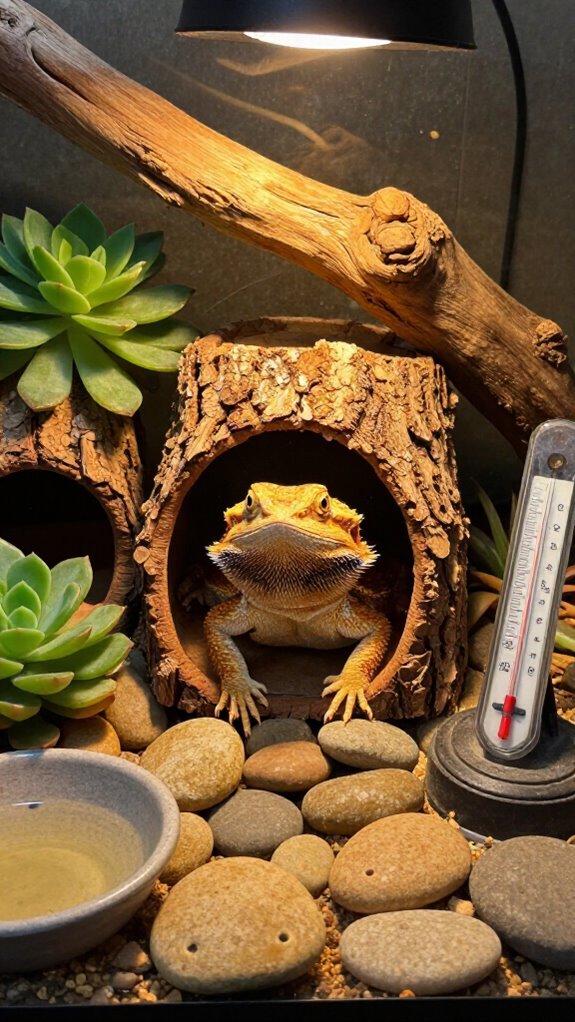
I’ll never forget the afternoon Barnaby face-planted into my *Haworthia succulenta* collection. Panic mode activated. But here’s the thing—after consulting with specialists and testing products like Reptile Systems’ UVB lighting (which influences plant health too), I realized educated plant selection prevents these heart-stopping moments. That single incident catapulted my research into overdrive, cementing my conviction that spineless aloe, echeveria, and rosemary aren’t just gorgeous; they’re survival essentials. Today, Barnaby coexists peacefully with his botanical neighbors using Zoo Med’s naturalistic substrates and anchored containers. Crisis averted, confidence established.
Ten indestructible specimens—spineless aloe, haworthia, echeveria, rosemary, basil, thyme, chamomile, clover, hibiscus, dwarf ficus—deliver humidity regulation, enrichment opportunities, and genuine nibble-tolerance. Deploy deep pots, quarantine protocols, and pest prevention strategies religiously.
Quick Takeaways
- Prioritize non-toxic, drought-tolerant plants like spineless aloe, haworthia, and echeveria for arid bearded dragon setups.
- Include edible, safe herbs such as rosemary, basil, and thyme for enrichment and occasional nibbling.
- Use low groundcovers and humidity-tolerant species—chamomile, clover, dwarf ficus, hibiscus—for varied textures and hiding spots.
- Add bioluminescent Java moss in damp microhabitats for safe moisture retention and calming aesthetics.
- Quarantine, use organic stock, establish roots fully, and secure pots to prevent uprooting and ingestion risks.
Are Live Plants Safe for Bearded Dragons? (Safety & Benefits)
If you want me to be blunt, yes—live plants can be safe for bearded dragons, and they often make tanks healthier and a lot prettier too.
I recommend live plants for plant benefits like humidity control, natural hiding spots, and mental enrichment, all of which support dragon health. Many keepers find that live plant kits simplify the process of selecting compatible, pre-vetted species for their setups.
Want safety? Choose non-toxic, heat-hardy species, let roots establish, and avoid pesticides. I’ve kept a dragon with a hardy succulent, and it calmed both my pet and my interior-design ego.
Curious about nibbling? Feed plenty of greens daily, monitor plant damage, and swap or protect plants if they’re munched too much.
For a reliable option that tolerates heat and occasional climbing, consider pothos plants which remain a favorite among experienced reptile keepers.
How to Choose Safe Plants for Your Bearded Dragon
You already know live plants can work great for beardies, so let’s talk about how to pick the right ones without turning your terrarium into a salad bar—or a cactus minefield.
I want ideal plant selection that’s non-toxic, hardy, and suited to arid heat, because safety matters. Ask: will it survive digging, tolerate basking light, and resist pesticides?
My experience with exotic pets and minimalist home decor taught me to balance function and style. One standout option for both beauty and safety is hibiscus plants, which offer edible flowers and leaves that many dragons enjoy browsing.
- Choose non-toxic, drought-tolerant species, well rooted before introduction.
- Prefer low-access tall plants or groundcovers with 3–6 month root time.
- Source organic, pesticide-free stock.
This equals real dragon habitat enrichment.
When selecting greenery, consider pothos varieties that thrive in the warm, dry conditions bearded dragons prefer.
Succulents Safe for Dragons: Aloe, Haworthia, Echeveria
Succulents make terrific dragon-friendly décor and snack stations, and I’m a bit obsessed with how well aloe, Haworthia, and Echeveria pull double duty as hardy plants and safe nibble options.
I recommend spineless aloe for hydration, Haworthia for toughness in arid setups, and Echeveria for colorful ground cover; together they show why succulent varieties are perfect for dragon tank care.
Plant them organically, let roots establish, and watch nibbling as occasional enrichment, not dinner. Curious which to try first? I’ve used them in my own terrarium setups, and they tolerate heat, digging, and the occasional brave bearded dragon bite—no drama. For a complete setup, consider exploring live plant kits designed specifically for bearded dragon habitats.
Non-Toxic Herbs for Enrichment: Rosemary, Basil, Thyme
I love how succulents handle the rough-and-tumble life of a dragon tank, and now I want to talk about herbs that bring flavor, scent, and enrichment to your setup, without turning into a salad bar.
I use rosemary, basil, and thyme for herb benefits and low-maintenance plant varieties that tolerate heat and nibbling, while adding scent for enrichment. Want specifics?
- Rosemary — woody, hardy, aromatherapy for dragons, anchors soil.
- Basil — fast grower, harvest sparingly, bright scent invites exploration.
- Thyme — low mat cover, tolerates trampling, smells lovely.
Trust organic sources, establish roots first, supervise curious bearded pals. While these herbs add enrichment, remember that essential supplements remain critical for complete bearded dragon nutrition beyond what plants can provide.
For a more immersive habitat, consider incorporating naturalistic backgrounds that provide climbing opportunities and visual barriers, which pair beautifully with these living herbs to create a fully enriched environment.
Edible Greens to Grow In-Tank: Collard, Mustard, Dandelion
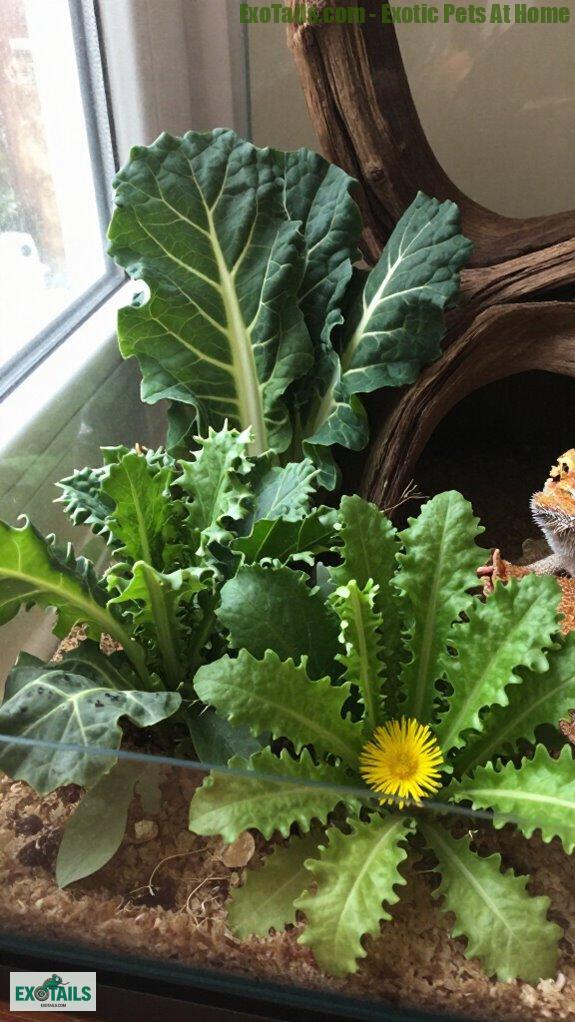
Three leafy powerhouses—collard, mustard, and dandelion—make excellent in-tank greens, and I’ll show you why they’re worth planting in your dragon’s little kingdom.
I grow collards for sturdy leaves that don’t wilt under curious nibblers. Mustard adds a spicy variety that stimulates appetite, and dandelion provides nutrient-rich bites and edible flower options, yes really.
Want safety? I avoid pesticides, establish roots before introduction, and rotate crops seasonally with seasonal plant rotations to keep a fresh supply.
Bearded dragon herb growing kits simplify the process by providing pre-seeded trays and appropriate soil mixes designed specifically for reptile-safe cultivation.
Have you tried trimming collards like tiny sails? My experience with exotic pets taught me patience, and honestly, your tank will look delightful, not like a salad explosion.
Heat-Tolerant Non-Toxic Tropicals (Best Options)
When you need tropical plants that can laugh at your heat lamp and still be safe for curious dragons, think about hardy, non-toxic species that thrive in warm, humid corners — and yes, they’ll survive the occasional bearded-misadventure nibble.
I recommend tropical varieties with proven heat tolerance, so your plants don’t sulk under the basking light. Ask: do they handle humidity and gentle nibbles?
I’ve used ficus and kentia in displays, they cope well.
- Kentia palm — tall, durable, gentle leaves.
- Ficus (dwarf) — sturdy, fast-rooting, non-toxic.
- Hibiscus (cool side rotated) — flowers, safe, humid-loving.
Groundcovers for Digging & Hiding: Chamomile, Clover
You’ve already picked a few heat-loving houseplants for the tall side of the enclosure, so now let’s talk about the floor—where dragons dig, hide, and practice dramatic yawns.
I like chamomile and clover for groundcover advantages. They root fast, cushion toes, and tolerate nibbling. Chamomile benefits include mild, safe flowers and calming scent—use sparingly so it establishes before grazing. Clover spreads low, hides egg-shaped toys, and survives digging with thick mats. Building custom decor elements for your dragon’s habitat can enhance these natural behaviors and create a more enriching environment.
Want variety and safety? I mix patches, stagger planting times, and watch for overgrazing. Trust me, a tidy tank looks great and keeps your dragon content—no drama required. While live plants support enrichment, remember that proper feeding schedules matter just as much for your dragon’s overall health and activity levels.
Toxic Plants to Remove Right Away
Anyone who’s ever loved plants and reptiles knows that a pretty leaf can hide a nasty secret, so I’m going to be blunt: pull toxic plants out of your dragon’s tank the moment you spot them.
I check for common toxic plants like oleander, philodendron, and dieffenbachia, because beardies nibble and don’t read labels.
Watch for symptoms of toxicity — drooling, lethargy, vomiting — and act fast. Want specifics? Here’s a short checklist:
- Remove and isolate the plant immediately, gloves on, no drama.
- Clean the substrate and décor thoroughly.
- Monitor your dragon and call your vet if symptoms appear.
Introducing Live Plants Safely (Quarantine, Soil, Anchoring)
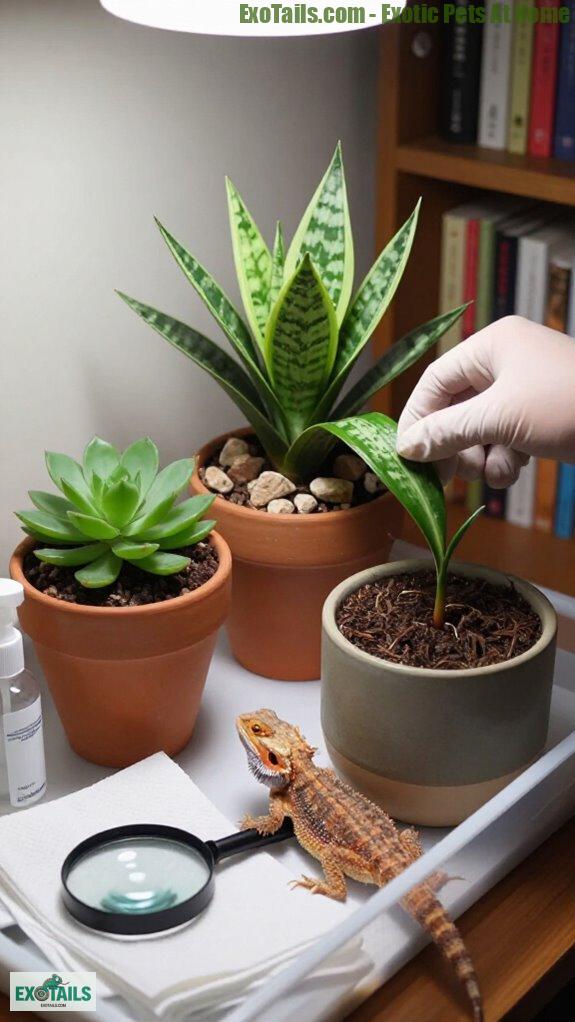
Because live plants can be a blessing or a biohazard, I always treat introductions like a mini quarantine mission — no drama, just procedure.
I isolate new plants for a full quarantine process, checking pests, molds, and watering response. I pot in safe soil types—cactus mix for succulents, loam blends for tropicals—no mystery dirt.
Want anchoring tips? Use heavier pots, bury roots deep, or glue rocks to bases so curious dragons can’t uproot them. I’ve done this with beardies and succulents, learning the hard way.
Want peace of mind and a pretty tank? Follow steps, take photos, and don’t skip the wait.
Maintenance & Troubleshooting: Pruning, Substrate, Pests, and If Your Dragon Eats a Plant
While I love a lush, leafy tank, keeping plants healthy around a curious dragon takes steady maintenance and a few tricks I’ve learned from wrecked succulents and a very judgmental bearded dragon.
I prune dead leaves, check substrate depth, and monitor plant health weekly; compact soils and pebbles stop digging, and rooted plants get a month before introductions. For pest control I use manual removal and safe neem alternatives, never pesticides. Selecting the right natural substrate helps maintain the stable humidity levels that keep both plants and dragons thriving in a shared environment. A bioactive soil mix provides the ideal foundation for plant root health while supporting beneficial cleanup crew organisms.
- Pruning: remove damaged growth, encourage compact roots.
- Substrate: firm, breathable, escape-proof layers.
- If eaten: watch digestion, offer greens, call vet if concerned.
Bioluminescent Java Moss
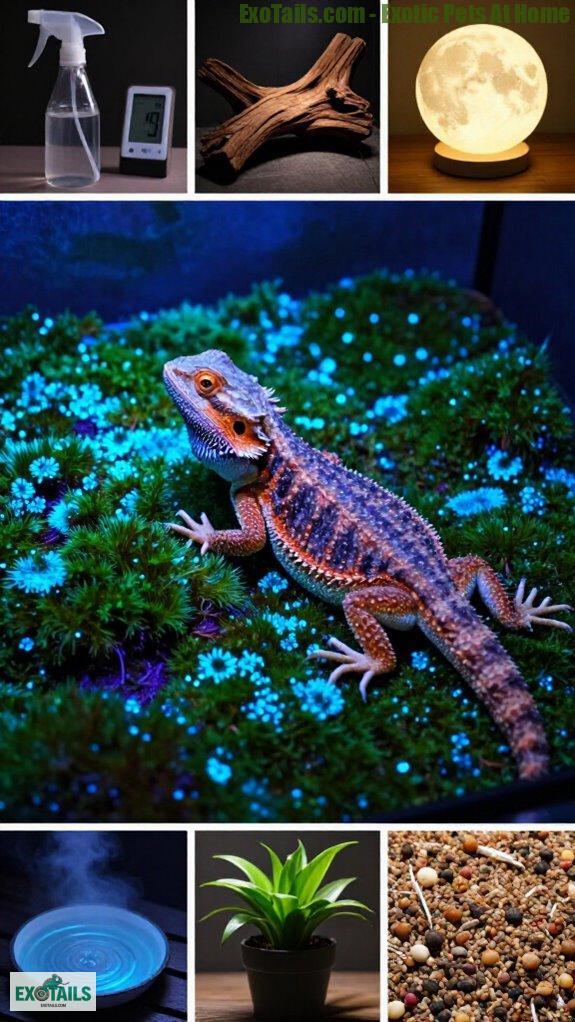
If you’re thinking of adding a soft, glowing carpet to a dragon tank, you’ll want to hear about bioluminescent Java moss — it’s Java moss that’s been selectively bred or treated to emit a faint, cool-blue glow under low light, and yes, it looks straight out of a sci‑fi terrarium catalog.
I’d recommend it for safety-minded keepers; its bioluminescent characteristics are subtle, non-toxic, and won’t harm curious bearded dragons who take a nibble.
It thrives in humid, damp spots and mimics aquatic environments when misted, so set it where moisture hangs.
Want a living nightlight that’s easy to maintain, and oddly calming? Me too.
Best Products to Use
That glowing Java moss sounds dreamy, but let’s talk gear you’ll actually need to keep the tank safe, tidy, and attractive — without turning your living room into a jungle science lab.
I’m picky about substrates, so I use a nutrient-rich plant substrate layer, capped with reptile-safe sand, to stop digging disasters.
Want low-maintenance feeding? Organic fertilizers in measured doses, not grocery-store guesswork. For vibrant blooms your dragon can safely nibble, consider adding edible hibiscus varieties to your setup.
- Quality plant substrate, sterilized, for root stability and slow nutrient release.
- Reptile-safe topcoat (sand or coconut fiber), for digging control and hygiene.
- Precise organic fertilizers, dilute and infrequent, to avoid burns or toxins.
When selecting materials, prioritize sustainable enclosure materials that minimize environmental impact while ensuring your dragon’s safety and comfort.
Trust me, your dragon will thank you.
FAQ
Can Live Plants Alter My Enclosure Humidity Long-Term?
Yes — I’ve found live plants can alter enclosure humidity long-term by buffering humidity fluctuations and improving moisture retention; I’ll monitor levels, choose hardy species, avoid overwatering, and guarantee safe substrates to protect my dragon.
Which Plants Are Best for Baby Versus Adult Bearded Dragons?
Sure — babies want tender, nibble-safe greens: baby friendly options like dwarf jade, haworthia, pothos and spider plant; adults get tougher, adult recommended varieties such as ponytail palm, aloe (spineless), sempervivum and prickly pear.
Can Plant Fertilizers Harm My Dragon if Absorbed by Soil?
Yes — I worry fertilizer toxicity can harm your dragon if soil absorption transfers chemicals into plants they eat. I recommend avoiding synthetic fertilizers, using organic options, and rinsing/store-bought plants thoroughly before adding them to enclosures.
How Do Plants Affect UVB and Basking Spot Temperatures?
Plants can shade yet cool: they lower basking spot temperatures and slightly alter UVB absorption. I observe placement carefully, balancing basking preferences and UVB absorption so my dragon gets safe heat and light.
Are There Plants That Repel Common Feeder Insects?
Yes — I use insect repelling plants like lavender, rosemary, and lemongrass for natural pest control near enclosures, but I avoid strong scents inside tanks and prioritize safe, non-toxic species and organic sourcing to protect my dragon.
References
- https://www.zenhabitats.com/blogs/reptile-care-sheets-resources/5-safe-plants-to-use-in-a-bearded-dragon-habitat
- https://www.youtube.com/watch?v=AI0-N7SY-tI
- https://community.morphmarket.com/t/live-plants-for-beardie-setups/14064
- https://cedarbridgebotanicals.com/blogs/info/plants-for-bearded-dragons
- https://ourreptileforum.com/community/threads/safe-plants-for-bearded-dragon.24816/
- https://www.youtube.com/shorts/4nuznpTdbzY