What Are Key Tips for Multi-Species Reptile Habitats?
Get ready to discover essential tips for creating harmonious multi-species reptile habitats that will keep your cold-blooded friends thriving—curious about the best practices?
Creating a happy, multi-species reptile habitat can be a real adventure! First, think about which species get along—no one wants a dramatic showdown. Give each buddy enough space to claim their own territory, plus spots to bask and hide. Keeping their temperature and humidity just right is essential too. Trust me, cranky reptiles can throw temper tantrums! Don’t forget proper lighting for their health. Ready to explore more tips that’ll keep your cold-blooded friends thriving?
Quick Takeaways
- Ensure compatibility by pairing calm and non-aggressive species to prevent stress and conflict in the habitat.
- Design the habitat with adequate space for individual territories, basking spots, and hiding areas to reduce competition.
- Maintain proper temperature gradients and humidity levels to support the specific needs of each reptile species for optimal health.
- Incorporate various hiding spots and enrichment items to promote stimulation and prevent boredom in the habitat.
- Provide appropriate lighting adjusted for each species’ needs to ensure adequate UVB exposure and prevent overheating.
Understanding Species Compatibility
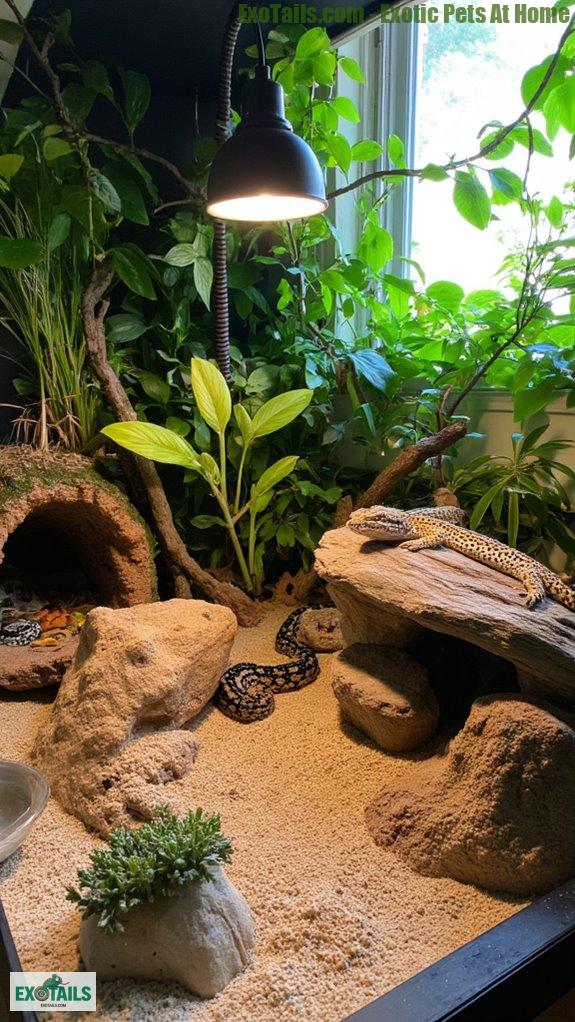
When it comes to creating a multi-species reptile habitat, understanding which species can coexist is like playing a thrilling game of matchmaker.
Imagine pairing a chill gecko with a temperamental snake—it’s like putting a cat and a dog in the same bed!
Pairing a laid-back lizard with a feisty serpent is like mixing oil and water—chaos guaranteed!
You’ll want to look at species behavior and habitat preferences. Some reptiles bask in the sun, while others prefer shady corners to brood.
I mean, who doesn’t love a good sunbath?
Finding the right combo can save you from a future drama series in your tank!
Trust me, I’ve learned the hard way while decorating with these fabulous creatures!
Space Requirements and Zoning
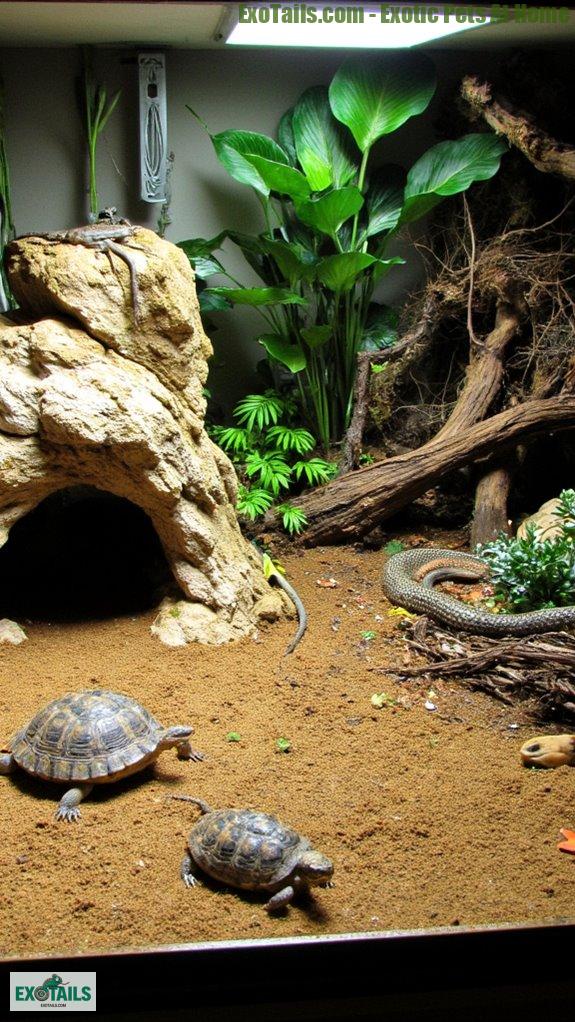
Creating the perfect multi-species reptile habitat isn’t just about the inhabitants; it’s also about giving them enough space to strut their stuff.
Space allocation is vital! Nobody wants a lizard and a tortoise playing tug-of-war over a rock, right?
In my experience, a well-thought-out habitat design gives each creature their own territory where they can bask, hide, and get some exercise without feeling like they’re in an overcrowded party.
Think about your reptiles’ personalities—like a reserved guest at a bustling bash.
Temperature and Humidity Control
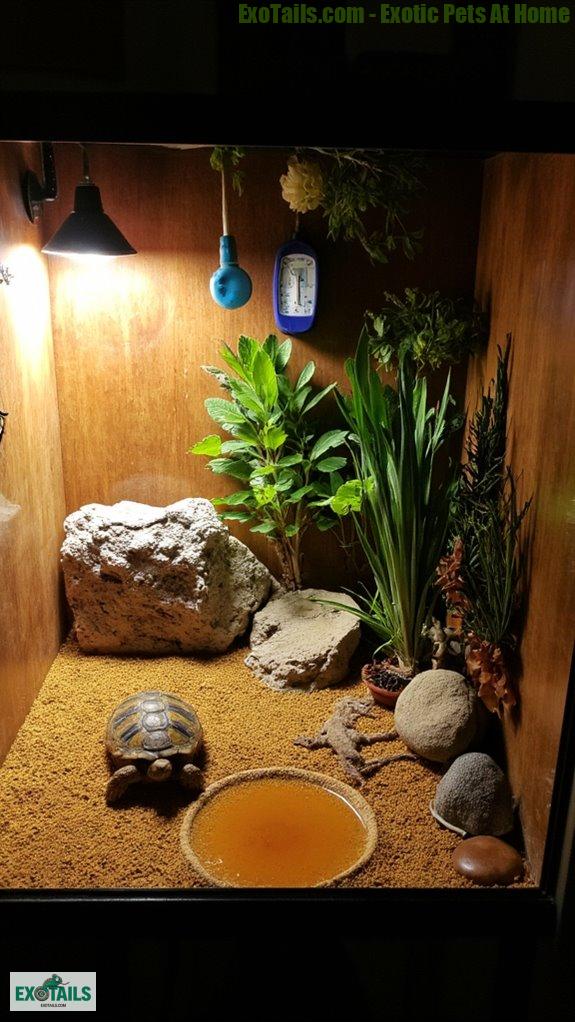
While it may seem like a breeze to just pop a heat lamp in the corner and call it a day, balancing temperature and humidity for multi-species habitats is a whole different ballgame.
Trust me, I learned this the hard way—my poor turtle’s had better times!
Here are some key pointers:
- Use thermoregulation methods that provide hotspots and cool areas.
- Don’t forget about hygrometer usage; knowing your humidity levels is essential.
- Regularly check and adjust equipment for ideal comfort—after all, reptiles don’t do well with mood swings!
Providing Hiding Spots and Enrichment
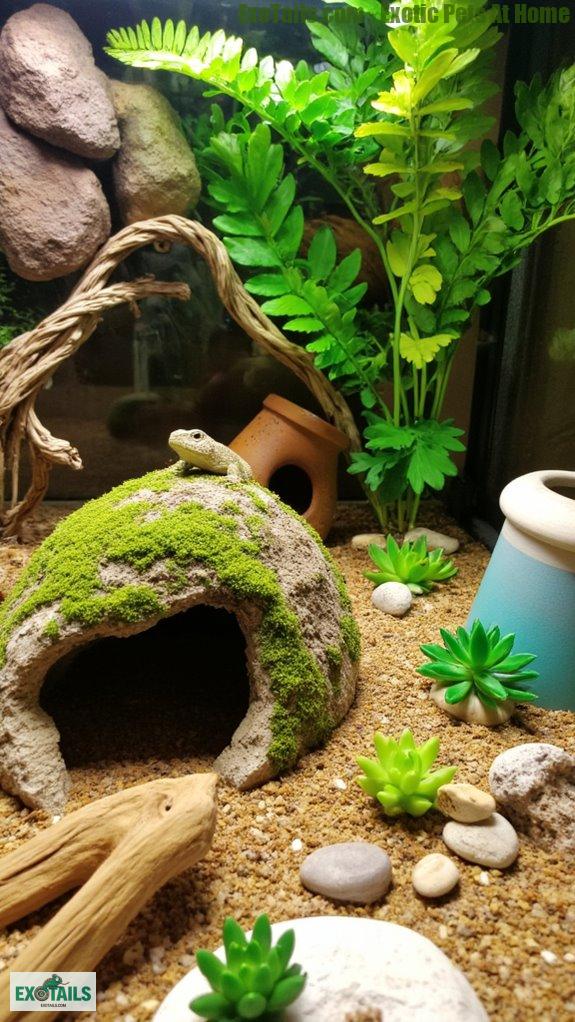
After nailing down that tricky temperature and humidity balance, you might think you’re in the clear, but hold your horses!
You’ve gotta think about hiding places and behavioral enrichment for your scaly pals. Envision a party where the guests hide under the snack table—awkward, right?
By adding caves, plants, or even creative decorations (I once turned a ridiculous pot into a hidey-hole), you’ll keep your reptiles snug and happy.
Create cozy hideouts with caves, plants, or quirky decor to keep your reptiles content and thriving.
Plus, enriching their environment can spice up their lives like adding hot sauce to a bland meal. Who doesn’t want a fun-loving reptile bouncing around in their habitat? Keep it lively!
Proper Lighting for Diverse Needs
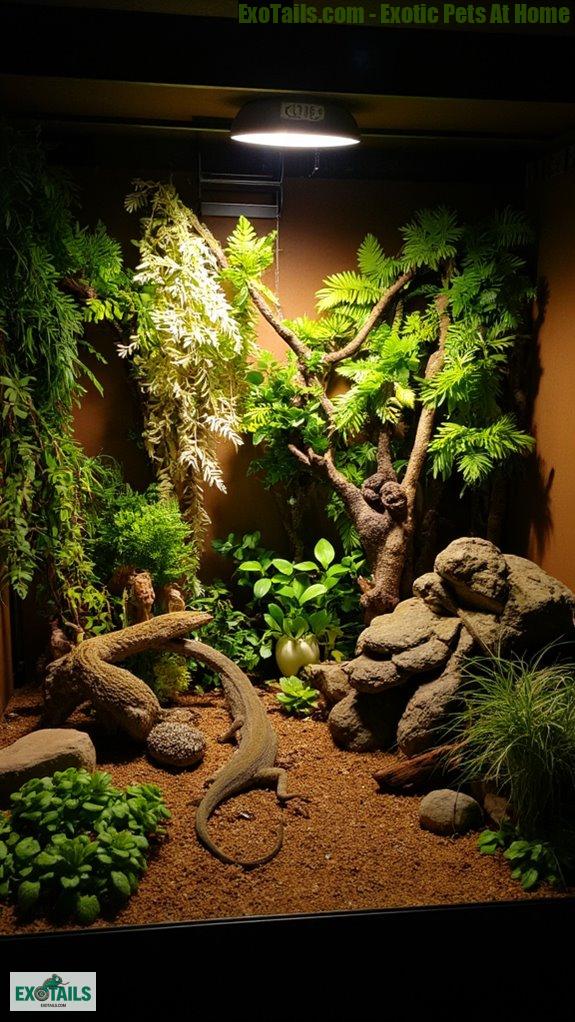
Even if you’ve got the temperature and humidity just right, without proper lighting, your reptiles might as well be living in a cave—literally!
Every species has its own needs, so let’s shine some light (pun intended) on this vital aspect:
- Lighting Spectrum: Different colors of light affect reptiles in unique ways; some bask, while others hide!
- UVB Requirements: Can your scaly companion manufacture their own vitamin D? Not without UVB, they can’t!
- Timing: Too much light can turn your habitat into a sauna; too little might make everyone feel like a vampire.
Trust me, your critters will thank you!
Water Sources and Maintenance
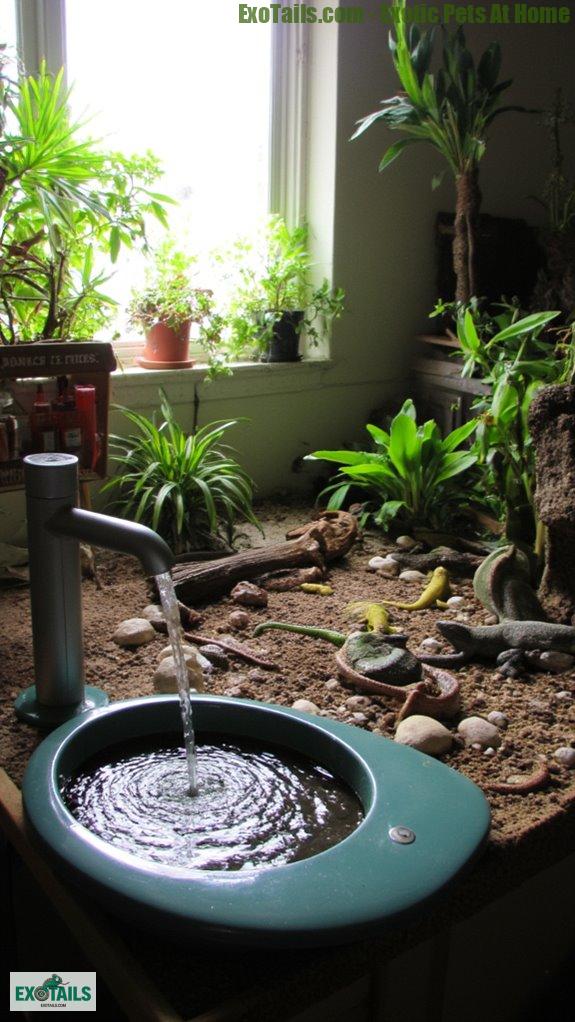
Alright, so we’ve got the lighting sorted, but how’s your water game?
Water quality is essential for keeping your multi-species reptile squad happy. I mean, who wants a cranky lizard?
Invest in a good filtration system, and practice a solid maintenance frequency—think weekly water checks. It helps prevent that “water of questionable origin” blues.
Trust me, I learned this the hard way with my first snakes; their tiny, judging eyes reminded me that clean water isn’t optional.
Monitoring Health and Behavior
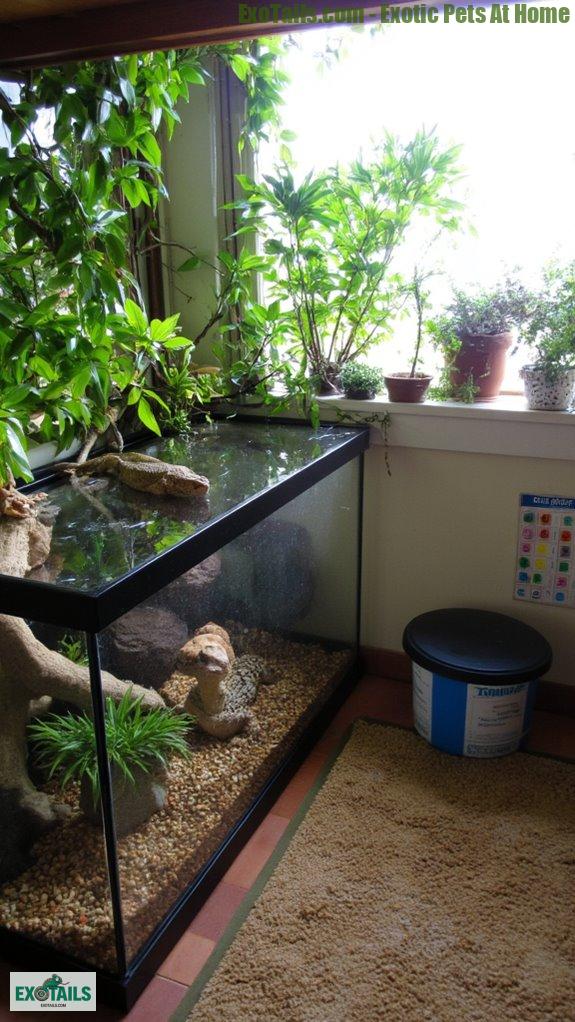
Keeping an eye on your reptile friends’ health and behavior is absolutely essential—trust me, it’s like being their personal detective.
Observing your reptiles is crucial—think of it as channeling your inner detective for their well-being!
Think you can ignore those subtle changes? Think again!
I love making health observations and spotting behavior patterns; it’s like my version of a crime thriller!
Here’s what I look for:
- Eating habits: Are they chowing down or suddenly on a hunger strike?
- Activity levels: Are they the Olympic athletes of the reptile world or couch potatoes?
- Physical appearance: Any suspicious lumps or colors?
Trust me, your scales will appreciate your sleuthing skills! 🕵♂
Exotic Pets At home
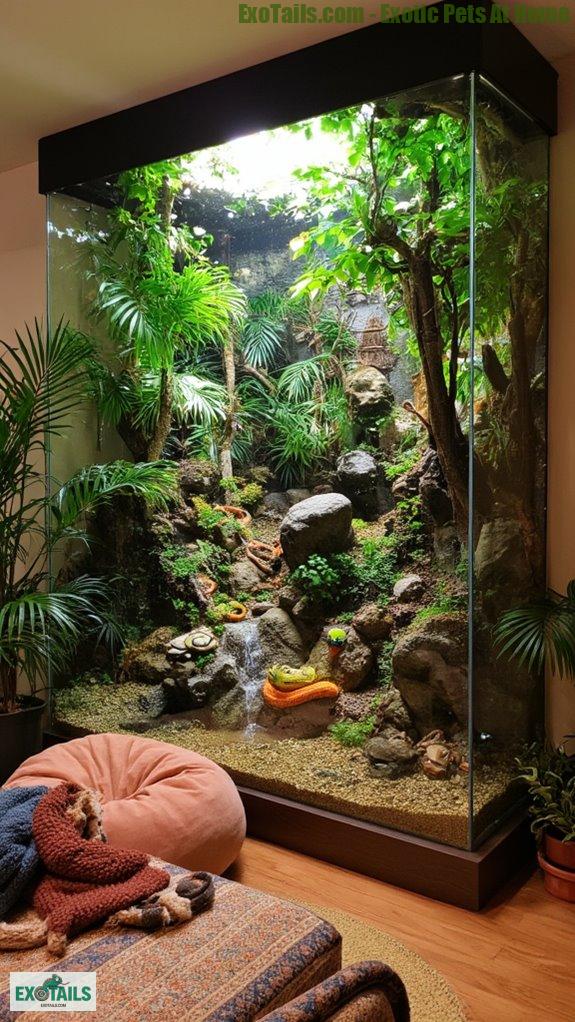
Envision transforming your living space into a vibrant jungle or a cozy cave—the thrill of making exotic pets a part of your home is like stepping into a real-life adventure!
Imagine the crafty habitat design you can create, complete with waterfalls for your turtles and mini jungles for your snakes.
Exotic pet care isn’t just a chore; it’s a chance to impress your friends and maybe even one-up the neighbor’s cat!
As someone who juggles pets and decor, I launched ExoTails to share the journey.
Who knew having a lizard could turn your living room into a Zen sanctuary? Incorporating multi-pet enrichment into your habitat design can create a harmonious environment for all your reptiles.
My Ebook About Pet Room Decor
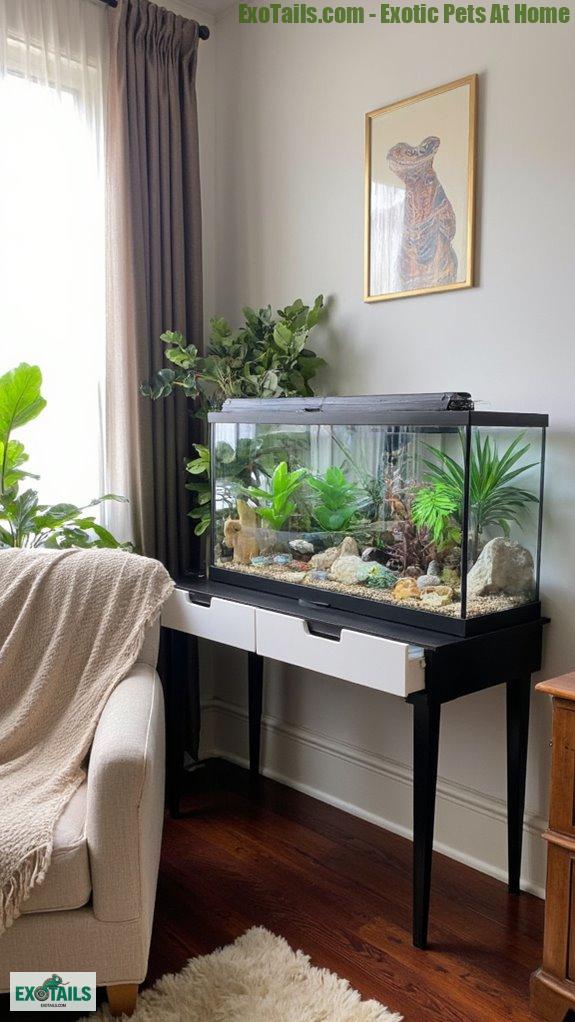
Creating a pet-friendly haven doesn’t mean sacrificing style; in fact, it’s an opportunity to showcase your flair for decor!
Designing a stylish space for your pets allows you to express your decor expertise while keeping it practical and fun!
Why not jazz up your pet’s space with some fabulous pet decor? It adds charm, and your scaly pals will love it too!
Check out my ebook for tips on habitat design that doesn’t look like a jungle exploded. Here’s a sneak peek of what you’ll find:
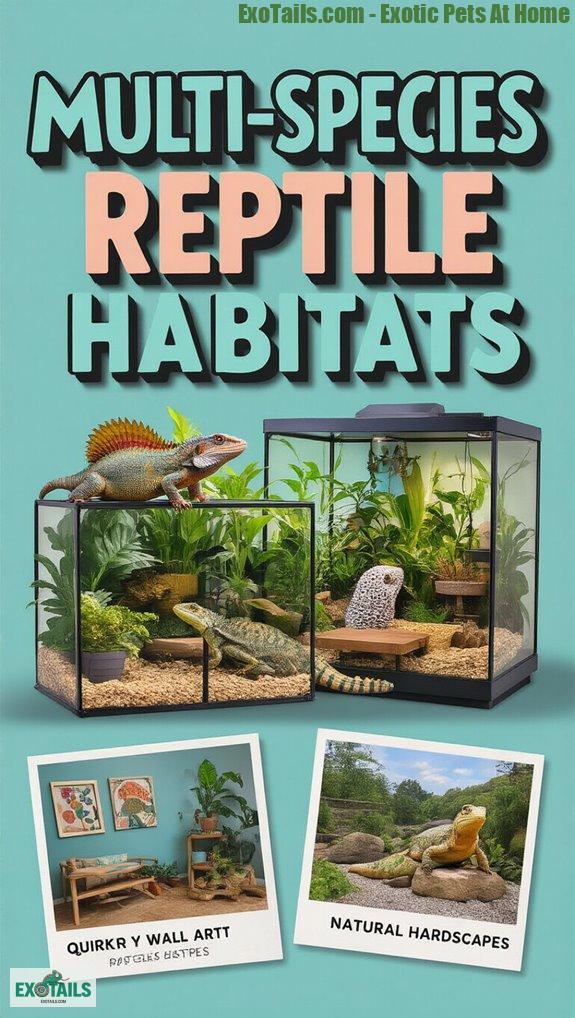
- Quirky wall art featuring your favorite reptiles
- Multi-functional furniture that hides pet supplies
- Stylish terrariums that double as conversation starters
- Incorporating natural hardscape elements can provide essential enrichment for your reptiles.
Let’s make your home a fashionable fortress for your pets! Why not?