5 Best Hiding Spots for Pet Dragons
Find the five best hides for your bearded dragon—cozy, safe, and photogenic options await, with exact placement and product tips to follow.
5 Best Hiding Spots for Pet Dragons
Ever notice how your bearded dragon zones out the moment you set up the *perfect* hide? That’s not coincidence—that’s contentment.
I’m genuinely obsessed with creating sanctuaries for my scaly companions. Barnaby, my bearded dragon, literally changed my life three years ago. When I rescued him, he was stressed, refusing food, basically a tiny prehistoric grump. Mr Wiggles, my axolotl, became his unlikely companion. Watching them thrive sparked something primal in me—I needed to understand *everything* about their comfort. That obsession became ExoTails, my blog documenting every hide hack, every temperature calibration, every “oh crap, that’s why he won’t eat” revelation.
These aren’t just aesthetic choices. They’re behavioral architecture.
The Five Game-Changers
A warm basking rock under a heat lamp (100–110°F) triggers thermoregulation like nothing else. Cork bark hides with 4–5″ openings from Zoo Med provide psychological security. Log caves anchored firmly against rear walls eliminate that paralyzing “what if it collapses” anxiety. Layered foliage corners with staggered shelves stimulate natural climbing instincts. Finally, cool ceramic night hides from Exo Terra facilitate restorative sleep cycles.
When Barnaby Refused to Hide
Barnaby wouldn’t touch any enclosure I built. Panic set in. Then I realized—I’d overcomplicated everything. One unadorned Reptile Systems cork bark hide, positioned low and slightly shadowed, changed everything. He burrowed immediately. Sometimes the answer isn’t complexity; it’s intuitive simplicity. That moment taught me more than months of research ever could.
Quick Takeaways
- Warm cork bark hide near the basking area for secure, humid shelter and natural texture.
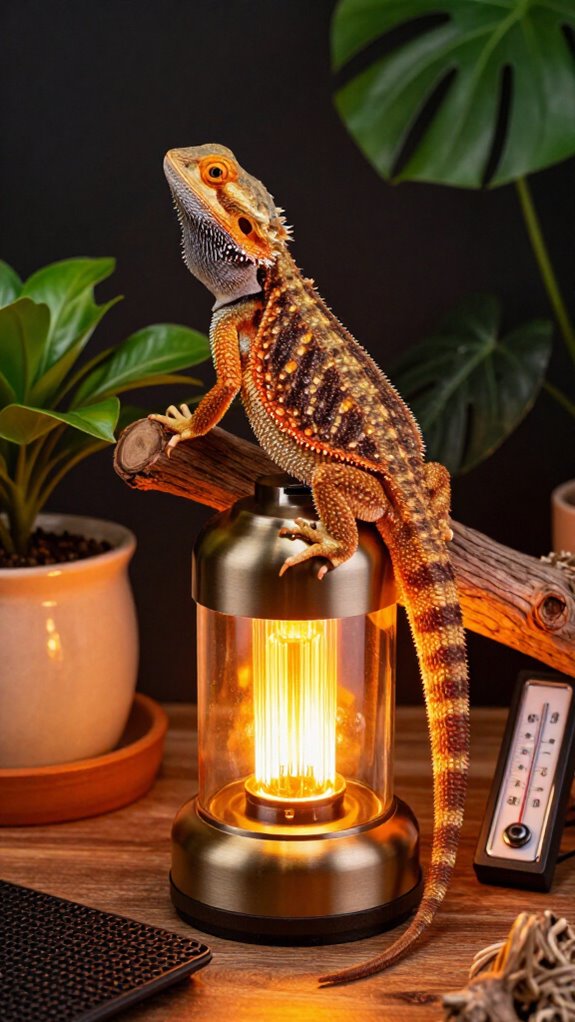
- Sunbasking rock spot under the heat lamp for thermoregulation and daytime lounging.
- Low-draft log cave placed against a rear wall for a stable, protected retreat.
- Foliage corner with staggered climbing shelves and sturdy branches for shade and enrichment.
- Night ceramic hide in a quiet corner to provide a cool, roomy, easy-to-clean sleeping refuge.
How to Choose a Bearded Dragon Hide: Size, Temp, Placement
If you want your bearded dragon to feel like royalty and not a stressed-out lizard, you’ve got to pick the right hide—size, temperature, and placement all matter. The ideal setup creates multiple microclimates that mimic natural cave environments where wild dragons retreat.
I recommend two hides, one roomy enough to turn around on the warm side, and one cooler for rest, because dragons like choices, not chaos.
Consider hide materials—wood, rock, or resin—safe, non-toxic, and easy to clean.
Place them in quiet, draft-free spots along clear temperature gradients so your pet can thermoregulate.
Want specifics? A hide opening about 4–5 inches works for adults.
Cork bark hides provide excellent natural texture and humidity retention for bearded dragons seeking secure shelter.
Trust me, I’ve set up cozy, stylish dens while avoiding designer disaster.
Sunbasking Rock Bearded Dragon Hide: Setup, Temperatures, DIY Tips
When you give your bearded dragon a sunbasking rock hide, you’re not just adding décor—you’re installing a micro-climate that lets your dragon thermoregulate like a tiny, scaly king. A proper enclosure setup should always prioritize these thermal gradients to support your pet’s natural behaviors and overall health.
I set up a layered rock shelf near the heat lamp, aiming for a rock temperature of 100–110°F at the basking spot, with a cooler side around 80°F.
That sunbasking benefits your dragon by offering quick warmth and a safe retreat, simple but essential.
Want DIY? Use slate or ceramic, secure edges, and check temps with a probe.
I’ve done this with quirky decor, and it really works—no drama, just happy basking.
Essential rock hides form the foundation of any proper bearded dragon habitat setup.
Low‑Draft Log Cave: Secure, Windproof Hide and Placement Advice
I often start by saying you want a hide that actually blocks wind, because drafts turn a cozy cave into a chilly disappointment—your dragon will thank you, and you’ll stop playing thermostat detective.
A low‑draft log cave makes a perfect windproof hide, sturdy and near floor level, easy to enter. While hides provide security, climbing branches are equally essential for bearded dragons to exercise and regulate their body temperature through vertical movement. Want placement tips? Quiet corner, away from vents, with a stable entrance height.
- Position against a rear wall for stability.
- Face entrance away from room traffic.
- Add flat slate floor for grip and warmth.
- Weight the log base to prevent tipping.
I’ve used similar setups, they look nice and stay safe. When selecting hides, rock hides remain a popular choice among bearded dragon owners for their natural appearance and excellent thermal properties.
Foliage Corner + Climbing Shelves for Bearded Dragons: Shade & Enrichment
You’ve got a cozy low‑draft log cave set up, and now you can build a green, climbable corner that gives your bearded dragon shade, hiding options, and a chance to stretch those legs.
I add soft artificial plants and staggered shelves for foliage benefits and climbing enrichment, so your dragon gets shade, choices, and safe exercise. Want specifics? I’ve used mopani branches and non‑toxic faux vines, they hold up and don’t stab anyone. Ideal climbing branches provide the sturdy, textured surfaces bearded dragons need for secure grip and natural movement. Even with excellent hiding spots, your dragon still needs proper basking bulbs to regulate their body temperature and stay healthy.
| Feature | Material | Purpose |
|---|---|---|
| Shelf | Mopani wood | Basking, climb |
| Plant | Faux vine | Shade, hide |
| Pad | Cork | Grip, safety |
| Ramp | Slate | Traction |
| Anchor | Zip ties | Stability |
Night Ceramic Hide: Cool Sleeping Spot, Safety, and Sizing
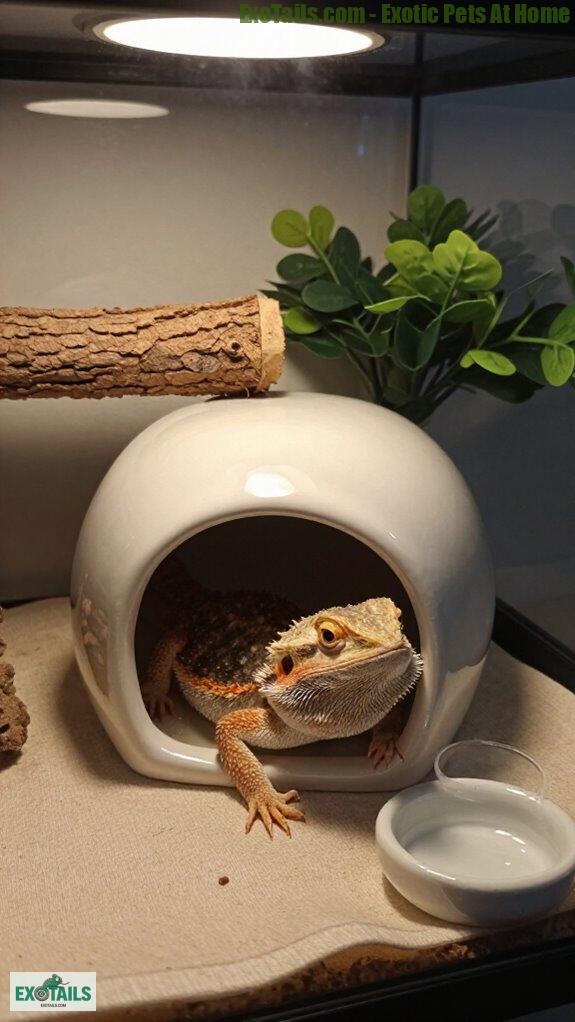
Why does a night ceramic hide matter so much for a bearded dragon’s sleep, safety, and comfort? I’ll tell you: it gives a cool, stable refuge for nocturnal behavior, and uses night hide materials that stay safe and clean. While ceramic hides offer excellent temperature regulation, many keepers also explore cork bark hides as a natural alternative for daytime basking areas.
- Size: roomy enough to turn, not too large to lose heat.
- Placement: quiet corner, away from drafts and foot traffic.
- Material: glazed ceramic or food-safe clay, easy to sanitize.
- Security: low entrance, solid walls, no sharp edges.
Want specifics? I once matched a ceramic cave to my living room, practical and stylish — dragons don’t care, but I did. The right substrate choice also plays a key role in maintaining the cool, stable environment your dragon needs for quality sleep.
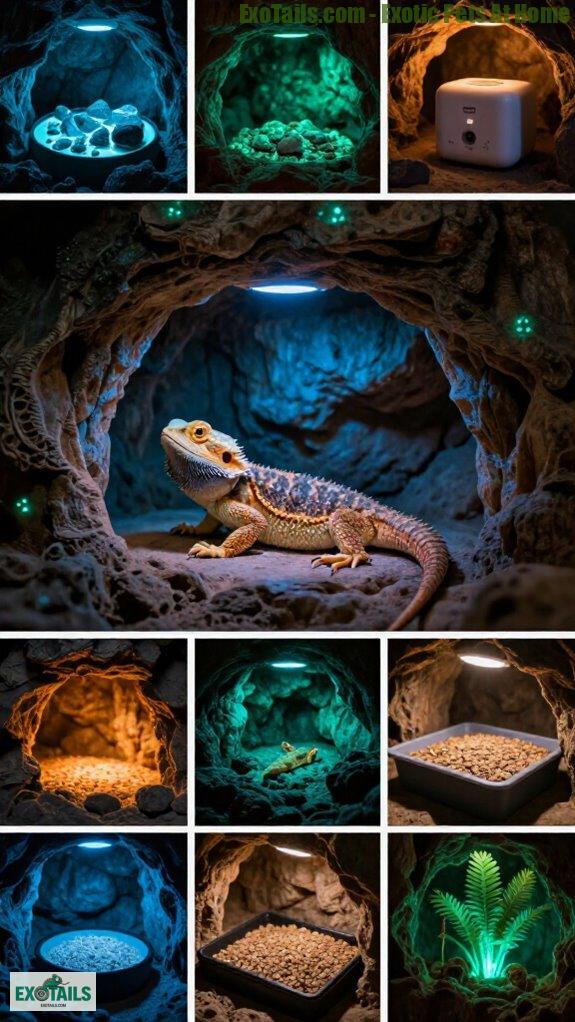
Bioluminescent Cave Networks
Although cave-dwelling light shows sound like something out of a fantasy novel, bioluminescent cave networks can actually be an inspiring idea for a pet dragon’s enclosure—if you handle them thoughtfully and safely.
I’d use subtle bioluminescent features, like low-glow strips or faux fungi, to mimic a cave ecosystem without stressing your dragon, okay?
Think cool retreats, gentle light cycles, and secure hides that block drafts.
Want examples? Install dimmable LEDs behind rockwork, keep temperatures steady, and avoid flashy patterns that spook.
I’ve paired mood lighting with sensible hides before, and yes, it looked magical—without compromising safety, or my furniture.
Best Products to Use
When I recommend products for a pet dragon’s hiding spots, I focus on durability, temperature safety, and calm aesthetics—because nothing ruins a perfectly styled vivarium like a heat lamp that melts your fake log (been there, sigh). Choosing the right cave hides ensures your bearded dragon feels secure while maintaining proper thermoregulation in their environment. Drawing from terrarium design inspiration can help you create a cohesive, natural-looking habitat that reduces stress for your pet.
- Slate slabs — sturdy, retain heat well, resist chewing; great for basking and cool edges.
- Mopani or driftwood — natural aesthetics, climbable, secure anchor points for hides.
- Ceramic half-caves — excellent heat tolerance, easy to clean, stable for heavy dragons.
- Sand pile mats + hide box — safe burrowing, non-toxic substrate option, place on cool side.
Want safer picks? I’ll help.
FAQ
Can Hides Transmit Parasites or Mold to My Dragon?
Yes — hides can transmit parasites or mold if dirty; I clean or replace hiding spot materials regularly, quarantine new items, and use safe disinfection methods to guarantee parasite prevention and keep my dragon healthy and stress-free.
How Often Should I Clean and Disinfect Hides?
I clean hides weekly and deep-disinfect monthly; I’ll remove debris, wash with hot soapy water, then use reptile-safe disinfecting methods (diluted bleach or veterinary antiseptic), rinse thoroughly, and fully dry before returning them.
Are Electronic Temperature Sensors Safe Inside Hides?
Coincidentally, yes—I use low-heat, sealed electronic sensors inside hides because they improve temperature regulation and maintain sensor accuracy; I avoid exposed wires, choose pet-safe casings, and monitor regularly to guarantee safe, reliable readings.
Can Baby Dragons Use Adult-Sized Hides Safely?
Yes — I recommend adult-sized hides only if I modify them: secure edges, snug hide materials, and smaller entrances to guarantee baby dragon safety, preventing entrapment, drafts, and temperature loss while allowing growth and comfort.
Do Hides Affect Calcium or Vitamin D3 Absorption?
Yes — but not directly. I’m careful: hiding behavior can change UVB exposure and feeding frequency, creating a nutritional impact by reducing vitamin D3 synthesis and calcium intake, so I monitor hides and lighting closely.
References
- https://www.beardeddragonforum.com/threads/hide-placement-recommendations.25746/
- https://www.clermontanimal.net/2025/05/15/how-to-set-up-the-perfect-bearded-dragon-habitat/
- https://www.lllreptile.com/articles/202-outdoor-housing-for-bearded-dragons
- https://www.youtube.com/watch?v=mlDCdKq48rM
- https://www.reptilecentre.com/blogs/reptile-blog/bearded-dragon-enclosure-ideas
- https://www.petsafetycrusader.com/creating-the-perfect-bearded-dragon-habitat-a-comprehensive-guide/
- https://www.galapagospet.com/animals/bearded-dragon/