How to Make DIY Enrichment Toys for Bearded Dragons
Liven up your bearded dragon’s world with durable, non‑toxic DIY toys—learn step‑by‑step plans, safety checks, and rotation tips to keep them curious.
Ever Wonder Why Your Bearded Dragon Seems Bored Out of Their Scales?
Creating enrichment toys isn’t just busywork—it’s fundamental husbandry that separates thriving reptiles from merely surviving ones.
My bearded dragon Barnaby transformed my entire perspective on captive care. When I first adopted him, he’d languish on his basking spot like a tiny, scale-covered couch potato. My axolotl Mr Wiggles—quirky, perpetually smiling—somehow inspired me to dig deeper into environmental enrichment. That’s when ExoTails, my blog, became a vessel for documenting these discoveries. Their well-being became my obsession.
I craft custom enrichment using aspen wood, non-toxic sealants, and Zen Habitats’ PVC components. These aren’t decorative—they’re psychological necessities. Twig piles with concealed greens? Game-changer. Cardboard mazes stuffed with gut-loaded crickets? Pure dopamine for reptiles.
The Day Barnaby Finally *Got It*
I’ll never forget installing my first DIY cardboard maze into Barnaby’s enclosure. His pupils dilated—literally—and he executed this primal hunting sequence I’d never witnessed before. That moment crystallized everything: enrichment isn’t peripheral to herp ownership; it’s existential. He wasn’t just surviving anymore. He was *living*.
Quick Takeaways
- Use non-toxic, chew-proof materials like aspen, apple wood, cork, slate, and untreated cardboard for safe toy construction.
- Create simple foraging toys: hide insects or greens inside cardboard mazes, twig piles, or sealed clay caves to encourage natural hunting.
- Build puzzle feeders from smooth plastic bottles or capped PVC with small holes, ensuring edges are sanded and openings prevent blockage.
- Add climbing and texture items—secure cork bark, hemp rope, and slate tiles with wide bases and aquarium-safe silicone or zip ties.
- Inspect toys weekly for wear, clean regularly, retire damaged items, and introduce new toys gradually while supervising interactions.
Safety Checklist Before Making DIY Enrichment Toys for Bearded Dragons
Before you cut, glue, or squish anything into a tunnel, let’s run a quick safety checklist so your dragon doesn’t stage a dramatic escape or develop an unexpected taste for foam—because who’s got time for a vet bill?
I check material safety first, asking: is this non-toxic, sealed, and chew-proof?
I avoid toxic wood like pine or cedar, and prefer aspen or apple, or smooth, pet-safe foam sealed with reptile-safe sealant.
Sharp edges, loose bits, and small parts get tossed.
Introduce toys slowly, watch reactions, and rotate items weekly. Mental stimulation through varied enrichment helps reduce chronic stress and promotes natural behaviors.
I’ve kept exotic pets and a tidy living room, so practical and pretty can coexist.
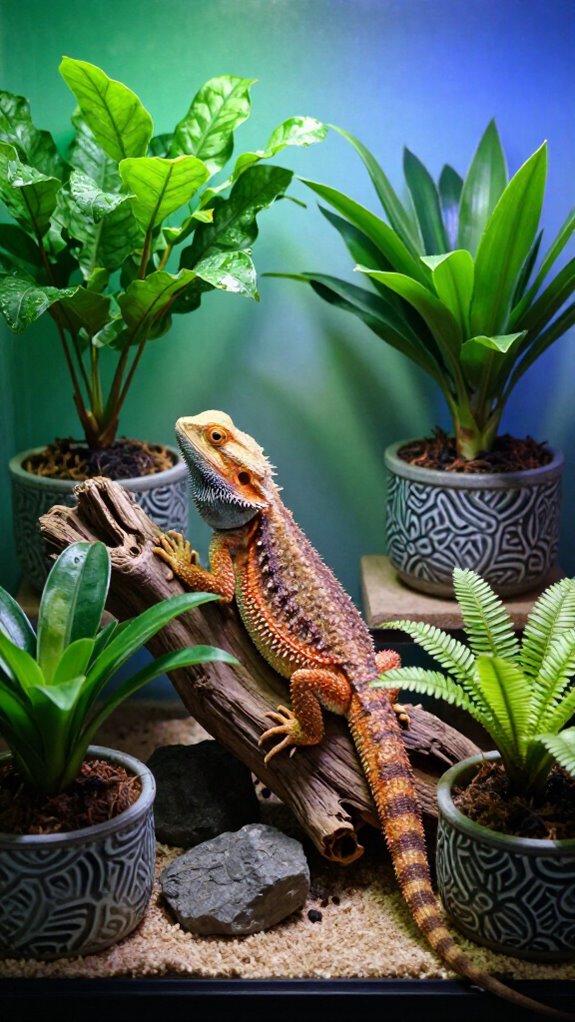
Consider adding safe natural plants to the habitat alongside toys for additional enrichment and a more natural environment.
DIY Foraging Toys: 3 Simple Builds for Bearded Dragons
If you want your bearded dragon to do more than stare at the glass and plot your demise, try making simple foraging toys that turn meals into a little adventure—I’ll show three builds that are cheap, safe, and actually fun to watch. Just like proper UVB exposure supports their physical health during basking, mental stimulation keeps their behavior thriving.
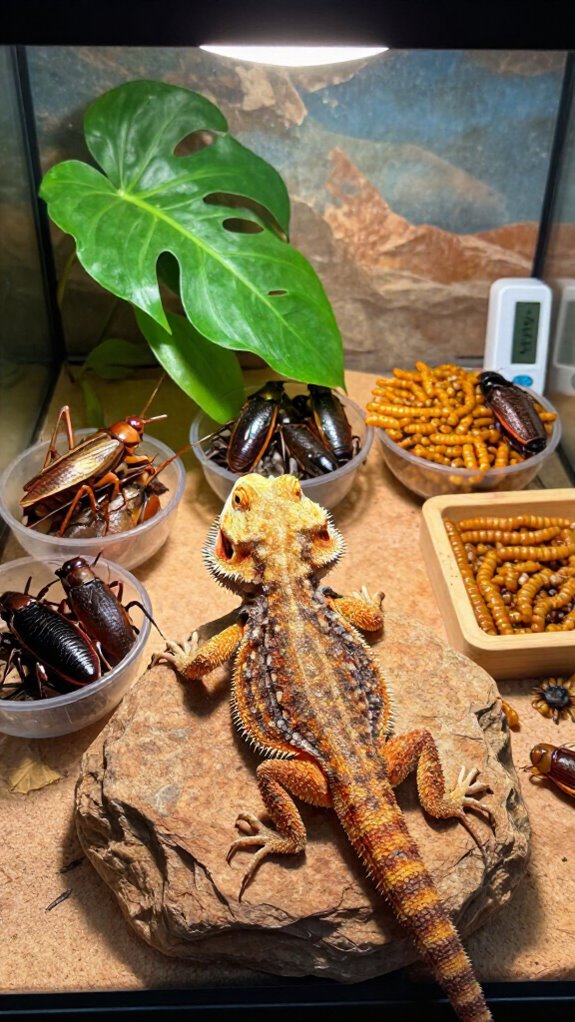
First, a cardboard maze: cut non-toxic boxes, tape securely, hide gut-loaded crickets, observe foraging techniques, swap weekly.
Second, a shallow twig pile: use aspen or apple wood, anchor branches, tuck greens and worms, supervise for loose bits.
Third, a clay cave: sculpt with Zoo Med clay, cool fully, place snacks inside.
I’ve used these with pets and a splash of home décor pride. Enrichment-focused design helps transform your reptile room into a more stimulating environment that encourages natural behaviors.
Build Puzzle Feeders and Treat Dispensers for Bearded Dragons
You’ve already seen how a cardboard maze, twig pile, and clay cave can get your bearded dragon moving and thinking, so let’s make their meals earn a little more swagger with puzzle feeders and treat dispensers that make hunting fun again. I build simple puzzle feeders from non-toxic plastic bottles, wooden blocks, or PVC, cutting holes just big enough for crickets or chopped veggies, and I always sand edges smooth. Want a treat dispenser? Try a capped tube with tiny openings, supervised so nothing gets stuck. Environmental enrichment techniques like these tap into natural foraging instincts and keep reptiles mentally stimulated throughout the day. Curious how they’ll solve it? Watch closely, remove if stressed, and enjoy the goofy triumphs—yes, they celebrate like tiny, scaly comedians. These creative living spaces can transform your reptile’s daily routine and encourage natural behaviors.
DIY Climbing and Texture Toys From Household Items for Bearded Dragons
When I want to turn a plain tank into a lizard playground, I grab everyday stuff and think like a bearded dragon—what’s climbable, what’s chewable, what smells interesting? Rock hides give them essential shelter and security while exploring.
I build climbing surfaces from cardboard, cork bark, and natural branches, anchoring with simple attachment methods like zip ties and aquarium-safe silicone. I carve foam shapes into ledges, add textured materials like hemp rope and slate tiles, and seal wood with safe finishes. To ensure your dragon receives complete nutritional support, consider how feeding routines interact with enrichment activities.
I watch stability concerns closely—wide bases, no wobble. Add colorful decorations sparingly for interest.
Want proof it works? My old crestie judged it, then snoozed—approval, I guess.
Introduce and Rotate Toys to Prevent Boredom in Bearded Dragons
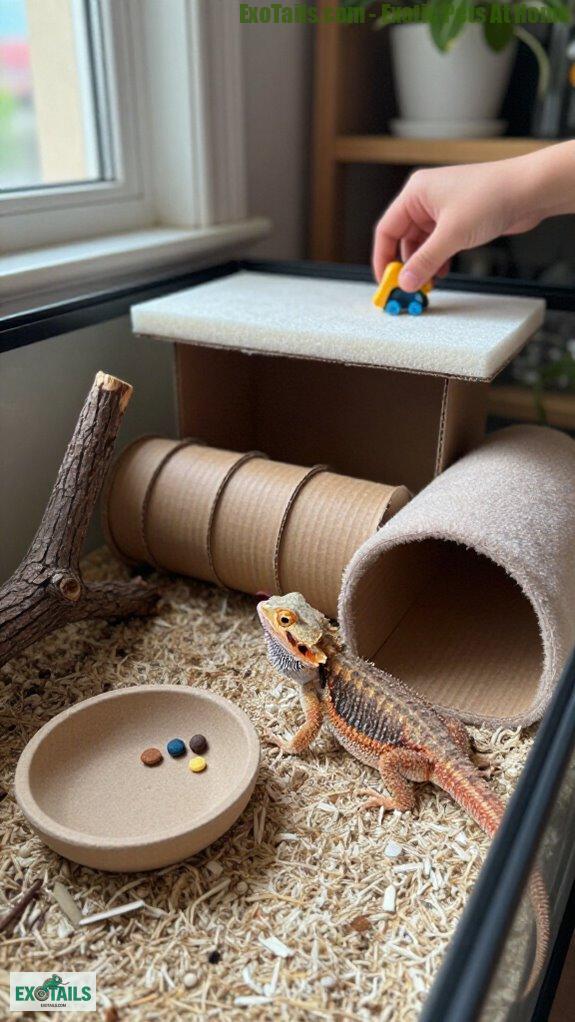
Because boredom sneaks up on beardies like a cat on a laser dot, I rotate toys and introduce new items on a deliberate schedule to keep curiosity sharp and stress low. Thoughtful reptile room decor can inspire creative toy designs that blend seamlessly into your pet’s environment.
I start slowly when introducing toys, giving one new item at a time, watching closely for comfort or stress.
I alternate climbing pieces, foraging mazes, and safe chewables, rotating toys weekly to prevent boredom and keep engaging activities fresh.
I’m observing behavior—tonguing, climbing, or hiding—to guide choices, and I tweak setups to enhance exploration without risk.
Want specifics? Try a cardboard maze one week, a foam perch the next—reliable, simple, and slightly smugly effective.
This approach mirrors multi-species habitat design principles, where environmental variety supports natural behaviors across different reptile species.
Troubleshooting Toys : When to Repair or Stop Using Them for Bearded Dragons
I keep a close eye on toys after a week or two of rotation, because even the best-made cardboard maze or foam perch will wear out or become a hazard, and I’ll tell you exactly what to watch for. Much like custom wood cabinets built for reptile habitats, durability and safety inspections are essential for any enclosure accessory. Tile substrates make excellent foundational surfaces for placing enrichment toys since they’re easy to clean and monitor for wear.
Do you spot fraying, loose parts, or chew marks? Those usage signs tell me whether to fix or retire a toy. What’re my repair guidelines? Simple: reinforce seams, sand rough edges, replace ingestible bits—otherwise toss it.
- Frayed edges or loose glue: repair or discard.
- Small pieces missing: stop use immediately.
- Odor or mold: retire and sanitize.
UVB-safe Sand Dig Box
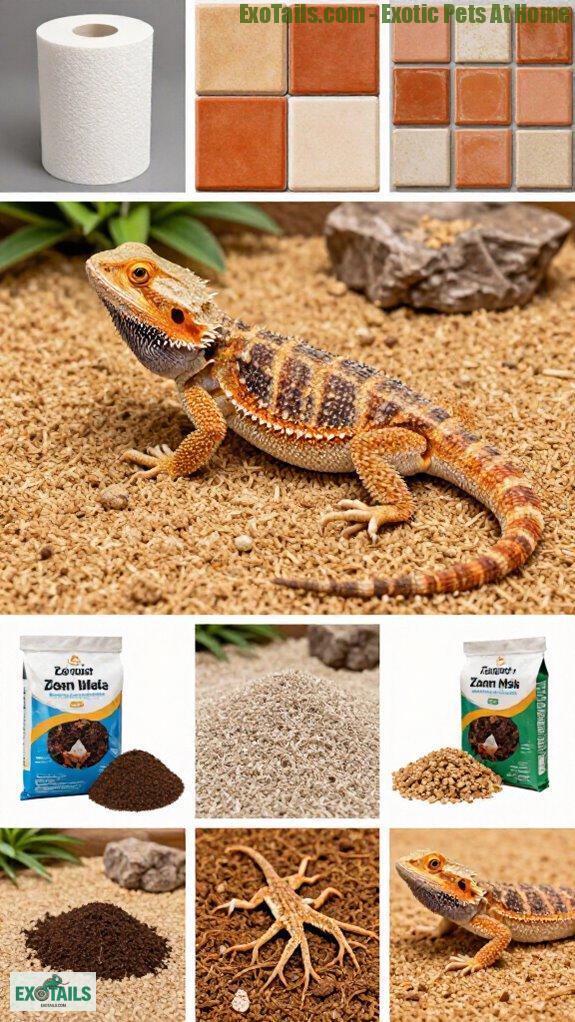
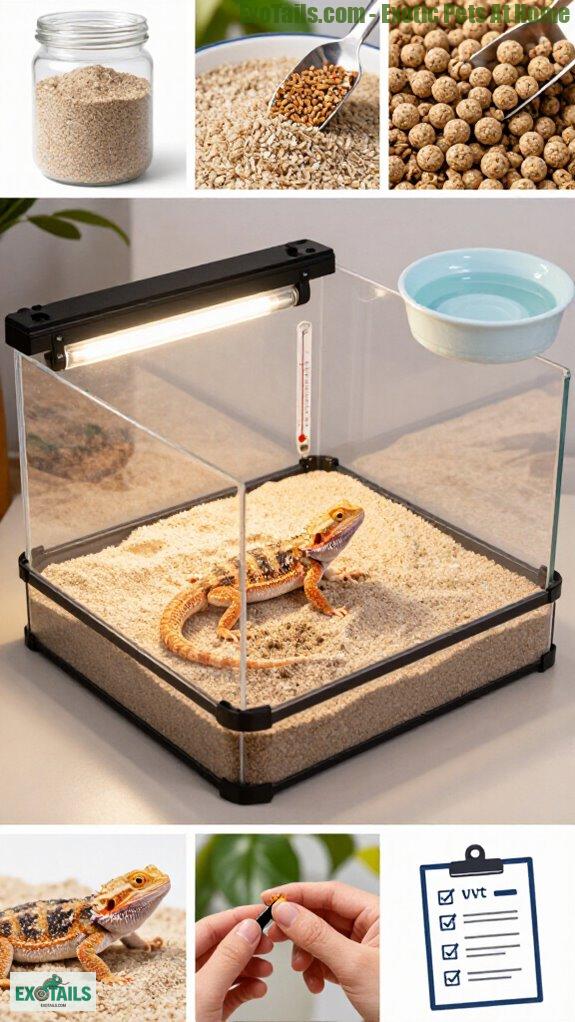
One simple thing I’ve found helps my dragon dig like a tiny, determined archaeologist is a UVB-safe sand dig box, and you can build one that’s both fun and vet-approved. Selecting appropriate substrate materials from reputable sources ensures you avoid common hazards associated with poor quality bedding. When selecting materials, top recommended substrates should always prioritize your dragon’s safety and digestive health.
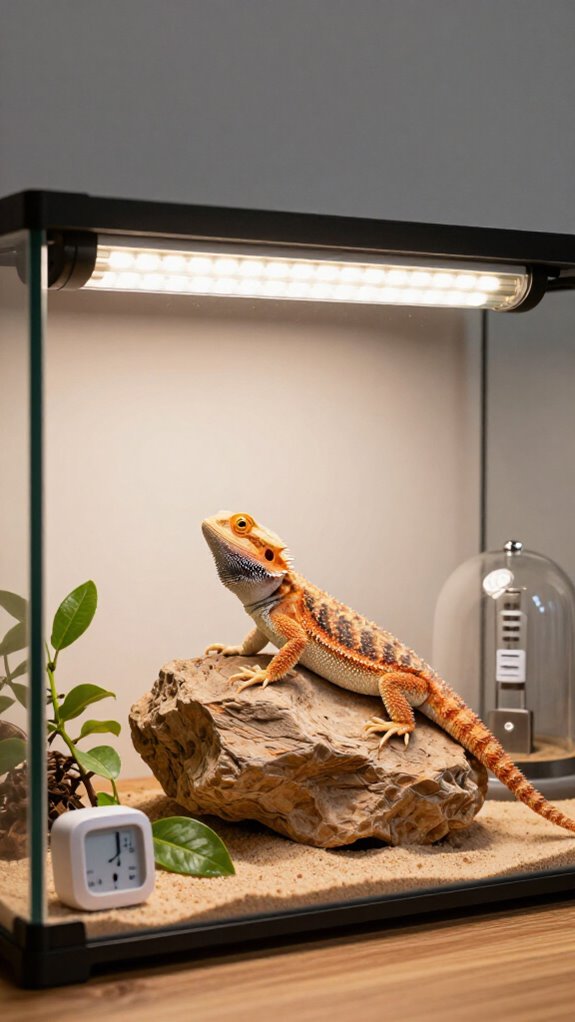
I use UVB benefits when placing the box under good light, keeping rays available for vitamin D3, while preventing overheating.
Want safe substrates? Consider sand alternatives like calcium sand blends or non-particulate reptile-safe mixes, not loose play sand.
Digging behavior is natural, so provide shallow areas, hidden treats, and varied enrichment materials, monitored closely.
Curious? I’ve used this setup for my rescue beardie with great, calm results.
Best Products to Use
Want a short shopping list that actually helps your bearded dragon thrive, not just look cute on a shelf?
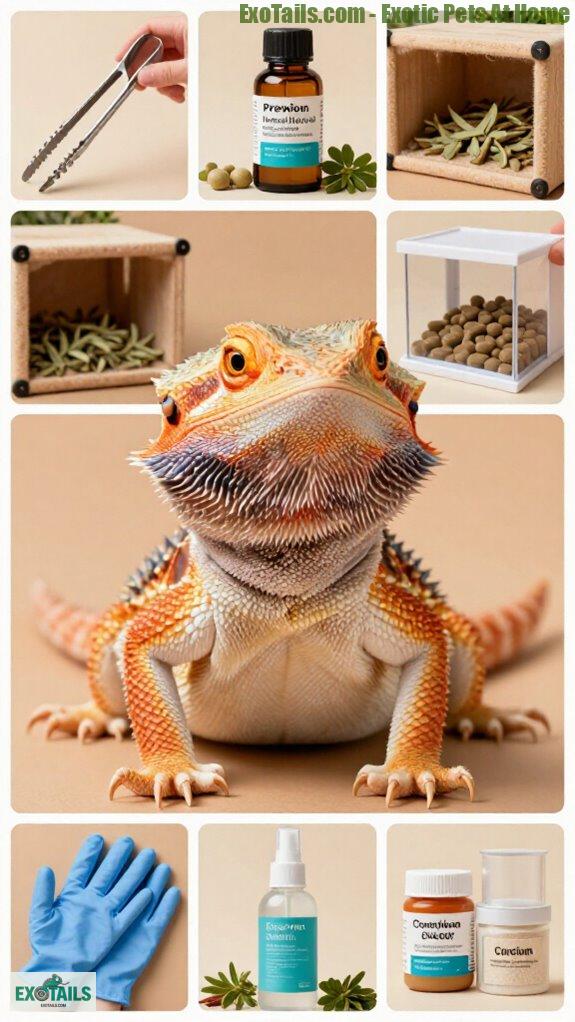
I pick the best materials that are safe, durable, and easy to clean, and I test favorite textures so your dragon won’t chew something sketchy. Need examples? Want options that won’t poison or poke?
- Cork bark, aspen blocks, and smooth river rocks — sturdy climbs, natural feel. Essential cork bark hides provide excellent shelter while maintaining humidity.
- Food-safe silicone molds and ceramic dishes — for digging boxes and treat puzzles.
- Non-toxic craft foam, sealed with aquarium-safe sealant — lightweight perches, textured walls.
I’ve kept exotic pets and loved tasteful home decor, so trust me: safety first, style second.
When selecting materials, consider using sustainable enclosure materials that minimize environmental impact while still providing a secure habitat for your dragon.
FAQ
Can Baby Bearded Dragons Use the Same Toys as Adults?
No — I don’t use the same toys for babies as adults; baby dragon preferences differ, so I choose smaller, safer pieces with toy size considerations, supervise closely, avoid small ingestible parts, and rotate items for stimulation.
How Often Should I Sanitize Fabric or Foam Toys?
I sanitize fabric and foam toys weekly, increasing sanitization frequency after messy use or illness; I consider toy material considerations—porous foam may need replacement, while washable fabrics get gentle soap, thorough rinsing, and full drying.
Are Scented or Essential Oil–Treated Items Safe?
Like walking a tightrope, I avoid scented or essential oil–treated items—scent sensitivity and toxicity concerns are real. I stick to unscented, vet‑approved materials, introduce new items slowly, and remove anything causing distress.
Can Multiple Dragons Share the Same Enrichment Toys?
Yes — I let dragons toy share cautiously; I supervise for aggression, hygiene, and toy dominance. I accommodate behavioral differences by rotating items, offering duplicates, and removing toys if stress, food guarding, or fights appear.
How Do I Adapt Toys for an Injured or Recovering Dragon?
I adapt toys gently, coincidentally placing a soft tunnel like a warm sock beside them, choosing safe materials and using careful observation techniques to watch mobility, stress signals, and interest, adjusting complexity as they heal.
References
- https://www.chewy.com/education/reptile-and-amphibian/bearded-dragon/bearded-dragon-enrichment
- https://www.thecritterdepot.com/blogs/news/behavioral-enrichment-and-mental-stimulation-for-bearded-dragons
- https://www.zillarules.com/articles/enrichment-for-your-bearded-dragon
- https://www.beardeddragonforum.com/threads/beardie-enrichment-ideas.23581/