Best Tank Sizes for Bearded Dragons
I’m revealing the best tank sizes for bearded dragons, but you’ll want to read on to learn why proper space changes everything for health and growth.
most owners botch it from day one.
—
I learned this the hard way with Barnaby, my surly, magnificent beardie who’s currently judging me from his Zen Habitats 4x2x2. He’s taught me more about thermal gradients than any herpetology textbook. Meanwhile, Mr. Wiggles—my perpetually baffled axolotl—reminds me daily that exotic pets demand precision. These two chaos agents sparked ExoTails, my blog where I document the beautiful disasters of reptile and amphibian husbandry. I’ve melted thermostats. I’ve wept over substrate choices. You want someone who’s been in the trenches? You’re looking at her.
—
That Time Barnaby Nearly Cooked Himself
Picture this: 3 AM, me in pajamas, frantically recalibrating a malfunctioning Zoo Med ReptiTemp Rheostat while Barnaby side-eyed me like *I* was the inconvenience. The ceramic heat emitter had spiked—classic cheap hardware betrayal. I’d been smug about my setup. Hubris, much? That night redefined “basking zone” for me. Now I run dual thermostats with backup probes. Paranoid? Perhaps. But Barnaby’s alive, smug, and spectacularly judgmental. Worth it? Absolutely. You’ll thank yourself when your dragon isn’t a crispy critter. Trust.
Quick Takeaways
- Minimum adult tank size is 4x2x2 feet; ideal range is 75–120+ gallons for space and temperature stability.
- Long, low enclosures better support movement, basking access, and climbing compared with tall, cramped tanks.
- Use a clear temperature gradient with a dedicated basking spot and a cooler area; monitor regularly.
- UVB lighting (fluorescent/LED) with a basking light; 10–12 hours daily, positioned above the basking area.
- Plan growth ahead to minimize upgrades; ensure safe setup with secure wiring and safe substrates.
What Size Terrarium Does a Bearded Dragon Truly Need
So, what size terrarium does a bearded dragon truly need? I’ll share plain, careful guidance you can trust.
Bearded dragon growth matters, and enclosure sizing sets the stage for health, activity, and heat work. A roomy, horizontal space is king, with minimums that prevent stress and encourage exploration. The horizontal orientation allows these terrestrial lizards to move naturally and display their full range of behaviors.
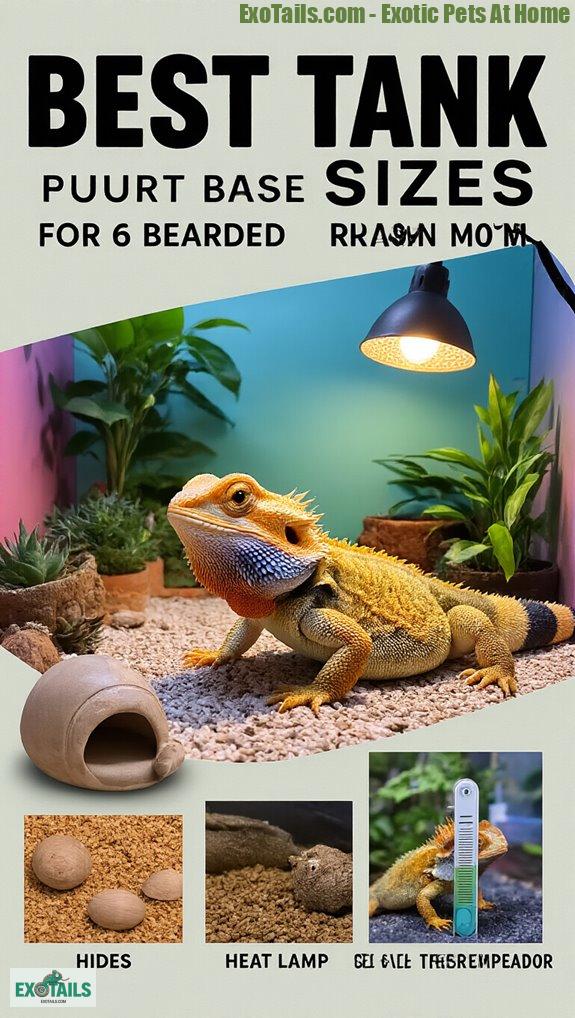
Think 4x2x2 feet as a solid baseline for an adult, and bigger if you can swing it. They love warm basking zones and cool retreats, so plan zones, not just a box.
Can you picture steady temperature gradients, safe furnishings, and enrichment that makes daily care a breeze? You can.
Proper enclosure size also supports the optimal climate your bearded dragon needs to thermoregulate effectively.
How Space Affects Basking, Heating, and Enclosure Layout
Space makes or breaks how bearded dragons soak up heat and show off their personalities. I’ve learned that bigger tanks create better basking behavior because dragons reach warming spots easily. Just as researchers studying regenerative abilities in axolotls must carefully control environmental conditions to observe natural behaviors, bearded dragon keepers need precise thermal management to support their reptiles’ wellbeing.
When space is generous, you can set distinct heating zones, so they don’t fight for a hot perch. Enclosure warmth stays steadier, reducing stress and tummy trouble. Spatial enrichment comes from varied layouts and safe decor, encouraging movement without injury. Many experienced keepers find that a 75 gallon tank provides the ideal balance of floor space and thermal stability for adult dragons.
Layout design matters: long, low enclosures with clear basking areas beat tall, cramped spaces. Ready to upgrade? Your dragon will thank you with happier, healthier days and cooler, confident poses.
Practical Tank Sizes by Age and Adult Growth Expectations
If you want my take on practical tank sizes, here’s the quick, honest guide: bearded dragons grow fast, so planning by age keeps you from buying twice. I’ve watched juveniles sprint toward bigger space; it matters for juvenile growth and temperature regulation. Proper UVB fixtures are equally critical during these growth stages to prevent metabolic bone disease and support healthy development. Starter kits for new owners often include appropriately sized enclosures that match your dragon’s current life stage.
As they hit adult requirements, you’ll likely need tank upgrades to meet 75–120+ gal goals. Think long, not tall, with steady heat shelves.
Do you upgrade early or risk stress? In my setup, I space upgrades as they grow, avoiding big jumps later.
Safety first, simple steps, and a calm, happy dragon—and yes, smooth decor helps.
Safe Design Features to Maximize Usable Enclosure Space
When I design a bearded dragon enclosure, I start by making safety and space work hand in hand, because a happy dragon means less stress and fewer escapes to the couch cushions. A pet-friendly furniture approach can inspire how we integrate habitats seamlessly into living spaces, balancing both creature comfort and household aesthetics.
I focus on usable space with smart design elements, clear enclosure layout, and sturdy interior structures. Heating zones stay even, not hot spots, and enrichment features spark curiosity. Just as elevated feeding stations can improve a pet’s posture and digestion, thoughtful vertical elements in your dragon’s habitat promote natural climbing behaviors and better overall wellbeing.
I add climbing opportunities without crowding, and choose simple substrate selection for easy cleaning. Regular checks keep the design flexible.
Do you see how subtle tweaks in placement, lighting, and texture can transform daily comfort into thriving health? It’s practical, not fancy.
Common Sizing Mistakes and How to Avoid Them
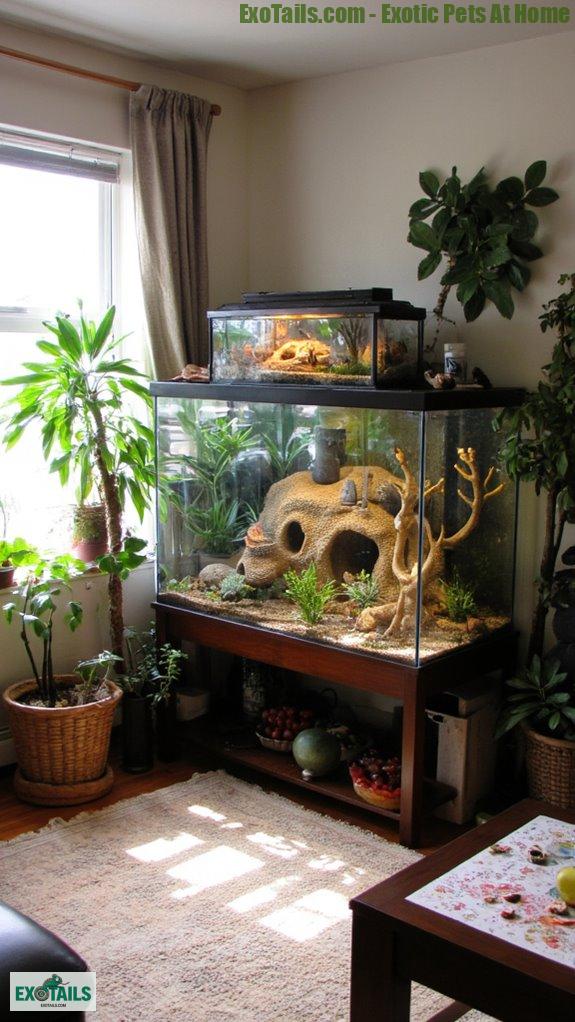
Ever fallen into the trap of sizing a tank by guesswork and hoping the dragon won’t notice? I have—and the results were stressful for them and me. Selecting appropriate bearded dragon substrates is equally critical, as the wrong choice can impact health just as severely as inadequate space.
Size misconceptions sneak in when we hustle to save space or money, but a too-small enclosure wrecks thermoregulation, activity, and mood.
Let’s fix it with a plan: choose habitat requirements that support growth, safety, and enrichment. Enclosure upgrades aren’t a retroactive luxury; they’re a must. You deserve confidence, not guesswork.
A well-designed terrarium decor kit can transform even a properly sized tank into a functional habitat that supports natural behaviors and reduces stress for both you and your dragon.
- Underestimating space and stressing both dragon and keeper
- Skipping proper heat gradients and chasing quick fixes
- Neglecting hides, basking spots, or substrate safety
- Skimping on future growth and upgrades
Desert Origins: Fossil Evidence
Desert origins aren’t just a backdrop for bearded dragons; they’re the whole origin story. I’m telling you this straight, friend: fossil evidence paints a dusty map of ancient habitats where heat ruled and drought tested survival. Temperature gradients are essential for replicating these conditions, allowing dragons to thermoregulate just as their ancestors did.
Think of it like a desert time machine—sand, bones, clues that whisper about where dragons once hunted and hid. This history guides how we care today: warmth, light, and safe hides keep our pets comfy, just like their ancestors preferred.
Curious how fossils translate to tank setup? It’s all about matching climate, shelter, and diet with safe, humane care. Fascinating, right?
Just as desert-dwelling rodents benefit from carefully designed habitats that mimic their arid environments, bearded dragons thrive when their enclosures reflect these same ancient conditions.
Bearded Dragon Fossil Footprints
fossil analysis helps us see stride length, claw marks, and weight distribution, revealing daily life in ancient habitats. Curious, right?
- They left trackways that show cautious steps and bursts of speed
- Weather clues come from footprint depth and mud consistency
- Habitat hints include dunes, floods, and plant life
- Safety lessons translate to today’s tanks and heat zones
Ever wonder how these prints shape our care rules and curiosity? I do.
Vitamin D Lighting Kits
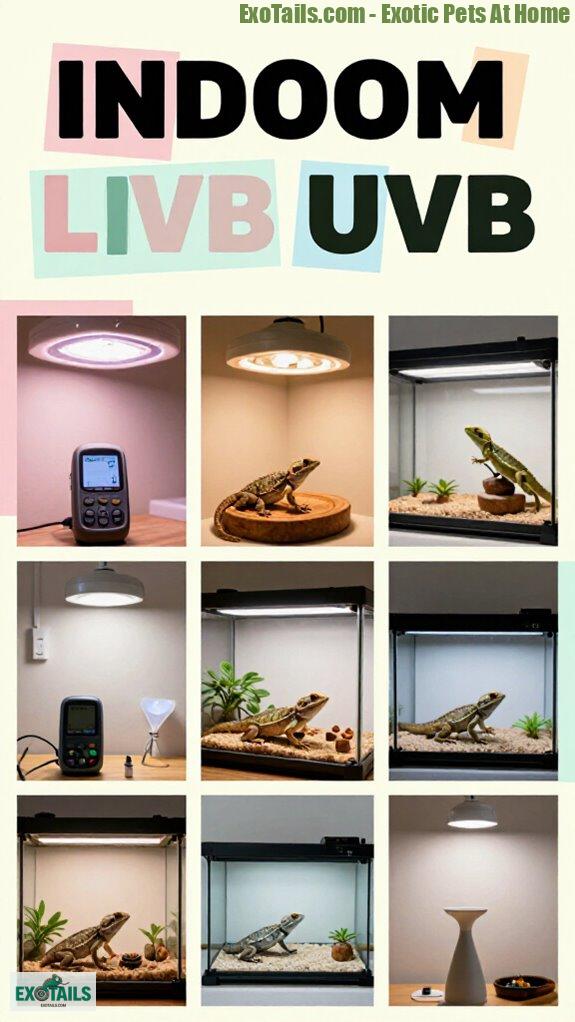
I’ll walk you through choices without turning safety into a snooze fest. Lighting options matter, so pick a reputable UVB option paired with a basking light. Bearded dragons require adequate UVB exposure to properly metabolize calcium and prevent metabolic bone disease.
Do you need coil, fluorescent, or LED? Coil bulbs fade fast and heat up; not ideal, so I skip them. Balance heat sources with a cool side for gradient comfort.
How long should you run them? Most dragons thrive with 10–12 hours daily.
Ready for safety tips, easy setup, and consistent basking spots? Let’s glow wisely, friend.
Quality light fixtures ensure proper UVB distribution and prevent dangerous hotspots that could harm your pet.
FAQ
Do Bearded Dragons Need Enrichment Beyond Size?
Do bearded dragons need enrichment beyond size? Absolutely, yes. I prioritize behavioral health through environmental stimulation, social interaction when appropriate, and mental engagement to keep them safe, active, and thriving inside a properly sized enclosure.
How Many Hides Are Ideal per Enclosure?
I recommend 2–3 hides total, placing one at cool, one at warm, and a central retreat for safety. Ideal hide placement guarantees thermal zones aren’t blocked; hide material options include reptile canvas, foam, and robust wood.
Is Substrate Choice Large-Impact on Space Usage?
Substrate choice does impact space efficiency, yes. I recommend easy-clean, compact options like reptile carpet or tile to maximize usable floor area, reduce waste, and enhance safety while keeping substrate types compatible with temperature and humidity needs.
When Should You Upgrade Beyond 4x2x2′?
I upgrade beyond 4x2x2′ as soon as my dragon hits growth milestones or shows habitat preferences for more space. For example, I move to 6x2x2′ when measurements exceed 24″ and climbing needs rise. Safety first.
Do Multiple Basking Spots Affect Growth?
Multiple basking spots don’t boost growth by themselves; they help safety and comfort. I’d place basking spot placement to maintain a stable temperature gradient, ensuring temperatures don’t spike. Prioritize safe temps and monitor dragons closely.
References
- https://reptizoo.store/blogs/reptizoo-reptiles-blogs/how-to-choose-the-best-bearded-dragon-tank
- https://www.chewy.com/education/reptile-and-amphibian/bearded-dragon/what-size-tank-does-a-bearded-dragon-need
- https://www.petsmart.com/learning-center/reptile-care/what-do-i-need-for-my-bearded-dragon-tank-setup/A0074.html
- https://reptifiles.com/bearded-dragon-care/bearded-dragon-terrarium-size/
- https://www.reptiles.swelluk.com/help-guides/creating-the-ideal-bearded-dragon-setup/
- https://www.petmd.com/reptile/bearded-dragon-care-sheet