Positioning Light Fixtures to Create Temperature Gradients in Terrariums
I unveil expert tips to position light fixtures in terrariums for optimal temperature gradients—discover how to create the perfect environment for your exotic pets!
When positioning light fixtures in your terrarium, I always focus on creating those all-important temperature gradients. It’s all about placing lights right above basking spots while keeping cooler areas intact. I love using LED lights since they’re energy-efficient and don’t overheat. Don’t forget to adjust the height and angle for ideal heat distribution. Trust me, your exotic pets will appreciate a cozy nook! Keep exploring my tips on how to achieve that perfect balance in your setup!
Quick Takeaways
- Position light fixtures at varying heights to create warm and cool zones within the terrarium.
- Utilize halogen bulbs in basking areas to provide direct heat for reptiles.
- Incorporate reflective surfaces to distribute heat evenly and enhance sunlight mimicking.
- Experiment with light angles to focus warmth in specific areas for targeted thermal comfort.
- Ensure proper spacing of fixtures to accommodate various temperature needs of plants and pets.
Understanding Temperature Gradients in Terrariums
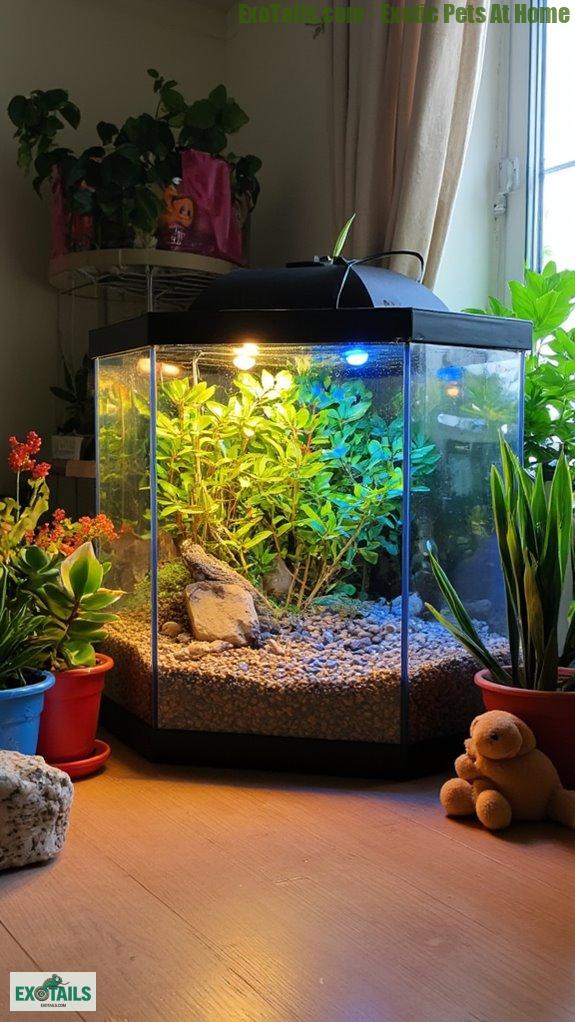
While it might seem like an enclosed glass box could just be a cozy little home for your favorite plants and critters, it’s essential to recall that these mini ecosystems can have some wild temperature variations.
Understanding temperature zones is vital—hot and cool spots can lead to uneven heat distribution. For instance, if your basking lizard’s basking area gets too toasty and the shade stays too chilly, well, that’s just bad real estate!
I’ve been there, juggling my exotic pets and décor. Trust me, managing these gradients can make a world of difference for a thriving terrarium. Incorporating essential lighting and heating can help maintain those crucial temperature fluctuations.
Who knew science could be so delightful?
Choosing the Right Light Fixtures
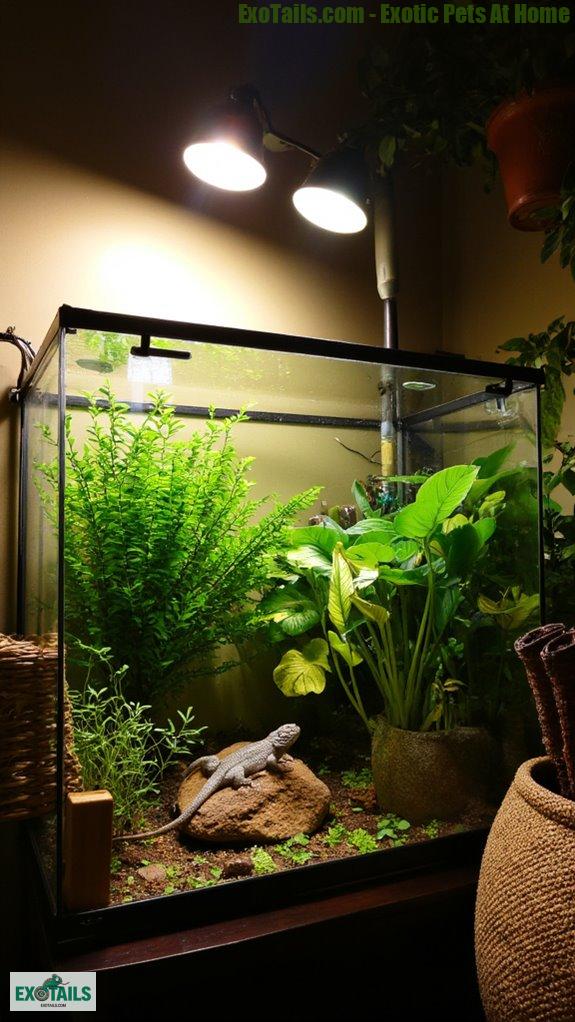
Getting the lighting right can make or break your terrarium, similar to finding that perfect spot for your basking lizard!
When choosing light fixtures, I usually consider three key elements:
- LED options, which are energy-efficient and produce less heat.
- Fixture styles that fit your terrarium’s aesthetic, whether sleek or more rustic.
- Adjustability, ensuring I can position the light just right for those temperature gradients!
I’ve learned that the right fixtures can elevate my terrarium’s environment and keep my exotic pets happy. Additionally, it’s important to ensure that the fixtures minimize noise reduction techniques to create a calm atmosphere for your pets.
Trust me; you want your little friends basking, not broiling!
Placement Strategies for Optimal Heat Distribution
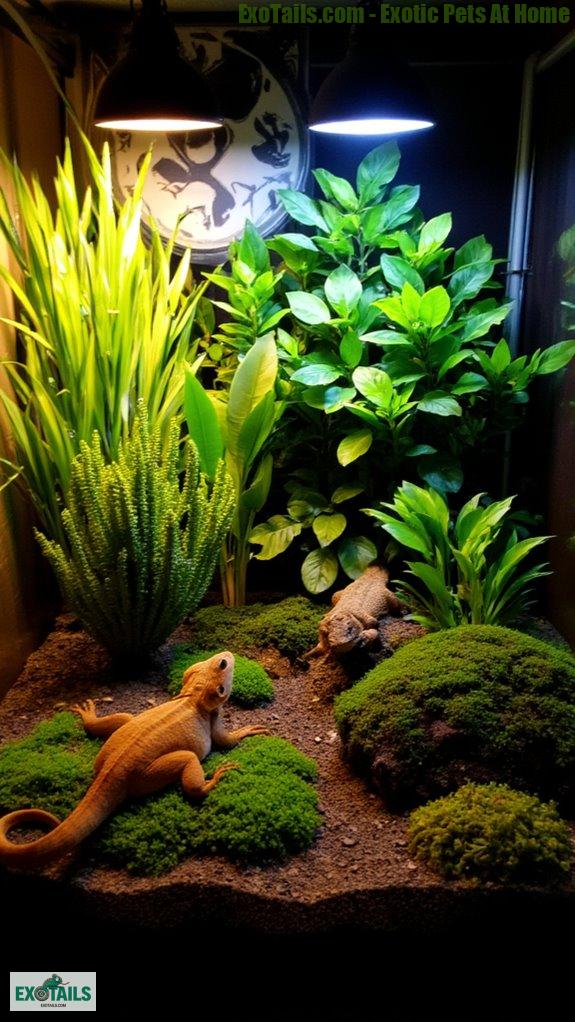
When it comes to placing light fixtures in your terrarium, finding the sweet spot can feel like a game of hide-and-seek with your pets, who, let’s be honest, usually win!
To achieve ideal heat distribution, think about the types of fixtures you’re using. Halogen bulbs radiate more heat, making them great for basking areas.
Position reflective surfaces behind these fixtures to amplify warmth and mimic natural sunlight—your plants will love you for it!
Additionally, creating naturalistic microclimates within the enclosure will further enhance the thermal comfort of your reptiles.
Experiment with different placements to see what works best; it’s like crafting a cozy nook for your exotic pets.
Trust me, your little scuttlers will appreciate the perfect temperature!
Adjusting Height and Angle of Light Sources
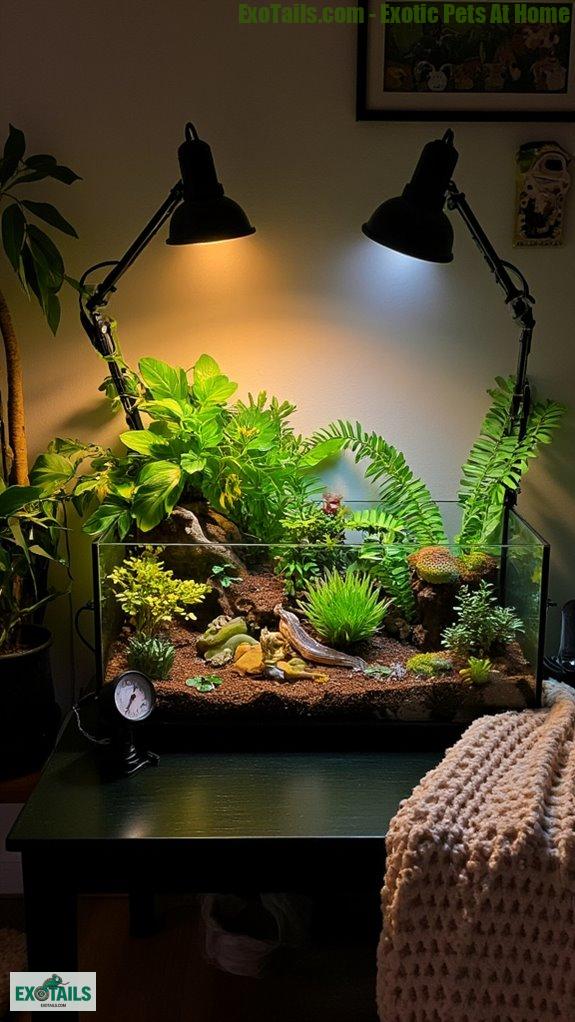
Adjusting the height and angle of light sources in your terrarium can feel like a high-stakes game of Jenga, but don’t fret—I’ve got your back!
Understanding light intensity and fixture types will make this a breeze. Here’s what I’ve learned:
- Experiment with different heights; too close can burn your little green friends.
- Tilt those fixtures to focus light where it’s needed most.
- Keep track of changes; a temperature gradient is essential for your terrarium’s health.
- Properly spaced fixtures help achieve the ideal temperature gradients necessary for the various needs of your reptiles.
Trust me, getting this right made my own exotic pet setup look like a designer display.
Let’s master those light sources together!
Monitoring Temperature Levels Effectively
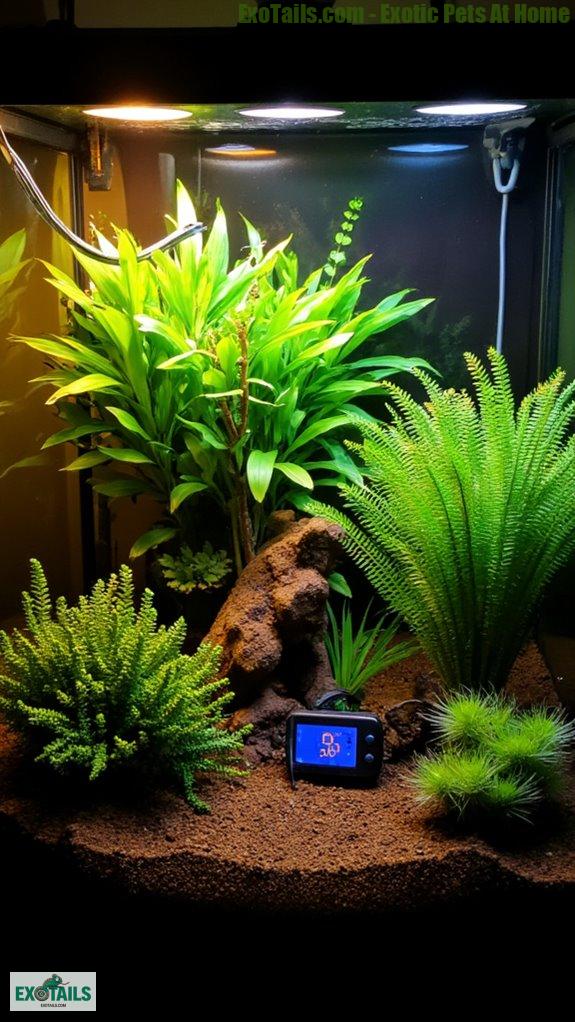
Monitoring temperature levels in your terrarium isn’t just a good idea—it’s a total game-changer! Trust me, I learned this while balancing my love for exotic pets and home decor with ExoTails.
Effective temperature monitoring starts with proper sensor placement.
| Sensor Type | Best Placement | Accuracy Level |
|---|---|---|
| Digital Thermometer | Near light source | High |
| Infrared Sensor | Center of terrarium | Medium |
| Bimetallic Thermometer | At substrate level | Low |
Enhancing Aesthetic Appeal While Maintaining Functionality
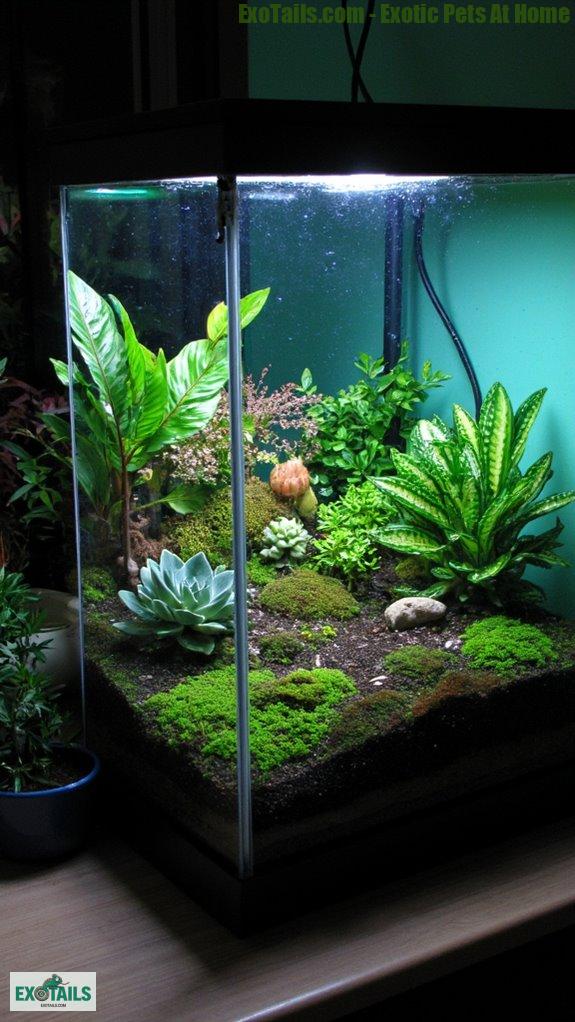
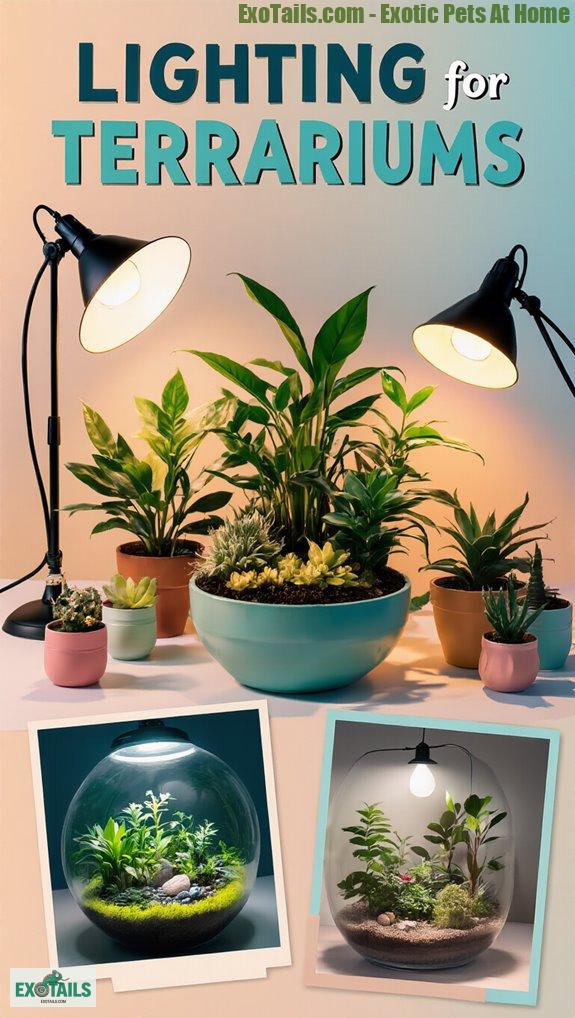
Have you ever thought about how the right lighting can totally transform your terrarium into a stunning focal point?
Balancing aesthetic design with functional lighting is key. Here’s how I enhance my setups:
- Use adjustable fixtures to spotlight different areas
- Incorporate colored bulbs for added whimsy
- Place lights strategically to create enchanting shadows
When I set up my terrariums for my exotic pets, I keep both beauty and practicality in mind.
Recall, the glow not only showcases your plants but also provides necessary warmth.