Lighting and Heating Setup for Desert Pet Enclosures
Navigating the essentials of lighting and heating for desert pet enclosures ensures a perfect habitat—discover the secrets for a thriving oasis!
When setting up lighting and heating for desert pet enclosures, it’s essential to mimic their natural habitat. Use bright, warm lights and include UVB bulbs. Got a thermometer? You’ll need one to keep an eye on that temperature! I learned the hard way that overheating is a no-go. Adding heat sources like ceramic emitters maintains cozy spots, and don’t forget to create temperature gradations. Stick around, and I’ll share more tips to create a desert paradise for your pets!
Quick Takeaways
- Use bright, warm lighting colors that mimic natural sunlight, ensuring energy efficiency and appropriate intensity for different desert species.
- Incorporate UVB lighting to enhance the health of desert pets by simulating natural sunlight conditions essential for their well-being.
- Utilize ceramic heat emitters alongside infrared lamps to maintain adequate temperature, ensuring comfort and safety for your pets.
- Establish temperature gradient zones within the enclosure, allowing pets access to varied environments and promoting overall health.
- Regularly monitor light and heat sources with digital thermometers and hygrometers to maintain consistent temperature and humidity levels.
Understanding the Natural Habitat of Desert Pets

When I think about desert pets, I can’t help but be fascinated by the harsh yet beautiful habitats they thrive in.
Desert pets thrive in their harsh, stunning habitats, showcasing nature’s resilience and beauty in every sun-soaked moment.
These critters have some serious habitat adaptations, making them expert survivors in dry places. Ever seen a lizard sunbathing like it’s on a tropical vacation?
Yeah, they really know how to maintain ecological balance by keeping pests in check.
As someone who’s dabbled in exotic pets and home decor, I created ExoTails to share this love with you.
Choosing the Right Lighting Types

Getting the right lighting for your desert pet enclosure is like picking the perfect sun hat for a day at the beach—it’s essential!
You wouldn’t want your buddy, the bearded dragon, sunbathing under disco lights, right?
Stick to bright, warm lighting colors that mimic natural sunlight.
Oh, and don’t forget about intensity control! Your pets need a dazzling light show, but not one that fries them like a piece of bacon.
As someone who’s juggled exotic pets and home decor, I’ve learned that lighting can make all the difference.
Trust me, your critters will adore the sun-kissed vibes!
Establishing Day and Night Cycles

Lighting your desert pet enclosure is only half the battle; establishing a proper day and night cycle is where the magic really happens!
You wouldn’t want to live in a party-less zone, right? Your pets crave daylight simulation just as much as I crave that second cup of coffee! Aim for about 12 hours of light and 12 hours of a cozy night cycle.
Use timers to keep things consistent—like your morning alarm that you hit snooze on.
And trust me, your critters will thrive, while you sit back and avoid the drama of a sunbaked lizard that forgot what night means!
Essential Heat Sources for Desert Enclosures

While it might seem like desert pets are experts at basking in the sun, they actually need a bit more than just a bright light to feel cozy in their enclosures.
I’ve discovered that the best heat sources include infrared lamps.
These little wonders can mimic the sun’s rays better than my attempts at a summer tan!
Infrared lamps not only heat the air but also warm your pets’ skin, making them feel right at home.
Trust me, it’s like giving your scaly friend a luxurious spa day, minus the cucumber slices.
Who knew creating a desert oasis could be this fun?
Creating Temperature Gradient Zones

To make your desert enclosure feel like a proper sun-baked paradise, creating temperature gradient zones is key.
I mean, who doesn’t love a hot side with a cool retreat? This allows your pet to meet their temperature regulation needs, while indulging in their species-specific needs—because we’re not running a reptile spa here!
Create hot basking areas with heaters and cooler spots in the shade, so your critters can play the temperature tango.
After all, I learned the hard way with my exotic pets that a hot mess in their habitat isn’t cute, but a well-designed zone is pure magic!
UVB Lighting and Its Importance

When it comes to your desert pet’s health, you can’t underestimate the power of UVB lighting—it’s like sunshine in a bulb!
Seriously, how do you expect your reptile to thrive without that sweet UVB absorption?
How can your reptile flourish without soaking up that essential UVB goodness?
It’s not just a fancy lighting accessory; it’s essential for their happiness and well-being!
Think of UVB as the VIP pass to their basic needs.
Without it, your pet might feel like they’re at a sunless beach party, and let’s be real, no one enjoys that!
Safety Precautions for Heating Elements

Getting the temperature just right for your desert pets is like a tightrope walk, and it’s not just about installing heating elements willy-nilly.
Trust me, I’ve seen the chaos when heating materials aren’t up to safety standards—let’s just say I learned the hard way!
Make sure your heat sources are secure and rated for reptile use.
Don’t be that person whose lizard turns into a roasted marshmallow—seriously, we’ve all seen those horror stories online!
Ask, “Will this fry my pet or my house?”
Monitoring Temperature and Humidity Levels

While it might seem easy to plop a thermometer in your pet’s enclosure and call it a day, there’s a bit more to monitoring temperature and humidity levels than that.
Think of it as your pet’s personal spa experience—temperature regulation and humidity control are key!
I’ve learned the hard way that one hot rock can turn a happy lizard into a grumpy puddle.
So, keep an eye on those readings! Use digital thermometers and hygrometers.
Trust me; your pets will thank you.
Plus, nothing says “I care” like a well-regulated enclosure—who knew being a pet parent involved so much home decor?
Maintenance Tips for Lighting and Heating Equipment

No pet owner can underestimate the importance of keeping their lighting and heating equipment in tip-top shape.
Trust me, bulb replacement is a lot easier than turning your pet iguana into a funky lizard popsicle!
Regular equipment maintenance isn’t just a chore; it’s a non-negotiable dance to guarantee your desert critters have their sunbathing paradise.
Check bulbs every few months, and while you’re at it, give your fixtures a good dusting—who knew reptiles loved disco lights?
Recommended Products for Desert Pet Enclosures

When it comes to creating the ultimate paradise for your desert pets, selecting the right equipment can feel as overwhelming as finding the perfect outfit for a first date.
But don’t worry, I’ve got your back with some top recommended products!
For a cozy heat source, I swear by ceramic heat emitters; they’re like the snuggly blankets of the reptile world.
And as for lighting, go for UVB bulbs—your pets will feel like they’re sunbathing in the Sahara!
Check out my essential equipment guides on ExoTails for more tips on transforming your pet’s enclosure from drab to fab while keeping it simple and stylish!
Desert Reptiles as Pets

If you’re thinking about bringing a desert reptile into your life, you’re in for an exciting adventure!
These quirky little creatures can add so much personality to your home. Plus, let’s be honest, who wouldn’t want to impress friends with tales of caring for a cool critter?
Here’s what you need to know:
- They’re less demanding than your average housemate.
- Their desert habitat can be a stunning focal point.
- You’ll discover the art of reptile care, which is a true treasure.
- And yes, they’ll probably give you that judging stare while you binge Netflix!
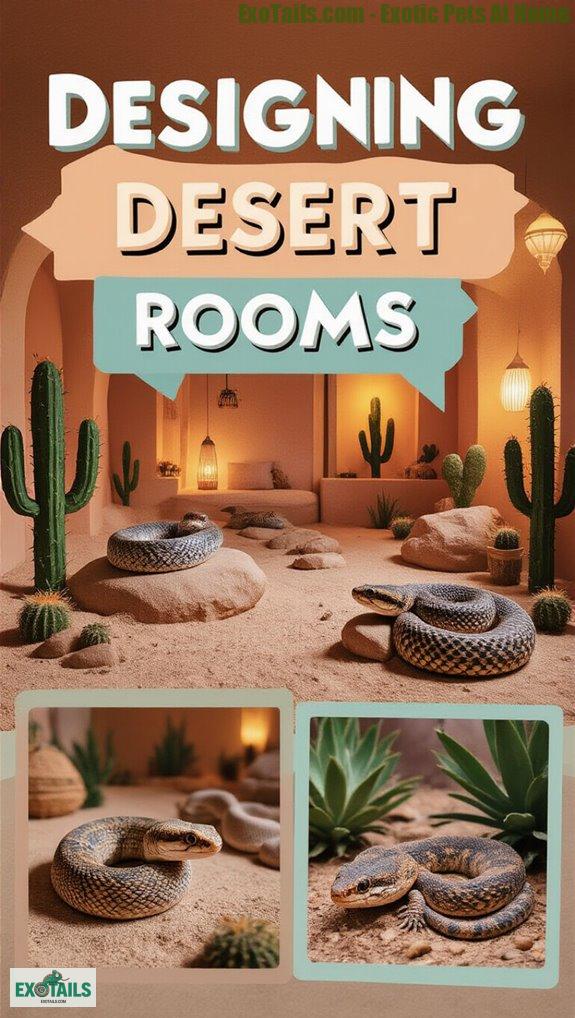
Desert reptiles thrive in environments with specialized lighting that mimic their natural habitats, enhancing both their health and the aesthetics of your enclosure.
Join me on this exotic journey!
My Aquatic Friend’S Habitat

After reveling in the wild world of desert reptiles, it’s time to shift our focus to another enchanting kind of companion: my aquatic friends!
Creating an aquatic setup is like building a tiny underwater kingdom, right? I’ve learned that my fish have specific habitat needs, and let me tell ya, they’re not shy about letting me know when I’ve missed the mark!
Designing an aquarium feels like crafting a miniature ocean realm, where my fish certainly make their needs known!
Do I need a rock? A castle? What about the perfect plant?
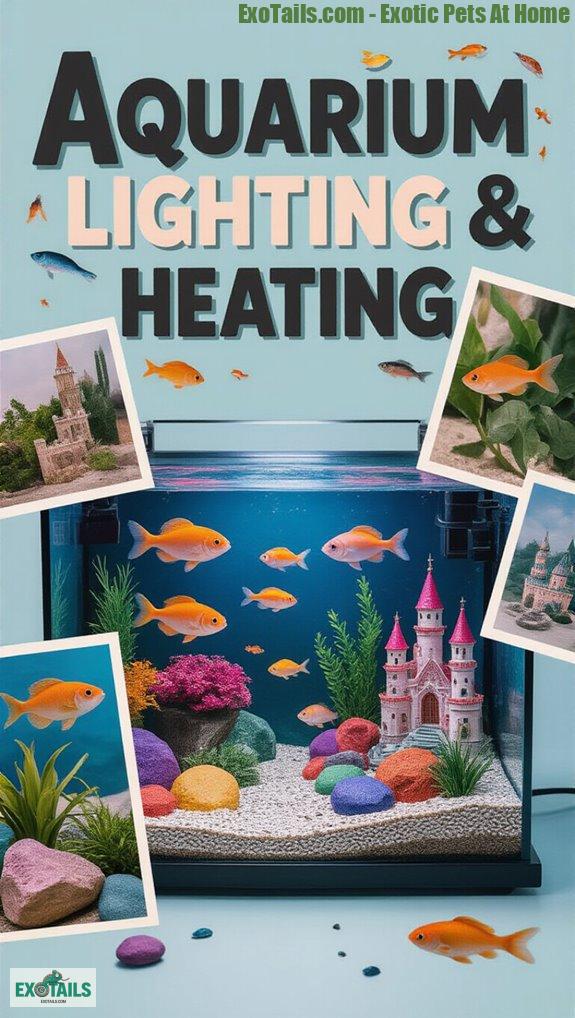
With a bit of trial and error, I’ve designed their paradise, and trust me, it’s way more fun than watching paint dry! Incorporating a reliable water filtration system helps maintain a clean environment for my aquatic buddies.
Questions and Answers
How Often Should I Replace My UVB Bulbs?
Did you know UVB bulbs lose about 30% of their effectiveness after six months? I replace mine every six months, keeping lighting options fresh and my pets basking happily. Trust me, they’ll thank you!
Can I Use Regular House Bulbs for My Desert Pet?
Using regular house bulbs for your desert pet? Let’s just say it’s like giving a lizard Halloween candy. Stick to proper bulbs for safety; alternative lighting keeps them happy, and I promise they’ll thank you!
What Are the Signs of Overheating in Desert Pets?
When pets start acting like a melted ice cream cone, you know something’s off. Overheating symptoms like lethargy, restlessness, or excessive panting scream for attention. Keep an eye on their quirky behavior to avoid pettin’ problems!
Is It Necessary to Use Both Heat and UVB Sources?
I can’t believe folks wonder about this! For pet health, it’s essential to use both heat and UVB sources. They need proper temperature regulation and a full light spectrum—just like me needing coffee before tackling anything!
Can I Use Ceramic Heat Emitters in Humid Environments?
Using ceramic heat emitters in humid environments is like trying to toast marshmallows during a hurricane—complicated! They’ve got heat regulation potential, but humidity levels can be tricky, so keep an eye on that balance!