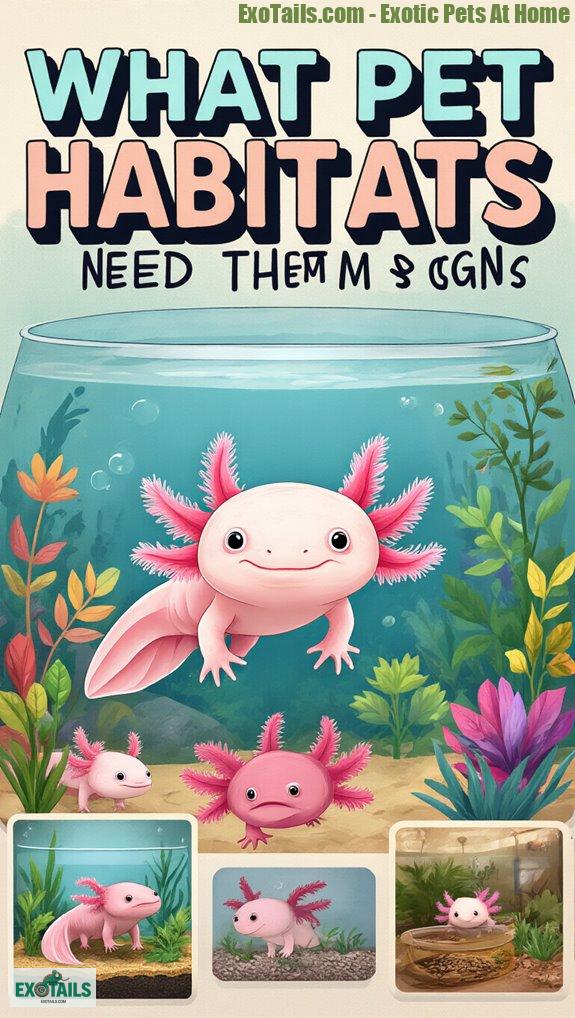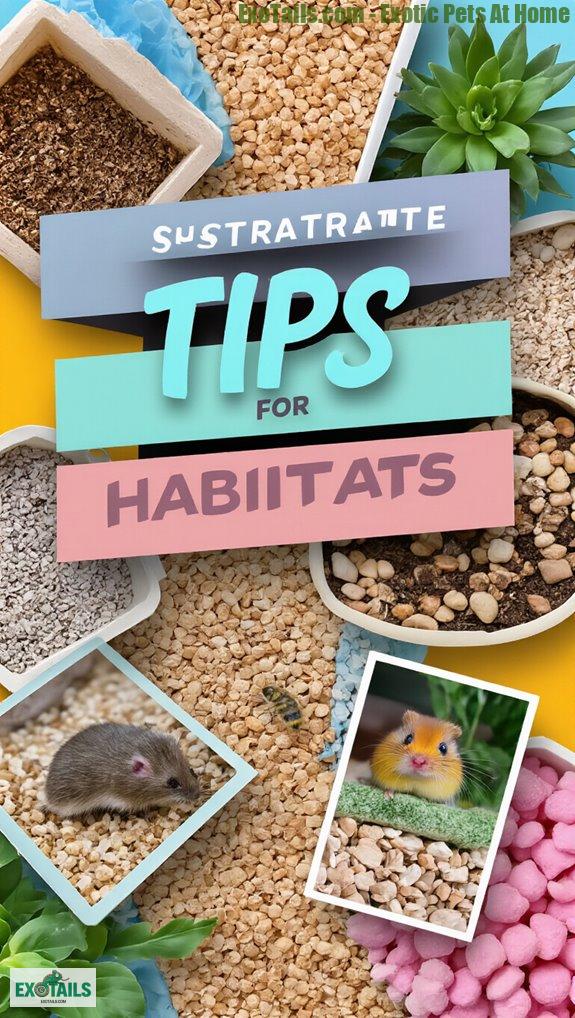
7 Top Substrate Tips for Pet Habitat Design
Once you discover these top substrate tips for pet habitats, you’ll be eager to transform your space into a thriving, cozy environment!
When choosing a substrate for your pet’s habitat, think about their needs first—sand for reptiles, cozy bedding for small mammals! I’ve learned that natural materials, like coconut coir, can make their space feel cozy and realistic. Layering different substrates boosts depth, while proper drainage keeps the habitat healthy. Trust me, you’ll want to maintain cleanliness to avoid any stinky surprises. Curious about incorporating plants or revitalizing your setup? Stick around, there’s more to explore!
Quick Takeaways
- Choose the right substrate based on your pet’s species and natural behaviors for optimal comfort and health.
- Utilize natural materials like bark mulch and coconut coir to enhance aesthetics and mimic habitats.
- Layer substrates effectively with a base for stability, an earthy middle, and decorative top for visual enrichment.
- Ensure proper drainage and aeration with gravel or mesh to maintain a healthy ecosystem and prevent waterlogging.
- Maintain cleanliness by selecting quick-dry substrates and establishing a regular cleaning routine to promote pet well-being.
Choose the Right Substrate for Your Pet’s Needs
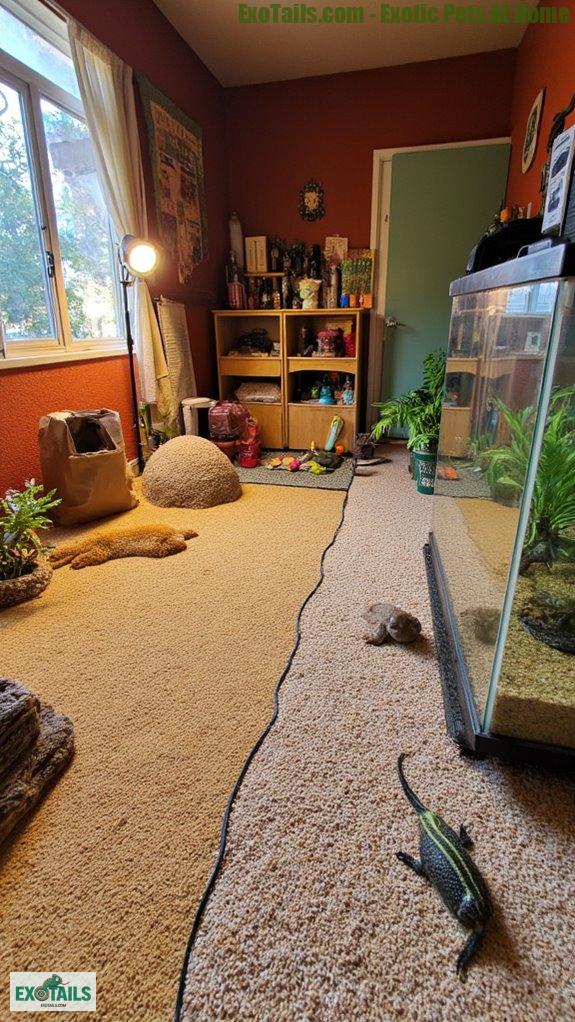
When it comes to choosing the right substrate for your pet’s habitat, there’s not a one-size-fits-all solution, and trust me—I’ve seen my fair share of critters settling down in less-than-ideal conditions.
Different substrate types cater to various needs. For instance, reptiles might thrive on sand or coconut fiber, while small mammals prefer softer bedding, like aspen shavings.
Have you thought about your pet’s preferences? It’s essential to take into account their natural behavior when picking a substrate, especially if you have aquatic pets like axolotls that require specific substrate types for their health and comfort.
Keep in mind, a happy pet equals a happy you! My experiences at ExoTails taught me that creating a thriving environment is worth every sprinkle of substrate!
Consider Natural Materials for a Realistic Environment
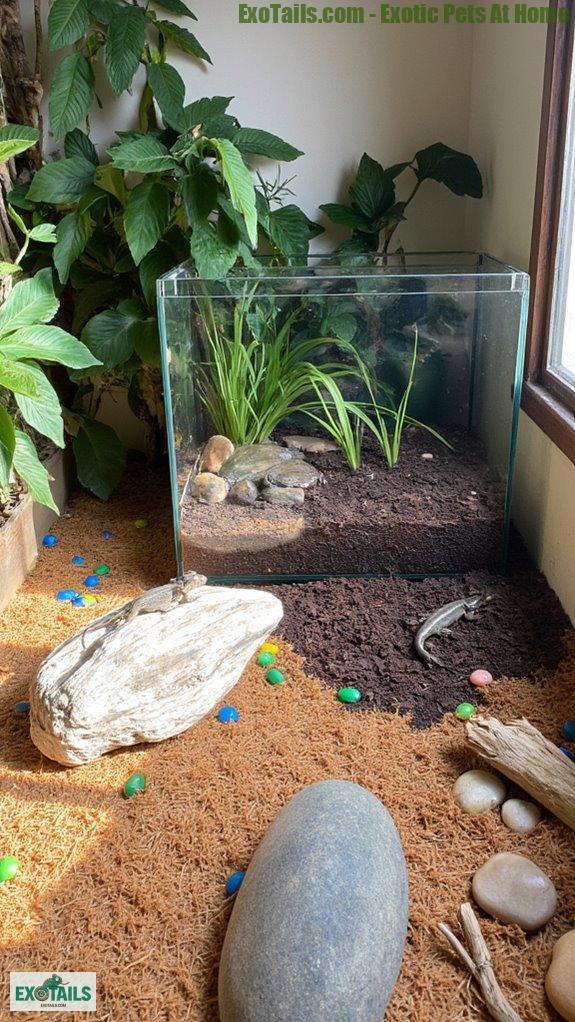
Even though we all love a clean, tidy pet habitat, using natural materials can actually transform your space into a vibrant, realistic environment that mimics your pet’s natural home.
Consider adding bark mulch or coconut coir to your setup. They not only enhance aesthetics but also offer comfort and enrichment for your pets. Who wouldn’t want their critters roaming around in nature-inspired luxury?
Trust me, I’ve seen my reptiles thrive in habitats designed with these materials. Additionally, incorporating natural substrates can help maintain the humidity levels needed for your reptiles’ health.
Plus, the earthy vibe makes your home feel alive, doesn’t it?
Layering Substrates for Enhanced Habitat Depth
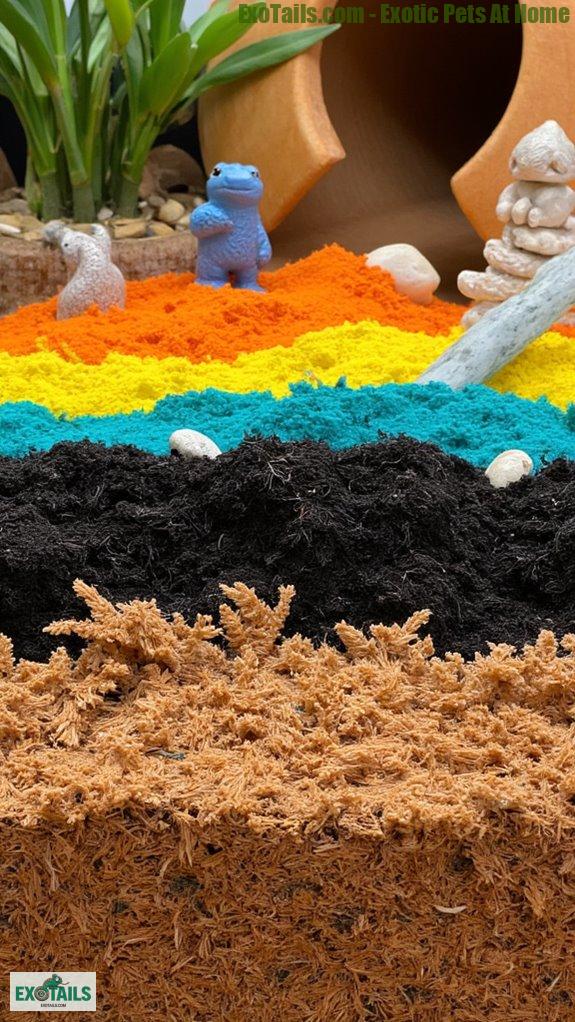
Layering substrates in a pet habitat isn’t just a fun design trick; it’s like building a mini ecosystem for your furry or scaly friends!
When I crafted habitats for my exotic pets, I learned the magic of substrate textures and visual layering firsthand.
Here’s how you can master it:
- Base Layer: Start with a sturdy foundation, like coconut coir or gravel, to encourage a stable environment.
- Middle Layer: Add organic materials, like soil, for that earthy feel pets love.
- Top Layer: Use decorative substrates, such as vibrant sands, for visual appeal that’s also enriching.
In fact, proper substrate layering can help create a harmonious space that benefits all species in your habitat!
It’s a game-changer!
Ensure Proper Drainage and Aeration
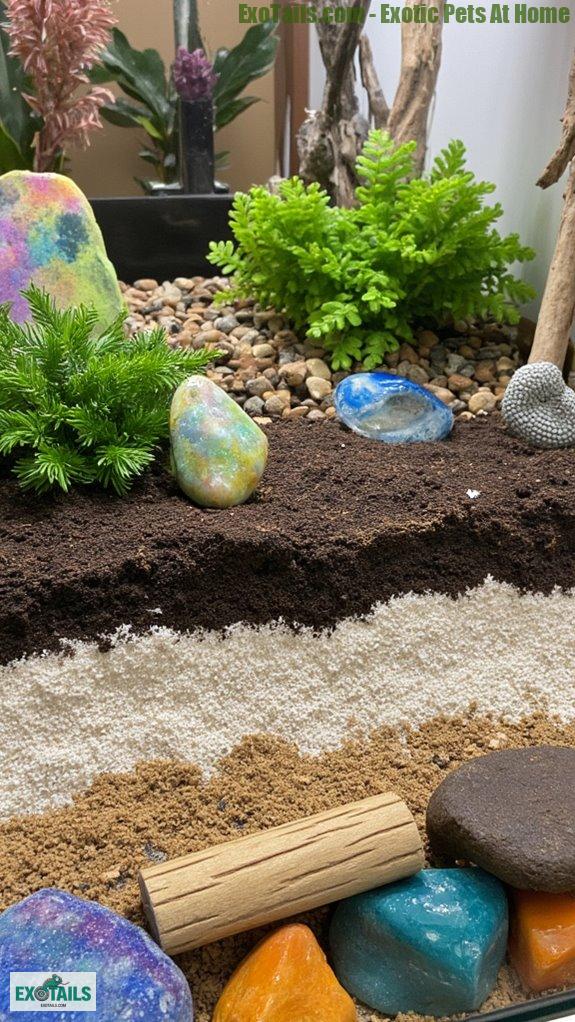
Creating a vibrant pet habitat is only half the battle; the other half is making sure everything runs smoothly underneath that beautiful layer of sand or soil.
Did you know that proper drainage techniques can prevent waterlogging and keep your pets comfy? I always integrate drainage layers—like gravel or mesh—into my setups.
Plus, using effective aeration methods, like mixing substrates, lets the soil breathe. This keeps nutrients cycling and promotes a thriving ecosystem. Additionally, the choice of substrate can significantly impact axolotl health, so it’s important to research what works best for your pets.
As someone who’s navigated the wild side of housing exotic pets, I can tell you that attention to detail makes all the difference!
Let’s make that habitat sing!
Maintain Cleanliness and Hygiene in Substrate Selection
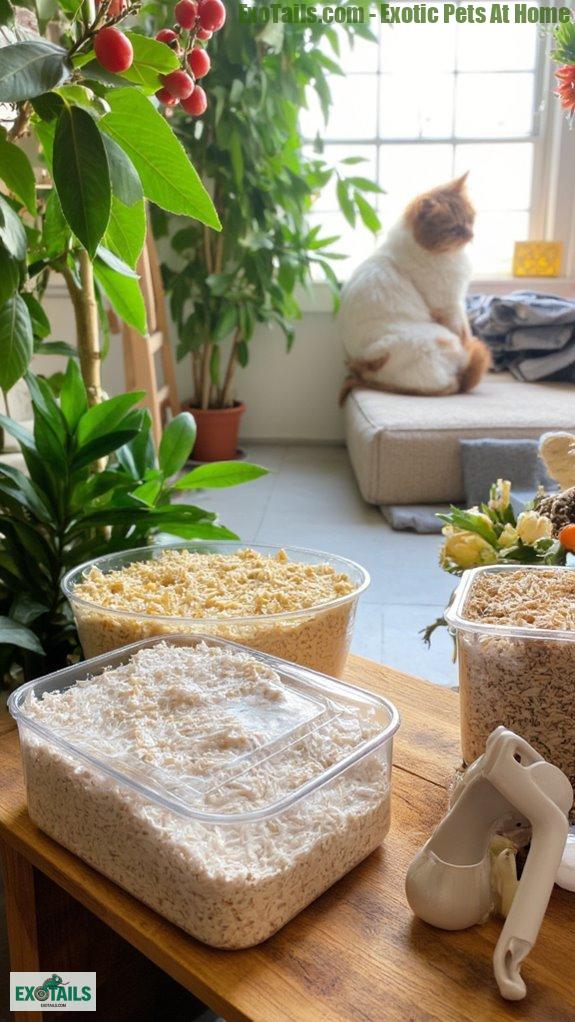
When it comes to selecting substrates for your pet habitat, you can’t overlook cleanliness and hygiene—trust me, your critters will thank you for it!
I learned this the hard way when my exotic pets turned my home into a no-go zone.
Here are my top tips for substrate maintenance:
- Choose quick-dry substrate: Look for materials that help absorb waste promptly.
- Set a cleaning frequency: Regular clean-ups, ideally every week, will keep odors at bay.
- Consider replaceable layers: Using layers you can easily swap out reduces overall mess.
Your pets deserve a clean home, so get started today!
Incorporate Safe Plant Life With Substrate
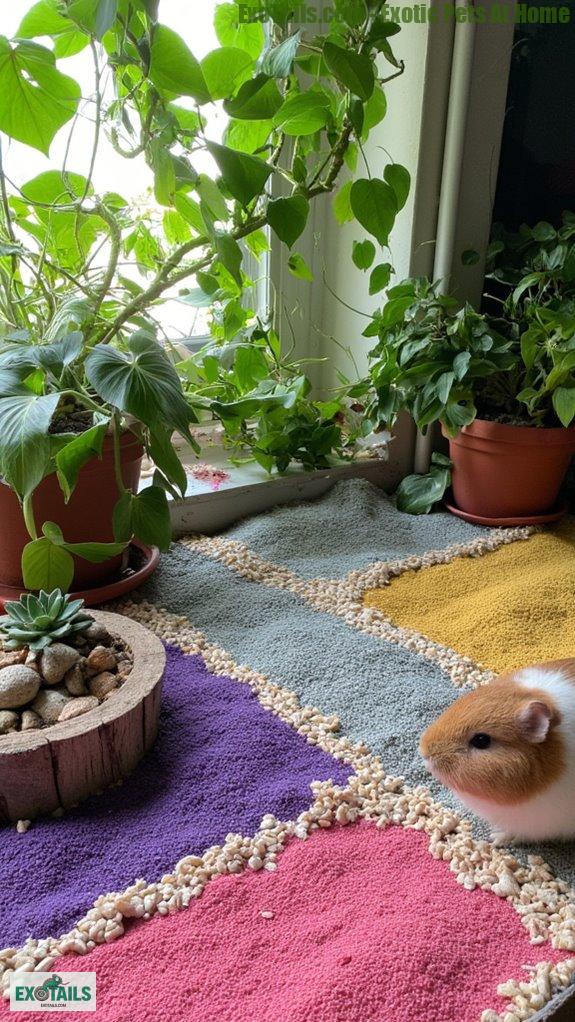
While it’s easy to think that your pet habitat needs just the right substrate to be perfect, overlooking the beauty of incorporating live plants is a major missed opportunity!
Adding plants not only enhances aesthetics but supports your pet’s environment. It’s essential to choose species that reflect plant compatibility with your substrate. Think low-maintenance favorites like spider plants and pothos; they thrive in various substrates!
I’ve seen firsthand how plants elevate habitats.
Plus, they help with substrate maintenance by retaining moisture and improving air quality.
Regularly Evaluate and Replace Substrate as Needed
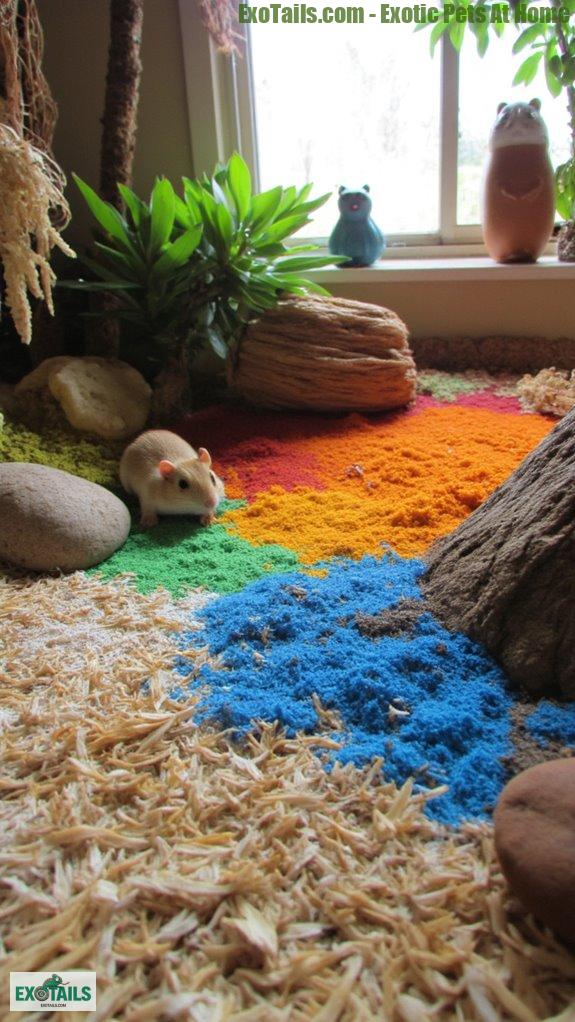
Evaluating and replacing your substrate isn’t just a chore; it’s a key part of keeping your pet’s habitat vibrant and healthy.
To help maintain substrate lifespan, I recommend:
- Checking for mold or odors – If it smells funky, it’s time for a change!
- Observing your pet’s behavior – If they avoid certain areas, you might’ve a substrate issue.
- Performing a habitat assessment every few months – Regular evaluations help catch problems early.
With my experience in caring for exotic pets, I’ve learned that keeping the habitat fresh not only benefits your pet but makes your space more enjoyable too!