5 Best Vegetables for Dragon Pet Diets
Learn which vegetables give your bearded dragon optimal nutrition and why collard greens reign supreme.
Ever fed your scaly bestie the nutritional equivalent of cardboard? Yeah, I’ve been there. Let’s talk about vegetables that actually move the needle on your dragon’s health.
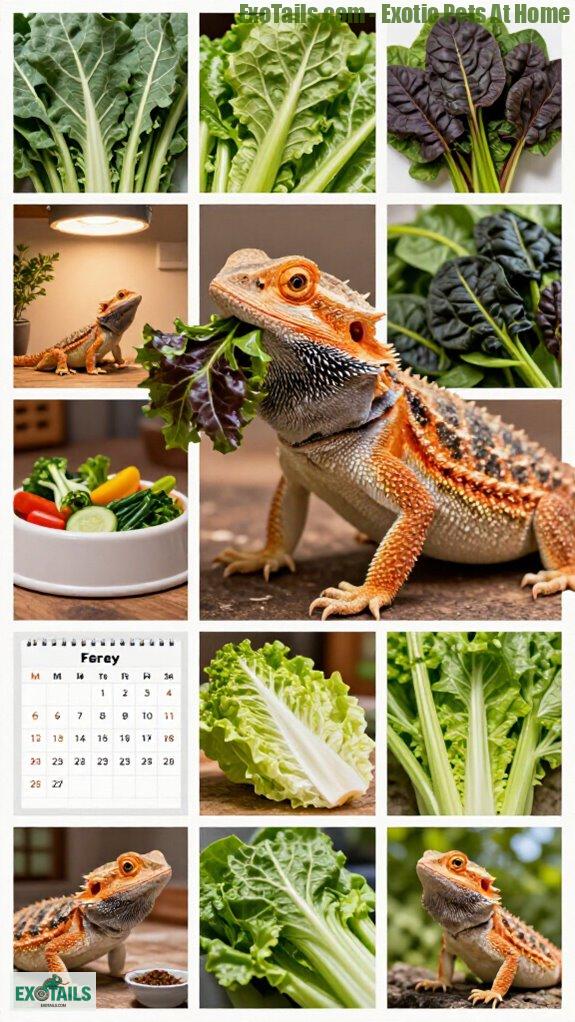
Collard greens are absolutely the MVP here—that 14.5:1 calcium-to-phosphorus ratio is *chef’s kiss*. Butternut squash, bell peppers, and carrots? They’re your supporting cast for keeping things interesting. Ditch iceberg lettuce (it’s basically vegetable water with commitment issues). Dark leafy greens are where it’s at.
The Barnaby Breakthrough
I adopted Barnaby three years ago, and honestly, watching him transform once I nailed his nutrition hit different. Mr Wiggles, my axolotl, taught me the importance of micromanaging care details. That’s when I launched ExoTails—my obsession with getting exotic pet nutrition *right* needed an outlet. These creatures rely on us entirely, you know?
The Day Barnaby Wouldn’t Eat
I remember the sinking feeling when Barnaby rejected his salad bowl entirely. His scales looked dull, energy depleted. After consulting with a herpetology specialist and switching to Repti Zoo and Fluker’s products, everything pivoted. I realized I’d been serving him nutritionally bankrupt vegetables. Fine-grated carrots, meticulously chopped peppers, consistent rotation—suddenly he was ravenous again, scales gleaming.
Quick Takeaways
- Collard greens are essential for bearded dragons with a superior 14.5:1 calcium-to-phosphorus ratio.
- Orange vegetables like butternut squash and pumpkin provide nutrition and support digestive health.
- Red, yellow, and orange bell peppers offer high vitamin C and low oxalates.
- Raw grated carrots preserve vitamins but serve only thumbnail-sized pieces once or twice weekly.
- Avoid iceberg lettuce and celery; rotate dark leafy greens like mustard and turnip greens.
Leafy Greens for Bearded Dragons: The Nutritional Foundation
They’re not exactly clamoring for a salad bar, but if you want yours to thrive (not just survive), leafy greens become your secret weapon. Proper humidity levels in their habitat also support healthy digestion of these fiber-rich vegetables.
Here’s the deal: collard greens benefits are genuinely impressive. Their calcium-to-phosphorus ratio of 14.5:1 makes them your dietary MVP—basically the nutritional foundation everything else builds upon. They should dominate your dragon’s plate.
Now, dandelion greens precautions matter too. While calcium-rich at 2.8:1, they contain moderate oxalates that bind calcium, so pair them strategically with collards or prickly pear.
Always verify they’re pesticide-free.
Want top-notch results? Mix collards, turnip greens, and mustard greens regularly. This rotation prevents boredom while delivering inclusive nutrition.
Place these greens in shallow feeding dishes to make consumption easier and prevent your dragon from accidentally ingesting loose substrate.
Safe Squash and Pumpkin: Orange Vegetables Your Dragon Can Eat
When you’re scanning the produce section for dragon-safe options, why does everything orange seem to scream “eat me”?
I’ve learned that squash varieties and pumpkin benefits make excellent nutritional additions to your bearded dragon’s diet. Butternut squash, acorn squash, and spaghetti squash offer safe, nutrient-rich options packed with vitamin A and fiber.
Pumpkin provides similar benefits while supporting digestive health—think of it as nature’s gentle gut support.
These orange vegetables deserve regular rotation in your dragon’s meal plan. Serve them peeled, desseeded, and finely chopped.
Your scaly friend gets variety, nutrition, and honestly? You’ll appreciate how these colorful additions brighten up any feeding setup.
Bell Peppers: Variety and Vitamin C Without Heat
While those vibrant orange veggies provide fantastic nutrition, bell peppers bring a whole different flavor profile to your dragon’s plate—literally.
I’ve discovered these colorful powerhouses offer impressive vitamin C sources and genuine bell pepper benefits without any spicy drama.
Here’s what makes them shine:
- Red, yellow, and orange varieties provide superior nutrition compared to green peppers.
- Loaded with vitamin C to support immune health and skin wellness.
- Low in oxalates, so you’re not compromising calcium absorption.
Chop them finely before serving.
Your scaly friend won’t judge your presentation skills, but they’ll definitely appreciate the nutritional variety. Rotate bell peppers regularly into feeding your bearded dragon for best results.
Carrots: Raw vs. Cooked and Safe Portion Sizes
Because carrots pack such a nutritional punch, I’ve learned they’re fantastic for your dragon—but here’s the thing: preparation method matters way more than you’d think.
Raw carrots offer superior carrot nutrition, preserving vitamins and minerals better than cooking methods. I grate them finely to prevent choking hazards—trust me, I’ve learned this the hard way with my bearded dragon setup.
Cooked carrots become softer, easier to digest, though they lose some nutritional value. Want the best approach? Rotate both methods weekly for variety.
Safe portion sizes? Offer carrots as occasional treats—roughly thumbnail-sized pieces, once or twice weekly max.
Toxic Vegetables to Avoid and Optimal Feeding Frequency
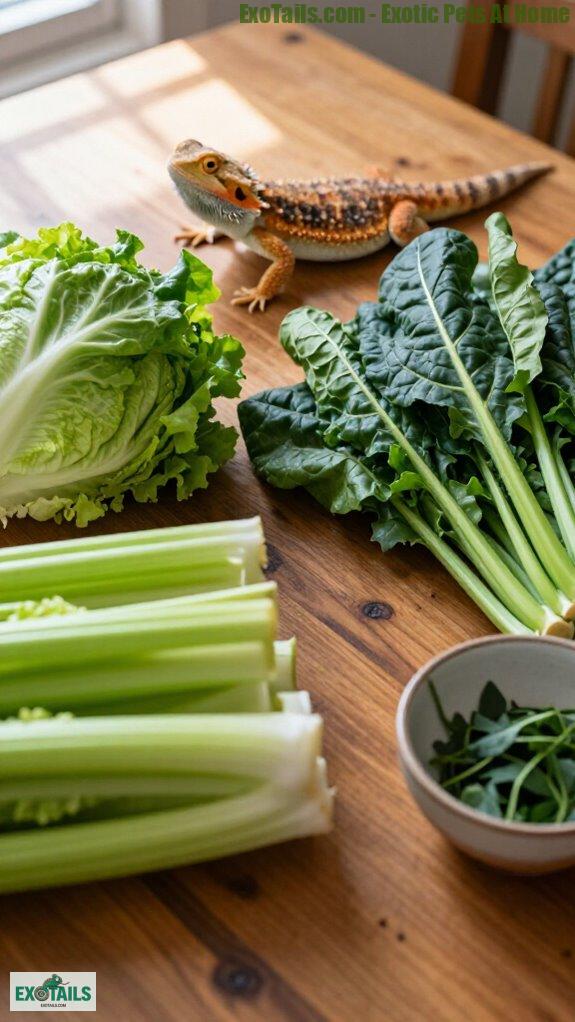
Now that you’ve got the carrot routine down, let’s talk about the vegetables you should absolutely keep out of your dragon’s food bowl—because not all greens are created equal, and some can seriously mess with your pet’s health.
Vegetables to Skip:
- Iceberg lettuce (basically water with zero nutrition)
- Celery (too fibrous, not worth the space)
- Light-colored inner leaves (nutrient-poor compared to darker greens)
Here’s the thing: stick with dark leafy greens like collards and mustard greens as safe alternatives.
Feed adults daily or every other day. Your dragon’s health depends on intentional choices, not shortcuts. Dark greens? Always your best bet.
Bearded Dragon Nutritional Requirements
Understanding what your bearded dragon actually needs to thrive goes way beyond just tossing some greens in a bowl and calling it a day.
Your scaly friend requires a carefully balanced diet with proper bearded dragon vitamins, dark leafy greens making up 50-80% of their meals, and diverse protein sources like crickets and dubia roaches. Among the top veggie options you can offer, collard greens, mustard greens, and dandelion greens should form the staple foundation of their daily vegetable intake.
Adults need roughly 25% animal matter for peak health.
Think of it like designing a terrarium—everything’s gotta work together harmoniously. Without adequate calcium, vitamin A, and protein, you’re fundamentally setting your dragon up for nutritional disaster.
Don’t wing it here; precision matters when feeding these reptiles.
Essential supplements for bearded dragon nutrition ensure your reptile receives critical nutrients that vegetables and protein alone cannot fully provide.
Calcium Supplement Powders
While you’re dialing in your dragon’s diet with all those gorgeous greens and protein sources, here’s the thing—even the best salad won’t cut it alone.
Your scaly friend needs calcium supplementation to thrive, and choosing the right calcium sources matters big time.
- Calcium powder without vitamin D3 for dusting insects three times weekly
- D3-included formulas used less frequently to prevent toxicity
- Liquid calcium supplements as an alternative delivery method
I’ve learned from keeping exotic pets that consistent supplementation methods prevent serious metabolic bone disease.
Dust insects lightly, don’t cake them. Your dragon’s skeleton will thank you for the attention to detail.
When selecting products, always check top calcium supplements recommendations from trusted exotic pet sources to guide your choice.
It’s important to research essential calcium supplements to ensure you’re providing the right nutritional support for your bearded dragon’s long-term health.
FAQ
How Should I Prepare Vegetables Before Feeding Them to My Bearded Dragon?
I’ll prepare vegetables like bite-sized building blocks for your dragon’s safety. Wash greens thoroughly, chop them finely, and grate harder vegetables like carrots. Never cook—serve raw only to preserve nutrients and prevent choking hazards.
What Is the Ideal Dietary Ratio of Greens to Other Foods for Adult Bearded Dragons?
I’d recommend you maintain 50-80% dark leafy greens for proper beardie nutrition. Add 20-30% non-leafy vegetables, 25% protein, and maximum 5% fruits. This dietary balance guarantees your adult dragon’s ideal health and safety.
Can Bearded Dragons Eat Iceberg Lettuce or Celery as Part of Their Diet?
I’d advise against feeding your dragon iceberg lettuce or celery—they’re nutritional deserts filled mainly with water and fiber. Instead, I recommend collard greens, dandelion greens, or mustard greens for superior nutritional value and your pet’s safety.
How Often Should I Feed Vegetables to My Adult Bearded Dragon?
I’d recommend feeding vegetables daily or every other day to your adult bearded dragon. Rotate your vegetable variety frequently—prioritize dark leafy greens like collard and mustard greens to guarantee safe, balanced nutrition and prevent dietary deficiencies.
Which Leafy Greens Have the Best Calcium-To-Phosphorus Ratios for Bearded Dragons?
I’d recommend collard greens first—they’ve got an exceptional 14.5:1 calcium-to-phosphorus ratio that maximizes calcium benefits while minimizing phosphorus sources. Turnip and dandelion greens follow as excellent, safer choices for your dragon’s health.
References
- https://www.petmd.com/reptile/nutrition/what-do-bearded-dragons-eat
- https://www.reptilecentre.com/blogs/reptile-blog/greens-for-bearded-dragons
- https://www.sangoveterinaryhospital.net/site/blog/2023/03/30/bearded-dragon-diet
- https://hospital.cvm.ncsu.edu/services/small-animals/nutrition/how-to-feed-your-bearded-dragon/
- https://vcahospitals.com/know-your-pet/bearded-dragons-feeding
- https://www.sawneevet.com/blog/bearded-dragon-diet
- https://www.fallsroad.com/site/tips-resources-blog-baltimore-vet/2022/01/14/bearded-dragon-diet
- https://dragonsdiet.com/blogs/dragon-care/best-greens-for-bearded-dragons
- https://reptifiles.com/bearded-dragon-care/bearded-dragon-vegetables-fruits/