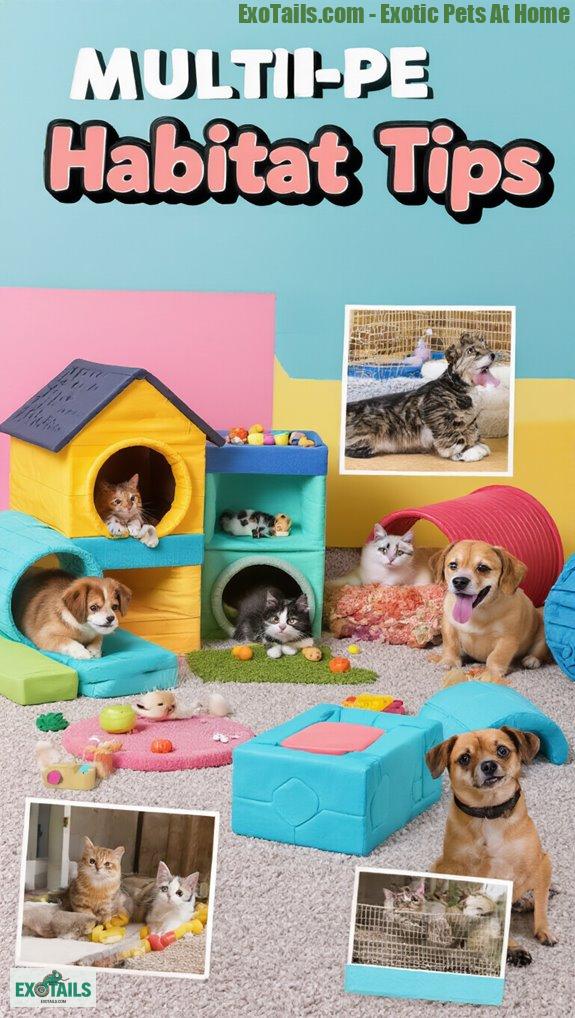
7 Tips for Multi-Pet Habitat Planning and Enrichment
Struggling to create a harmonious multi-pet habitat? Discover essential tips that will transform your space into a thriving pet paradise!
Planning a multi-pet habitat can feel like juggling flaming torches, but it’s totally doable! First, assess your space and create zones for different species—seriously, turtles don’t want to mix with ferrets! Then, incorporate vertical and horizontal enrichment, like shelves and climbing structures, to keep everyone engaged. Choose compatible pets with similar social needs, and don’t skimp on natural elements—your critters will thrive! Curious about more tips to enhance your pet paradise? Keep that spark alive, my friend!
Quick Takeaways
- Design distinct zones for each pet species to cater to their specific needs and ensure safety from incompatible species.
- Incorporate vertical and horizontal enrichment, such as shelves and climbing structures, to promote exercise and reduce boredom.
- Use natural elements like branches and rocks to create a stimulating environment that mimics natural habitats for pets.
- Consider species compatibility in temperament and activity levels to minimize conflict and enhance coexistence.
- Provide cozy corners for all pets to offer spots for solitude, ensuring their comfort and happiness in the habitat.
Assessing Space and Layout for Diverse Pet Needs
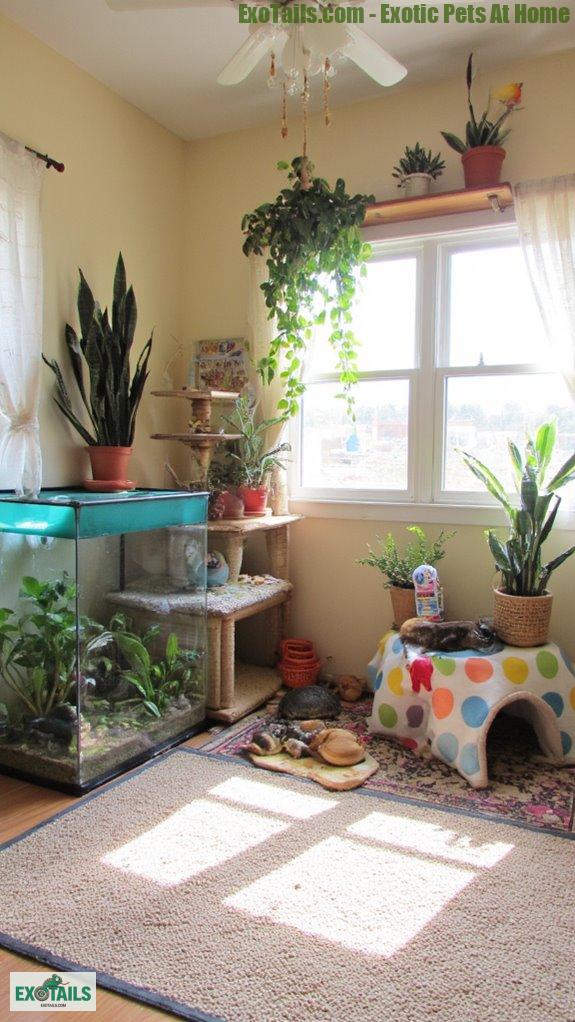
How can you create a happy home for pets that all have different needs?
First, consider habitat efficiency and space utilization.
I’ve learned that having an open layout allows for harmony between species.
Keep in mind, free-range turtles mightn’t vibe well with busy little ferrets.
Try shelving for vertical space—climbing is a joy for cats and iguanas alike! Maximize your space with stylish corner enclosures to create intimate pet areas.
Remember, pet happiness equals your happiness.
Tailor your space, make certain everyone has their cozy corner, and watch the magic happen.
With ExoTails, I’m here to help you navigate this delightful chaos, turning your home into a pet paradise!
Creating Zones for Different Species
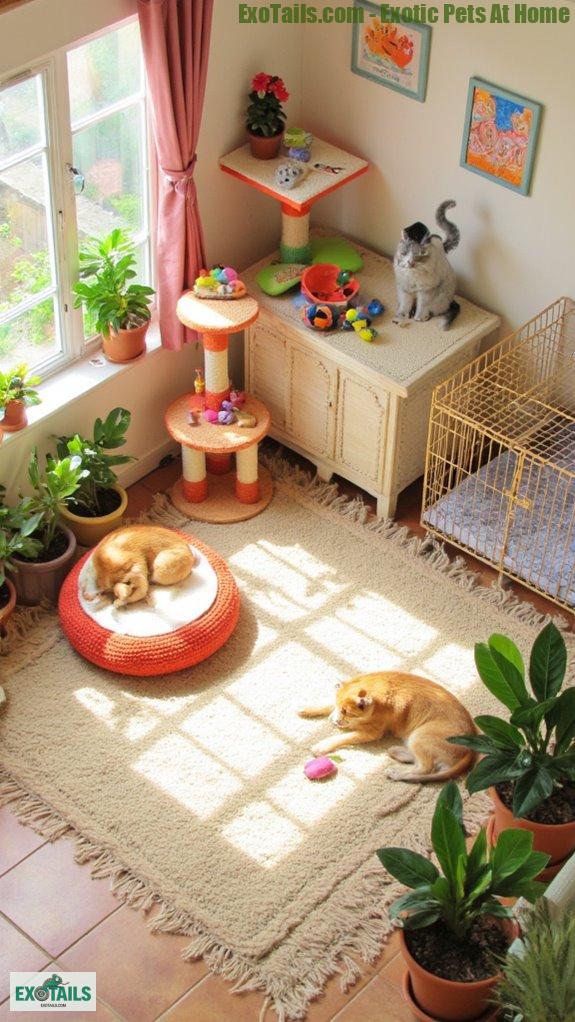
Creating distinct zones for different species within your home isn’t just a fun idea—it’s essential for happy, harmonious coexistence. Trust me, I learned this the hard way with my exotic pets!
Here’s what you need to take into account:
- Species specific requirements: Know what each pet thrives on—space, environment, and more.
- Safety: Make sure no pets can reach each other’s zones.
- Accessibility: Each species should feel at home, so make sure easy access.
- Behavioral considerations: Understand how each species interacts; some thrive on solitude while others enjoy socializing.
To create a successful multi-species habitat, remember that creating zones enhances the overall wellbeing of your pets.
Your pet utopia starts with these zones!
Providing Vertical and Horizontal Enrichment
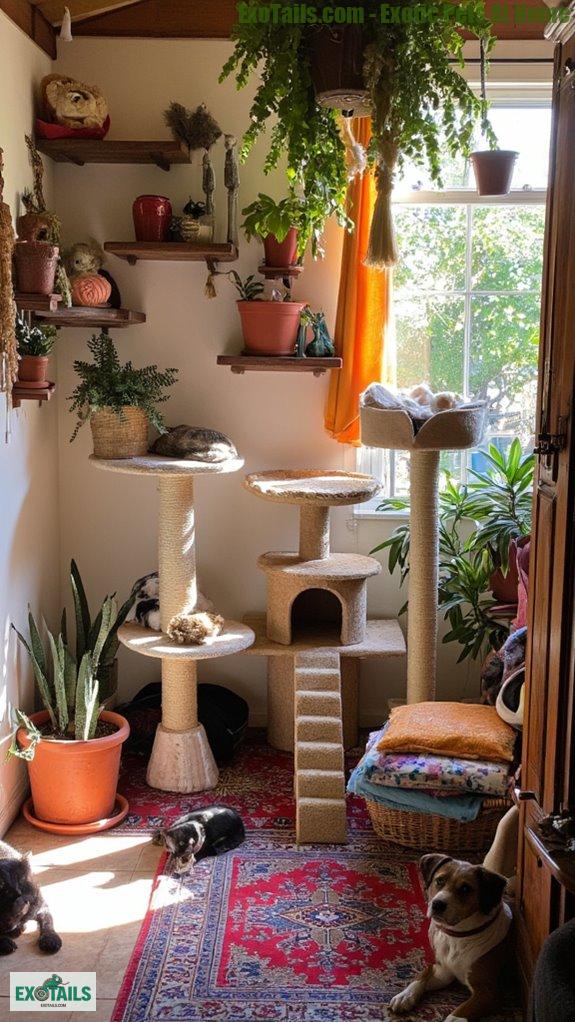
While I never thought about it until my pets started using my furniture as their personal jungle gym, providing vertical and horizontal enrichment is key to keeping your multi-pet home lively and engaging. Providing options for mixed pet species allows each animal to engage with their environment in unique ways.
Creating fun shelving options and sturdy climbing structures can transform a drab space into an adventurous playground. Here’s a quick reference to inspire your pet-friendly design:
| Enrichment Type | Ideas | Benefits |
|---|---|---|
| Vertical | Wall-mounted shelves | Increases space utilization |
| Horizontal | Wide ledges | Reduces boredom |
| Climbing | Cat trees or ramps | Encourages exercise |
Let’s get creative!
Choosing Compatible Species for Cohabitation
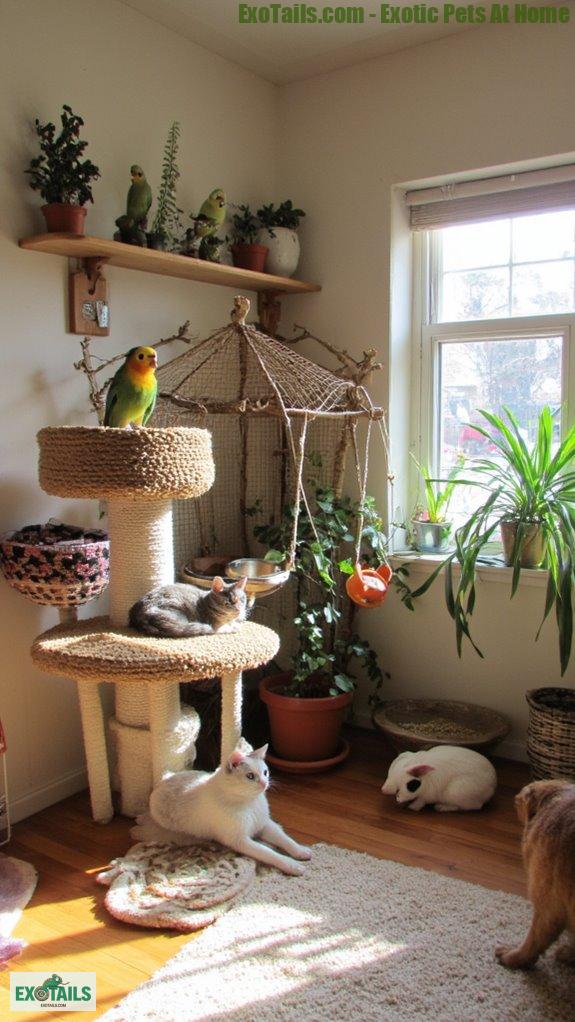
Understanding the dynamics of your multi-pet household means more than just installing a few fun shelves or ramps; it also involves picking pets that can get along harmoniously.
Trust me, nothing’s worse than a cat plotting on a parakeet!
To ascertain behavioral compatibility, consider these four factors:
- Species Temperaments: Research each species’ social needs.
- Activity Levels: Match energetic pets with similarly spirited companions.
- Dietary Needs: Coexisting species should have compatible diets.
- Space Requirements: Verify everyone has room to roam without stepping on each other’s toes.
With a bit of planning, you can create a peaceful pet paradise!
Incorporating Natural Elements for Habitat Simulation
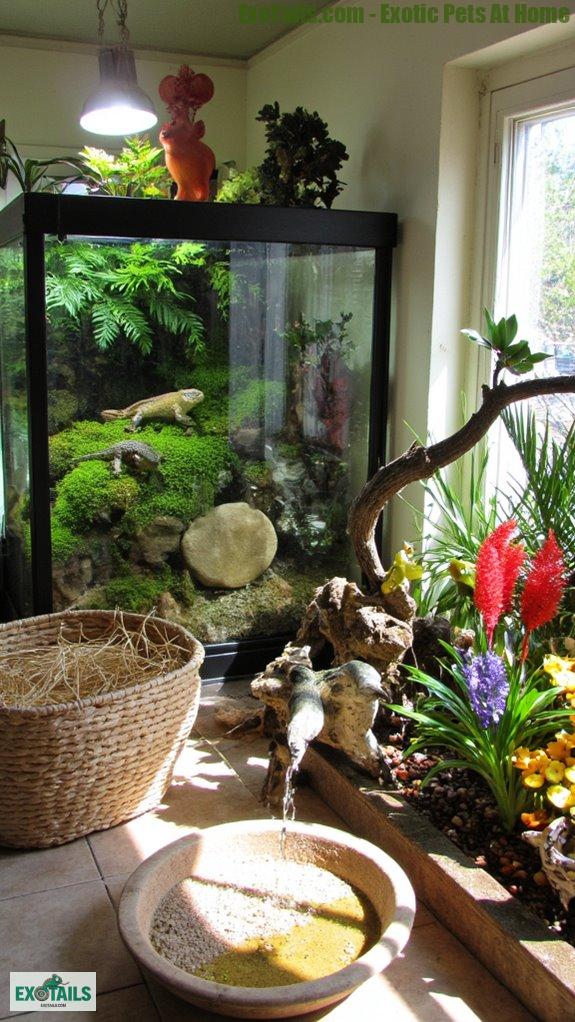
If you want your multi-pet home to feel vibrant and alive, you’ll need to think about incorporating natural elements that mimic their environments.
Consider using natural materials like branches, rocks, and plants to create little ecosystems for your pets. These not only provide sensory stimulation but also make the habitat visually appealing. Think of it as decorative gardening for critters!
In my experience with exotic pets, blending nature into their habitats has led to happier and healthier companions. Additionally, bioactive enclosures can play a crucial role in maintaining the balance of your habitat, providing essential benefits such as clean soil and water.
Designing Safe and Interactive Play Areas
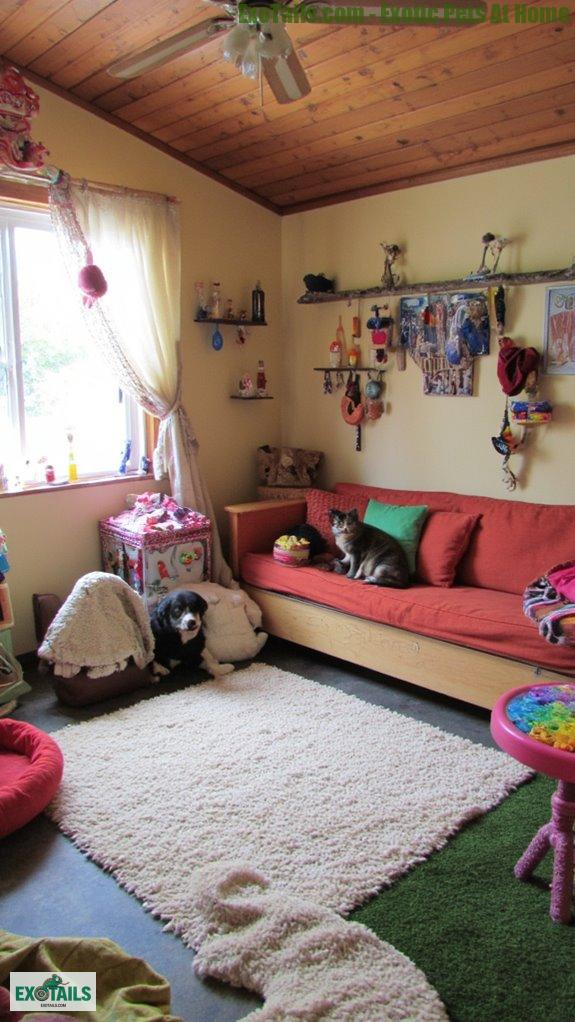
Creating a safe and interactive play area for your furry, scaly, or feathered friends can feel like crafting an adventure land right in your living room.
To elevate playtime routines, consider these four essentials:
- Interactive Equipment: Choose toys that stimulate minds, like puzzle feeders or climbing structures.
- Safe Zones: Designate areas free of hazards, ensuring your pets can frolic without worry.
- Diverse Textures: Incorporate different surfaces, like grass mats or soft fabrics, to engage their senses.
- Escape Routes: Always provide escape paths, so everyone can claim their throne during royal squabbles!
With a thoughtful layout, you’ll create joyous experiences for your pets!
Regularly Evaluating and Adjusting the Environment
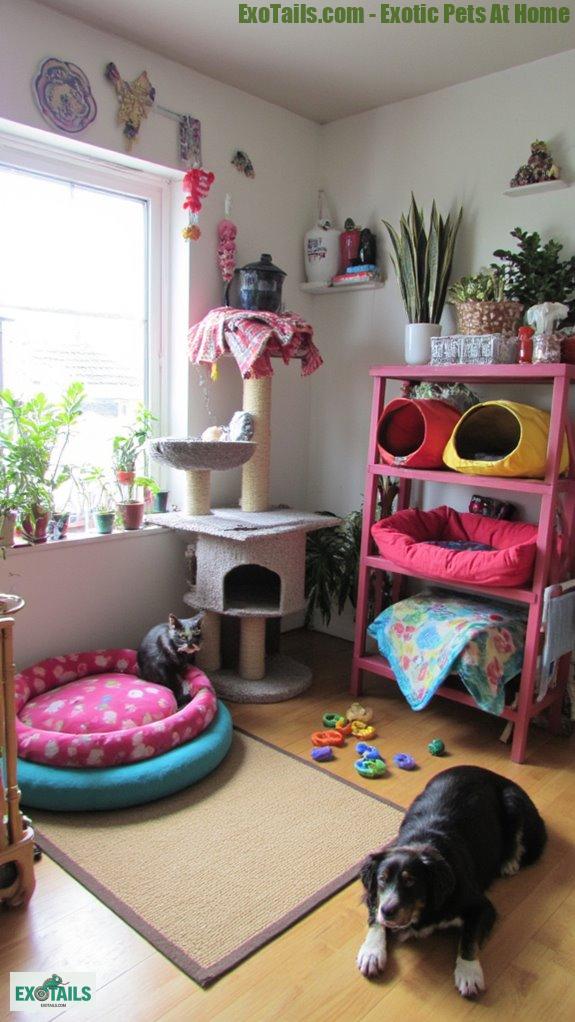
While the excitement of bringing home a new pet can feel like a whirlwind of joy, keeping their environment stimulating and safe is an ongoing adventure.
I regularly watch my pets and jot down behavioral observations to catch any signs of boredom or stress. Are they interacting well? Do they seem curious?
With these understandings, I make necessary environmental modifications, like adding new hiding spots or rotating toys.
Trust me, a little change opens up a world of discovery!
Creating ExoTails, I learned that a lively habitat keeps critters and humans alike happily engaged.
Let’s master this together!