8 Tips for Vertical Terrarium Setups for Reptiles
Capture the secrets to creating a stunning vertical terrarium for your reptiles, and discover the crucial elements that will transform their habitat!
Creating a vertical terrarium for your reptiles can be a game changer! First, choose a spacious terrarium—at least 18 inches tall for climbers. Then, go vertical with branches and rocks to keep them active and happy. Don’t forget the right substrate mix for burrowing and drainage. Control humidity and temperature like a mini weather station. Add safe décor and proper lighting to make it pop! Trust me; your exotic pets will thank you. Stick around for more tips!
Quick Takeaways
- Select a terrarium with a minimum height of 18 inches to accommodate climbing species and prevent cramped living conditions.
- Incorporate vertical structures like branches and rocks to encourage climbing and provide enrichment for reptiles.
- Use a suitable substrate mix of soil and coconut fiber, ensuring proper drainage for healthy burrowing.
- Maintain specific temperature and humidity levels, regularly monitoring with a thermometer to ensure optimal environments.
- Include safe decorations, live plants, and appropriate lighting, such as UVB and basking bulbs, for a healthy terrarium setup.
Choose the Right Terrarium Size

When it comes to setting up a vertical terrarium, picking the right size is essential—trust me, I’ve learned this the hard way!
Imagine a tiny gecko staring at you from a shoebox—oops! Different reptile species need specific terrarium dimensions. A tall setup might look amazing, but if it’s too cramped, you could have a very unhappy critter on your hands.
Different reptiles require specific terrarium sizes—don’t let your setup be a shoebox for your little climbers!
So, measure twice, buy once! A good rule is to look for a terrarium at least 18 inches tall for climbers.
Your pet deserves a space where they can stretch their legs—or claws.
With the right size, your reptile family will thrive!
Incorporate Vertical Space for Climbing

Creating a vertically engaging habitat is like giving your reptile a gym membership—minus the monthly fees, of course!
When it comes to climbing structures, think outside the box! Use branches, rocks, and even shelves to encourage vertical enrichment. Your scaly buddy will appreciate the exercise and the chance to show off their impressive climbing skills.
Ever seen a gecko scale a wall? It’s a sight to behold! Plus, adding these elements can enhance the overall aesthetic of your terrarium.
As someone who loves exotic pets and home decor, I founded ExoTails to help fellow enthusiasts create these lively habitats filled with climbing fun!
Select Appropriate Substrate

Choosing the right substrate is essential—after all, it’s basically the foundation of your reptile’s home!
Now, when it comes to substrate types, think of it as a buffet for your scaly friend; you wouldn’t want to serve them soggy crackers, right?
Substrate choices are crucial—avoid serving your reptile soggy crackers; they deserve the best!
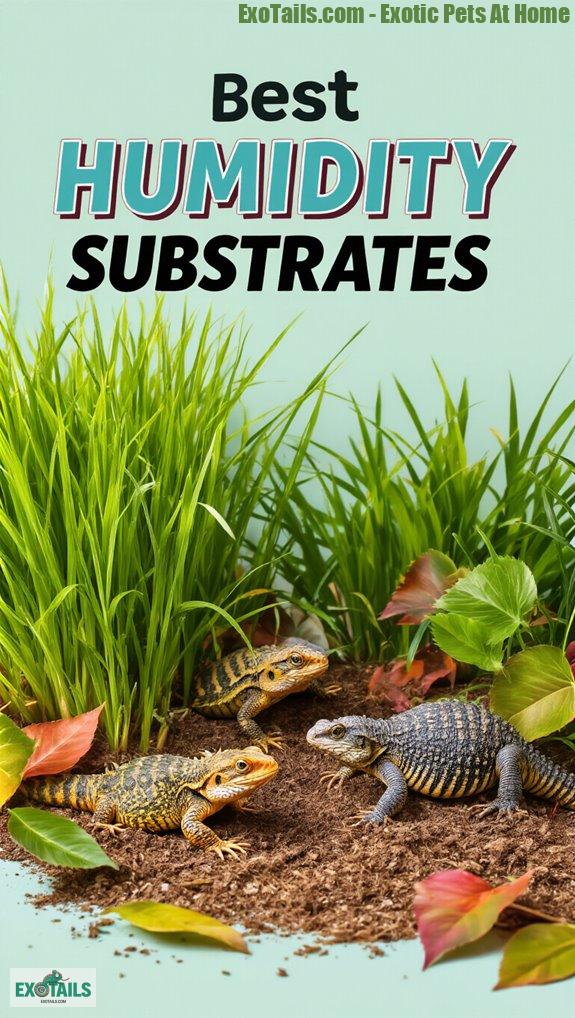
A good mix of soil and coconut fiber can promote healthy digging and burrowing.
Don’t forget about drainage layers! They prevent that dreaded swamp vibe we’re all trying to avoid.
Trust me, as a self-proclaimed reptile architect at ExoTails, I can assure you—if your substrate isn’t right, you might as well be hosting a gym for mudslides!
Provide Temperature and Humidity Control

While you might think reptiles are low-maintenance pets, one fact remains: they thrive in specific temperature and humidity ranges that mimic their natural environments.
So, let’s talk about temperature regulation. You wouldn’t want your scaly buddy sweating like it’s in a sauna, right? Use a thermometer to keep those temperatures just right.
Next up: humidity levels. Too dry? Your reptile might as well be on a desert vacation.
Too humid? Hello, mold!
Choose Safe and Functional Decor

After making sure your reptile’s temperature and humidity are just right, it’s time to think about how to make their home not just functional but also visually appealing.
You want decorative elements that are pretty but also safe—no one wants a snake scaling a foam rock that decides to melt.
I’ve been there; the last thing you need is a miniature disaster unfolding in your terrarium!
Utilize Live Plants for Added Benefits

Integrating live plants into your reptile’s vertical terrarium can feel like a game changer, as they not only beautify the space but also offer a plethora of benefits.
Enhancing your reptile’s terrarium with live plants transforms the habitat into a vibrant, functional oasis!
Think about it—what plant species could make your scaly friend feel like royalty? Not only do they create climbing spots, but they also provide fresh air and humidity, which is like a spa day for your reptile.
Plus, they’re perfect for terrarium care! Just keep in mind to choose easy-care plants so you don’t accidentally become a full-time plant parent. Come on, who’s got that kind of time?
Give your terrarium some life!
Ensure Proper Lighting Conditions

Creating the perfect environment for your reptile goes beyond just adding stunning plants to their vertical terrarium.
You’ve gotta light the place up like it’s a disco party!
Different lighting types, like UVB and basking bulbs, serve specific purposes.
Trust me, your scaly friend isn’t a fan of dim candlelight dinners.
For ideal light placement, aim for the top half of the terrarium, ensuring those illuminated options get their daily dose of sunshine, even if it’s artificial.
I’ve learned a lot in my journey with exotic pets on ExoTails.
Regularly Monitor and Maintain the Setup

While it might be tempting to set up your vertical terrarium and then forget about it, keeping an eye on your setup is essential for your pet’s wellbeing.
Trust me, your reptile won’t enjoy humidity levels more befitting a sauna! I’ve learned to routinely monitor humidity and check temperature to avoid transforming my home into a reptilian spa day rehearsal.
Don’t let those poor creatures overheat or catch a cold!
Exotic Pets At home

Choosing to keep exotic pets at home can be an exciting adventure, but it also comes with its own unique set of challenges and rewards.
Ever tried deciphering reptile behavior? It’s like learning a new language—one filled with head bobbing and tail flicks!
With exotic pet care, you’re not just feeding them; you’re hosting a mini wildlife documentary in your living room!
I created ExoTails to share my wild experiences, about how I balance terrarium decor and my skittish chameleon’s taste in foliage.
In order to enhance your pet’s habitat, consider including naturalistic enclosures that allow for their instinctual behaviors and provide stimulation.
My Ebook About Pet Room Decor

Have you ever stood in a pet store, pondering how to transform your space into a mini jungle for your reptiles? I’ve been there, and I felt it was time to turn my pet room into a breathtaking habitat rather than a chaotic jungle gym!
That’s why I wrote my ebook, packed with pet room decor guidelines to release your inner interior designer. From stylish rocks to live plants that’ll make your scaly buddies feel at home, I promise it’s easier than dressing a cat in a sweater! In this guide, you’ll discover creative ideas for DIY reptile terrariums that will inspire you to customize each habitat beautifully.
Let’s make your reptiles’ home stylishly wild, one terrarium at a time!