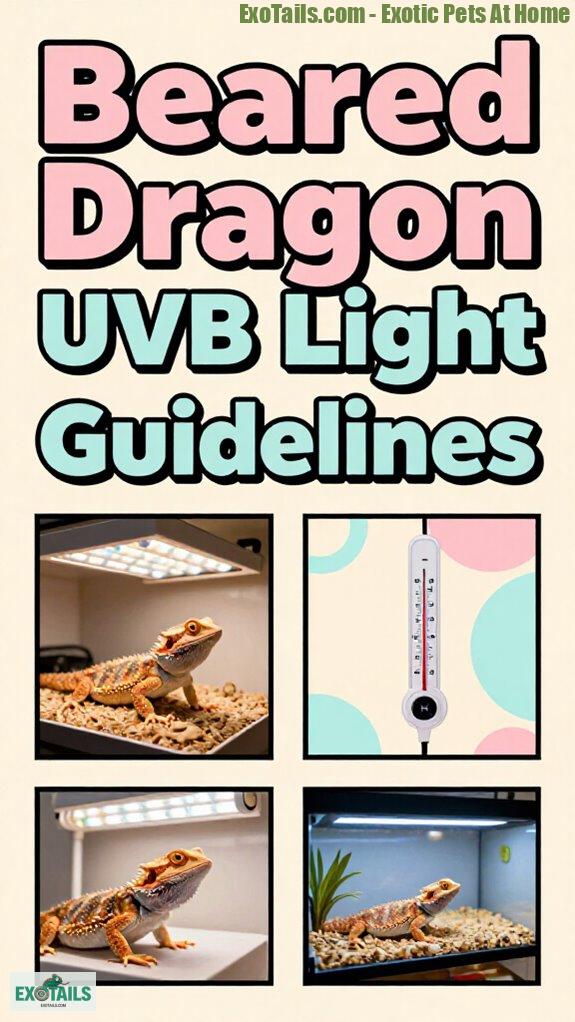
Bearded Dragon UVB Light Requirements: 3 Guidelines
Careful sun-levels and bulb care meet bearded dragon needs, but what are the three must-follow guidelines you should know?
Nailing Your Bearded Dragon‘s UVB Game: A Setup That Actually Works
Ever scrolled through exotic pet forums at 2 AM, spiraling over whether your scaly bestie is getting enough UVB? Yeah, you’re not alone.
My bearded dragon Barnaby transformed my whole perspective on reptile husbandry. When I first brought him home, I was clueless—genuinely floundering. Watching him bask under inadequate lighting broke my heart. That’s when I obsessed over getting it right, researching relentlessly for ExoTails, my blog. Now? Barnaby thrives. Even Mr Wiggles, my axolotl, benefited from the knowledge spillover. These creatures aren’t just pets; they’re my responsibility, my teachers.
The Day My UVB Setup Nearly Failed Barnaby
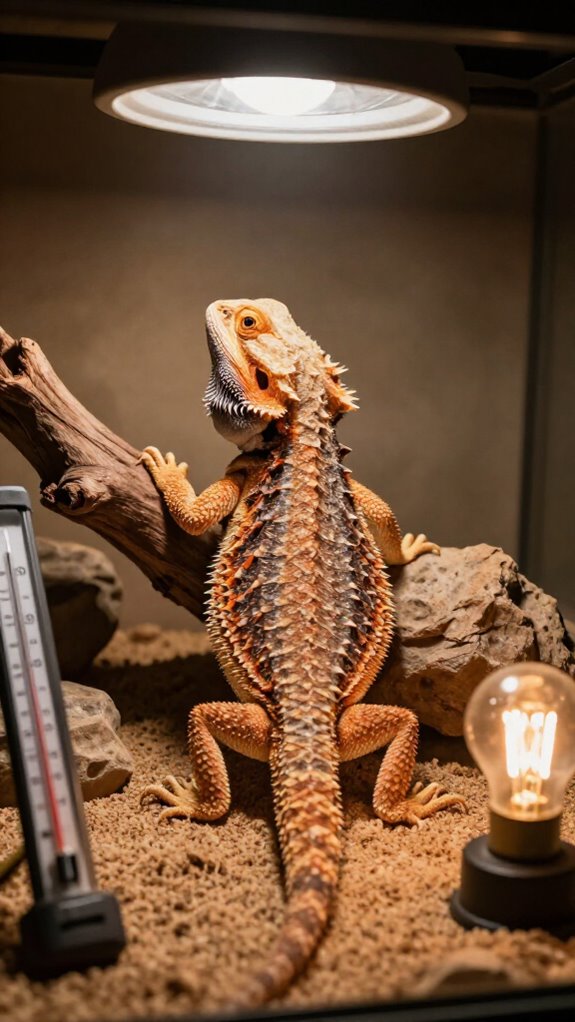
I’ll never forget the gut-wrenching moment I discovered my original Reptisun 10.0 bulb had degraded catastrophically. Barnaby’s appetite tanked. Using a Solarmeter 6.5 UVI meter, I measured a pathetic 1.2 UVI at his basking spot—nowhere near the requisite 4–6 UVI range. I immediately pivoted to a premium T5 system from a reputable supplier, maintaining rigorous 12-hour photoperiods. Within weeks, his vitality rebounded spectacularly.
Establish consistent UVB-UVA exposure: 12 hours daily using dependable T5 tubes calibrated for your enclosure dimensions. Monitor output meticulously with a UVI meter at the basking location. Target 4–6 UVI steadily. Rotate bulbs preemptively—they’re not immortal, despite what we wish.
Quick Takeaways
- Ensure a steady UVB source delivering a UV Index of 4–6 at the basking spot, measured with a UV meter.
- Provide 12 hours of UVB exposure per day, complemented by UVA daylight and heat for a natural cycle.
- Regularly test and replace UVB bulbs to prevent degraded spectrum and reduced intensity.
- Avoid glass barriers between the light and dragon; position bulbs at recommended distances for safe exposure.
- Choose a reliable UVB kit (T5 tubes preferred for larger enclosures) with complete components and proper spectrum.
Foundations: Why UVB Matters and the Right Dose for Bearded Dragons
UVB isn’t just a bright light in the room—it’s a life tool for your bearded dragon. I’m here to tell you that UVB Benefits go beyond glow; they drive Vitamin D3, calcium, and strong bones.
Too little sun, and trouble lurks; too much, and stress hops in. Ideal Exposure means a steady, safe pattern, not a full sun marathon. Optimal UVB setups vary by species and enclosure size, requiring careful planning to match your dragon’s natural habitat conditions.
Selecting the right UVB bulbs ensures your dragon receives optimal spectrum and intensity for healthy development.
Do you want a thriving lizard or a fragility test? Start with measured exposure, avoid glass barriers, and pick a trusted lamp.
I’ve seen calm, confident reptiles when care is precise and steady—your dragon deserves that kind of glow.
How to Measure UVB and Keep Readings Safe and Reliable
So, how do we measure UVB safely and keep readings reliable without turning this into a science fair project?
I keep it simple: use a UV Index measurement tool like a Solarmeter 6.5, and test at the basking spot where your dragon spends time. Selecting from recommended best bearded dragon uvb fixtures ensures you start with reliable equipment that delivers consistent output.
Check regularly for UVB degradation—bulbs fade, not die suddenly—so replace every 6 months.
Don’t chase crazy numbers; aim for a steady 4–6 UVI.
Protect readers by avoiding glass barriers, and align readings with a stable basking distance.
Investing in essential UVB meters ensures accurate readings and protects your dragon from harmful exposure levels.
Curious minds, isn’t safe, consistent lighting the true glow of responsible reptile care?
A 24/7 Lighting Schedule for Bearded Dragons: Daily Care and Troubleshooting
A 24/7 lighting plan for bearded dragons isn’t about blasting heat all day or chasing fancy numbers; it’s about creating a steady day-night rhythm that supports health and mood.
I keep schedules simple: 12 hours UVB, with UVA daylight and heat for full spectrum.
Want safety? check distances, avoid glass covers, and measure with a meter. If readings drift, troubleshoot tips like adjusting basking distance or bulb age. When selecting your UVB setup, prioritize T5 UVB tubes that match your enclosure size and your dragon’s specific needs.
Do you notice mood changes or restless nights? Tweak lighting schedules gradually.
I mix practical care with a splash of humor, because good routines should feel doable, not scary.
For optimal UVB output, I recommend investing in Essential T5 UVB Tubes designed specifically for bearded dragons rather than generic alternatives.
Bearded Dragon UVB Spectrum Variance
When it comes to UVB, not all lights are created equal, and even small shifts in spectrum can change how much vitamin D3 your dragon actually makes. I’m here to help you spot the quirks of UV spectrum variance and why it matters for safety, not guesswork. Selecting from the best bearded dragon uvb light kits ensures your reptile receives consistent, research-backed exposure from day one.
UVB degradation happens fastest with cheap bulbs, so choose steady output. Let’s break it down:
- Minor spectrum shifts can cut D3 production
- Higher UVB accuracy equals stronger calcium absorption
- Degraded bulbs lose intensity quickly
- Test regularly with a meter, not vibes alone
Our top UVB fixture reviews compare output stability across popular brands to help you avoid premature bulb failure. Want reliable basking? Your dragon deserves precise, calm care.
Bearded Dragon UVB Bulbs
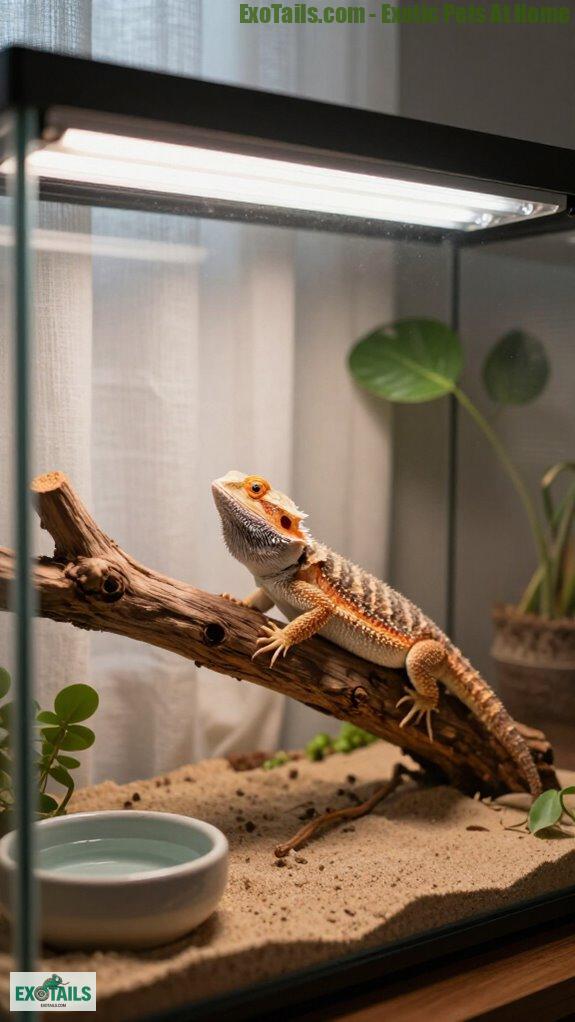
Think UVB bulb types and UVB bulb lifespan matter. Want safety? yes. Want a glow-up for your tank? yes. Need a simple chart to visualize it? absolutely. Choosing from the best bearded dragon UVB bulbs requires understanding your specific setup and reptile’s needs. A complete UVB light kit ensures you have all the essential components for proper bearded dragon care.
| Size | Benefit | Trade-off |
|---|---|---|
| Long-lasting | Less frequent changes | Higher upfront cost |
| Budget-friendly | Easy on wallet | Shorter lifespan |
| Cropped spectrum | Tailored UVB | Requires checks |
FAQ
Do UVB Needs Change With Beardie Age or Size?
UVB needs don’t profoundly change with beardie growth, but age factors and size considerations matter for basking distance and bulb strength; I adjust UVB exposure as they grow, ensuring safe, effective levels during beardie growth stages.
How Often Should Basking Zone Distance Be Adjusted?
Basking zone distance should be adjusted as seasons change and beardie grows, but never guess—watch UVB readings and behavior. I’ll monitor basking height adjustments and seasonal basking changes, then fine-tune distances for safety and ideal health.
Can Natural Sunlight Replace UVB Indoors?
Yes, natural sunlight can’t reliably replace indoor UVB; I’d use safe, indoor lighting alternatives alongside window exposure. I recommend monitoring UV levels, avoid glass, and pair with a proper UVB lamp for consistent natural sunlight exposure.
Do UVB Requirements Differ for Female vs. Male Beardies?
Yes, they’re similar, with no strict male/female UVB split; I guide you to prioritize safety. I watch female behavior and male temperament, ensuring consistent UVB, because stress or aggression can threaten basking and calcium balance.
Is UVB Maintenance Impacted by Enclosure Glass or Mesh Types?
Yes, enclosure materials affect UVB penetration; glass greatly blocks it, and mesh may still reduce exposure. I recommend direct-to-the-beardie lighting, minimal barriers, and regularly measuring UVB to guarantee proper enclosure materials safety and effective UVB delivery.
References
- https://internetreptile.com/blogs/reptile-learning-zone/which-uv-light-should-i-buy-for-my-bearded-dragon
- https://www.cttlight.com/post/bearded-dragon-uvb-lighting-guide
- https://www.youtube.com/watch?v=ZDTKhwyNXOE
- https://zoomed.com/wp-content/uploads/UVB-Reptiles-Lamp-Charts-2023.pdf
- https://arcadiareptile.com/lighting/guide/
- https://www.corhs.org/uploaded/89bfcdf0397c3e18c1dff810553f6336_CoRHS_Bearded_Dragon_Care_GuideCURRENT.pdf