7 Key Techniques for Simulating Reptile Enclosure Climates
With these 7 key techniques, you can create the perfect climate for your reptiles—discover how simple adjustments can make a huge difference!
To simulate the perfect climate for your reptiles, start with precise temperature monitoring using digital thermometers—trust me, every degree counts! Next, I love using effective heat sources like radiant heat panels to mimic natural sunlight. Keep an eye on humidity with regular misting and moisture-retaining substrates. Plus, who doesn’t love a little tech? Automated controls can make life easier. Oh, and make sure your enclosure design promotes climate stability. Curious to learn the rest?
Quick Takeaways
- Utilize precise temperature monitoring with digital thermometers and multiple probes to track basking spots and ensure optimal reptile conditions.
- Implement effective heat sources like radiant heat panels and under-tank heaters to mimic natural sunlight and create temperature gradients.
- Maintain humidity levels by using moisture-retaining substrates and regular misting, while ensuring good ventilation to prevent excessive buildup.
- Incorporate remote monitoring technologies, such as wireless sensors, to receive real-time data and automate climate control for the enclosure.
- Design enclosures with sturdy insulation materials and adjustable ventilation to stabilize climate conditions and promote reptile health and happiness.
Precise Temperature Monitoring and Data Collection

When it comes to simulating the perfect climate for your reptiles, precise temperature monitoring is like having a backstage pass to their little world—essential and oh-so-important!
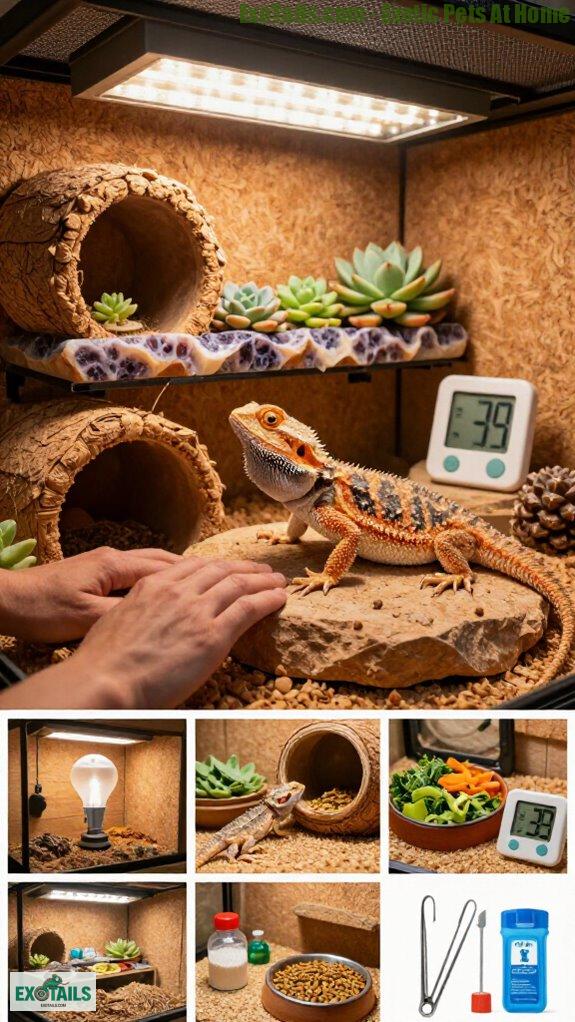
I can’t stress enough how valuable devices like the Exo Terra Digital Thermometer are. They give you real-time readings and even track the extremes. Real-time data monitoring through these devices helps ensure optimal conditions are maintained. Additionally, using heat and light combining bulbs can further enhance basking areas to meet your reptiles’ specific temperature needs.
I love using multiple probes for different sections, ensuring those basking spots stay cozy. Plus, who wouldn’t want an alarm that yells at you if things get too hot?
With my experience in caring for exotic pets through ExoTails, I know that every degree counts in keeping our scaled friends safe and happy!
Utilization of Effective Heat Sources

Creating the right heat setup in your reptile enclosure isn’t just a luxury—it’s a necessity! Utilizing efficient heat sources can greatly enhance your reptiles’ wellbeing by mimicking natural sunlight.
Using radiant heat panels and ceramic heat emitters can mimic the sun nicely, warming your scaly friends without throwing off their day-night rhythm. These tools create cozy spots, so your reptiles can bask or cool down as needed. Investing in under-tank heaters also helps maintain that perfectly balanced temperature gradient, just like nature intended. Regularly checking your setup with temperature and humidity probes ensures that you are providing the best environment for your reptiles to thrive.
I’ve learned the hard way, ensuring safety through proper setup and regular checks pays off. So, let’s keep those little friends comfy, happy, and healthy in their perfectly climate-controlled homes!
Humidity Control and Monitoring

Maintaining the right humidity in your reptile enclosure is just as important as perfecting the heat setup we chatted about earlier. You’ll want to choose substrates like sphagnum moss, which happily holds moisture for our scaly friends. Regular misting with a spray bottle can elevate humidity, especially for those moisture-loving species. Just keep in mind, good ventilation’s essential! We don’t want a swamp—yikes!
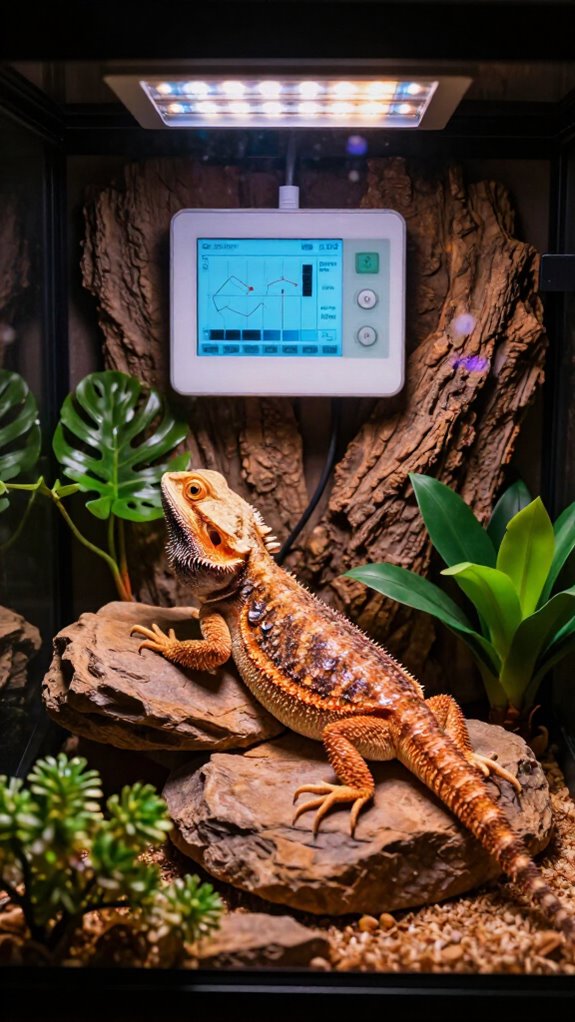
Devices like Tempcube let me monitor humidity levels in real-time, helping to keep the atmosphere just right. Furthermore, consistent monitoring is crucial for maintaining ideal humidity levels, as fluctuations can lead to health issues for your reptiles. And don’t forget to mimic nature’s humidity cycles. Trust me, your reptiles will thank you, and you’ll have a vibrant, thriving environment!
Remote Monitoring and Automated Control Systems

Setting up a reptile enclosure can feel like preparing for an Olympic event—except this time, the medal is a happy, healthy pet instead of gold.
Using remote monitoring systems makes my life so much easier. I integrate wireless sensors that send real-time data straight to my phone, so I know if my enclosure’s heating is on point or if humidity’s gone rogue.
Using wireless sensors for real-time data keeps my reptile’s habitat perfect—no more guessing games!
With automated controls, I avoid any temperature rollercoaster rides, keeping my scaly friends comfy and safe.
Wouldn’t you want that peace of mind while you sip your coffee?
Let’s think smart about reptile care, and trust me, your pets will thank you!
Species-Specific Climate Customization

When it comes to crafting the perfect climate for your scaly companions, every species has its own unique requirements that can feel a bit like trying to solve a Rubik’s Cube blindfolded.
Seriously—tropical species can be super finicky, thriving within specific temperature zones. I’ve learned that using environmental sensors really helps pinpoint these safe havens.
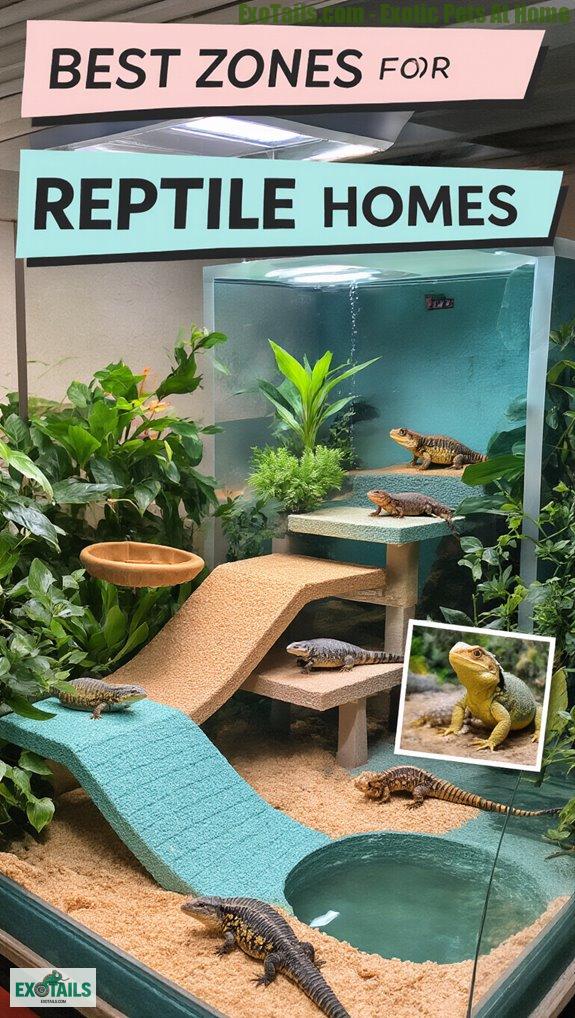
Have you ever watched your reptiles bask or hide? It’s not just cute; it’s essential! Custom heating elements, humidity systems, and temperature gradients allow them to self-regulate.
Trust me, getting it right makes all the difference, both for them and for your peace of mind!
Enclosure Design for Optimal Climate Stability

Designing a reptile enclosure that keeps the climate stable can feel like trying to juggle flaming torches—exciting but a little nerve-wracking.
To make sure your enclosure thrives, consider these key factors:
- Choose sturdy PVC for better insulation.
- Integrate heating lamps and mats for those cozy basking spots.
- Set up adjustable ventilation to keep air flowing.
- Use digital thermometers for accurate temperature readings.
Trust me, I’ve learned the hard way with my exotic pets at ExoTails.
Consistent environments mean happier reptiles, which means peace for you—and maybe fewer melted decorations!
Incorporating Naturalistic Elements for Climate Regulation

Creating a naturalistic enclosure can feel like crafting a mini ecosystem, and believe me, it’s a game changer for your reptiles.
Using substrates like coconut fiber not only enhances the look but also helps regulate temperature. Have you ever seen a reptile happily burrowing? It’s fascinating! Plus, those materials hold humidity, keeping your friends healthy and hydrated.
Mixing in durable, artificial decor gives climbing spots and hiding places, making your pets feel secure. Easy to clean? That’s a bonus!
At ExoTails, I’ve discovered that a little creativity in design transforms your pet’s world — and yours! Isn’t that what we all want?
Pet Room Temperature Control

Temperature control in your pet room is a game changer for creating a safe haven for your reptiles. I can’t tell you how essential it is!
Here are a few tips I learned while setting up my own exotic pet paradise with ExoTails:
- Create a basking zone, where it’s 10-20°F warmer.
- Install a thermostat for precise temperature management.
- Use heat mats or lamps; just don’t fry your critters!
- Place thermometers at various points to verify accuracy.
Keeping temperatures just right keeps your scaly friends happy, and trust me, a happy reptile makes for a delighted pet owner!