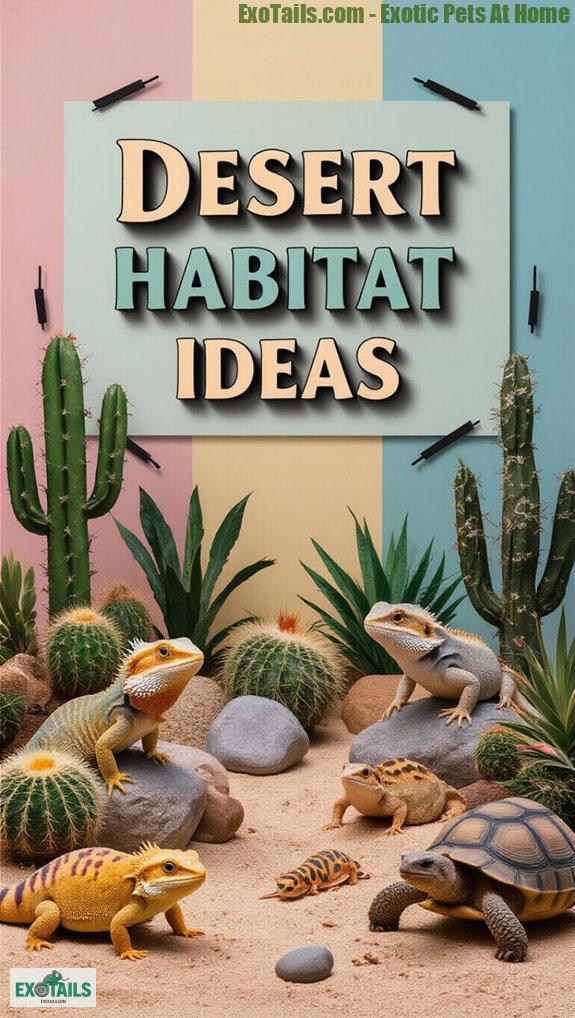
DIY Guide: Creating Reptile Vivarium Backgrounds at Home
Homemade reptile vivarium backgrounds can transform your pet’s habitat, but wait until you discover the best materials and techniques to make it truly extraordinary!
Creating a vivarium background at home can be a blast, and your reptiles will love it! Start by choosing materials like foam, cork, or even some fancy bamboo—eco-friendly is all the rage! Think natural vibes—rocks, plants, and textures make all the difference. As a fellow exotic pet enthusiast, I know how cozy a well-designed habitat can be! So, grab your tools and let’s get cracking on that masterpiece. Can you hear your reptiles cheering you on already? Stick around, and I’ll share my favorite tips!
Quick Takeaways
- Choose eco-friendly materials like cork, foam, or recycled items for a safe and attractive reptile background.
- Design a natural look by incorporating rocks, plants, and layered hardscapes to enrich habitats.
- Follow a step-by-step process, cutting and securing materials to create a cohesive and stable structure.
- Apply texturing techniques and natural elements for realistic effects, enhancing both aesthetic appeal and reptile comfort.
- Ensure proper installation with secure adhesives or anchors for stability, preventing movement and ensuring safety for your reptiles.
Choosing the Right Materials for Your Vivarium Background
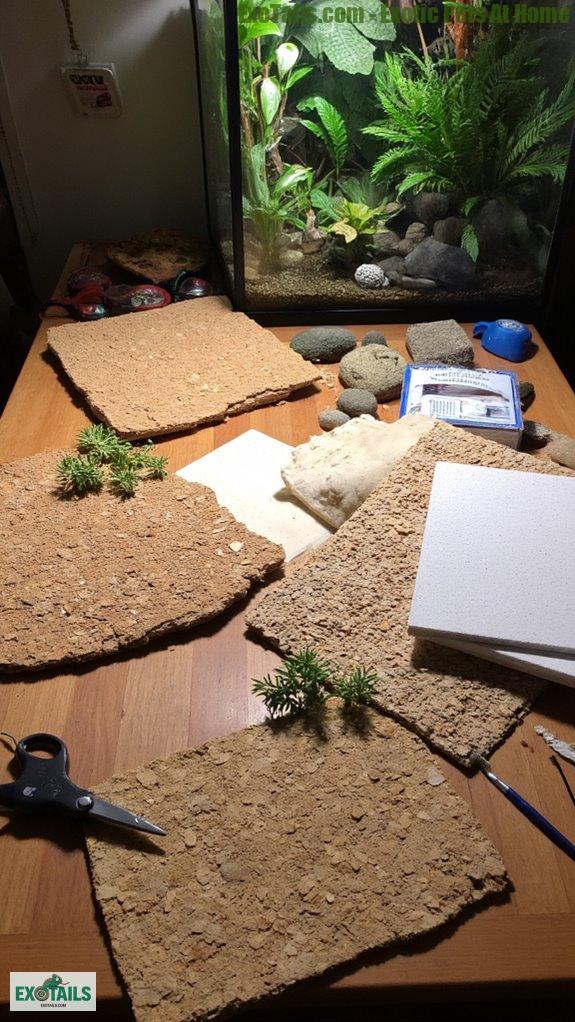
When I first set out to create the perfect vivarium background for my exotic pets, I quickly realized that choosing the right materials could make or break the whole vibe of the enclosure.
So, what’re the best material types? I found a mix of cork, foam, and wood that worked like a charm!
And if you’re eco-conscious, consider using eco-friendly options like recycled materials or sustainable bamboo. It’s all about balance, right?
After all, when your pets feel at home, you, my friend, get major bragging rights!
Incorporating exotic pet environments into your design can enhance the overall aesthetic and comfort for your reptiles.
Want your vivarium to be the talk of the reptile kingdom? Let’s plunge into it together!
Designing a Natural Look: Planning Your Background Layout
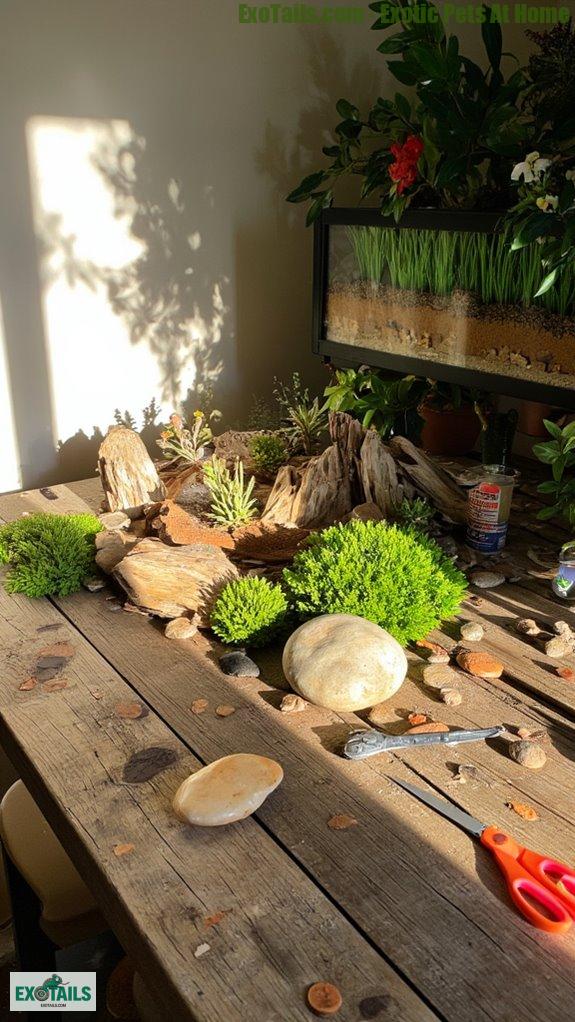
Have you ever stood in front of an empty vivarium and thought, “What on earth do I put back there?”
Designing a background layout that looks natural can elevate your reptile’s home from bland to breathtaking, and trust me, it’s easier than you might think!
Transform your reptile’s habitat from ordinary to stunning with natural background designs—it’s simpler than you might imagine!
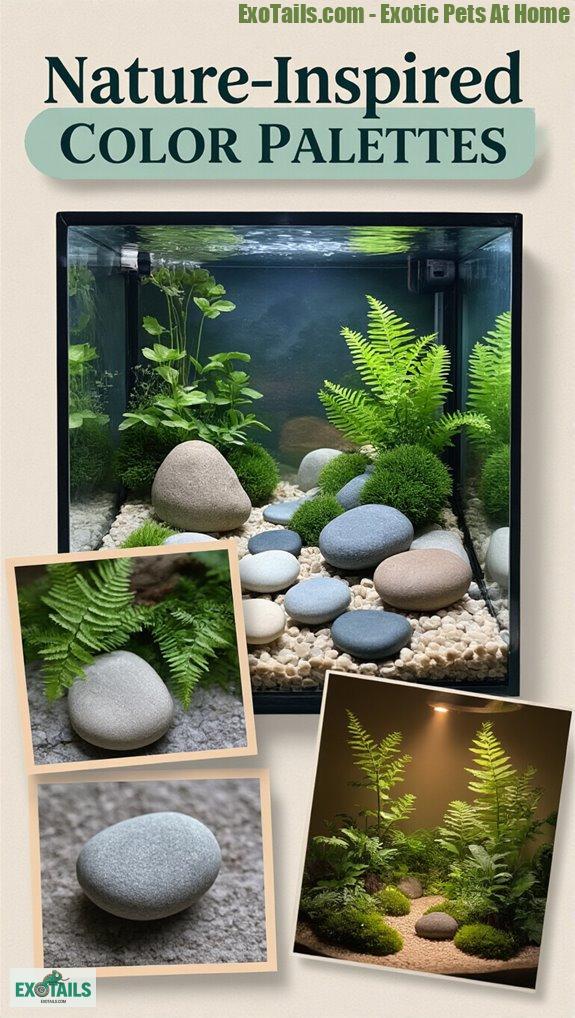
Start with background inspiration from nature—rocks, plants, or even old tree bark can spark your creativity. Adding natural hardscape materials can not only enhance the aesthetic but also provide your reptile with enrichment.
Experiment with layout techniques like layering for depth or creating hideaways.
You want your critter to feel at home, not like they’re living in a sterile science project.
Let your space reflect your style and your exotic pet’s personality!
Step-by-Step Guide to Constructing the Background
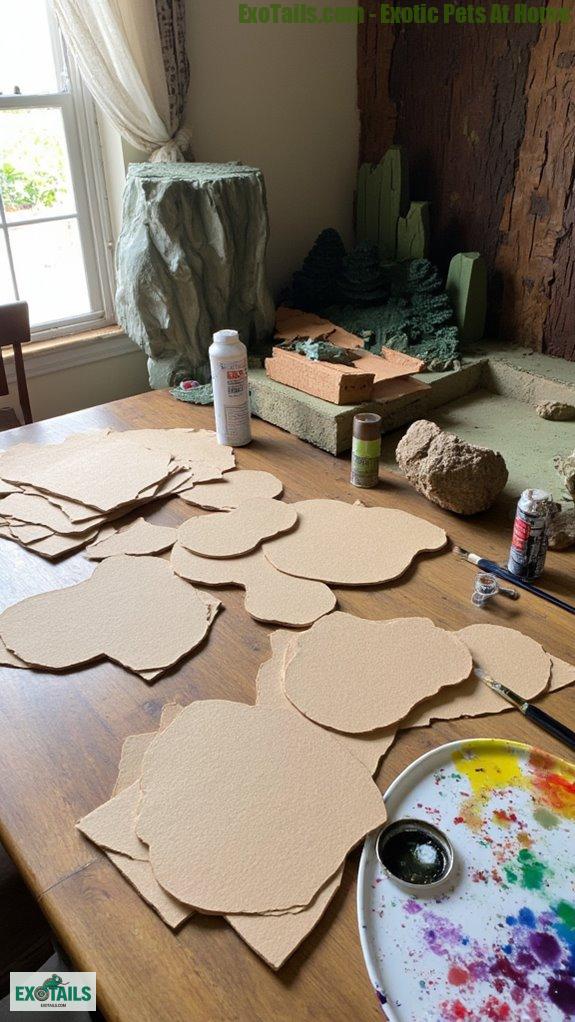
Constructing a stunning background for your reptile vivarium is much simpler than you might think, especially if you follow a step-by-step guide.
First, gather your background materials; think foam, spray adhesive, and paints.
Then, depending on the design, cut your materials to fit. Isn’t it thrilling to take control of your space?
Next, secure the pieces in place with adhesive for a solid base.
Now, let your creativity shine with your favorite DIY techniques! Creating a naturalistic environment is essential for the well-being of your reptiles.
Remember, it’s your vivarium, and every detail matters.
Trust me, you’ll love how it transforms your exotic pet’s home. Welcome to ExoTails!
Texturing and Finishing Touches for Realism

After securing your background materials, it’s time to make that vivarium come alive with texture and character.
Utilizing various texturing techniques, you can create depth and interest. Here are some ideas to enhance your masterpiece:
Explore diverse texturing techniques to infuse your masterpiece with depth and intrigue, transforming it into a captivating vivarium.
- Contrasting layers of foam for rock formations
- Textured paint for a rugged effect
- Natural materials like bark for authenticity
- Sculpted elements simulating caves or ledges
- Air-drying clay for added fine details
For a polished look, finish with sealing sprays or natural resin.
These finishing materials not only bond the elements but also protect against moisture. Isn’t that just thrilling? Let’s get creative!
Installing Your Vivarium Background Securely

When it comes to installing your vivarium background securely, you’ll want to make sure everything’s firmly in place, so your scaly friends don’t think they’re on an amusement park ride!
Here’s a handy table for fixture options based on background stability:
| Fixture Option | Best For |
|---|---|
| Liquid Adhesives | Foam backgrounds |
| Silicone Sealer | Glass or plastic backs |
| Screws and Anchors | Heavy, solid structures |
Remember: your vivarium’s not just decor, it’s a home! Keeping backgrounds secure helps prevent disasters. I learned this the hard way with my gecko, and now, I’m just a tad obsessed with ExoTails!
Maintenance Tips for Longevity and Aesthetics

To guarantee your vivarium background stays beautiful and lasts a long time, it’s essential to keep up with some simple maintenance. Trust me, it’ll save you hassle in the long run.
Here’s what I do to keep things fresh:
- Regularly inspect for dust and debris
- Use gentle cleaning techniques, like a damp cloth
- Monitor and adjust humidity control
- Rearrange plants and decor occasionally
- Spot clean any spills immediately
With my experience in creating vibrant habitats for exotic pets, I’ve learned that a little effort goes a long way!
Who doesn’t love a stunning scenery that’s also functional?
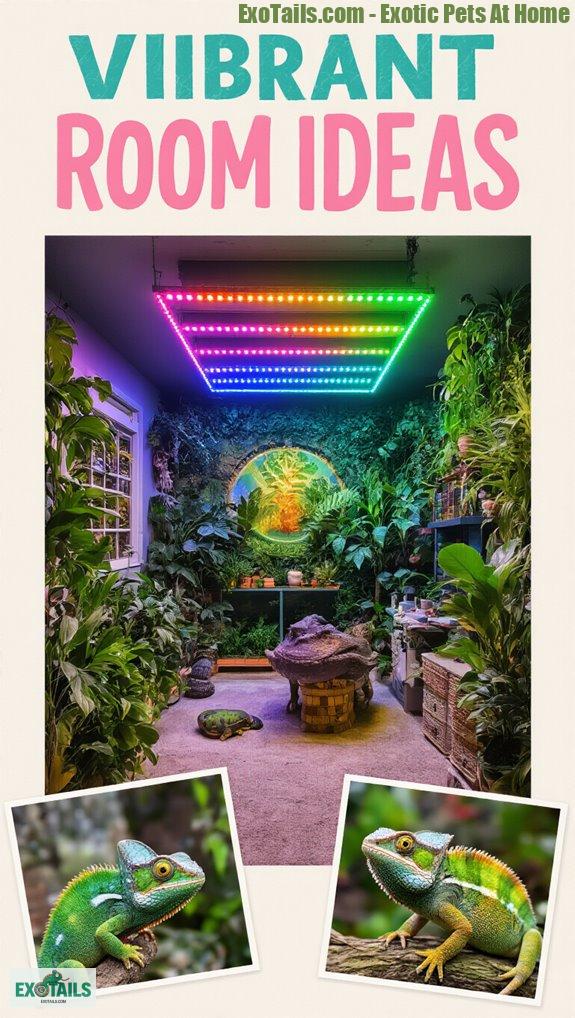
Designing Reptile Habitats Indoors
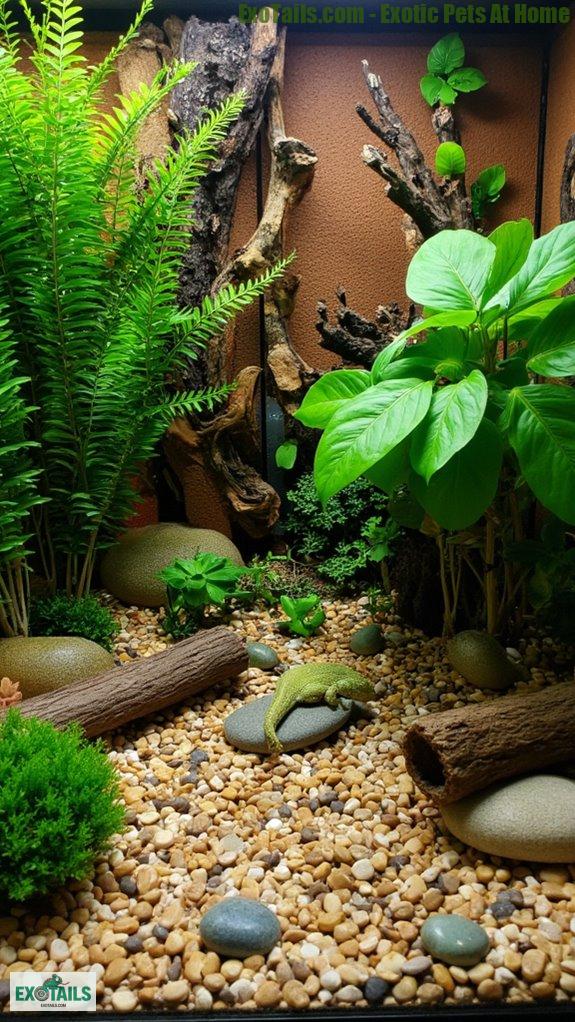
Designing indoor reptile habitats can feel like putting together a puzzle, but it’s a rewarding challenge that really amps up your pet’s living space.
You’ll want to mix habitat diversity with those all-important temperature gradients. Think about creating cozy hides, climbing spots, and basking areas to mimic nature.
Why not add a tropical twist with live plants? They not only look great but also help regulate humidity.
Trust me, after years of caring for exotic pets and crafting ExoTails, I’ve learned that a well-designed habitat keeps everyone happy.
Questions and Answers
Can I Use Recycled Materials for My Vivarium Background?
I love using recycled materials for my vivarium background! It’s a fantastic way to save costs while being creative. Plus, I know I can control the aesthetics and sustainability of my setup.
How Do I Ensure the Background Is Safe for My Reptiles?
When it comes to ensuring safety, recall: an ounce of prevention’s worth a pound of cure. I always choose non-toxic background materials and consider my reptiles’ habitat needs to keep them thriving and secure.
What Tools Do I Need for Creating a Vivarium Background?
To create a vibrant vivarium background, I’ll gather essential tools like scissors, a hot glue gun, and craft materials. I’m focused on choosing safe and durable background materials to guarantee my reptiles thrive in their habitat.
How Long Will the Background Last With Proper Care?
I thought my vivarium background would last forever; turns out, longevity factors like humidity play a big role. With proper maintenance tips, I find it can last several years, so I stay vigilant!
Can I Customize My Background to Fit Different Reptile Species?
Absolutely, I can customize my background to fit different reptile species. I focus on species-specific designs and my aesthetic preferences, ensuring each vivarium not only looks great but also meets my reptiles’ needs perfectly.