10 Essential Tips for DIY Terrarium Substrate Layers
With the right substrate layers, your DIY terrarium can thrive—discover the essential tips that will transform your plant paradise! What are they?
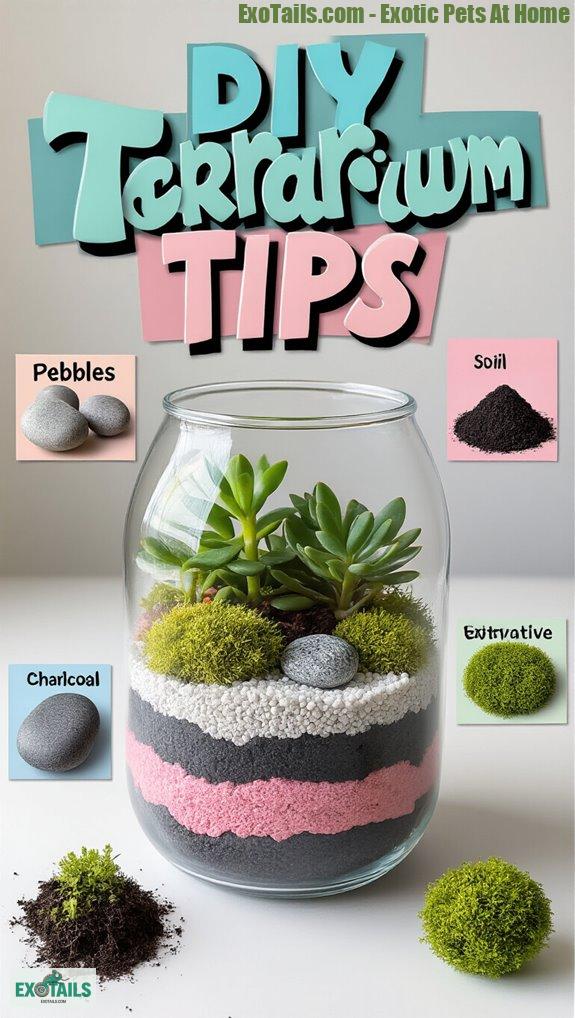
When creating your DIY terrarium, choosing the right base material is key—it sets the stage for a thriving ecosystem! Start with drainage stones to manage excess water, then sprinkle in some activated charcoal to keep things fresh. Don’t forget to layer in sphagnum moss and organic potting soil for moisture and nutrients. Keeping layer thickness balanced is essential, so regular checks are a must. Curious about how to make it even better? There’s more to explore!
Quick Takeaways
- Begin with a 1-2 inch drainage layer using small river stones to prevent waterlogging and support plant health.
- Incorporate a barrier layer above the drainage to separate it from the nutrient-rich middle layer.
- Use a combination of organic potting soil and coir for the middle layer to provide essential nutrients and moisture retention.
- Top your substrate with a decorative layer for aesthetic appeal while ensuring it doesn’t impede moisture and air circulation.
- Regularly monitor and maintain substrate layers to avoid compaction and replace degraded materials for a thriving terrarium ecosystem.
Choose the Right Base Material

When it comes to creating the perfect terrarium, choosing the right base material is like picking the right outfit for a fancy dinner—if you get it wrong, nothing else will shine!
Selecting the right base material for your terrarium is crucial—get it right, and everything else shines!
There are several base material types out there, like potting soil, coconut coir, or even sand.
But here’s the kicker: substrate compatibility matters! You wouldn’t wear flip-flops to a ball, right?
Trust me, after my years with exotic pets and home decor, I’ve learned that a good base makes all the difference.
Layer With Drainage Stones

Choosing the right base material is just the beginning of your terrarium journey; now it’s time to layer in some drainage stones!
Trust me, those little pebbles pack a punch when it comes to drainage importance.
Here’s how to nail the stone selection:
- Grab some small river stones; they’re stylish and effective.
- Avoid sharp-edged rocks; no one wants a terrarium injury!
- Aim for a 1-2 inch layer at the bottom; it’s like the terrarium’s little spa day.
- Think about keeping the stones clean; nobody likes a dirty dance floor in their glass garden!
Your plants will thank you!
Incorporate Activated Charcoal

Next up, let’s chat about activated charcoal—yes, that black magic ingredient that does wonders for your terrarium!
Seriously, it’s like the superhero of your plant kingdom. Not only does it help with carbon filtration, but it also works magic in odor control.
Activated charcoal: the superhero for your plants, ensuring fresh air and eliminating pesky odors!
Picture this: an aromatic swamp of dubious smells? Not on my watch! A thin layer of activated charcoal prevents that.
I learned this while designing my exotic pet haven on ExoTails, where freshness is key, even for the tiniest critters.
Add Sphagnum Moss for Moisture Control

Now that we’ve got our activated charcoal superhero in place, it’s time to bring in the sidekick: sphagnum moss! This fluffy wonder isn’t just a pretty face—it’s a moisture-retaining magician that’ll keep your terrarium cozy.
Here are some sphagnum benefits you can’t ignore:
- Enhances moisture retention—who doesn’t love a hydrated home?
- Adds a delightful texture—like a spa day for your plants!
- Creates a barrier to pesky critters—goodbye, mold!
- It’s biodegradable, so Mother Nature gives a thumbs up.
Trust me, your plants will thank you for this mossy joy!
Utilize Organic Potting Soil

When you’re setting up your mini-garden, utilizing organic potting soil is like rolling out the red carpet for your plants.
Setting up a mini-garden? Give your plants the star treatment with organic potting soil!
Seriously, who wouldn’t want that VIP treatment?
This stuff’s packed with organic nutrients ready to give your leafy buddies a lovey-dovey hug, ensuring they thrive.
And let’s talk soil moisture.
With organic potting soil, you won’t have to worry about your plants dying of thirst.
It holds water like your best friend after a breakup—comforting and reliable!
Mix in Coir for Improved Aeration

If you think organic potting soil is the only star of the show, wait until you meet coir—a game-changer for your terrarium’s aeration!
Seriously, coir benefits your substrate layers like a charm, giving them the airiness they need. It’s like a refreshing change for your plants!
Here’s why you should mix it in:
- Boosts drainage for happy roots
- Helps retain moisture without turning into a swamp
- Naturally pest-free (goodbye, critters!)
- Eco-friendly, made from coconut husks
Trust me, adding coir to your mix is one of those ‘why didn’t I do this sooner?’ moments.
Consider a Bioactive Component

While I wouldn’t say bioactive components are the flashiest stars in the terrarium world, they definitely earn their keep behind the scenes.
These tiny heroes, like substrate microorganisms, provide bioactive benefits you won’t want to miss. They munch on waste, keeping your environment fresh and clean—no more smelly terrariums, I promise!
Thinking about my exotic pets and how I launched ExoTails, I realized that nature’s little engineers make all the difference.
Don’t you want your plants to thrive and look fabulous?
Adding a bioactive component is like hiring a clean-up crew that never takes a day off—now that’s a win!
Use Leaf Litter for Natural Aesthetics

In any great terrarium, adding leaf litter can elevate your setup and create stunning natural aesthetics.
Why? Well, it not only looks pretty but also provides natural camouflage for your critters and aesthetic diversity for your eyes!
Here’s how to jazz it up:
- Choose dried leaves from non-toxic plants.
- Mix in various shapes and colors for visual interest.
- Layer it just right to allow for drainage—like a culinary masterpiece!
- Toss in a couple of playful insects to keep the vibe alive!
Trust me, your terrarium will be the talk of the living room—just don’t tell the pets!
Maintain Proper Layer Thickness

To create a thriving terrarium, maintaining proper layer thickness is essential, and trust me, it can make or break your miniature ecosystem.
Too thin, and your plants might think they’re in a desert; too thick, and it’s a soggy swamp party.
I want that Goldilocks zone of substrate balance—just right! Aim for about 2 to 4 inches total, layering gravel, charcoal, soil, and decorations like you’re assembling a delicious sundae.
Ever tried putting too much sauce on ice cream? Spoiler: It’s a mess!
Regularly Monitor and Maintain the Substrate

Keeping an eye on your terrarium’s substrate isn’t just a good idea; it’s essential for its health and happiness.
Think of it as checking your pet’s pulse—except, hopefully, your plants won’t bite back!
Just like checking a pet’s pulse, keeping an eye on your plants is crucial—no bites, just joy!
Here’s how to keep that substrate happy:
- Watch for mold: If you see it, act fast!
- Check moisture levels: Too much or too little is a no-go.
- Monitor environmental factors: Is it too hot or too cold? Your plants love a cozy space!
- Stir things up: Loosen compacted layers for air circulation.
Trust me, happy substrate equals a happy you!
Exotic Pets At home

Having a vibrant terrarium can spark creativity and passion for plant care, but why stop there when you can amp up your home’s vibe with exotic pets?
Imagine a unique pet habitat where your friends can meet Gerald, the chubby gecko, who seems to judge your life choices daily.
Exotic animal care isn’t just for the professionals—trust me, I’ve had my share of hilarious moments figuring out how to keep my quirky pets happy. Additionally, consider the social nature of some exotic pets; for instance, many axolotls thrive with companionship from others.
My Ebook About Pet Room Decor

Creating a cozy and stylish pet room décor isn’t just for the Instagram influencers—it’s something you’ve got to try, too!
Trust me, I’ve learned this through years of cuddling with exotic pets in my quirky space.
Ready to level up your room aesthetics? Here are four pet-friendly designs to take into account:
- Cool Cacti Corner: Because who doesn’t love an unobtrusive prickly plant?
- Comfy Pet Beds: Pick one that matches your elegance—after all, the fancy should also be fluffy!
- Customizable Walls: You need space for your pet’s artistic drool.
- Fun Shelves: Ideal for storing all those yawn-inducing toys!
Plus, colorful substrates can enhance the overall look of your tanks, providing both aesthetic appeal and comfort for your pet.