7 Best Desert Habitat Ideas for Reptile Rooms
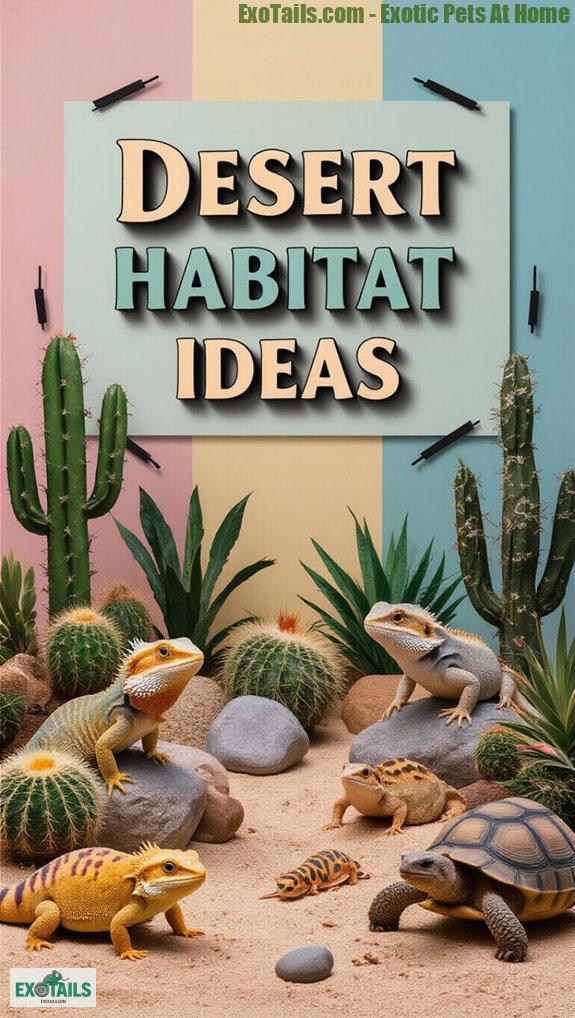
If you’re dreaming of a fabulous desert habitat for your reptiles, I’ve got you covered! First, incorporate natural sand for humidity and burrowing fun. Then, add quirky cacti and low-maintenance succulents, which also provide hiding spots. Don’t forget rock formations for climbing and ambush spots; reptiles love a good hide-and-seek! Also, install proper heating and UVB lights for their health, and sprinkle in some water features for hydration. Curious about more tips? I’m just getting started!
Quick Takeaways
- Incorporate natural sand and desert soil for authenticity while ensuring moisture levels are balanced to prevent unhealthy environments.
- Choose low-maintenance cacti and succulents like Echeveria and Haworthia for both aesthetic appeal and reptile hiding spots.
- Design habitat structures with rock formations and bespoke caves to create climbing opportunities and secure hiding places for reptiles.
- Utilize heat mats and ceramic heaters to maintain optimal warmth, complemented by UVB lighting for enhanced reptile health.
- Add water features and misting systems to simulate natural hydration environments, benefiting both reptiles and maintaining humidity levels.
Incorporating Natural Sand for Authenticity
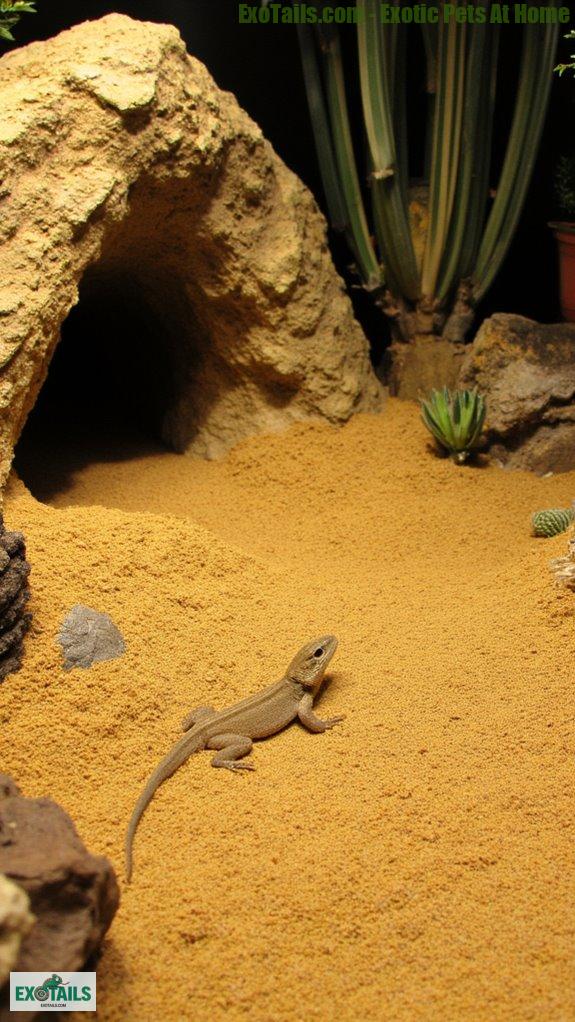
When it comes to making your reptile room feel like a slice of the wild, incorporating natural sand is a game changer.
Transform your reptile room into a wild paradise with natural sand—it’s a total game changer!
You wouldn’t believe the difference between sand types—some make humidity levels dance like it’s a party! I learned the hard way that too much moisture can turn into a swamp.
Trust me, you don’t want your lizards practicing synchronized swimming.
Choosing fine sand makes it easier for your scales friends to burrow; plus, it adds that authentic touch.
Utilizing Cacti and Succulent Plants
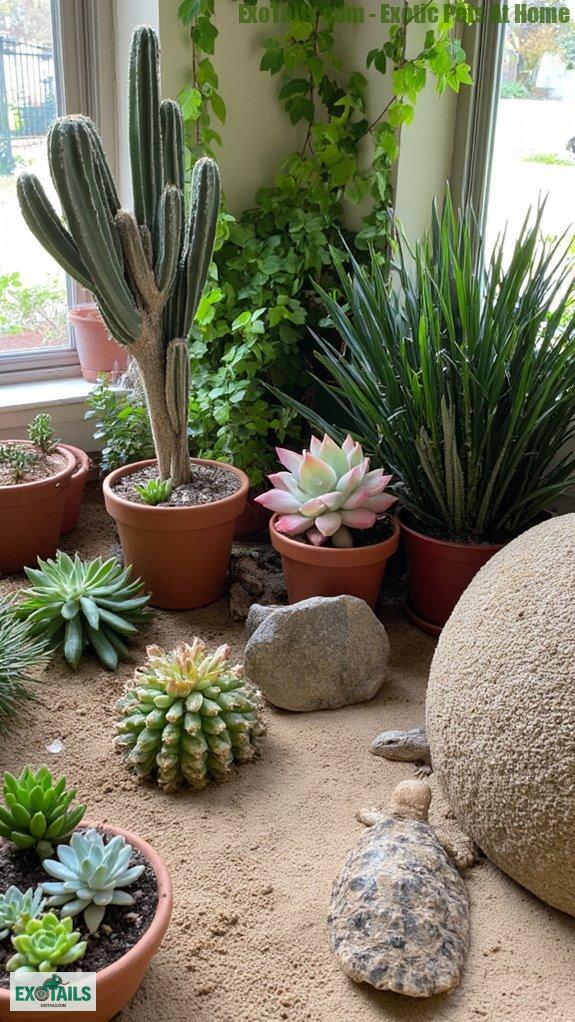
Adding cacti and succulents to your reptile room is like throwing a fabulous party for your scaled friends—everyone will want to join in!
Trust me, nothing says “desert vibes” like a bunch of prickly pals. Plus, cacti care is a breeze!
Pick succulent varieties like Echeveria or Haworthia that are low-maintenance, just like that buddy who shows up to parties and doesn’t eat your snacks.
These plants provide great hiding spots and lovely decor. Just watch your critters—no munching on the spiky buffet!
I love blending my passion for exotic pets with fun home decor on ExoTails, don’t you?
Creating Rock Formations and Hiding Spots
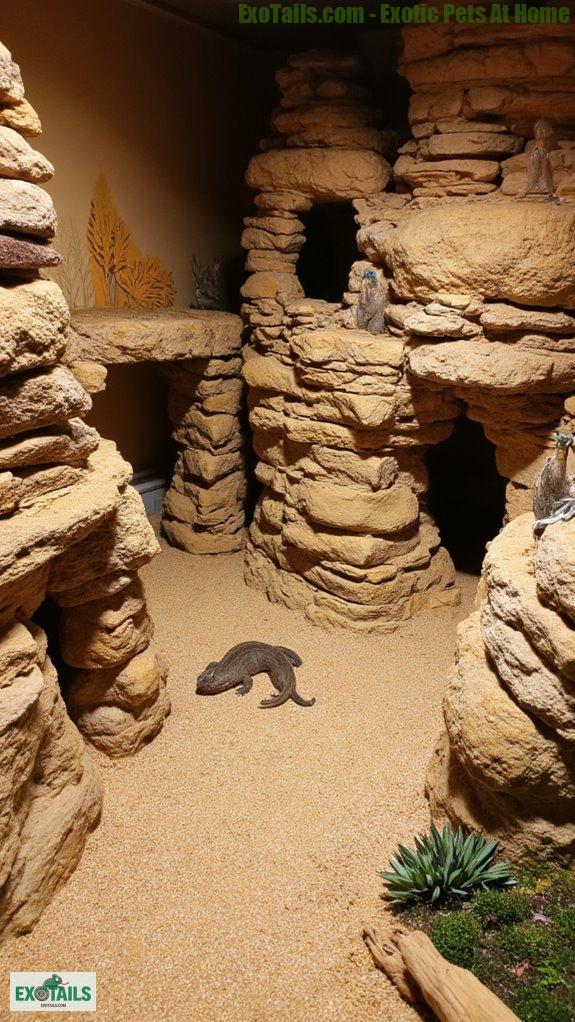
Creating rock formations and hiding spots in your reptile room is like building a deluxe hideaway for your scaly companions! Trust me, they’ll thank you.
By utilizing rock layering and random hideaway compartments, you can create a functional and fabulous environment that sparks joy—just like my love for exotic pets at ExoTails!
Create a stunning reptile paradise with rock layers and cozy hideaways for a joyful, stylish habitat!
Imagine your reptiles snuggling into their bespoke caves and pretending they’re in a fancy spa.
- They’ll feel safe and snug!
- A perfect lair for sneaky ambushes.
- Rock climbing of Olympic proportions!
- You’ll be the coolest reptile parent on the block!
Who wouldn’t want that?
Heating Elements for Optimal Temperature Regulation
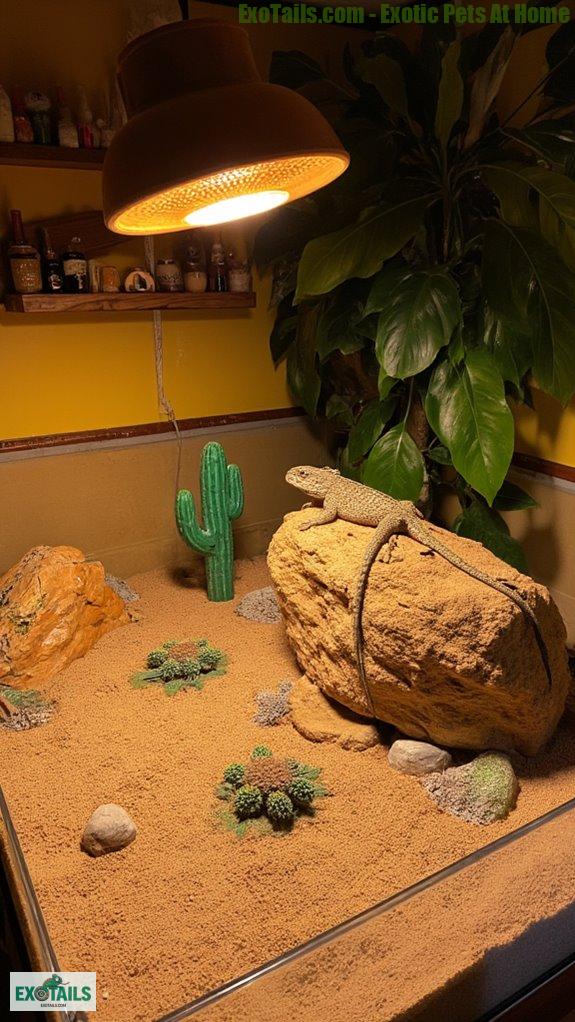
To guarantee your reptiles thrive, the right heating elements are key—because, let’s face it, nobody wants a cold-blooded buddy feeling chilly!
I swear by heat mats for those sneaky heat spots your slithery friends crave. They’re like little warm hugs under the substrate, making your reptiles feel right at home.
Ceramic heaters, on the other hand, shine for providing a consistent glow of warmth, perfect for basking or lounging.
Plus, who knew heating elements could be a stylish décor choice? When I started ExoTails, I never envisioned I’d be heating up my home and my reptiles’ lives at the same time!
Installing UVB Lighting for Healthy Habitats
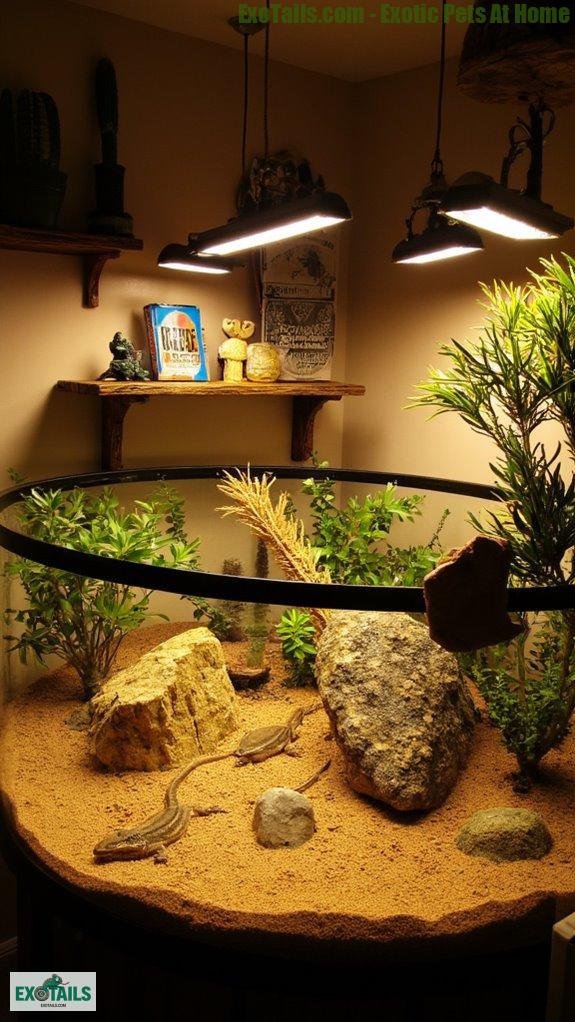
When it comes to creating a healthy habitat for your reptiles, UVB lighting isn’t just a nice-to-have—it’s essential!
Trust me, I’ve learned the hard way; without it, my pets were more “grumpy lizards” than “happy critters.”
Here’s why UVB is a game-changer:
- Promotes calcium absorption—because who wants a lizard with rickets?
- Reduces health issues—seriously, who needs a vet bill for a sunburned lizard?
- Enhances activity levels—happy lizards are just more fun.
- Looks great in your setup—fashionable lighting is a must!
Designing Water Features for Rehydration
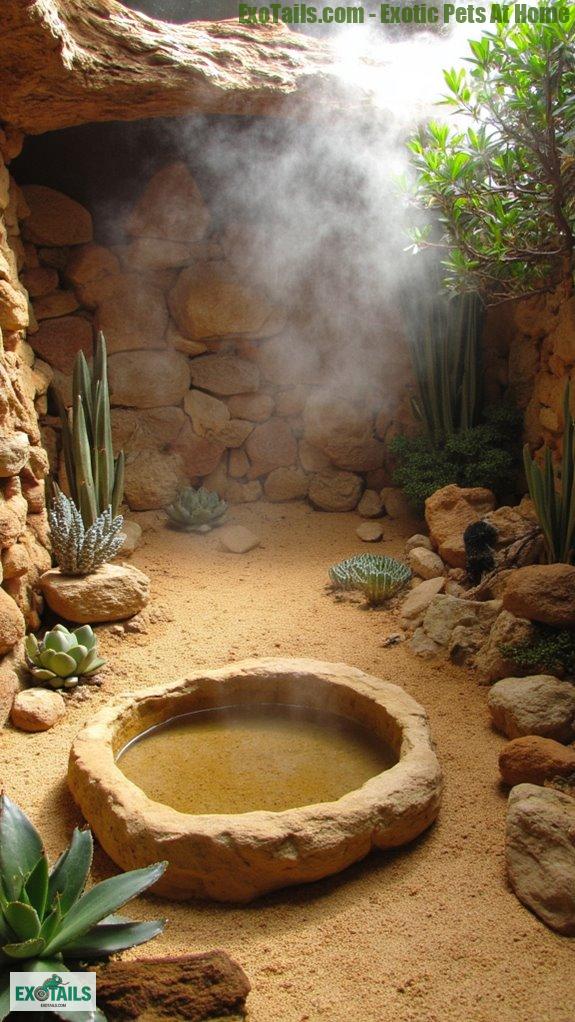
A well-designed water feature is like the cherry on top of a sundae for your reptile habitat—it’s not just pretty; it’s practical too!
Think about adding those fabulous misting systems that make your critters feel like they’re in a rainstorm, minus the soggy shoes.
And, let’s not forget water bowls; they’re not just for drinking—your scaly friends might fancy a little splash, too!
I learned this playing around with my exotic pets and making my home decor pop on ExoTails.
Using Natural Substrates for Earthy Aesthetic
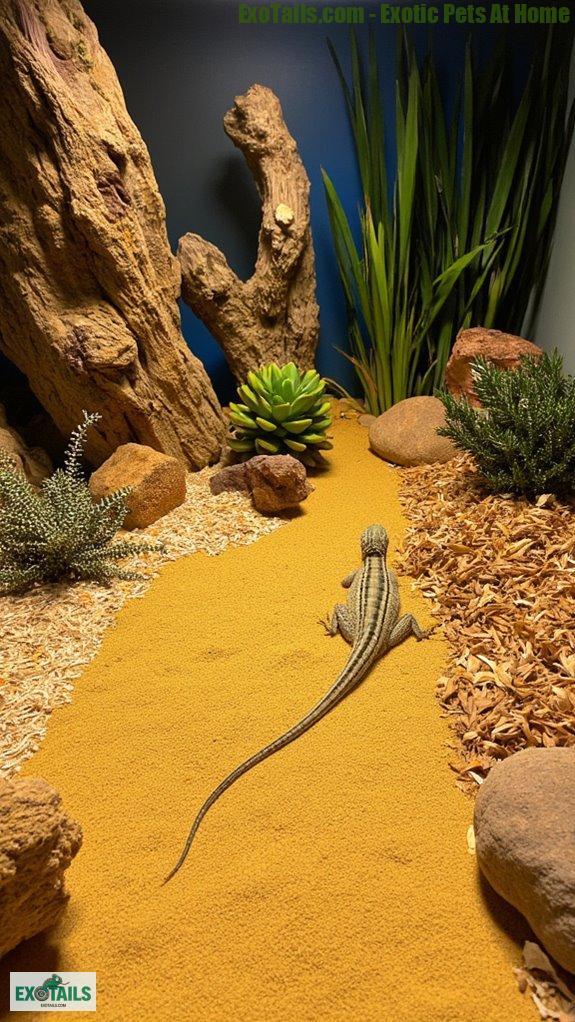
There’s something undeniably magical about creating a natural environment for your reptiles, and choosing the right substrate can make all the difference.
I mean, who wouldn’t want their scaly friends to feel like they just stumbled into a desert paradise?
Here are some fun ideas:
- Sand – like a mini beach vacation for your reptiles!
- Coconut fibers – because who doesn’t want organic materials in their desert?
- Desert soil – for that earthy decor vibe!
- Reptile safe mulch – it’s not just for landscaping, folks!
Trust me, I created ExoTails to share the wisdom of catering to their whims and making incredible habitats.
Unique Pets Indoors
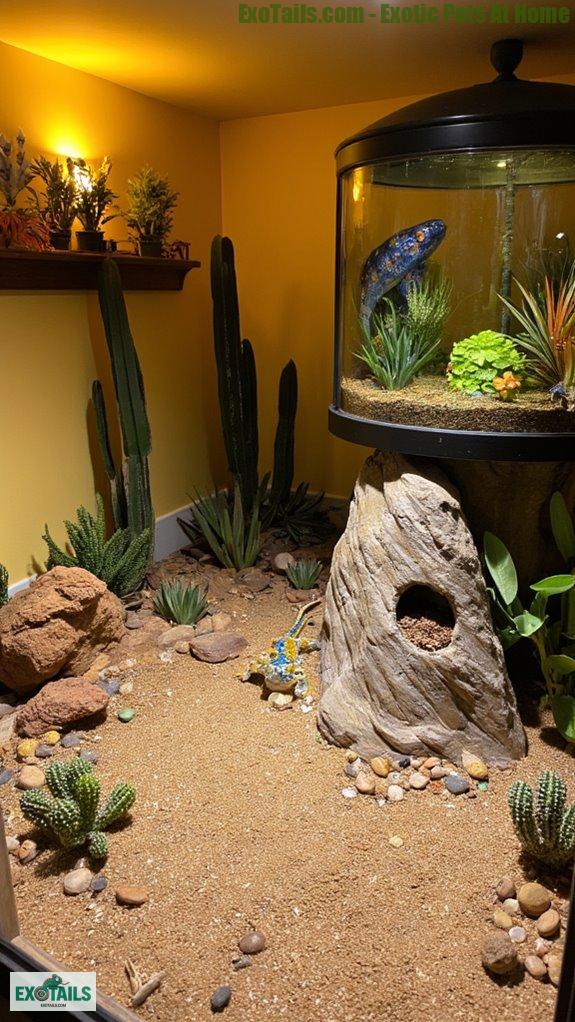
Gobbling up fresh substrates for your reptiles can get you pretty pumped about their habitat, but don’t forget: unique pets don’t just live in terrariums!
I’ve found that indoor habitats can host an array of exotic reptiles and other quirky creatures, like the charming axolotl or a sassy tarantula.
Why stick to the ordinary when you can jazz up your space with something that’ll make your friends say, “What the heck is that?”
Remember, each unique pet adds character to your home—kinda like that weird decoration you picked up on vacation!
Trust me, your pets will thank you for such fabulous digs!
My Axolotl in a Tank
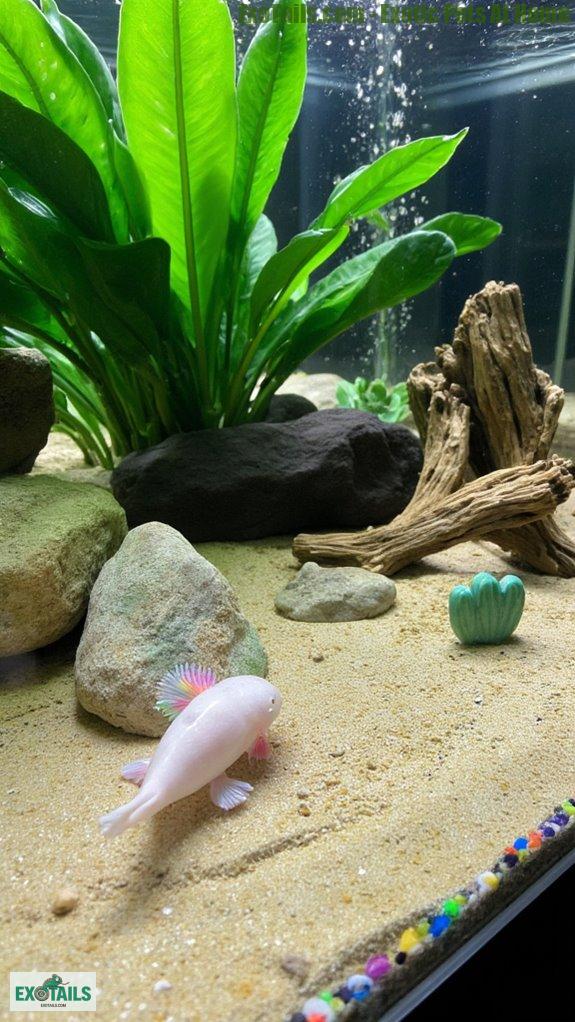
Envision peering into a vibrant world where a whimsical axolotl glides gracefully through the water, its frilly gills fluttering like colorful feathers.
What’s not to love about these goofy aquatic buddies? Here’s what I adore about my axolotl:
- Their cute, smiley faces—seriously, it’s like they’re always grinning!
- The way they wiggle around, making me chuckle on the daily.
- The joy of perfecting axolotl care (talk about a slippery slope of obsession!).
- Tank maintenance? It’s basically my cardio!
I created ExoTails to share the magic of exotic pets like my axolotl while sprucing up home decor. Additionally, ensuring proper water conditions is crucial for maintaining my axolotl’s health and vitality.
Isn’t life quirky?
Questions and Answers
How Do I Maintain Proper Humidity Levels in a Desert Habitat?
Maintaining humidity levels can feel like a balancing act with a tightrope! I use good ol’ moisture monitoring and a splash of humidity control, ensuring my desert critters don’t feel like they’re on a dry road trip!
What Are the Best Heat Sources for a Reptile Room?
When I think about heating my reptile room, it’s like a warm hug from the sun! Heat lamps and ceramic heaters are my go-to. Just keep in mind, too much warmth can turn my scaly friends into sauna enthusiasts!
Can I Keep Different Reptile Species Together in One Habitat?
Sure, I’d love to mix friends, but species compatibility’s tricky! Some reptiles can’t stand each other. You might end up with a habitat segregation situation like a reptile soap opera—unpleasant drama isn’t fun for anyone!
What Type of Substrate Is Safest for My Reptiles?
When choosing substrate, I’ve learned to prioritize safety. Natural substrate options can be great, but I always check for substrate safety considerations—nobody wants their reptile’s home to resemble a scene from a sandcastle disaster!
How Often Should I Clean the Desert Habitat?
When it comes to cleaning frequency, I usually tackle it weekly to keep things fresh. Maintenance tips? Just recall, a clean habitat is like a dirt-free lizard lounge—no one wants to party in a dump!