8 Tips for Personalized Pet Enclosure Labels
Understanding the essentials for personalized pet enclosure labels can elevate your pet care; discover tips that make a difference in your furry friend’s environment.
Looking for a way to add personality to your pet enclosure? Let’s talk about personalized labels!
Meet Mr. Wiggles, my charismatic axolotl. When I first brought him home, I knew that a simple tank wasn’t enough. I crafted a label that told his story—a reminder of his quirky little antics. My blog, ExoTails, shares tips on making pet care easier, just like a label with care instructions can do.
Durable materials are your best friends! Go for something that withstands a splash or two. Color coding? Count me in! It makes the chaos of pet care feel manageable. And don’t forget names and even QR codes for pet sitters, because we all know the panic of a last-minute scramble for info.
A Splash of Reality: The Mr. Wiggles Saga
Picture this: I had a pet sitter who was delightful but clueless. Mr. Wiggles’ label saved the day!
The QR code led her straight to his care guide, avoiding a mini-crisis on feeding day. Thanks to that label, my axolotl stayed happy and healthy. It’s the little things that make a big difference!
Quick Takeaways
- Use durable materials like PET or HDPE to ensure your pet enclosure labels withstand the elements and last longer.
- Incorporate color coding to convey important information regarding dietary or medical needs quickly and effectively.
- Include specific care instructions, such as feeding schedules and allergy information, to aid caregivers in providing proper care.
- Leverage QR codes on labels for instant access to detailed pet information and updates on care requirements.
- Ensure compliance with labeling regulations by clearly identifying your pet’s needs and obtaining necessary approvals for safety.
Choose Durable Materials for Longevity
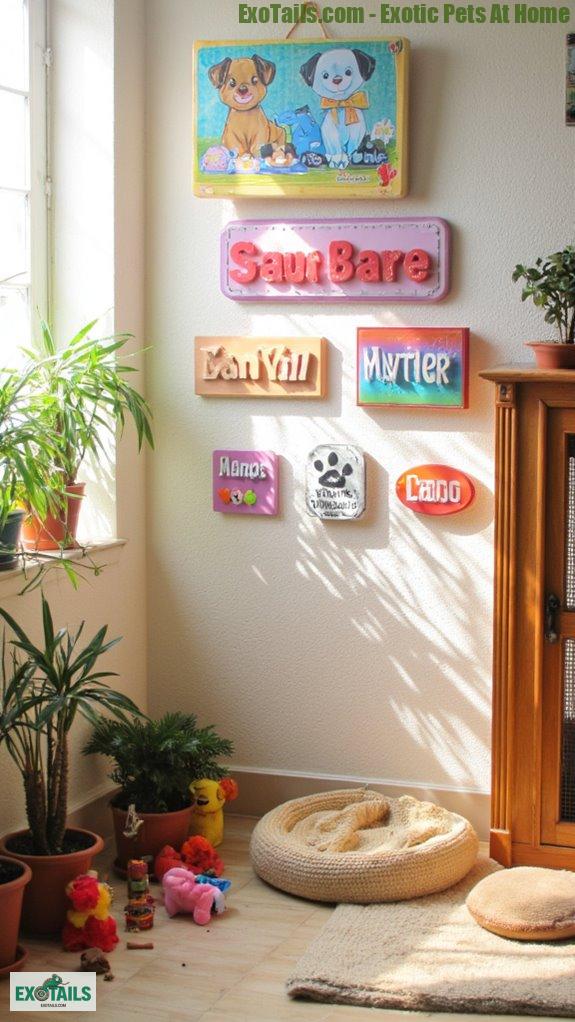
When it comes to designing personalized pet enclosure labels, choosing durable materials is key if you want your labels to withstand the test of time—trust me, your parakeet’s shenanigans can’t be underestimated!
For longevity features, I’d suggest materials like PET or HDPE. They’re tough against chemicals and UV rays, keeping your labels intact. If you’ve got moisture in the mix, polypropylene works wonders. Having the right labels can even ensure material compliance with safety regulations. Additionally, using materials that allow for durable custom signs can further enhance the appearance and functionality of your pet enclosures.
Are you considering the environment, too? Eco-friendly options can be durable while being kind to our planet. By focusing on smart material selection, you’ll create labels that stay vibrant and legible, even during the wildest of pet adventures!
Incorporate Color Coding for Quick Identification
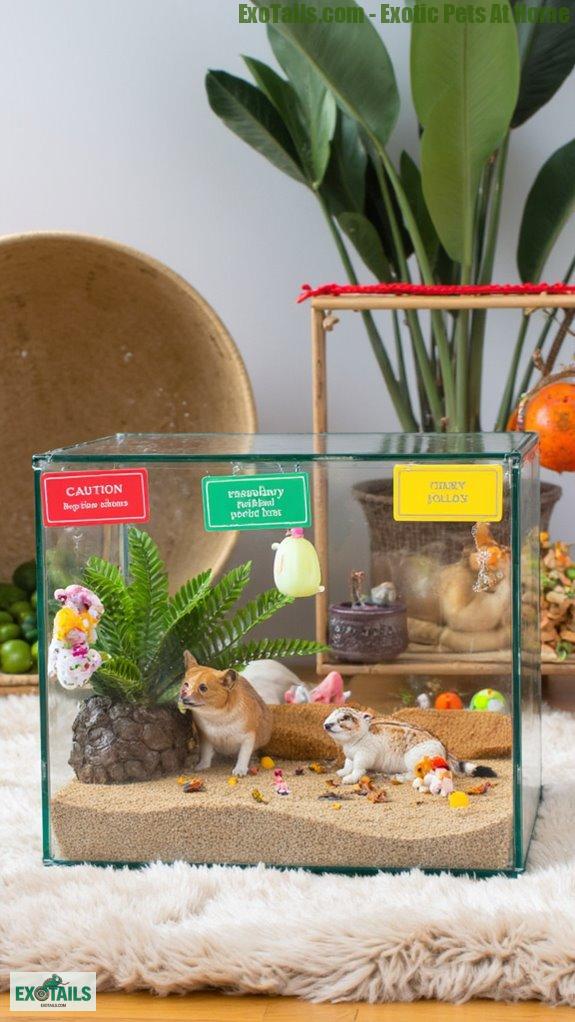
Incorporating color coding into your pet enclosure labels can be a game-changer, especially when you want to quickly identify each pet’s needs at a glance.
By utilizing color psychology, I can create a system that’s not just safe but also visually appealing. For instance, red for caution and green for friendliness help staff recognize important details effortlessly. Additionally, using colored rectangles to indicate dietary or medical notes can further enhance quick identification of any special requirements for each pet. To optimize the labeling experience, I recommend using creative signage ideas that resonate with the unique characteristics of each exotic pet.
When I designed ExoTails, I realized that clear label design makes a huge difference, especially in chaotic environments.
Include Animal-Specific Care Instructions
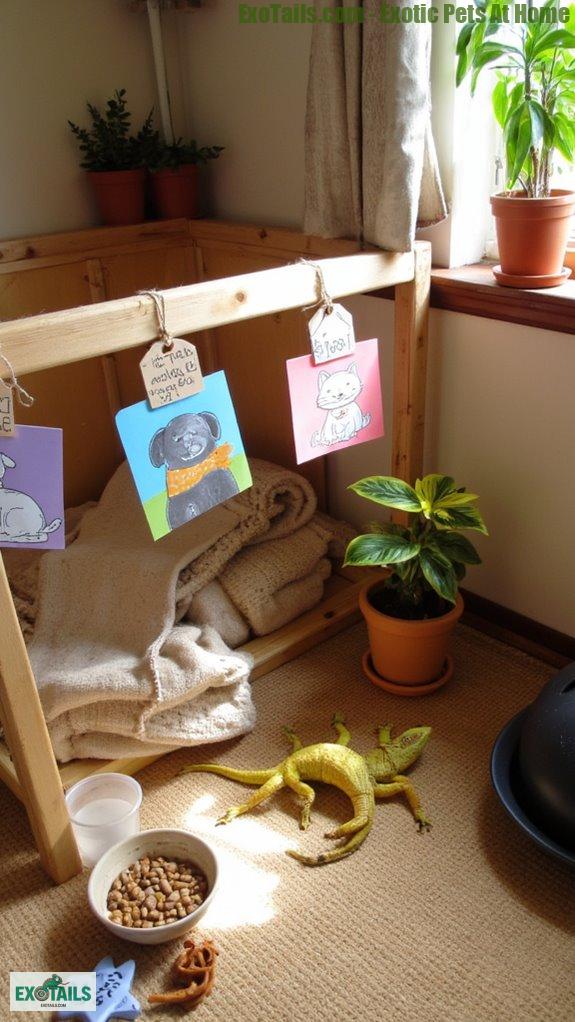
Creating labels that include animal-specific care instructions is essential if you want to guarantee your pets are happy and healthy.
Think about your pet’s specific medical needs, like allergies or chronic conditions. It’s a real game-changer!
Don’t forget dietary preferences either; if it’s a picky eater, I feel you! Mention food types, how often to feed, and the all-important water schedule.
And hey, I get it—keeping things tidy is a must. Labeling all this assures you or your pet sitter know what’s up.
Trust me, from my experience with exotic pets, it’s the little details that make all the difference! Additionally, understanding your pet’s bioactive habitat requirements helps support their overall well-being and mimic their natural environment.
Use QR Codes for Digital Access to Information
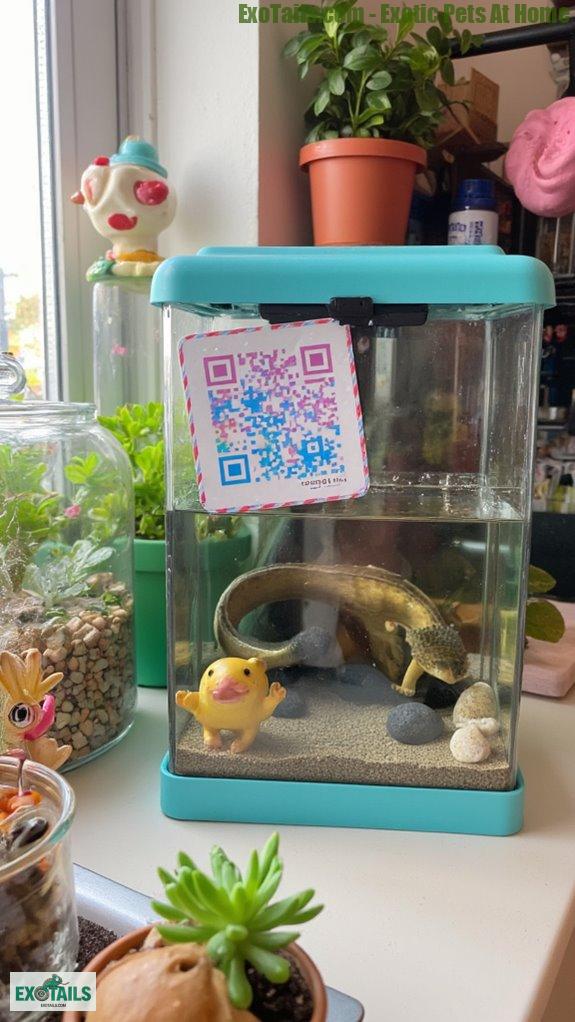
Visualize this: you’re at the park, and you spot someone holding a lost pet, but they can’t track down the owner. This is where QR codes come in handy!
Using QR code advantages offers an easy way to access crucial information quickly.
- Real-time updates to contact info
- Privacy controls for extra safety
- Access to thorough pet details
- Efficient and cost-effective
With all those features, I feel like a genius for adding QR codes to my exotic pet enclosure labels on ExoTails. Just picture the peace of mind knowing your pet can be swiftly reunited while enjoying the sun! Additionally, having accurate information about tank size for axolotls ensures that the pet’s habitat meets their specific needs.
Personalize With Names and Breed Information
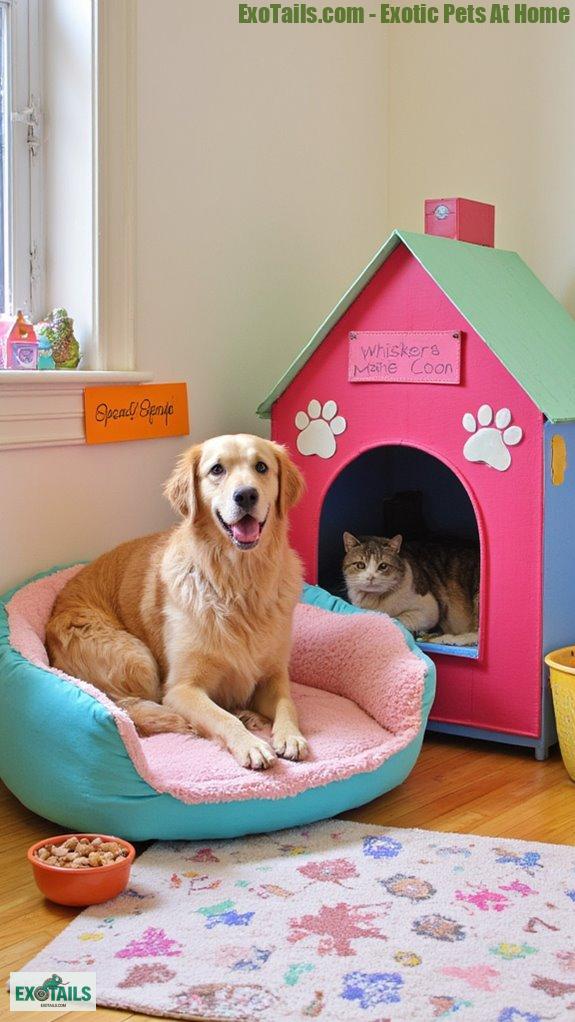
When you’re out and about, wouldn’t it be nice if your pet’s name and breed information were right there for everyone to see?
Adding name clarity and breed symbolism on their enclosure labels can make a world of difference. Not only does it identify your furry friend, but it also highlights any special care they might need.
I’ve found that using bold fonts and colorful designs really catches the eye! Plus, it helps reduce confusion when curious onlookers want to know if your dog is a Great Dane or just a particularly fluffy kitten.
Who knew pet labels could look so fabulous?
Ensure Compliance With Labeling Regulations
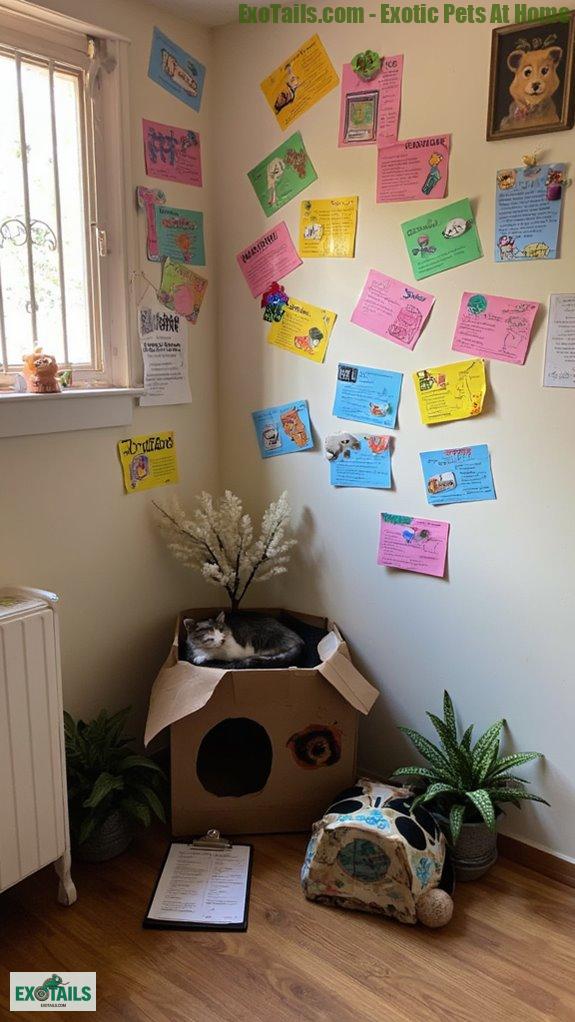
While adding personal touches to your pet’s enclosure labels can make them pop, we can’t forget about the significance of following labeling regulations.
It’s vital for pet safety and compliance audits to guarantee we’re on the right track.
Here are some essential tips:
- Get label approval from relevant agencies.
- Clearly identify the product and its use.
- Include any necessary regulatory markings.
- Keep records of approvals and updates.
Trust me, guaranteeing compliance with these guidelines means your label design isn’t just pretty—it’s safe!
After all, my love for exotic pets at ExoTails inspired me to prioritize safety in style!
Design Labels for Visibility and Readability
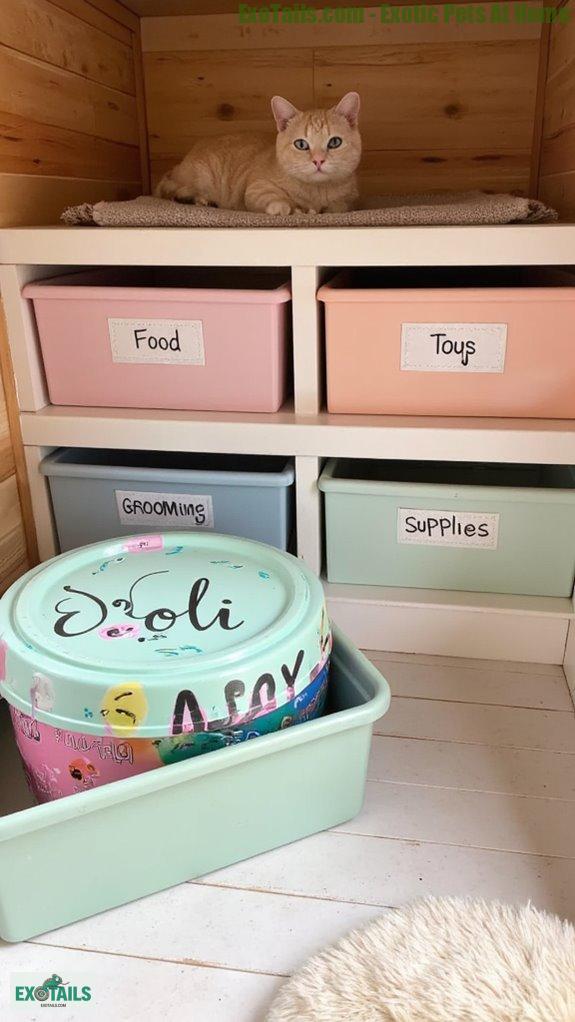
Designing labels that stand out in your pet’s enclosure is more than just a fun task; it’s essential for ensuring you and your pet can easily find what you need.
Think about label placement and make sure it’s at eye level for quick access. When choosing font selection, stick with clean, sans-serif styles for legibility. Color contrast is key—dark text on a light background works wonders!
Organize your information hierarchy so critical details jump out at you.
Ultimately, material choice matters; go for durable labels that resist moisture. Trust me, your pets will thank you… or at least pretend to!
Provide Clear Handling and Transport Instructions
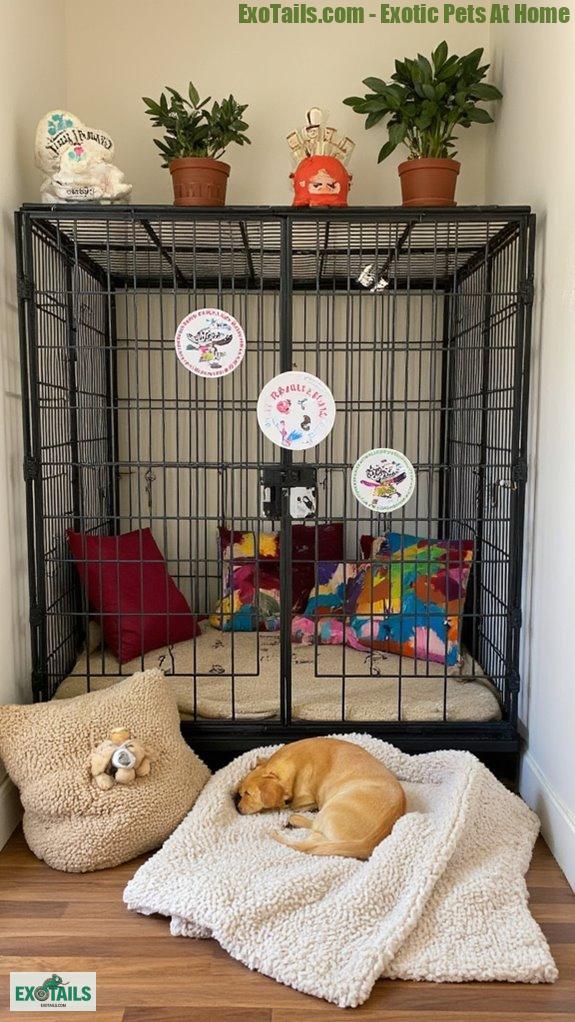
Even though handling and transporting your pet’s enclosure might sound straightforward, it’s actually an opportunity to guarantee safety and comfort for everyone involved.
Trust me; you don’t want a surprise pet escape during transit!
Here are some essential handling guidelines for transport safety:
- Secure fixtures: Double-check that everything is tightly fastened.
- Stabilizing measures: Use straps or ropes to keep things steady.
- Protective covers: A blanket can save your enclosure from dents.
- Visual indicators: Clearly label for any special handling needs.
Let’s assure smooth travels for our beloved exotic pets. After all, what’s more important than their safety?
My Axolotl at home
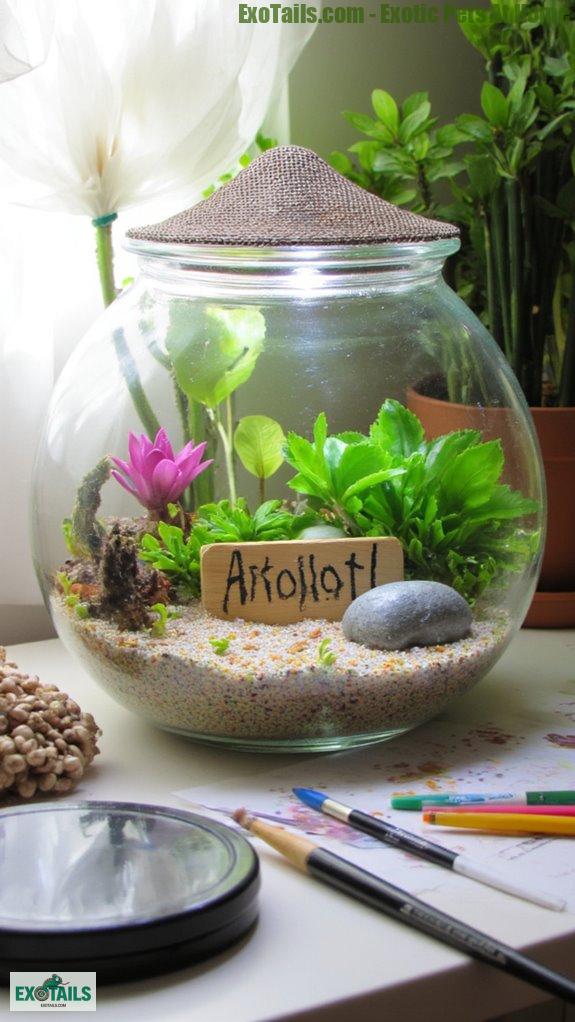
There’s a certain magic in bringing an axolotl into your home, isn’t there? I’ve seen them thrive in a customized tank that mirrors their natural habitat, and trust me, it’s enchanting to witness their unique axolotl behavior.
Keeping the water temperature between 15-20°C is essential—it’s a must! I use a fine mesh lid to regulate heat and routinely test water parameters with my trusty kit. It’s all about balance.
And don’t forget feeding—using tongs has turned dinner time into our delightful little ritual!
Creating a cozy, safe haven for my axolotl inspired the ExoTails journey, making every moment unforgettable!
References
- https://www.aafco.org/resources/startups/labeling-labeling-requirements/
- https://www.aphis.usda.gov/sites/default/files/pel_4_2.pdf
- https://www.law.cornell.edu/cfr/text/9/112.2
- https://www.iata.org/contentassets/b0016da92c86449f850fe9560827bbea/pet-container-requirements.pdf
- https://ag.colorado.gov/pet-treat-label-requirements
- https://www.eltronis.com/events/know-your-labels/
- https://columbinelabel.com/custom-pet-product-labels/
- https://www.smithcorona.com/pet-product-labels.html
- https://inovarpackaging.com/industries/pet-care/
- https://www.hollytagandlabel.com/labels/pet-product-custom-labels/